

If you had to choose just one urban space to visit in the Peruvian capital, it would have to be the Historic Centre. Declared a World Cultural Heritage Site by UNESCO, the old town of the “thrice-crowned city” is a refuge of the past where every step takes you back to foundational Lima, to the Lima of the viceroyalty.

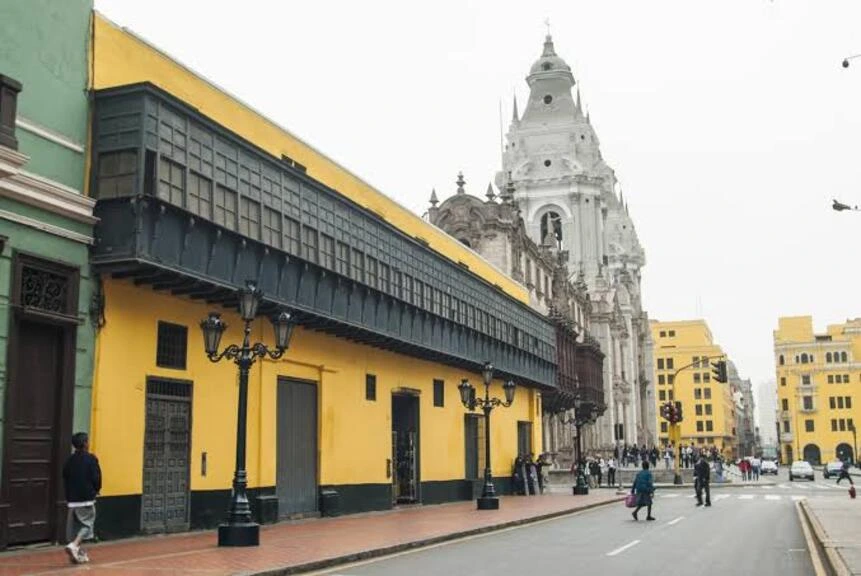
Mansions, churches, and colonial convents shape the old town of a destination steeped in tradition and history, evoking memories, art, and culture. Here, every square, every street or “jirón”, every Baroque, Neoclassical or even Gothic façade has something to show you, something to tell you.
The Historic Centre is the beginning, the origin, the genesis of the metropolis that is now home to more than 10 million people. It all started on 18 January 1535, when Francisco Pizarro founded and mapped out the original layout of the City of Kings, in what is now the Plaza de Armas, also known as the Main Square.
According to the regulations of the time, the conquistador planned the fledgling city in a grid or military square pattern. This included what was known as the “Cercado de Lima” (until the 17th century the city had a wall) and the district of Rímac. These two areas were divided by the course of the Rímac River, meaning “the talking river” in Spanish.
Urban development remained within “Pizarro’s Grid” until the 18th century, when the defensive walls surrounding the city were demolished. Lima then began to expand – and it hasn’t stopped since. The Peruvian capital keeps growing and “distancing” itself from its Historic Centre, the place you absolutely must visit today, tomorrow… and always!
Peruvian Heritage, World Heritage
“The Historic Centre of Lima bears witness to the architectural and urban development of a Spanish colonial city of major political, economic, and cultural significance in Latin America,” reads one of the reasons why UNESCO declared Lima’s Historic Centre a World Cultural Heritage Site in 1988.
According to UNESCO, the centre “represents an outstanding expression of a regional cultural process, conserving its architectural, technological, typological, aesthetic, historical and urban values adapted to the availability of materials, climate, earthquakes and the needs of society.”
Today, the essence of Lima’s Historic Centre “remains intact, as it still preserves much of the original characteristics of its foundation layout, in grid form, and of the expansion areas from the 16th to 19th centuries, including ancient pre-Hispanic routes heading north (Chinchaysuyo) and east (Antisuyo).”
Because of its immense monumental value, the 277.99 hectares of the Historic Centre, shared between the Cercado and the district of Rímac, are protected by various legal regulations. Their management and preservation fall under the responsibility of the Metropolitan Municipality and the Rímac district council.
These are just some of the reasons why the founding core of the city feels like an open-air museum, where every street, every square, and every balcony (a defining feature of the city) holds historical significance for the people of Lima, for Peruvians, and ultimately, for all humanity.
What to Do in Downtown Lima?
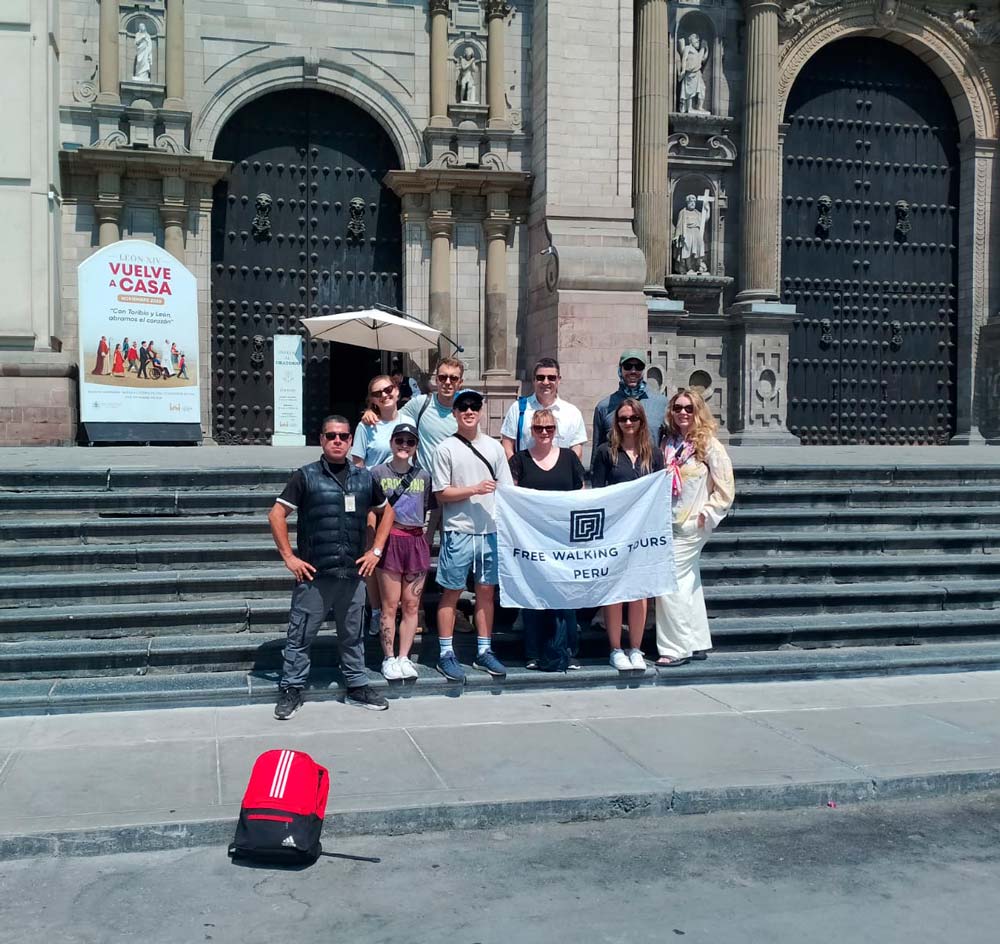
Join the FREE Walking Tour
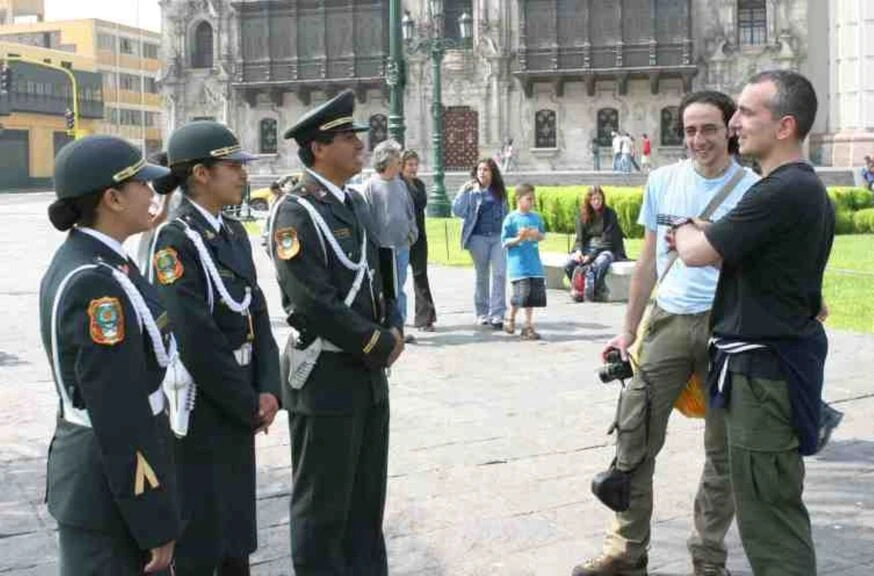
Stroll through the centre, pausing at its main landmarks while listening to the stories told by a local, certified guide who knows the city’s history inside out. This is an experience you can enjoy in Lima free of charge with our free walking tours.
We are pioneers in offering FREE walking tours in Lima. Book with us and get ready to discover the City of Kings step by step – just like the many happy travellers who leave amazing reviews of our tours on social media. Read their feedback and browse thousands of photos on Instagram and Facebook.
We’re waiting for you in Lima to show you the very best of the old town. At the end of the tour, don’t forget to acknowledge your guide’s knowledge by leaving a tip. It helps them continue sharing the story of their city with visitors who come to the heart of the Peruvian capital.
Note for Peruvians: Free tours are exclusively for inbound tourism. If you are Peruvian, book our Lima city tour. You’ll love it!
Wander Around the Plaza de Armas
Visit, explore, and enjoy the urban space where the colonial and republican history of Lima first began. Surrounded by imposing buildings such as the Cathedral, the Government Palace (Casa de Pizarro), the Municipal Palace, and the House of the Oidor, among others, the Plaza de Armas – or Main Square – was, is, and will always be the centre of that Spanish town which became a melting-pot metropolis.
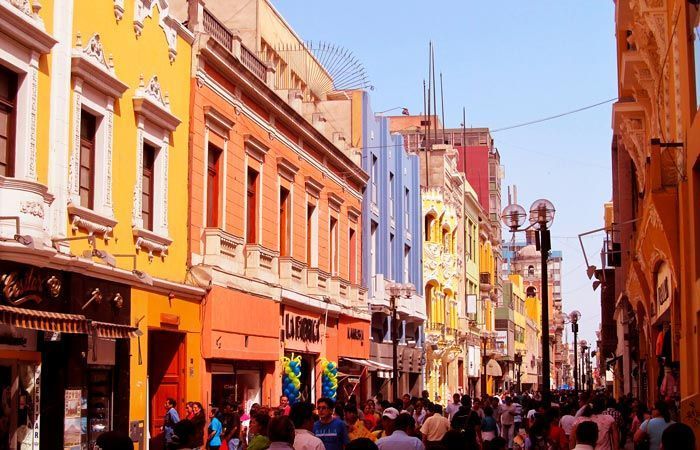
Take a Walk Down Jirón de la Unión
“Peru is Lima, Lima is Jirón de la Unión,” wrote Abraham Valdelomar in the 20th century. Much has changed since then, but the importance of this pedestrian street still endures. It symbolically links the colonial city (Plaza de Armas) with the republican city (Plaza San Martín).
Before independence, this thoroughfare was known as Calle de los Mercaderes (Street of the Merchants). In the 19th century, it received its current name, without losing its commercial character, as you’ll notice while strolling through it.
During your visit, be sure to check out the Church of Nuestra Señora de la Merced and the historic Palais Concert building.
Enjoy Popular Culture at the Chabuca Granda Promenade
Just behind the Government Palace and along the banks of the Rímac River, you’ll find a promenade named after María Isabel Granda y Larco—Chabuca Granda—a celebrated singer-songwriter who composed iconic pieces of Peruvian and Lima’s traditional music, such as La flor de la canela, El puente de los Suspiros, and José Antonio.
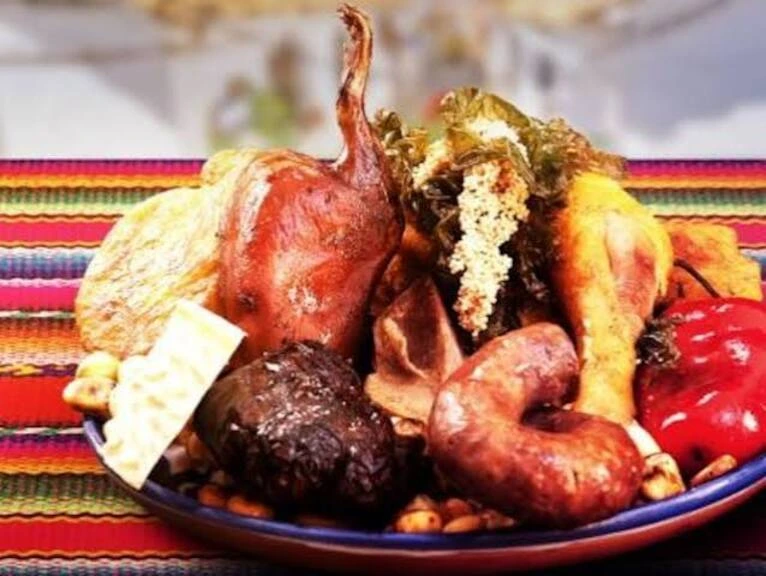
A popular spot among locals, the Chabuca Granda promenade offers a taste of traditional Limeñan street food like picarones and anticuchos, and lively street performances, including shows by the famous cómicos ambulantes (travelling comedians). Entry is free.
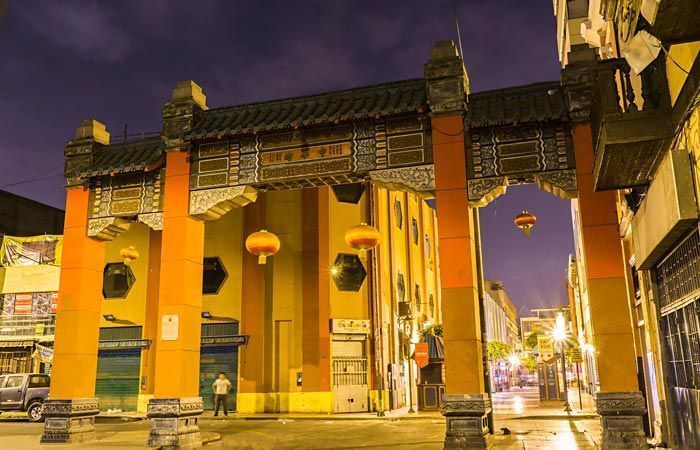
Dine at a Chifa in Chinatown
Ordering a lomo saltado or a chaufa rice in one of the chifas on Capón Street in Lima’s Chinatown is a tribute to the cultural blend and fusion of culinary techniques that have enriched Lima’s gastronomy since colonial times. Back then, pre-Hispanic ingredients were blended with those brought over by the Spanish.
In the mid-19th century, Peru welcomed thousands of Chinese migrants. Over time, Chinese restaurants began to appear. Lacking ingredients from their homeland, the cooks substituted them with local products, sparking an intense culinary fusion.
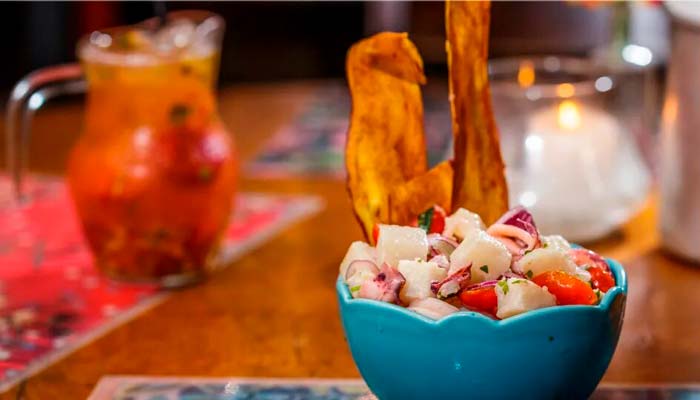
This fusion gave birth to chifas (the name given to Chinese-Peruvian restaurants) and to classics like arroz chaufa and lomo saltado, prepared in a wok, the large oriental pan. Make sure to taste these dishes right in the neighbourhood where they were born – they’ll have a truly special flavour.
Explore the Catacombs of San Francisco
Around 36,000 people found their “eternal rest” in the catacombs beneath the Convent and Church of San Francisco. Considered the oldest cemetery in the city, its crypts are 10 meters deep and its five graves are interconnected by narrow, low tunnels.
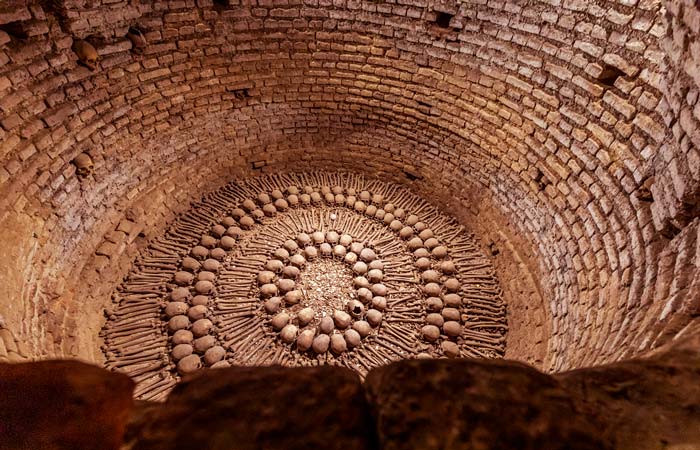
The custom of burying the dead in the underground galleries of temples began during early Christianity, when believers were persecuted. Shrouded in mystery and darkness, these tunnels are said to have once connected to the Cathedral, Pizarro’s House (now the Government Palace), and even the Real Felipe Fortress in Callao.
Visit the Aliaga House
This is one of the oldest houses in Lima’s Historic Centre. A unique feature of this colonial home is that its current owners are direct descendants of its first resident, the Spanish captain Jerónimo de Aliaga y Ramírez, who accompanied Francisco Pizarro during the conquest.

As old as the city itself, the house was originally built using adobe and quincha (a traditional building method), but due to Lima’s seismic activity, it has undergone several renovations. This architectural gem has 18 rooms, with the most impressive being the Golden Room in baroque style. You’ll find it on Jirón de la Unión, very close to the Plaza de Armas.
Wander Through the ‘Home’ of Peruvian Saints
The cloisters of the Santo Domingo Convent housed Saint Rose of Lima and Saint Martin de Porres, two of the five Peruvian saints. All of them lived during the viceregal era, between 1570 and 1660, demonstrating the religiosity and faith that prevailed at that time.

Saint Rose of Lima (1586–1617) was canonised by Pope Clement X in 1671, becoming the first saint of the Americas. In 1669, Isabel Flores de Oliva (her birth name) was proclaimed patron saint of Lima. A year later, she was declared patroness of the New World and the Philippines.
Saint Martin de Porres (1579–1639) was the first American of mixed race to be canonised. He is believed to have had the gift of bilocation (being in two places at once) and to heal with herbs, which is why he is the patron saint of pharmacists. Pope John XXIII canonised him in 1962.
Discover the Monument to Taulichusco
Along the Santa Rosa Passage, beside the Municipal Palace, a monolith commemorates and honours Taulichusco the Elder, the Inca curaca (chief) who governed the Rímac Valley when Francisco Pizarro and his troops arrived at what is now Peru’s capital. The commemorative stone was placed in 1985 by Mayor Alfonso Barrantes.

Admire the Balconies of the Historic Centre
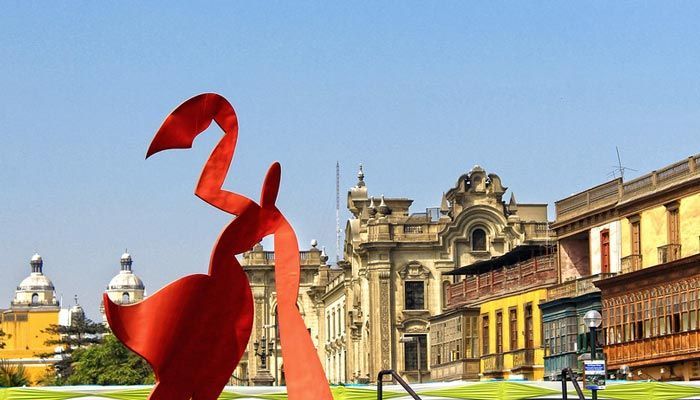
Lima, the city of balconies. As you walk through the Historic Centre, always look up—you’ll spot plenty of them, in many styles, adorning colonial buildings. Among the most notable are the balconies of the Torre Tagle Palace and the House of Osambela.
Although balconies originated in the Arab world, their use was prohibited in Spain after the Moors were expelled. But this law was disregarded in Lima. In the newly founded city, balconies continued to appear in palaces and mansions, eventually becoming one of the defining symbols of the Peruvian capital.
What to Do at Night?
Nights hold a special charm in the foundational city of Lima. It’s not just that its architectural landmarks take on a different beauty under the moonlight and street lamps. There’s another reason: its streets hide more than a few cosy spots where you can enjoy a drink and a good time.
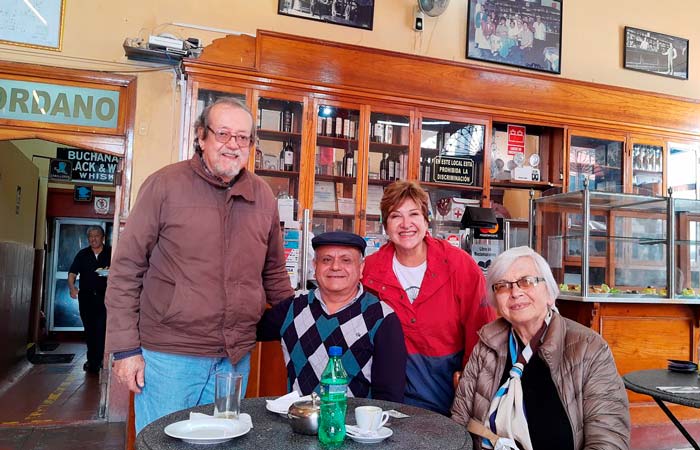
An excellent starting point for your evening (or perhaps late-night) plans is Bar Cordano, one of the city’s most traditional bars. Just a stone’s throw from the Government Palace, it’s famous for its butifarras (ham sandwiches) and tacu tacu with steak. It’s also well-known for its pisco-based drinks – pisco being Peru’s national spirit. Make sure to visit early, as it closes at 8pm.
If you’d like to explore the flavours of Peru’s famous grape-based spirit, try a pisco sour at the Bar of Hotel Maury, considered one of the birthplaces of this iconic cocktail. Another excellent option is the bar at the Gran Hotel Bolívar, right on Plaza San Martín. Here you can order a catedral (an extra-large pisco sour) or a well-made chilcano.
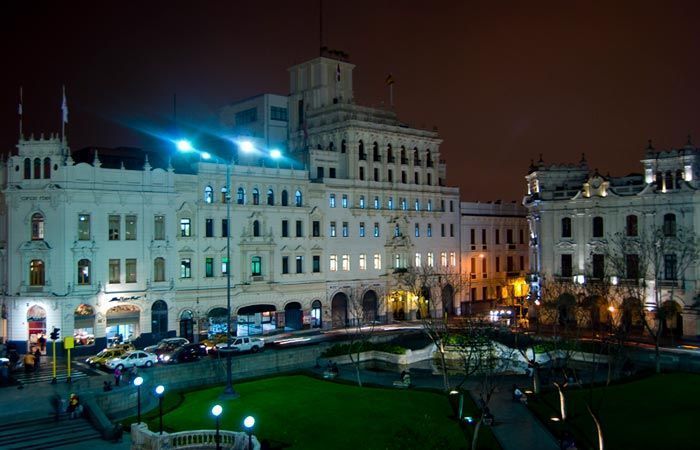
Near the square, you’ll find other lively spots such as the popular Queirolo – a bar and restaurant offering a variety of dishes and a great selection of piscos and wines. Just as fun are Estadio FC, a football-themed bar, and Rincón Cervecero, where the star of the menu is cold, refreshing beer.
Dining Recommendations
If you’re after tourist-friendly restaurants, head to Pasaje Santa Rosa (access it from the Plaza de Armas). In this peaceful corner of the Historic Centre, you’ll find more than one excellent spot to enjoy both Peruvian criollo and international dishes. Prices range between 40 and 70 soles (approx. 10 to 20 USD).
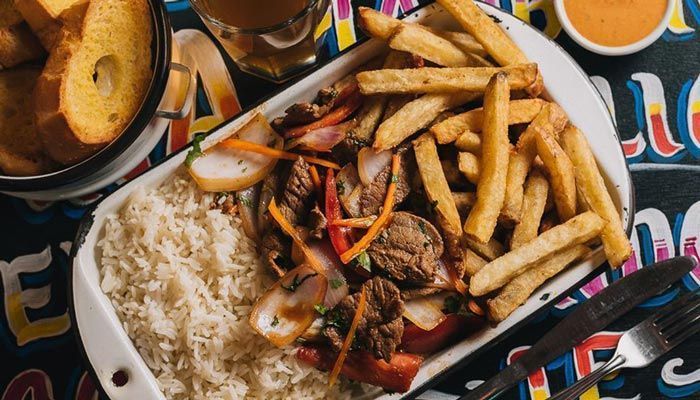
If you’re on a budget and join one of our free walking tours, your guide — a true expert in the city — will recommend a restaurant that not only offers great value for money, but also tasty dishes served in generous portions. Prices here typically range between 10 and 15 soles (approx. 3 to 5 USD).
How to Get to Lima’s Historic Centre?
From Miraflores:
- Option one: Take an app-based taxi (Uber, Cabify, InDrive, or Yango), or a street taxi (exercise caution and choose a trustworthy driver). The ride usually costs between 15 and 20 soles (around 5 to 7 USD).
- Option two: Board the C line of the Metropolitano from any of the Miraflores stations (if you’re near Central Park, head to Ricardo Palma Station). Get off at the Jirón de la Unión station and walk to your destination. The fare is 3.20 soles. Note: you’ll need a transport card to board the bus, which you can purchase at the station booths.
- Option three: Our free tour is the safest, most reliable, and most enjoyable way to get to the Historic Centre from Miraflores.
From Barranco:
- As Barranco is quite close to Miraflores, getting to the Historic Centre is very similar. From Lima’s bohemian district, you can take a taxi or the Metropolitano. If you decide to join our free tour, we’ll meet you in Miraflores.
Free Walking Tours Peru
Secure your spot on our free tours led by professional, authorized, and expert guides in Free tour Cusco, Free tour Lima, Free tour Arequipa, Free tour Barranco, Free tour Magic Water Circuit. Booking is free!