
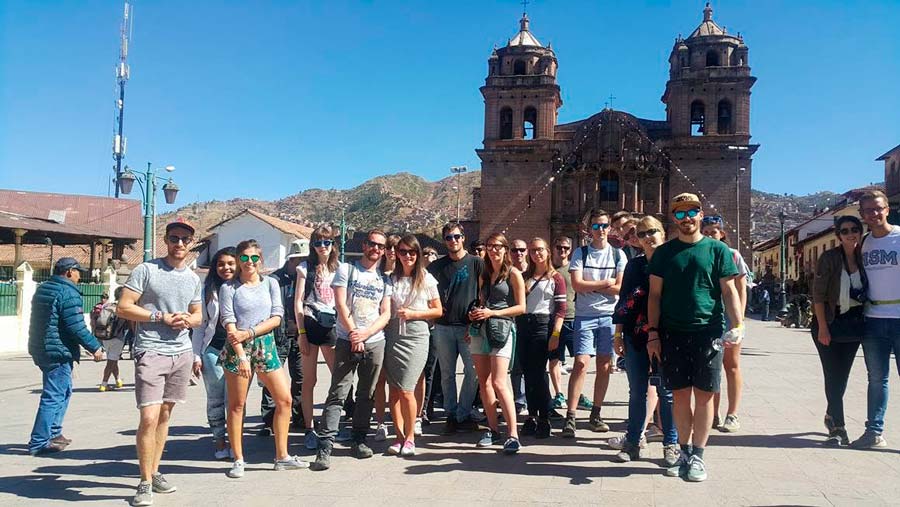
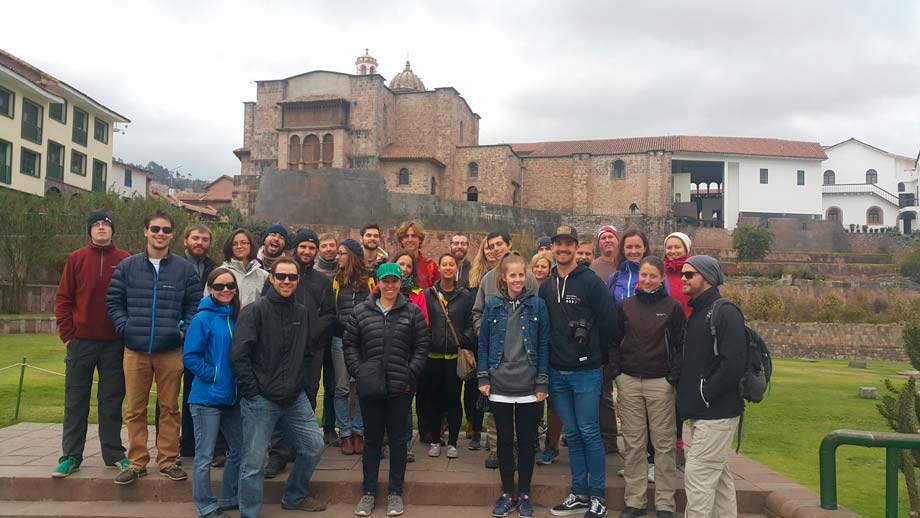
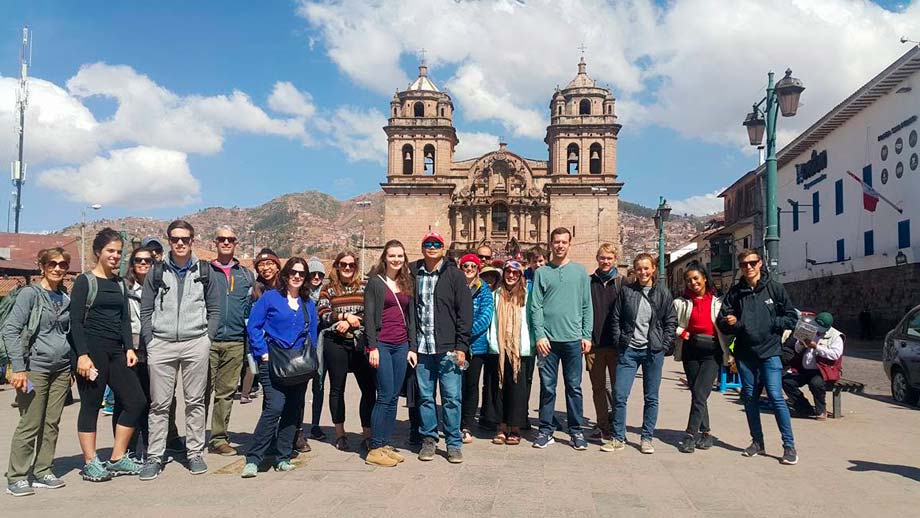







Discover the entire historic center of Cusco with the best Free Walking Tour in English (or in Spanish, if you prefer), led by qualified Indigenous guides. On our free tours of Cusco, you’ll visit the most iconic sites from both the Inca and colonial periods.
Your first stop will be in front of the Casa del Inca Garcilaso de la Vega, where our guide will share the story of the famous mestizo chronicler, born in this very house in 1539. From there, you’ll head to Plaza San Francisco and the renowned Colegio Nacional de Ciencias.
The Arco de Santa Clara is another highlight of this walking tour – a monument symbolising political unity between Peru and Bolivia. The route continues to San Pedro Market, Cusco’s very first and still one of its most vibrant. During this walking adventure, you’ll also visit the Plaza de Armas and two impressive Inca archaeological sites.
In short, our free tours focus on the rich history of Cusco and Peru. If you’re looking for an educational and cultural experience, join one of our free walking tours, and we’re as original as Sandemans!
OPERATION ISSUE OF THIS TOUR:
Make your free tour reservation now, even last-minute reservations are accepted! — We are operating all free tours in Cusco in English and Spanish — separate groups. Check the timetable below.
FRANÇAIS:
Si vous souhaitez participer au free tour à pied en français, le pourboire minimum obligatoire est à partir de 40 soles par personne. Vous pouvez vérifier la disponibilité uniquement via WhatsApp au +51 958745640.
Horaires disponibles : du lundi au samedi à 09h00 et 12h30.
HIGHLIGHTS
Meeting point
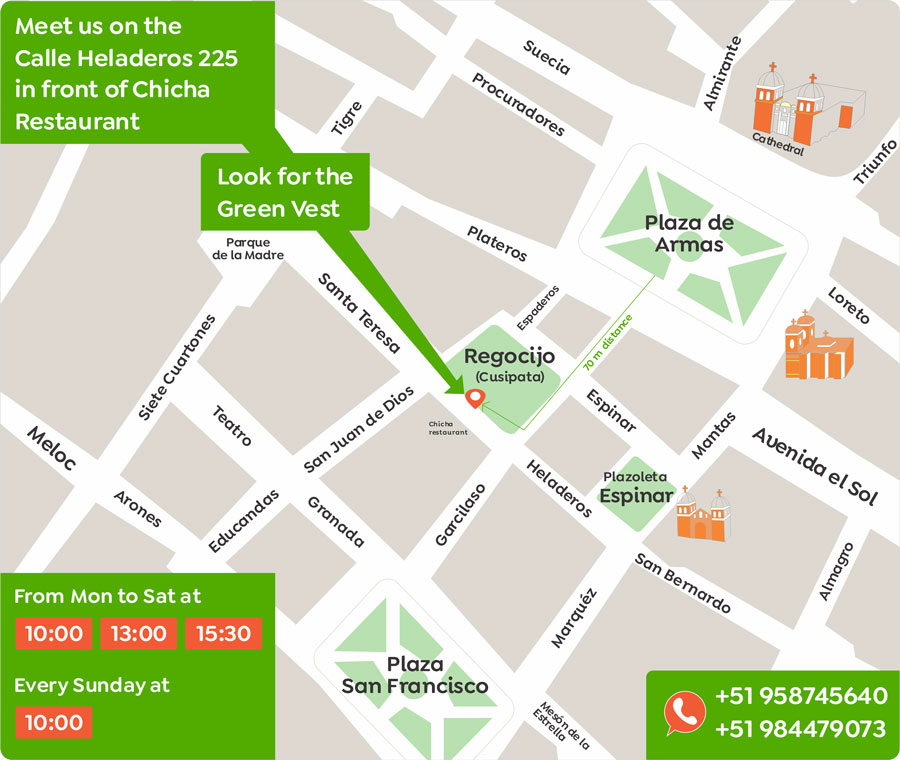
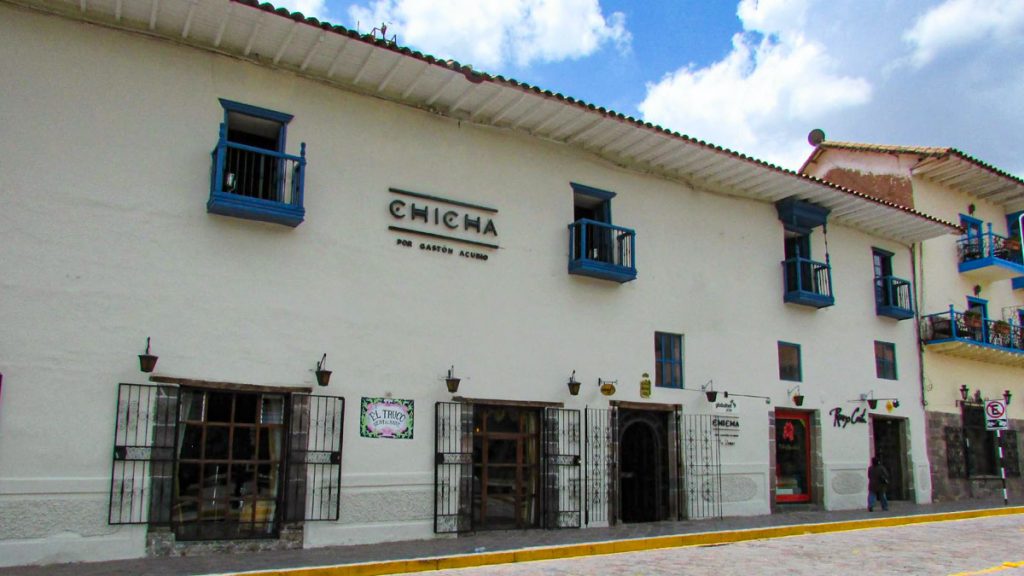
The free walking tours through the Historic Centre of Cusco start in front of the Chicha restaurant in Plaza Regocijo (Heladeros Street 290), look for the green vest. Please, don’t confuse it with the Plaza de Armas!
House of Inca Garcilaso de la Vega (Exterior Visit)
Your first steps in Cusco’s Historic Centre will take you to what was once the home of Inca Garcilaso de la Vega, considered the first cultural mestizo of Peru and the Americas, as he was the son of a Spanish conquistador and an Inca princess from the Tawantinsuyo.
Born in Cusco on April 12, 1539, Garcilaso de la Vega is the author of the Royal Commentaries of the Incas. In this work, he shares the history, traditions, and customs of the “Children of the Sun”, drawing from the oral accounts passed down by his mother’s family.
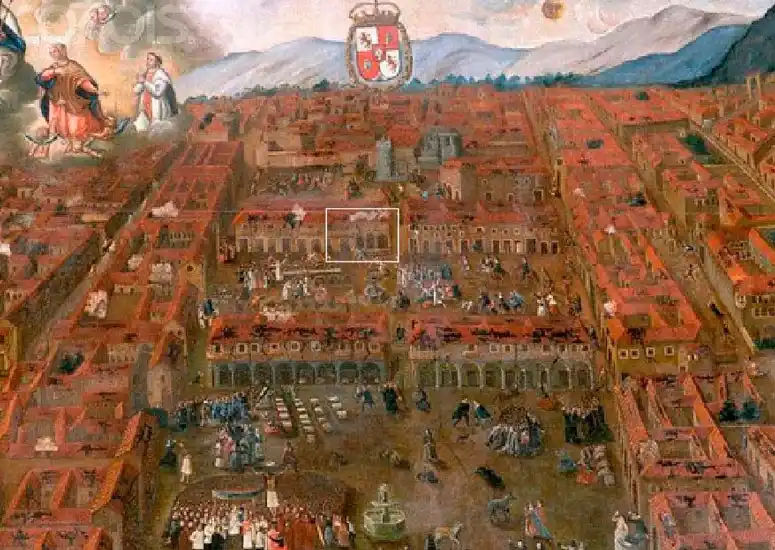
But the story of the so-called “Prince of the Writers of the New World” begins within the walls of the 16th-century colonial mansion that your guide will show you at the very start of the free walking tour.
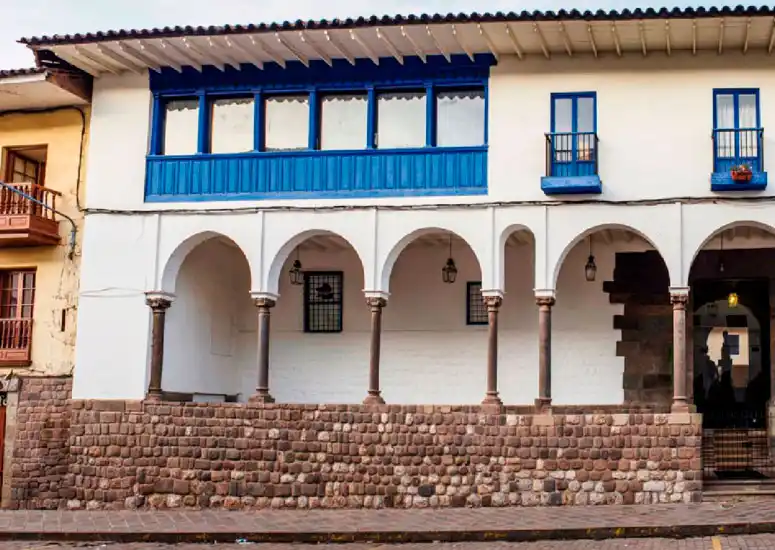
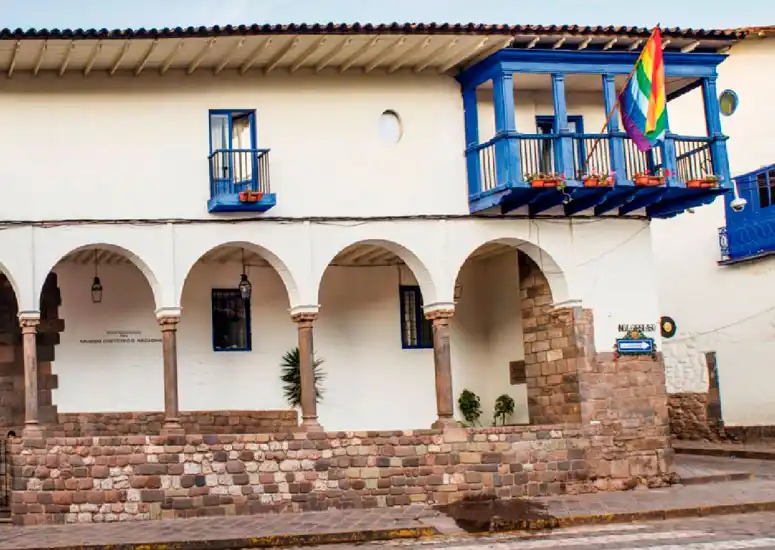
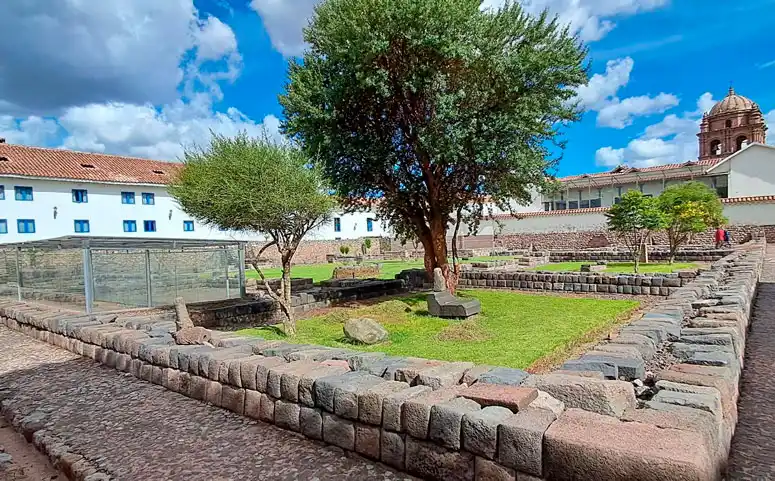
Located in Plaza Cusipata (also known as Plaza Regocijo), this colonial house was built on ancient Inca terraces. Its first owner was Pedro de Oñate. After his death, the home was occupied by Sebastián Garcilaso de la Vega and his wife, Isabel Chimpu Ocllo.
Today, this historic and monumental house – where Peru’s first mestizo was born and raised – is home to the Regional Historical Museum of Cusco. We highly recommend visiting it after your walk with us!
San Francisco Square
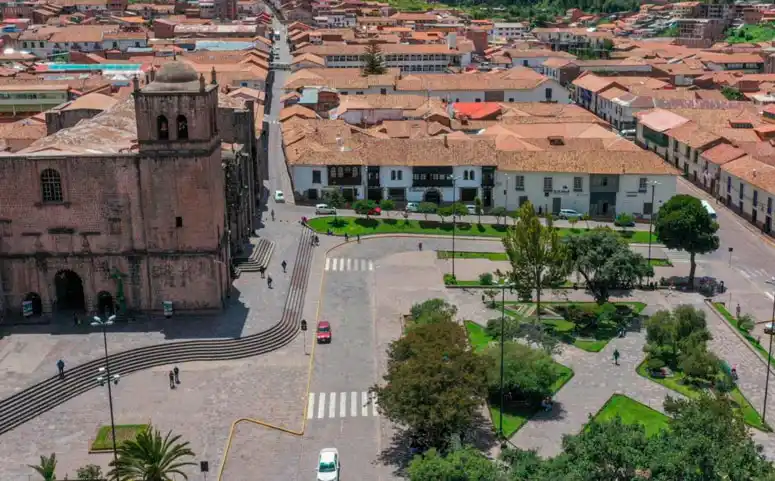
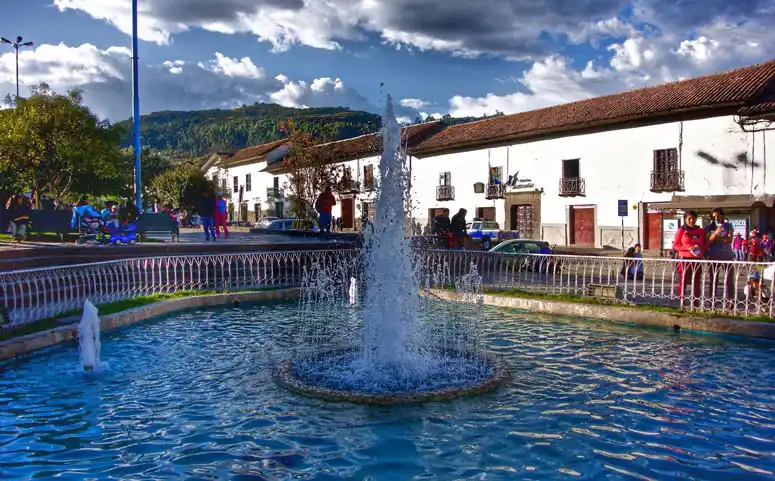
From square to square – starting at Plaza Regocijo and heading to Plaza San Francisco, a lively and open public space where you’ll discover Cusco’s Botanical Garden. At this stop, your guide will share fascinating insights into the native flora of the Andes.
In the garden, you’ll come across the cantuta or kantu (Cantua buxifolia), Peru’s national flower; the American cedar (Cedrela odorata); uña de gato (Uncaria tomentosa); and the avocado tree (Persea americana), among other native species.
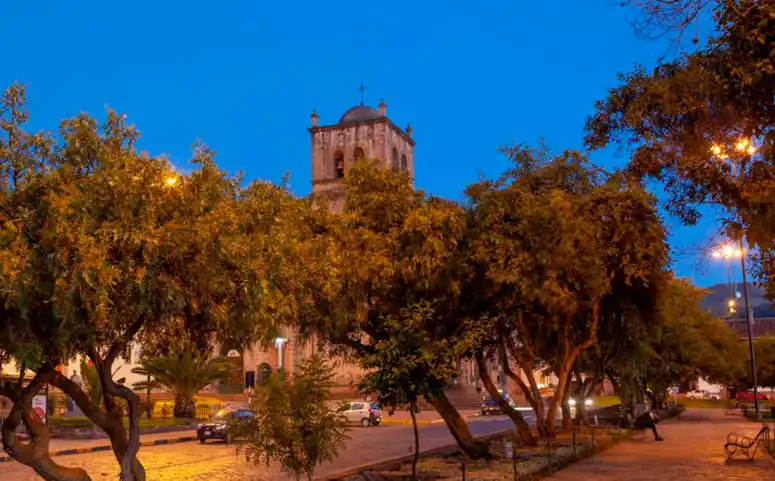
Beyond the flora, Plaza San Francisco is dominated by the striking architecture of the colonial San Francisco Convent and Church. Built in the 16th century on the Inca terraces of Chaqnapata, its façade will impress you with its intricate Plateresque style.

Colegio Nacional de Ciencias y Artes (Exterior Visit)
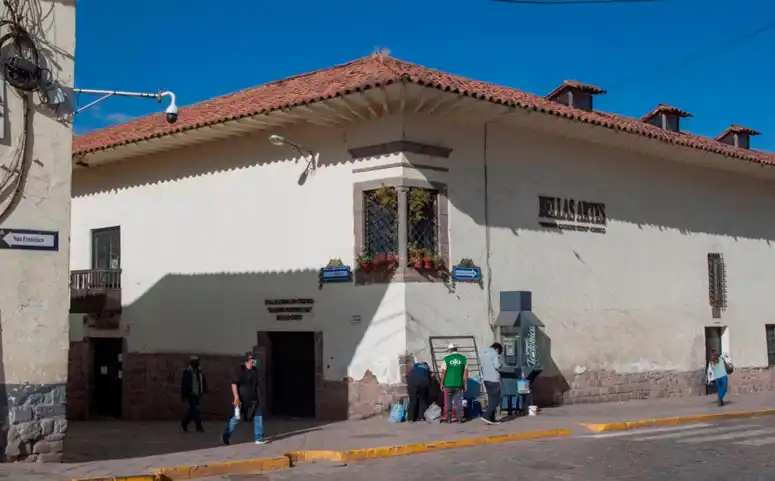
Farewell to flora, and welcome to science and knowledge at Cusco’s first public school. Known locally as El Cienciano, this historic institution was founded in 1825 by order of the liberator Simón Bolívar.
In its early years, the school operated within the cloisters of the Church of the Society of Jesus, sharing the space with San Antonio Abad University. In 1828, El Cienciano was moved to its current location on Santa Clara Street.
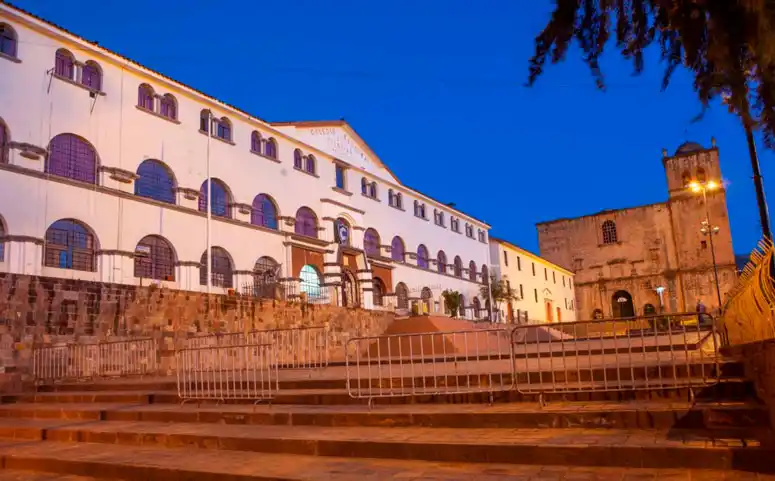
The home of this iconic educational institution is part of Cusco’s Monumental Zone, declared a UNESCO World Heritage Site for its unique blend of Inca and Spanish architecture.
The name Cienciano is also closely linked to sport, as it’s shared by Cusco’s most successful football club. In 2003, the Inca squad won the Copa Sudamericana, and the following year, they lifted the Recopa after defeating Argentina’s Boca Juniors.
Santa Clara Arch
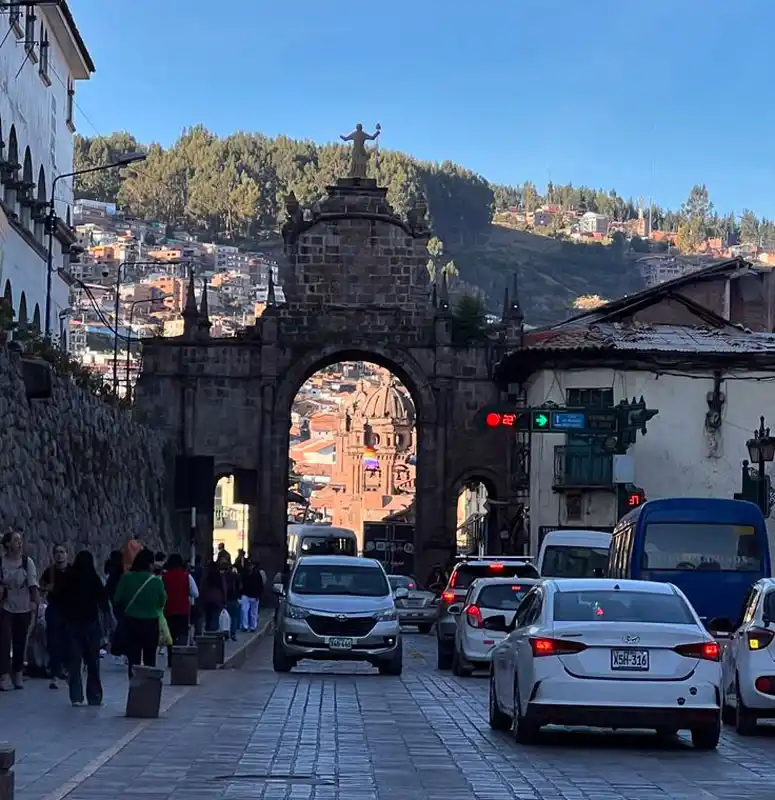
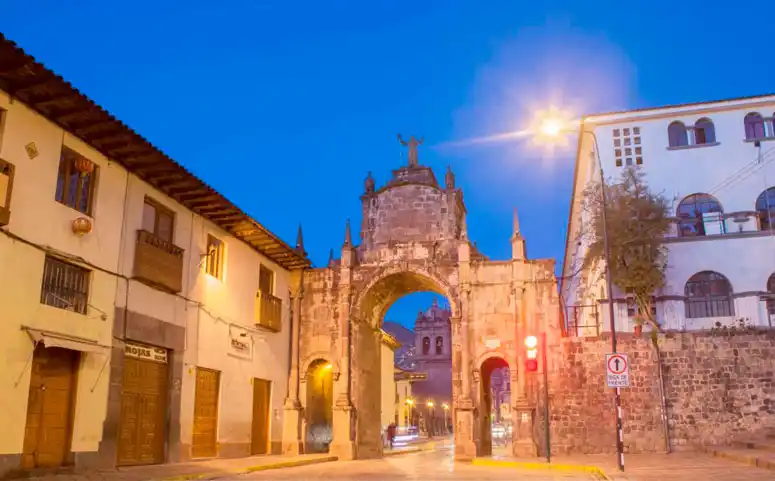
After receiving your guide’s insights just outside the oldest school in Cusco, you’ll cross the Arch of Santa Clara – a beautiful piece of architecture built to celebrate the creation of the Peru-Bolivian Confederation.
In 1836, Marshal Andrés de Santa Cruz ordered the construction of a grand archway, featuring one main entrance and two smaller side arches, on the western corner of Plaza San Francisco, right next to the Colegio Nacional de Ciencias y Artes.
Santa Cruz was the driving force behind the idea of a confederated state between Peru and Bolivia. His vision became a reality in 1836, but the project faced strong opposition both at home and abroad. In 1839, the confederation was officially dissolved.
Even so, the semi-circular arch with its Ionic columns – now known as the Arco de Santa Clara – still stands proudly today, catching the eyes (and cameras) of visitors like you, who join us to explore the streets of Cusco’s Historic Centre.
San Pedro Central Market
A bit of everything at great prices – welcome to Cusco’s oldest food market! Opened on 7 June 1925, San Pedro Market has everything from native potatoes to the items needed for a traditional offering to Pachamama (Mother Earth).
Designed by engineer Gustave Eiffel (yes, the same man behind the famous Parisian tower), this market will charm you with its colours, aromas, flavours, and incredible variety of products that capture the cultural heart of the Andean world.
Before it opened, Cusco didn’t have a main marketplace. During colonial times and the early years of the republic, vendors set up in Plaza de Armas and Plaza San Francisco, creating both chaos and pollution.
It was Mayor Manuel Silvestre Frisancho who came up with the idea to build San Pedro. Little did he know it would become, a hundred years later, one of the most popular tourist attractions in Cusco’s Historic Centre.

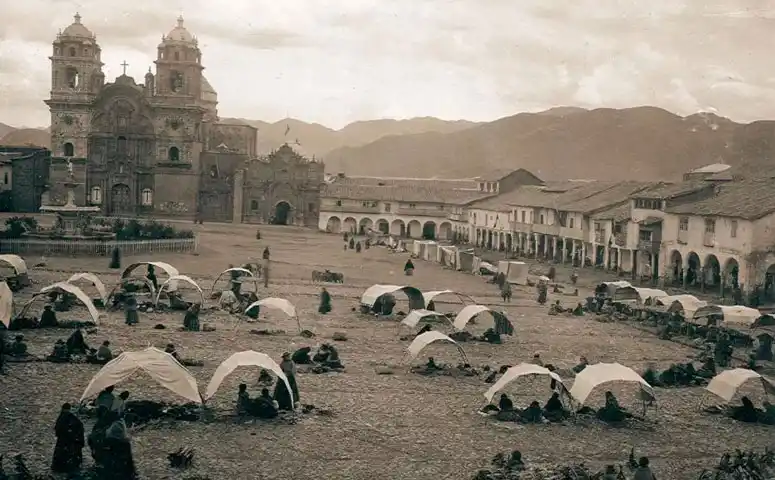


Plaza de Armas
If Cusco is the “navel of the world,” then the Plaza de Armas is the centre of that navel. So get ready to take your next steps towards this iconic urban space, where history, culture, and architecture come together in the heart of the Historical Capital of Peru.
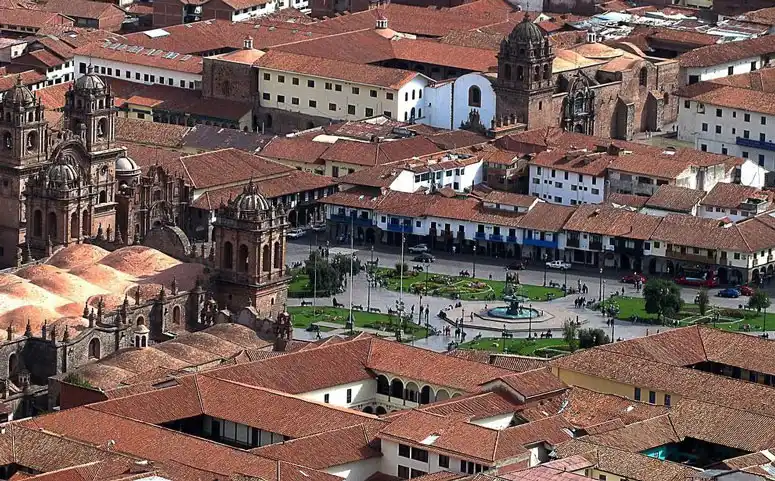
Known as Auqaypata by the Incas, the square is surrounded by religious and civil buildings, all built on top of ancient temples and pre-Hispanic palaces. This blend of Andean and Western styles creates a space of unique architectural beauty.


From the square, you’ll see the Cathedral, the Convent of Santa Catalina, and the churches of El Triunfo, La Sagrada Familia, and La Compañía de Jesús. You’ll also notice the elegant archways and several balconied buildings, many of which now house shops and restaurants.
Before the arrival of the Spanish, this space – then known as Aucaypata or Huacaypata – was dominated by impressive Inca stone structures such as the palaces of Amaru Cancha and Kiswar Cancha, as well as temples like Aclla Wasi and Suntur Wasi, among other important political and religious buildings.


Tupac Amaru I and Tupac Amaru II were executed in this very square in 1572 and 1781, respectively. Both events symbolically marked the end of the Inca nobility. But their sacrifice was not in vain – they left behind a powerful legacy of honour and bravery.
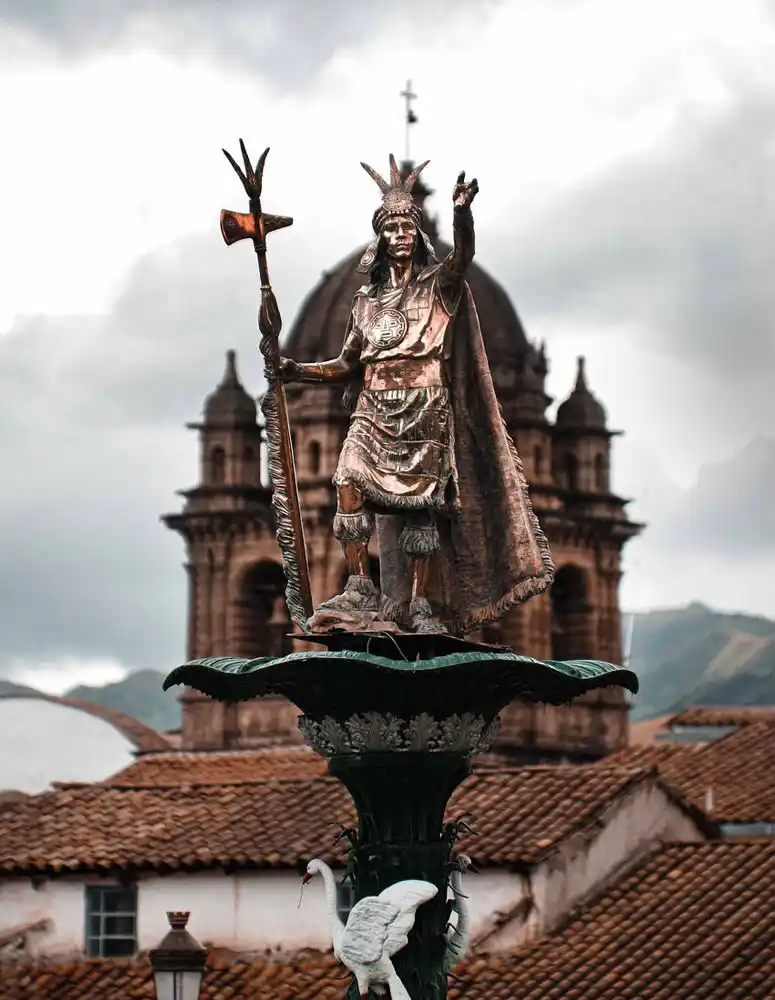
While you’re here, don’t miss the chance to snap a photo of the beautiful water fountain at the centre of the square. Donated by the city of New York in 1908, it was later crowned with a statue of Manco Capac, the legendary founder of Inca civilisation.

Basilica Cathedral (Exterior Visit)
On the steps of Cusco’s main temple — just a few steps from the Plaza de Armas — your guide will share the story of Peru’s very first cathedral. With its impressive size, it’s considered the second largest in the Americas.
Its origins date back to the period between 1560 and 1664. During those years, architect Juan Miguel de Veramendi led the construction of the Cathedral Basilica. He was later succeeded by Juan Correa, who continued the monumental project.
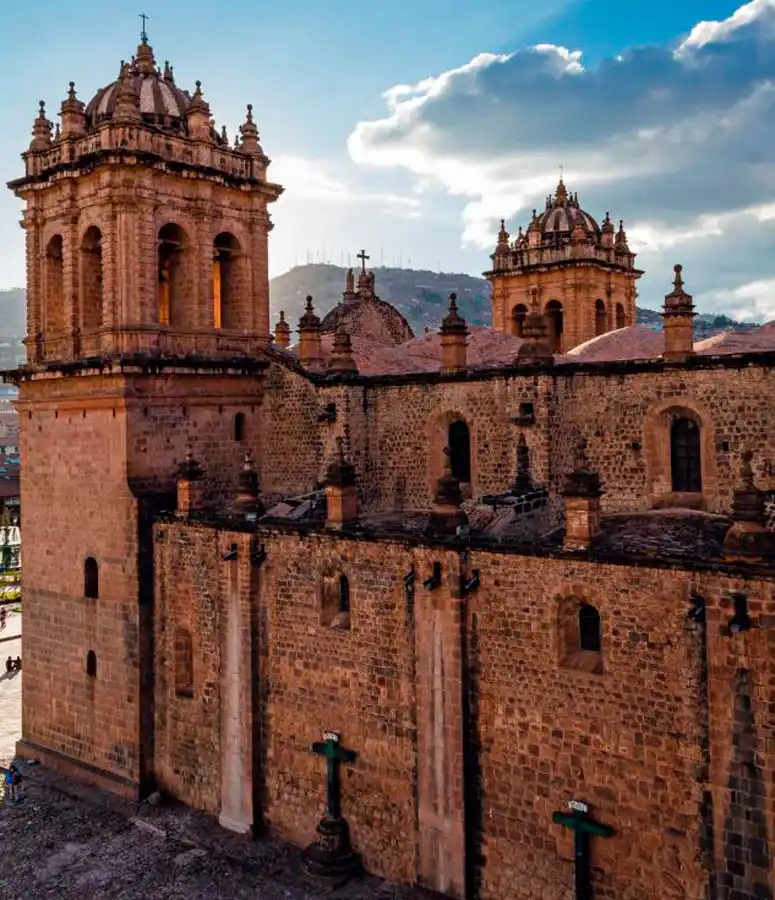


In 1615, master builder Miguel Gutiérrez Sencio took over the project and completed it in 1649. Designed in the Andean Baroque style, the Cathedral’s atrium offers a stunning view of the Plaza de Armas and the surrounding Cusco mountains.
If you’re interested in religious art, we highly recommend visiting the inside of the Cathedral. Built in the Renaissance style, its chapels house valuable collections that showcase the deep sensitivity and talent of colonial-era artists.

Loreto Street or Sun Street
And suddenly, you’ll feel your steps taking you back to imperial Cusco — a time when the Sun was worshipped, and Mother Earth was honoured. That’s what happens when you let your imagination wander along this street filled with history and ancient memory.
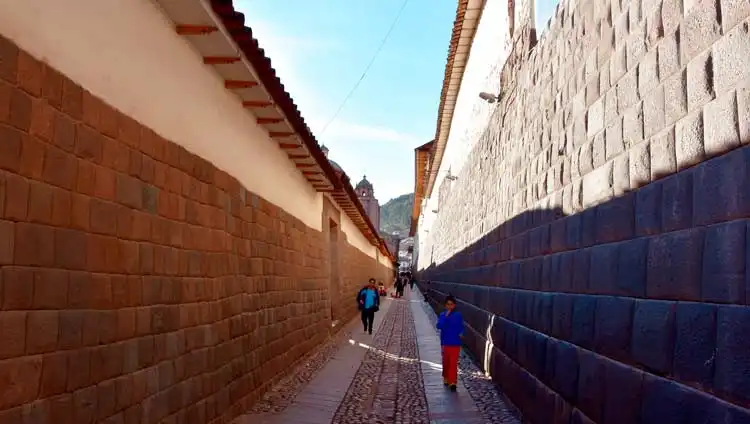
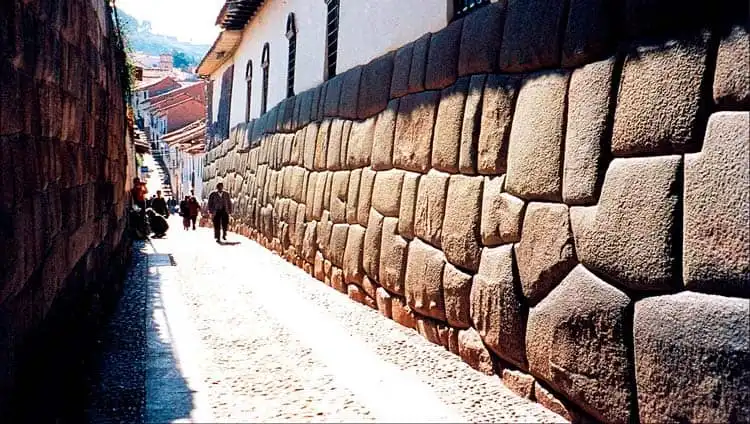
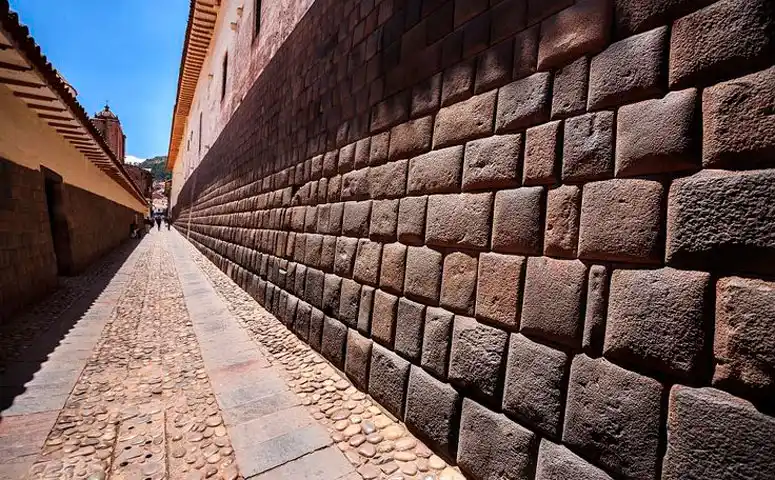
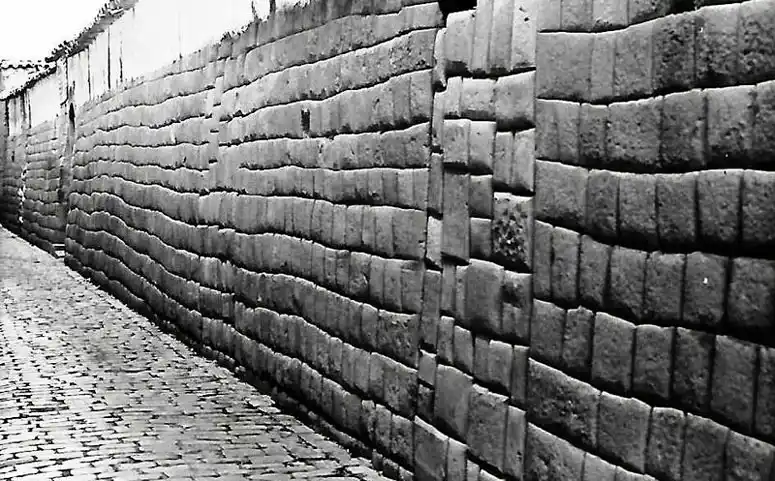
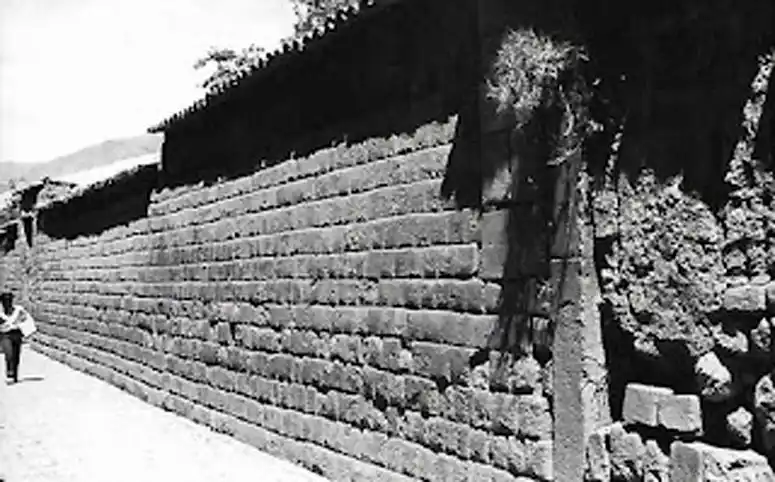
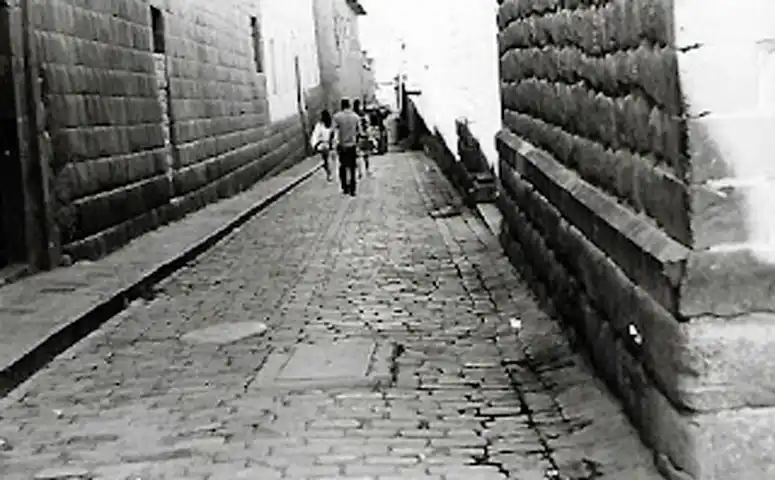
Inti K’ijllu (Street of the Sun), as the ancestors called it in Quechua, was later renamed Calle Loreto by the Spanish. But beyond its name, this pedestrian street still preserves the massive stone walls that define pre-Hispanic architecture. Flanked by Amaru Cancha and Aclla Wasi, Inti K’ijllu links the Plaza de Armas with Pampa del Castillo Street, another iconic spot in the “navel of the world” — the city we’re discovering together.
Alpacas and Llamas (optional)
Charming, eye-catching, and sometimes a little cheeky, llamas and alpacas are iconic animals of the Andes. Getting close to them, giving them a gentle stroke, and snapping a photo by their side is a must-do experience for many travellers who come to Cusco.
If time allows and your guide thinks it’s appropriate, you may even get the chance to interact with them right on the streets of Cusco. Spanish chroniclers once described llamas and alpacas as the “sheep and horses of the Andes”.
In the Andes, llamas are still used as pack animals — there are even herders today who travel with them. Alpacas, on the other hand, are prized for their wool, which is used to weave warm ponchos, jumpers, blankets, and traditional chullos (Andean hats).
Proud and unpredictable, it’s best to approach them calmly. Be patient, kind, and earn their trust. That way, you’ll avoid startling them — and trust us, you don’t want to see them in a bad mood!
Take the opportunity to ask your guide what llamas and alpacas do when they’re annoyed… the answer might surprise you!


Palace of Inca Pachacutec
In the heart of the Historic Centre lie the architectural remains and structures of what was once the palace of Pachacutec (1438 to 1478 AD), the Sapan Inca who solidified Cusco’s dominance in the high Andes.
Known as La Qasana during Inca times, the palace featured several canchas or courtyards with vibrant gardens, all surrounded by eight impressive chambers built with massive stone blocks.
When the conquistadors took over Cusco, Pachacutec’s Qasana became the headquarters of the Spanish army. After Peru’s independence was declared, it continued to serve a military purpose, this time under Peruvian command.
Visits to Pachacutec’s palace are only available Monday to Friday, as part of the free walking tours that begin at 10:00 and 13:00.


Church of Santo Domingo and Qoricancha (Exterior Visit)
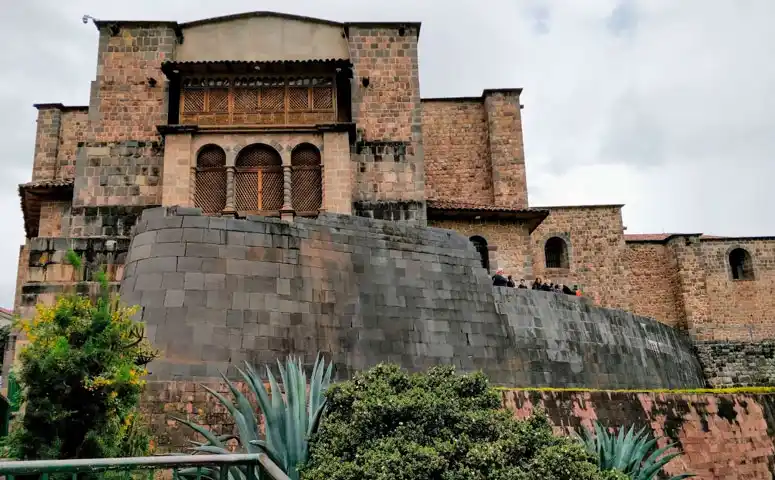
Here, your guide will tell you all about Andean Baroque, an artistic style that emerged in Peru during colonial times. You’ll also learn about the importance of Qoricancha, the Inca temple where worship was dedicated to the Sun god, the Moon goddess — and also to the rainbow and lightning.
The word Qoricancha means “golden enclosure” in Quechua. When the Spanish arrived, its walls were covered in gold plates, which were later removed by the conquistadors. The temple also served as a centre for astronomical observation and study.

In the 16th century, the Inca walls of Qoricancha served as the foundation for the construction of the colonial Convent and Church of Santo Domingo.
Building Catholic temples on top of Inca sacred sites was a religious, ideological, and cultural strategy designed to symbolically show that Western gods were superior to the Andean deities.
Despite this, many ancient beliefs survived or blended with Catholic rituals, giving rise to the religious syncretism that can still be seen in various artistic and cultural expressions today.
Nowadays, this architectural complex stands as a powerful symbol of Andean-Spanish fusion. The colonial church and the Inca walls of Qoricancha are lasting witnesses to Cusco’s imperial past and colonial legacy.



End of the tour
The free walking tour of Cusco’s Historic Centre ends near Santo Domingo, just a 5-minute walk from the Plaza de Armas in the “Archaeological Capital of Peru”.
TIMETABLE
We offer departures for our Free Tour in Cusco in the morning schedule at 10:00 hrs (10:00 AM) every day.
For the afternoon schedule, we have departures at 13:00 hrs (1:00 PM) and 15:30 hrs (3:30 PM) from Monday to Saturday.
All our tours are available in Spanish and English.
| Schedule | Language | Duration | |
|---|---|---|---|
| 10:00 | Every day | English | 2.5 h |
| 13:00 | From Monday to Saturday | ||
| 15:30 | |||
| 10:00 | Every day | Spanish | |
| 13:00 | From Monday to Saturday | ||
| 15:30 | |||
| We don’t operate on January 1. The tour duration is approx. | |||
Français:
Si vous souhaitez participer au free tour à pied en français, le pourboire minimum obligatoire est à partir de 40 soles par personne. Vous pouvez vérifier la disponibilité uniquement via WhatsApp au +51 958745640.
Horaires disponibles : du lundi au samedi à 09h00 et 12h30.
WHERE?
Meeting Point: Meet us at Heladeros street 298 in front of Chicha Restaurant — how to get in there?, Look for the Green Vest. Please, don’t get confused with the Plaza de Armas!
Meeting Point
Chicha Restaurant
PRICE
Booking the tour is completely free! 🎁
At the end of the tour, feel free to tip your guide based on the quality of the experience.
💡 Travel tip: Remember to bring cash on the day of the tour (we accept Peruvian soles, US dollars, or euros). We currently do not accept card payments or bank transfers.
DETAILS
Tour Type: It’s a free, non-private group tour.
Accessibility: This tour is not suitable for people with reduced mobility.
Included: Professional tour guide.
What do I bring?
- Sweaters.
- Raincoats.
- Rain ponchos.
- Hats.
- Anti-slip shoes.
- Cash (Peruvian soles, American dollars or Euros) for the tip.
WhatsApp:
FAQs
Why choose our Free Walking Tour in Cusco?
What’s the difference between a Free Walking Tour and a Paid Tour in Cusco?
With a traditional paid tour, you pay a fixed price in advance.
With our Free Walking Tour, you reserve your spot for free and decide how much to tip your guide at the end based on your experience.
This approach motivates our guides to deliver outstanding service on every tour.
What is the difference between the Free Walking Tour and the traditional Cusco City Tour?
Cusco Free Walking Tour: This is a walking tour through the historic center covering the outside of main plazas, streets, and the San Pedro Market. It has no set fee; it works on a pay-what-you-want tip basis at the end of the tour.
Traditional Cusco City Tour: This is a paid tour combining transport and guided walks that lets you enter the inside of the Cathedral and the Sun Temple (Qorikancha). Plus, it includes visits to the 4 nearby archaeological sites: Sacsayhuamán, Qenqo, Puka Pukara, and Tambomachay (requires the Cusco Tourist Ticket). Learn more details about our Cusco City Tour with 4 incan ruins.
Does the Free Walking Tour include San Pedro Market or the San Blas neighborhood?
Yes.
The tour includes several highlights throughout Cusco’s Historic Center, including the famous San Pedro Market.
If you’d also like to explore Cusco’s bohemian neighborhood, we recommend joining our Free Walking Tour of San Blas.
Is the Cusco Free Walking Tour offered in separate English and Spanish groups?
Yes. To ensure a seamless and personalized experience, we organize 100% separate groups by language: one exclusive group in Spanish and another in English.
Each tour is led by an expert local guide so you can enjoy the history of Cusco in your preferred language without interruptions or back-and-forth translations.
What is the itinerary for the Free Walking Tour in Cusco?
Our Free Walking Tour Cusco covers the most iconic spots in the historic center on an easy walk lasting around 2 to 2.5 hours.
- Inca Garcilaso de la Vega House (outside view).
- San Francisco Square, Ciencias y Artes School, and the Santa Clara Arch.
- San Pedro Central Market (exploring local food and artisan goods).
- Cusco Main Square (Plaza de Armas) and the Cathedral (outside view).
- Loreto Street (traditional Inca stonework) and a stop with llamas and alpacas (optional).
- Inca Pachacutec Palace and Qorikancha / Santo Domingo Church (outside view).
If you want to dive into the detailed history of each stop, check out photos, and get practical travel tips, read our complete Cusco Walking Tour itinerary guide.
Does the Cusco Free Walking Tour include visits to Inca sites and historic streets?
Yes. During the tour, we’ll walk through the most famous Inca streets in the historic center, such as Hatun Rumiyoc (home to the famous 12-Angled Stone and the 13-Angled Stone) and Romeritos Street. Additionally, we will see important Inca sites from the outside, including the Palace of Inca Roca and the Cusicancha Palace (the birthplace of Inca Pachacutec).
Does the Cusco Free Tour require a lot of physical effort or steep uphill walks?
No, the walking tour is easy and does not require high physical effort.
Unlike other routes in the city, our walk takes place 100% on flat ground, with no steep inclines or exhausting stairs. The itinerary is paced gently so you can comfortably enjoy the history and architecture of Cusco’s historic center while adjusting to the altitude. It is suitable for all ages and families.
Is the Free Tour wheelchair accessible and stroller friendly?
Yes, strollers are fully allowed. We recommend lightweight strollers that are easy to maneuver on cobblestone streets.
However, the Free Tour is not wheelchair-friendly or suitable for severe mobility limitations. The streets in the Historic Center feature uneven cobblestones, narrow sidewalks, and high steps.
💡 Traveling in a wheelchair?
To ensure a comfortable, fully accessible experience at your own pace, we recommend booking a private tour, where we can adapt the route to flat pathways and accessible ramps.
Is the Cusco Free Walking Tour good for kids and families?
Yes, it’s a family-friendly activity!
- Easy pace: The walk is dynamic, steady, and relaxed, with frequent stops at main squares and key sights.
- Kid-friendly duration: It lasts around 2.5 hours, making it comfortable for children of all ages.
- Pro-tip: We recommend bringing water, sunscreen, and a light snack for the little ones during the tour.
Is the meeting point at Cusco’s Main Square (Plaza de Armas) or where are we located?
No, we do not meet at the Main Square. Our exact meeting point is in front of Chicha Restaurant (half a block from Regocijo Square) in the historic center.
Look for our team wearing distinctive green vests. You can open our exact meeting point location on Google Maps to get there directly without getting mixed up with third-party operators.
Do I need the Cusco Tourist Ticket for this Free Walking Tour?
No.
You don’t need to purchase the Cusco Tourist Ticket (Boleto Turístico) or any entrance tickets.
The entire tour takes place along historic streets, public squares, and scenic viewpoints that are free to access.
What time do the Free Walking Tours start and how long do they last?
We offer daily departures at the following times:
- Morning Tour: 10:00 hrs (10:00 AM) — Every day.
- Midday Tour: 13:00 hrs (1:00 PM) — Monday to Saturday.
- Afternoon Tour: 15:30 hrs (3:30 PM) — Monday to Saturday.
The walking tour lasts approximately 2 to 2.5 hours.
Do you offer an afternoon Free Tour in Cusco, or is it only in the morning?
Yes, we offer both morning and afternoon tours.
Our Free Walking Tour Cusco runs at the following times:
- Morning Tour (Monday to Sunday): 10:00 hrs (10:00 AM)
- Afternoon Tour (Monday to Saturday): 13:00 hrs (1:00 PM) & 15:30 hrs (3:30 PM)
The afternoon tour is perfect for exploring the historic center if you’ve just arrived in town, giving you time to acclimatize to the altitude and enjoy Cusco at sunset.
Do I need to book in advance, or can I just show up?
We recommend booking online in advance to secure your spot, as we intentionally keep our groups small to provide the best possible experience.
However, if you weren’t able to book ahead of time, you’re welcome to come directly to the meeting point and join the tour, subject to availability.
How do I book this Free Walking Tour?
Booking is quick and easy. Simply complete the booking form by selecting your preferred tour date and entering your personal information. You’ll receive an instant confirmation email with everything you need.
Is it necessary to book the Free Tour through platforms like Civitatis or GuruWalk?
No, it’s not necessary. In fact, we are direct local tour operators, which means we are not third-party platforms like Civitatis or GuruWalk.
Booking directly on our official website gives you great advantages:
- 0% booking fees: Your spot is 100% free and guaranteed directly with us.
- Direct customer support: You bypass middleman platforms and get instant help via WhatsApp for any changes or questions.
- Personalized service: You deal directly with the local team that actually organizes and guides your tour in Cusco.
By booking directly on our website, you secure your spot quickly and transparently while directly supporting a local business.
Is it a good idea to take the Free Walking Tour on my first day in Cusco?
Absolutely!
It’s one of the best things to do on your first day in Cusco. Since it’s an easy walk along mostly flat streets (without stairs) at a relaxed pace, it helps your body gradually adjust to Cusco’s altitude (11,155 ft / 3,400 m).
At the same time, you’ll discover the city’s fascinating history while receiving valuable travel tips and local recommendations from your professional guide.
How much should you tip on a Free Walking Tour in Cusco?
Most travelers usually tip 30 to 50 Peruvian soles (approximately US$10–15 per person), depending on their experience.
We accept cash in Peruvian soles, US dollars, and euros, and we can occasionally accept card payments.
Unlike online marketplaces, we’re a local tour company, so your tips go directly to our guides and local team, helping support Peruvian families.
If you’d like to learn more about tipping customs for guided tours, hiking tours, restaurants, and other services, check out our guide on how much to tip in Peru.
What’s the average group size of your Free Tour?
This is a shared group tour, not a private experience.
To ensure a more personal experience, our groups average 7 to 10 participants, separated by language (English and Spanish).
What’s the minimum number of participants required to run the Free Tour?
A minimum of two participants is required for the tour to operate.
Fortunately, this requirement is met 99% of the time, so our tours run almost every day.
What happens if I’m late to the meeting point?
We allow a 10-minute grace period.
For example, if your tour is scheduled for 10:00 in the morning, it will normally begin at around 10:10.
If you still can’t make it, don’t worry. You can usually join the next available departure (especially if you’re traveling with two or more people), make a new booking for another time, or simply contact us on WhatsApp and we’ll be happy to help.
Do Free Walking Tours run when it rains?
Yes.
Our tours operate rain or shine.
Cusco’s weather can change quickly, so we recommend bringing an umbrella or rain jacket, especially during the rainy season (December through March).
Can I cancel or change my booking?
Yes.
Your reservation is completely flexible.
If your travel plans change, you can reschedule or cancel your booking by replying to your confirmation email or sending us a quick WhatsApp message.
We don’t charge cancellation or no-show fees.
Who is not allowed on this Free Tour?
- Peruanos: Este Free Tour opera bajo una modalidad exclusiva para turistas extranjeros. Si eres peruano o viajas con locales, te invitamos a reservar nuestro City Tour por Cusco, diseñado especialmente para ti.
- People under the influence of alcohol or substances: Anyone under the influence of alcohol or drugs, or displaying disruptive behavior that affects the group experience, will not be permitted to join.
REVIEWS
Please, scroll down to see reviews.



Social Media
⭐TripAdvisor: 900 reviews | ⭐Google Maps: 1900 comments | ⭐Facebook: 200 testimonials | ⭐Instagram: 3k followers | ⭐YouTube: watch our videos | ⭐Travellers: more than 54,750 tourists



Juan Ignacio Rubio
Descubrimiento de Cusco
Excellente y muy completa visita de Cusco de la mano de John que nos ha permitido transportarnos a la epoca y entender mejor el imperio Inca y el impatto de hoy en dia en America
Nieves Domrom
Muy buena explicación
John nos explicó de manera muy amena la preciosa ciudad de Cuzco
Cristian Gonzalez
Buen tour por centro Cusco
Muy bueno tour del guia John, explicativo y recorre puntos principales dando mucha información valiosa, todo queda cerca y va a ritmo tranquilo
irama iguaz marco
Tour Cusco
Un tour completo por la parte centro de Cusco (plaza de armas, mercado San Pedro....)
Richar nuestro guía nos explicó muy bien todo.
Patty Alonso
Interesantísimo!
Tour con información claramente explicada por Richard! Gracias!
Sílvia Sanchez Barniol
super tour
muy interesante y dinámico!! recomendable:)
Nuria Domenech
Nos encantó el tour por cusco
Muy interesante toda la explicación.
Amogh Hoskote
Very informative tour
Elvis was a great guide who explained a lot about the history of Cusco and the Incan empire. We really enjoyed the tour and would definitely recommend.
Lilymae
Great tour
Had a great time on the tour with Elvis as an our guide - he is very knowledgable and has a great sense of humour. Highly recommend this tour to learn more about Qosco
Tonicka Virdee
Excellent tour
Levi’s was a very good tour guide, would recommend!
Eloise Apothéloz
Très bon tour de la ville
Tour de la ville très complet et varié. Ecplications claires, notre guide Elvis est très sympatoque et répond volontiers aux questions. A ne pas manquer !
Gina Jauslin
Very nice Tour!
Our Guide was Elvis and he did a great job!
Very informative and gave soo much background information.
I would recommend this tour for sure.
Enrico Sola
Excellent free walking tour
The free walking tour in Cusco with Elvis was very interesting, as he\'s very prepared both on history, curiosities and he is very honest about all the topics
Valeria
Discover Cusco from Incas to modern times
Abbiamo prenotato questo free walking tour per poter scoprire e capire meglio la città di Cusco. Elvis, la nostra guida, è stato fantastico nel rispondere a tutte le nostre domande e curiosità in modo attento, dettagliato e storicamente onesto. Raccomandatissimo per scoprire questa città, anche detta il centro dell universo!...
Abbiamo prenotato questo free walking tour per poter scoprire e capire meglio la città di Cusco. Elvis, la nostra guida, è stato fantastico nel rispondere a tutte le nostre domande e curiosità in modo attento, dettagliato e storicamente onesto. Raccomandatissimo per scoprire questa città, anche detta il centro dell universo!
Raccomandatissimo! Grazie Elvis!
Callum Chandler
Fantastic
Incredible tour, very knowledgeable about the history of the city and the transition between the pre-Inka, Inka, colonial Spain and current Peruvian culture.
Would recommend to anyone!
Marcus Kalil Mohallem
Richard fue un excelente guía.
Nos enseñó muy bien la ciudad de Cusco.
Estefanía Herranz
Genial el free tour de cusco
Nos llevó Richard y nos encantó el tour!
Barbara Rocha
Excelente experiência
Fizemos um free Walking tour com o Richard, excelente experiência. Muita história, muito conhecimento. Recomendamos.
Axel Kruger
Excelente experiencia
El guía fue Richard y fue muy ameno y muy interesante. Conoce mucho de la historia
G Gieco
Paseo por Cusco
Muy bueno el tour con Richard. Entretenido y con mucha informacion.
Kevin Herrmann
Informative and communicative Walking Tour
The tour with Elvis was very informative, he was very communicative and open for any questions we had. Therefore, it was a very individual tour. Highly recommended!
Lucy Holmes
Excellent tour!
I really enjoyed my walking tour with Elvis! He was very interesting, friendly and engaging. I learnt a lot about Inca culture and the history of Cusco. He was happy to answer any questions we had and gave very detailed and insightful responses to these. I would really recommend this walking tour to anyone in Cusco! Very, very interesting.
Oliver van Koetsveld
Very interesting!
We had a great tour with Elvis. Lots of interesting history and sights, as well as some practical tips. Would definitely recommend!
Edward Johnstone
Great Tour
Very good tour, educational, funny and informative
Ryan James
Great tour!
It was the best walking tour I\'ve done so far in Peru. Elvis was a great guide, very informative and made sure we were able to ask any questions we had. Learnt a lot and saw key sites. Not hilly so great for early on in acclimatisation.
Anna Chapman
fantastic walking tour Cusco
Really great tour - our guide was super nice and informative and took us to great interesting places around the city!
Chloe jevons
Interesting and Educational
We have done a few walking tours around South America and this was one of the best we have done. Our guide Richard was amazing, spoke very good English and gave us so much information about the history of Cusco. Would highly recommend booking onto this tour if you’re visiting Cusco
Nik Hauska
Great Tour
Really great tour, learned a lot and answered all our questions. Would recommend immediately.
Stuart Clark
Free walking tour - Richard
Great walking tour, very interesting history and great recommendations for our time in Cusco. Richard was a great guide.
Gabriela Cangussu
Amazing tour
We have done an amazing tour with Richard! He gave us a lot of information about the city and the Inca culture! Definitely recommended it!
Tabitha Kler
Great Tour + Guide (Richard)
We really enjoyed the tour! Our guide, Richard, was very knowledgeable and friendly. Highly recommend!
MarieleStockhoff
Great tour
Richard was a great tour guide. I enjoyed the tour a lot! Thank you so much!
Anastasiia Romashova
Amazing local tour experience
Elvis was amazing! He told us about lots of interesting facts from different centuries. He responded to all our curious questions, absolutely recommend it!!!
Eliza Flanagan
Amazing walking tour
Elvis was amazing - he was super knowledgeable and engaging. Would highly recommend the tour if you’re in Cusco!
Malen Martinez
experiencia
muy claro y mucha información histórica.
Sara Huenul
Tour Excelente
Jonhi,el guia es un genio. Recomendaria siempre este Tour. A detalle nos cuenta toda la historia y siempre esta disponible a escuchar preguntas.
Martín López-Guerra Belzunce
Tour muy entretenido por Cuzco
Un tour muy entretenido y completo por varias zonas de Cuzco. El guía nos dio muy buenas explicaciones. Recomendable.
Maria Kp
Tour a pie por centro de Cusco
¡Experiencia muy recomendable! El guía fue excelente, muy atento, amable y con grandes conocimientos. Nos explicó todo de forma amena e interesante, haciendo que disfrutáramos muchísimo del tour. ¡Sin duda, repetiríamos!
Rosario Sánchez Moreno
Muy buena primera impresión de cusco
Jhon nos presentó cusco con mucha paciencia y dedicación. Nos contó de su historia, sus frutos, su actividad económica, sus construcciones. Muy completo
Beatriz Velez
Excelente tour en Cuzco
Hicimos el tour por el centro histórico de Cuzco con Richard y nos encantó! Aprendimos mucho, Richard respondió a todas nuestras preguntas y nos explicó todo de forma completa y sin afán. Lo recomiendo 100%
Marcelo Riquelme
Cusco con guia
Excelente recorrido por el centro histórico de Cusco. Richard fue nuestro guía. Muy buen manejo histórico, muy bien explicado! Recomendable 100!
MrJoselevk
Todo genial!!
Hicimos el Tour con Richard y fue todo muy bien!! Sabe mucho de historia y da muchos datos interesantes! Un chico muy majoo
jon alvarez
Excelente experiencia de viaje
Un gran Tour con Richard!! Muy recomendable .
Nerva Cortes
Excelente
Me encantó tofo
Lyla Kotsch
Great Tour
We had a great time and learned a lot. Walked about 2 miles.
Emily Whan
Great, Informative Tour
Great baseline for seeing Cusco and understanding the history. Elvis was a great tour guide!
Will Schulte
Amazing! Highly Recommend!
This tour provided great insight to this wonderful city! I would recommend to anyone looking to learn more about Cusco and it’s rich history!
Jan-Hendrik Nagel
Sehr Informative Tour
Elvis war ein sehr freundlicher und gebildeter Guide der uns jede Frage beantworten konnte und uns ausführliche Informationen zu Cusco, der Kolonialzeit und dem Inca Reich gab.
Remy Duynstee
Great Walking Tour With Jhon
Really informative tour with jhon who was a great guide. We saw many sights around the city and learned some great tips for exploring on our own later on. Gracias!!!
oliverio espindola
Visita al centro de Cusco
Realicé el tour con Jhon en el mes de octubre y fue fantástico! Nos ayudó mucho a comprender más sobre la ciudad y su historia. Nos mostró un poco de todo. Gracias desde Argentina ❤️🩹
Micaela Cano
Excelente guía
Hermosa visita guiada, Jhon nos explicó muy bien y nos hizo viajar en el tiempo para conocer la historia de cusco, hermosa tarde!
Mateo Bertotti
EXCELENTE JHON
Fue un tour excelente con Jhon, muy interesante.
Stéphanie Franke
Très bon expérience à Cusco
Le tour de la ville était très intéressant. Nous avons appris pleins de choses sur les incas et sur la ville en général. Nous avons découvert de belles places et endroits que nous avions pas remarqué jusqu’alors.
Oliwia Sierzega
Cusco
Had an amazing tour of Cusco. Very informative I definitely recommend doing. I always do the free tours every city I go to with this company and it never disappoints!
Julia Maguire
Great overview of the city
Really enjoyed this tour - did the walking tour with Richard after I’d already done salkantay trek, sacred valley and the other sites around Cusco, so was looking for something easy and at sites I hadn’t yet visited. It was a great way to end my trip in Peru - I got to visit sites I hadn’t already seen and I learnt more about the history...
Really enjoyed this tour - did the walking tour with Richard after I’d already done salkantay trek, sacred valley and the other sites around Cusco, so was looking for something easy and at sites I hadn’t yet visited. It was a great way to end my trip in Peru - I got to visit sites I hadn’t already seen and I learnt more about the history from Richard other (more expensive and paid) guides hadn’t covered. Highly recommend!
R. Karisch
Perfect Walk around
Everything was great.
Papontee Veerapravati
Very informative and interesting tour!
Very informative tour around Cusco. Richard explained every site with many details, entertaining too. Would recommend for all to join the walking tour to get to know the city and understand the Incan empire!
Samir Alamir
Excelente tour
Ótimo guia. Apresentou várias curiosidades interessantes sobre Cusco
Amy Wood
Great tour!
Really informative and fun. Richard was a great guide. Great introduction to the city!
Alexandru Iugan
Great experience
Elvis was a great guide, really informative and patient with all of our questions. We\'ve learned a lot about the history and culture of the city. Thank you!!
Gram O'Malley
Amazing walking tour
Elvis was very knowledgeable and Cusco and the history of the city. We loved learning so much about the pre and post Spanish eras of the city. I would highly recommend!
Javier NN
Muy buena experiencia
El Guía Richard además de hacernos sentir cómodos quedamos impactados por su conocimiento y su gran aporte cultural. Temas que queríamos ahondar. Super recomendable
Alejandro Aguiar Rivero
Bonita visita por Cusco
Realizamos la visita guiada con Richard por diversas zonas de Cusco, resaltando zonas de especial interés y curiosidad como el Mercado de San Pedro o la plaza de Regocijo. Muy recomendable el tour debido a lo ameno que se hace y el interés mantenido durante todo el recorrido.
Sonia Vallejos
Caminata por Cuzco
Guía muy amable, explica con mucho conocimiento, es un recorrido amplio por los puntos historicos más importantes. Muy recomendable su tour!
Cynthia Segundo
Experiência com guia
É muito importante contratar um guia para conhecer melhor a cidade. Eu recomendo Jhon, muito educado e atencioso.
Luciana da Silva Andrade
Excelente opção
Fizemos o tour com Jhon e ele foi incrível, conhecia muito da história e nos guiou de forma incrível. Adoramos a opção de recorrer a cidade com ele.
Recomendo
emilce valerio
Excelente free walking tour
John el guía muy amable, nos explicó todo con mucha paciencia, nos hizo probar frutas ricas! Un tarde hermosa en cusco
Ignacio Ruffa
Visita por Cusco
Muy buena recorrida con el guia John por todo el centro historico de Cusco
Ana Luque Cespedes
Buen freetour
El guía John nos resumió todas las curiosidades de Cuzco durante la visita. Nos contó tanto historia como muchas curiosidades de la ciudad y cultura. Muy recomndable .
Alicia Jiménez
Excelente!!
Nuestro guía John nos ha enseñado los sitios más emblemáticos de la ciudad y nos ha contado muchas curiosidades! Nos ha encantado!!
Trevor Mah
Excellent Tour
Had a great experience with Richard showing us the heritage sites of Cusco, knows a ton about the history and learned lots. Highly recommend this tour!
Tania Bezerra
Amamos o passeio.
Richard, nosso guia nos apresentou uma Cusco cheio de histórias e mostrou como o povo inca era guerreiro. Recomendo.
Shannon O'Floinn
Great walking tour Cusco city centre
Elvis was a great guide, he took us around the historic centre and gave lots of extra historical context about Peru!
We are very grateful, thank you!
Fernanda Lagunes
Excelente servicio
Muchas gracias a Richard por sus atenciones y por toda la información que nos brindó, este tour es muy recomendable si quieren aprender de historia tanto colonial como inca.
Un zoom a su cultura y una gran experiencia, gracias por todo.
Saludos desde México!
Ale-gría Lagunes
Excelente experiencia por Cusco
El recorrido por los principales lugares de Cusco ha sido muy interesante gracias a la excelente explicación de Richard que fue nuestro guía el día de hoy. Gracias
jm de francisco
Tour fantástico
Hicimos el free tour con Richard y fue un tour fantástico, muy amable y nos explicó no sólo la arquitectura sino también la vida y cultura local.
Iosu Ugarte Juaristi
Excelente tour con Richard
Excelente tour por Cusco. Richard ha explicado muchos cosas interesantes sobre la ciudad. Demuestra mucha sabiduría. Muy recomendable.
bunny love
One of the best walking tour with our guide Elvis!
This was one of the best free walking tours I’ve taken. Our guide, Elvis, spoke excellent English, was incredibly knowledgeable, and had a great sense of humor that made the tour fun and engaging from start to finish. I learned so much about Cusco’s history, culture, and traditions. Everyone in the group was impressed by how informative and...
This was one of the best free walking tours I’ve taken. Our guide, Elvis, spoke excellent English, was incredibly knowledgeable, and had a great sense of humor that made the tour fun and engaging from start to finish. I learned so much about Cusco’s history, culture, and traditions. Everyone in the group was impressed by how informative and entertaining he was. I highly recommend this tour to anyone visiting Cusco!
Larissa Berrouet
Walking tour
Very nice tour! It was about 2h30 walking around everywhere. Richard is very knowledgeable and could answer all our questions about Perú and Cusco.
Kasimir Khadjavi
Very good overview of Cusco
Great enthusiastic guide, highly recommend!
Amelia Dewberry
Informative history tour
Cesar was a great guide. We made it to many stops around Cusco in 2 hours and received detailed, interesting history from Pre-Incan to current day. It made the city come to life before with some knowledge of the city!
Armandine Le Bertre
Excellente mucha risa
Nuestro guia fue muy muy amable
Ruairi Green
Walking tour
Thoroughly enjoyed the walking tour and would recommend. Our guide was very informative and spoke great english
Denise Eloy
Maravilhoso! :)
A experiência do tour foi incrível. Passar por vários lugares da cidade de Cusco, compartilhando toda a história dos monumentos, cultura e demais, foi muito interessante. Uma ótima maneira de conhecer a cidade, sua história. Richard sabe muito da história dos incas, do Peru como um todo. Certamente é um tipo de tour que nos instiga a...
A experiência do tour foi incrível. Passar por vários lugares da cidade de Cusco, compartilhando toda a história dos monumentos, cultura e demais, foi muito interessante. Uma ótima maneira de conhecer a cidade, sua história. Richard sabe muito da história dos incas, do Peru como um todo. Certamente é um tipo de tour que nos instiga a conhecer mais. Muito bom!
Duarte Arias
Muy buena experiencia.
Hicimos tour con Richard. Muy ameno y muy buena experiencia, llena de información interesante. Muy recomendable.
Carmen Mira Palomino
Freetour por Cusco
Vinimos mis amigos y yo a Cusco y aprovechamos la mañana libre para hacer un freetour. Estuvimos con Richard, muy recomendable! Nos dio una vuelta por toda la ciudad, y acabamos en Andhara, una cervecería donde nos contaron un poquito sobre ella y una pequeña cata final.
Lara Coutinho
Foi excelente!
O tour é muito completo. Visitamos vários sítios históricos da cidade e o guia foi muito muito profundo nas explicações históricas e trouxe muitas curiosidades sobre a cidade e os incas. Faria novamente!
Inès B.
tour très intéressant
Nous avons visité la ville de Cusco avec Elvis et nous avons énormément appris sur l’histoire de la ville et de la région, c’était très enrichissant, on sent que Elvis est très passionné, il a réussi à nous embarquer dans l’histoire inca
Pierre Bretagnolles
Nice introduction of Cuzco
We did a nice tour in Cuzco with Elvis, it was really nice we learned a lot about the story of Cuzco !
maria.edensbach
Great Tour!
We had a really nice time! The tour was very interessierst, our Guide was eager to answer questions and could answer all of our questions!
EMANUELE DELLATORRE
Nice tour of the city of Cusco
Very interesting tour of the Cusco city. Our guide Richard was very interesting, exaustive and he told us a lot of curiosity about PERUVIAN and Inca culture.
Iris Loffeld
Great tour
Really enjoyed this free walking tour in Cusco! It was very interesting and informative, but also fun and relaxed. We learned a lot about the history and culture of Cusco, and the guide was very friendly and knowledgeable. Definitely recommend this tour if you want to discover the city and learn more about its history!
Sharon Jansen
Great!!
Had a very nice experience doing the walking tour. Very informative. Would definitely recommend!
Julia Reinhardt
Excellent tour!
Thanks a lot for this excellent tour! It was a perfect wrap up of Peruvian and Cusco history with highly dense information content, we really enjoyed it!
Jessica Chencinski
10/10
Great free walking tour. Tour guide was funny and really nice.
Alejandro José Valverde Sacristán
Very interesting tour
Richard has been an amazing guide. Very professional, all explanations were clear and interesting. He shared information about Cuzco but also but Peru as whole.
Pablo Mena
Excelente tour !
Hice el tour con Jon y le recomiendo !
Gracias
Esther Gomis
Valoración de tour
Muy bien el Tour y el guía Jon ha sido muy amable y nos ha explicado muy bien todo. Las paradas han sido bonitas cada una con su explicación. Todo maravilloso.
Diego Santillan
Walking tour por cusco con Jhon
Excelente jhon
Alexssander Nascentes da Silva
Experiência
Excelente o tour para conhecer um pouco da história local. O guia possui o conhecimento necessário para deixar a experiência mais rica.
Juan Alvarez
Excelente, recomiendo mucho el tour
Hicimos el tour con Jhon, muy recomendable, fue muy claro con las explicaciones y muy atento.
Ioan Marc
Free tour óptimo
Muchas gracias a Richard por su tiempo, amabilidad e información. Muy interesante el tour. Gracias.
Alex Cano
Free-tour Cusco
Muy recomendable para entender la historia de la ciudad. Richard, el guía es muy atento y simpático.
paola de castro monedero
Execelente free tour en Cuzco..
Una experiencia magnífica y agradable para aprender de la cultura peruana junto al guía Richard.
Lo recomiendo al 100%.
Lorena Lamiel
Free tour Cusco
Muy interesante el free tour por el centro de Cusco con Richard!
Álvaro GV
Free Tour Cuzco
Magnífico el tour por el centro de Cusco y muy buenas explicaciones y anécdotas de Richard. 2 horas y media muy amenas. Recomendado.
Vic Red
A lovely morning in Cusco
We had a lovely tour with Elvis walking around Cusco, he gave not only historical info but also put it in context with today
Informative and relaxed
Craig Maxwell
Interesante y variado tour de cusco
Muy interesante sobre la historia y cultura de cusco. Me gustaría aprender más del época de las incas y pre-incas, pero para un free tour el información está muy bien.
Silvia Fernández
Jhon free tour cusco
Muy completo, ameno, y divertido. Te enseña la ciudad muy comprimido, pero lo necesario
No olvidéis chaquetas! Que refresca
Pablo Contreras Núñez
Todo genial!
Todo muy bien, tour muy completo y Jhon el guía muy bueno y muy competente!
Michiel Klep
Nice tour!
Really good and nice tour with good explanation!
Magda de Roon
Leuke tour door cuzco
Leuk om de stad te zien en te leren kennen! Ik zou het aanraden!
Michiel Klep
Convenient City Tour
It was a nice experience and good start to get to know Cusco for the first time
Isabel Schrader
Cecar
Was a Great Experience - very informative. Focused on what matters.
S H
Good tour
Cesar was on point. We had some tours who were too long. Cesar had good information and was open for questions. Was a great tour. :)
Alexandra Linares van der Lem
Tour de Cuzco
¡Ricard ha sido fantástico! Se nota que sabe muchísimo de historia y que le apasiona lo que hace. Lo explica todo de una manera súper amena e interesante, implicándose en absolutamente todo y cuidando cada detalle. Además, sus recomendaciones de la ciudad son geniales. ¡Un guía de 10, totalmente recomendable!
Alison Moore
Amazing tour
Walked with César and had a really interesting tour. Learned a lot about Cusco and its history, and the buildings here. Also tried some local beer which was excellent! I’d definitely recommend.
Virginia Sivirichi
Caminando por Cusco con Jhon!!!
Me ha encantado tener un guia maravilloso una actitud y un carisma exelente un comunicador exelente
Joseph
Cusco Walking Tour
Our tour was fantastic, Elvis was super knowledgeable and we understand so much more about the culture and heritage of the city!
Manuel Gómez-Limón Fernández
Excelente walking tour con Jhon
Un tour introductorio a Cuzco muy completo, y Jhon un excelente guía. Muy recomendado!!
Nicole Marques
Perfecto!
Vale mucho la pena! John estaba buenissimo con las explicações!
inge
Muy buen tour con Jhon
Tour interesante con contenido histórico
paule lasuen
Excelente tour
Ha sido increible conocer Cuzco
Dom
Immaculate tour of Cusco
Richard was a fantastic tour guide. Incredibly knowledgeable, had great local recs, and a good sense of humor.
Live Love Fly
Amazing Free Walking tour
Richard was very entertaining and informative. We really enjoyed it. We regret that we did it on our last days here in Cusco. We learned a lot from this tour and highly recommend it. We’ll definitely recommend to our friends who are planning to come to Peru
Ariel Gulchin
Great walking tour!!
We loved the walking tour, we learned a lot and our tour guide was really awesome. I love a guide that knows his stuff and gives a lot of great, relevant info and I feel we got just that!
Thomas Wagener
Great walking tour of Cusco
The tour was great and very informative. About 2 hours walking and wasn’t too strenuous. Best way to understand the city and get around. Highly recommend
Nicole Thomas
Free walking tour
I’m so glad we signed up! Wonderful local history tour. We went to a local market, visited many sites and learned about community and local traditions. Our guide spoke English well and was easy to understand.
giuliana coluccini
Excelente
Hicimos el tour con john, excelente contando la historia de cada rincón de Cusco!!! Recomiendo
T K
와 이거 안왔으면 큰일날뻔
잉카의 수도가 쿠스코였데요!
제가 원래 역사를 좋아하는데, 아는만큼 보인다고 이래서 투어를 하나봐요. 근데 이게 공짜니깐 끝나고 팁만 조금 드리면 됩니다! 꼭 한번 해보시길!!
Manon Bourhis
Very great
Thanks to César. It was really useful to understand the history of the city. I recommend 100% ! :)
Salvatore Iannuzzi
Fun and informative
Great guide
Sara Iannuzzi
A walk through Cusco
Highly recommended to get an overview of the city and important landmarks :)
Gaetano Petescia
Fun and informative
A nice tour with pls tu of info about hispanic and inca culture in Cuzco
Annie Zhao
Great Experience
It was extremely informative and covered the 4 eras very well. Additionally, they showed different types of building styles which was very fun.
properly6503
Excellent informative experience
Excellent local knowledge and in-depth Inca knowledge.
P J
Walking tour in Cuzco
Thank you Elvis for this VERY interesting 3h tour 😍
So many details and anecdotes 🙏
We very much recommend.
Very friendly also 🙂🙏
Thank you
David Leaney
Great history and local knowledge
Cesar was great. We learned about local history, buildings, culture, and had a good walk.
Stephen Banfield
Great city tour
We really enjoyed the informative session and walking around the many sites in Cusco. Cesar was very knowledgeable and patient with our many questions. Highly recommended.
Robyn Banfield
Extra time!
Our guide was very generous and ran overtime in order to give us information about all the sites. Thankyou
Samira
Excellent Tour
We had a very informative tour with Elvis. Thank you so much!
Stephanie Lind
Very informative
Elvis was a great guide, very knowledgeable and friendly.
veronica Principi
Esperienza fantastica!
Richard la nostra guida è stato bravissimo e molto chiaro, pur essendo italiani abbiamo fatto il tour in spagnolo ed è stato molto disponibile e chiaro! Super consigliato
Scarlette Hayden
Great tour!
Elvis was a fantastic tour guide, we learnt lots and it was very interesting
Chloe Dunleavy
Elvis was a fantastic tour guide!
We had an incredible experience with Elvis! He incorporated the perfect mix of humour, history and culture! So enjoyable! I would recommend to anyone!
Andrea Guzina
Amazing walking tour!!!!
We had the best time doing a walking tour with Elvis. He was so knowledgeable, answered all of our questions and kept us super engaged the entire tour. It was also well paced and covered all main sites and landmarks of downtown Cusco. Would recommend to anyone looking to learn more about this amazing city and the Inca culture
Mary Grace Kelley
great walking tour
spent the afternoon in Cusco on a walking tour with Elvis. Very informative and funny! Would recommend
Patricia Rodriguez Parras
Free tour por Cuzco
Ha sido una experiencia muy recomendable. El guía que se llama Richar explica todo súper claro y ha sido muy ameno. Nos lo hemos pasado genial!
Miguel Ángel Martin
Excelente free tour
Muy completa visita por el centro histórico de Cuzco de la mano del gran guía Richard, cuyo conocimiento sobre historia es muy amplio. Muy recomendable!
Andrea Martín
Espectacular
Lo mejor ha sido el amplio conocimiento en historia y cómo contarlo para hacerlo súper interesante de nuestro guía Richard
Riju Shaji
Experience review
One of the best walking tour I did in Latin America
Cillian Mc Ginnity
Great Cusco Tour
Elvis was a fantastic tour guide! Very knowledgeable and brought us to all the key sites of Cusco! Would definitely recommend!
Sarah Mahady
Brilliant and fun way to explore Cusco!
We had such a great experience on our walking tour of Cusco! Our guide Elvis was friendly, knowledgeable and really engaging, and we learned so much about the history, culture and city. It was a brilliant way to get our bearings and discover places we might otherwise have missed. Would definitely recommend doing this at the start of your time in...
We had such a great experience on our walking tour of Cusco! Our guide Elvis was friendly, knowledgeable and really engaging, and we learned so much about the history, culture and city. It was a brilliant way to get our bearings and discover places we might otherwise have missed. Would definitely recommend doing this at the start of your time in Cusco!
Laura Poelmans
Very interesting walking tour!
Julio Cesar was our guide. He gave us a lot of information about the sights and the history of Cusco and Peru as a whole. We learned a lot and got to see a lot of the main places, and got recommendations for extra things to do in and near the city. Definitely recommend doing this tour!
Maycke Coimbra
Excelente experiencia de viaje!
Richard ha sido un excelente guía en nuestro primer dia en Cuzco
Maria Luz Salazar
Free Tour Cusco
El recorrido súper completo. Richard, nuestro gruía, nos explicó todo con muchísimos detalles y muy atento. Aprendimos un montón sobre su cultura e historia
Marcos Volpini
Excellent
Muito completo e detalhado
Ivan Lembo Wuest
Richard un crack!
Richard nos llevó a dar un paseo de 2 hs y media por la zona del centro histórico contándonos todos los detalles históricos y actuales, muy completo, y terminamos degustando una cerveza! Super recomendable!
Jeremy James
Free walking tour Cusco downtown highlights
Richard was very knowledgeable, optimistic, and humorous. I would recommend this tour to anyone who comes to Cusco!
Cassie Lidisky
Free walking tour!
Really enjoyed the free walking tour with Elvis!! Learned so much about the history of Cusco
Yanis Alaoui
Pour entamer sa visite d’une ville
Notre guide Elvis a été super, il prend le temps de répondre à absolument toutes les questions. Toujours une petite blague pour la route. On prend l’habitude de participer à un free walking tour dans chaque ville et ça change notre perception.
N’hésitez pas à participer ça vaut le coup quand on arrive dans une ville.
Sam Thomas
Great Walking Tour
Great walking tour with Cusco history and sights! Tour guide Elvis was energetic and very personable, and made for a great time exploring the city!
Braden Taack
Excellent walking tour of Cusco historical district
We went on a great tour with Elvis. He was very entertaining and informative on this history of the city, architecture, and customs. I’d highly recommend!
Gabby Knox
Wonderful Cusco walking tour!
Great, informative walking tour of Cusco! Our guide, Elvis, was wonderful. Highly recommend!
Annika Thomas
Amazing!!!
Learned so much and had a fabulous time! What a great way to learn about the city! A MUST DO ON YOUR TRIP!
Sole
Tour muy interesante
Excelente tour. Gracias Jon
Kathy Gajewsky
Excelente tour , muy completo !
Excelente puntualidad , muy clara y didáctica la explicación , nuestro guía John muy amable y conocedor de la historia de la ciudad , absolvió todas nuestras preguntas .
Lucy Horner
Excelente tour
Muchas gracias John por un excelente tour de Cuzco!
Marta Méndez
Visita centro de cusco
Increible nuestro guía Richar. Excelentes comentarios y cultura. Ha sido muy entretenido y hemos aprendido mucho con él
Francisco Gallego
Visita centro Cuzco
Excelentes comentarios y sabiduría de Richard Peralta. muy recomendable.
Manuel Liroa
Excelente tour
¡Experiencia fantástica en Cusco! Richard fue un guía excepcional, amable y muy profesional. Nos transmitió su pasión por la historia y la cultura peruana. ¡Totalmente recomendable!
Daisy Nahir Janavel Rodríguez
EXCELENTE!!!
Una caminata increíble!.... Con un Guía muy agradable... JHON!... No sólo lo escuchamos con placer, sino que intercambiamos opiniones, experiencia de vida, anécdotas... Su conocimiento nos abrió puertas al mundo de los INCAS, y la experiencia resultó enriquicedora!... Después de este Tour, sólo tengo más admiración y respeto por los...
Una caminata increíble!.... Con un Guía muy agradable... JHON!... No sólo lo escuchamos con placer, sino que intercambiamos opiniones, experiencia de vida, anécdotas... Su conocimiento nos abrió puertas al mundo de los INCAS, y la experiencia resultó enriquicedora!... Después de este Tour, sólo tengo más admiración y respeto por los INCAS!!!
Gracias! de corazón!... Me llevo el brillo de INTI en el alma...
DAISY NAHIR JANAVEL RODRÍGUEZ, uruguaya...
PERSONAL INFORMACION
Excelente experiencia, recomendable
Muy agradecida con el guia Jhon quien fue muy amable, conciderado y paciente. Nos explico todo al detalle. El tour es muy completo y lindo, quedamos encantadas y muy satisfechas. 100% recomendable. Fue una muy linda experiencia y muy buena elección
Amelie De Leyn
Free walking tour Cusco
Heel interessant om de stad op deze manier te ontdekken! Wij liepen al eens rond op onszelf, maar met deze tour kom je dingen te weten die je een andere blik op de straten geven!
Jethin Joshy
Very Interesting Tour
Elvis gave us a wonderful tour of Cusco. He was extremely knowledgeable, and it was clear how passionate he is about Peruvian history. Thank you very much!
Vanessa Klenecky
Very interesting tour
Elvis lead us for almost 3hrs through the center of cusco and explained a lot about the history of Cusco. You could notice his interest well. He always asked if we had any questions. Perfect tour if you’d like to learn a lot about Cusco and explore the streets.
Henry Adlam
Excellent tour with Elvis
We had a lovely three hour tour with Elvis. He was very knowledgeable and funny. Would recommend both the tour company and guide to anyone!
After walking throughout Cusco on our own it was great to learn the history and importance of various neighbourhoods and buildings of significant importance.
B.
Informativer Stadtrundgang durch Cusco
Die Tour war super informativ und kurzweilig. Unser Guide Elvis konnte uns sehr viel über die Geschichte Cuscos erzählen und hat uns interessante Orte gezeigt.
Wir können die Tour weiterempfehlen!
Hania Leckos
Great city tour
The city tour with Elvis was very nice and took 2,5h. We mostly walked around the city center and got to know the city’s history. The group was rather small, around 8 people.
Ana da Silveira
Jhon
Exelente la explicación y el recorrido , muy claro, atento, respondiendo todas las consultas y dudas del grupo. Exelente Jhon.
Ana Goya
Tour Jhon Eugenio Cusco
Tour recomendado. Atento a las consultas y demuestra conocimiento
Maria Ayala
Jhon
Excelente guía
Felipe Umpierrez
Gracias Jhon
Excelente tour, lo volveríamos a hacer, saludos Mario, Adriana y Felipe
Alicia Sguilla
Cusco
Excelente el dominio del guía de la historia y la cultura.
Maria Berriel
Excelente tour
El tour fue sumamente interesante. Richard fue muy amable y receptivo. Sabe comunicar muy bien. Recomiendo este tour, no tiene desperdicio.
Vincenzo
Gran Tour de Cusco
Hemos hecho el tour por Cusco con Richard y nos ha encantado. Recomendado!
Antonio Sánchez
Excelente walking tour
Richard fue un excelente guía y nos hizo aprender mucho de la ciudad de Cusco, recomiendo 100% el tour
José Romero Herrera
Excelente tour.
Elvis fue un excelente guía, nos explicó excelente todo, muy histórico el recorrido!!! Recomendadisimo.
Antoine Pecchioli
Excellente approche de la ville de Cuzco !
J\'ai réservé cette visite par pur hasard et, franchement, elvis (le guide) était incroyable ! Ouvert, sympathique et prêt à nous faire profiter de ses connaissances et de son amour pour l\'histoire de son pays ! Je ne peux que recommander
Juliette Van den Storme
Nice travel experience
We got an interesting tour of Cusco and the Inkan history. Elvis responded all of our questions. Would recommend!
Marie Amaglo
Excellent tour
Elvis was a very nice and funny tour guide. Would definitely recommend this tour to get to know the city of Cusco.
Ellis Kelk
Baba tour
Elvis war sehr sympathisch Tour hat gefetzt danke für alles
Marcio Brigatto
Excelente Tour
John é um excelente guia. Tour muito explicativo e um roteiro bem completo pelo Centro de Cusco. Recomendamos muito!
Amy Fearn
Excellent tour
We had an excellent and informative walking tour with Elvis this morning. He showed us lots of very interesting parts of the city and explained lots about the culture of the city & of the Peruvian people. Would highly recommend to anyone to get a good base knowledge of the city! A great foundation for your trip to Cusco.
Ima
Tour en cuzco
Richard es un gran comunicador y excelente guía turístico para hacer el tour de la ciudad de Cuzco. Un placer haber compartido este reto con él.
Sonia Martín
Excelente tour con gran riqueza de contexto historico
Fantastco tour cn Richard!
gorka oquillas
Excelente
Un tour interesante dinamico y amigable, para nada pesado
Agustina Sol Matias
Muy bueno el tour
Nos encantó, los súper recomendamos.
Lucia Matias
Excelente tour
Muy completo y entretenido. De los mejores tours que hice desde que llegué a Perú, muy recomendado.
Selene Tang
Free Peru walking tour
We had Elvis as our guide, and he was superb. Very informative, knew his history and cultute well, made the tour very interesting. Definitely book a tour.
Jenna Ketteringham
Cusco walking tour
Elvis was our guide and he was really good and super knowledgable ! We had a really great time - would definitely recommend.
arek ciszewski
Walking tour Cusco
Julio Cesar knows all about Cusco and history of this place. It was really amazing time full of details, stories and good time.
Jane Li
Good tour
Nice tour, good amount of information for the intro to the city!
Silvina Lopez Ferro
Excelente
Gracias Richard por la caminata y el tour , muy predispuesto . Gracias !! Gracias por enseñarnos y explicar todo
Sanjana Holla
Excellent tour
Elvis is very knowledgeable and i highly recommend this walk. They don\'t try to upsell you. Lots of information about the history and culture.
yam harpaz
Very nice walking tour
The tour was 3 hours, it was really nice and informative.
Julia van Zelst
Really great walkingtour with Elvis
Thank you Elvis for the grrat walkingtour!
Florian Ziegler
Great Free Walking Tour
Had a great experience on the free walking tour and learned a lot about the history of Cusco!
Sawyer Gaviria
Excellent free tour
Interesting, informative and great timing. Good way to see Cusco and get a baseline understanding of the history
Eleanor Bergstein
Jho
Muy buen tour, con información interesante y recomendaciones para el resto de nuestra estancia!
Maartje van Will
Great walking tour!
Very nice walking tour. The guide was enthousiastic and had lots of stories to tell. Would recommend!
Martyna
Amazing city tour in Cusco!
Our guide was fantastic — super friendly, knowledgeable, and passionate about the history and culture of the city. Everything was well organized and we had a great time. Highly recommend!
Amanda Lages
Tour incrível pelo centro histórico de Cusco
Nossa experiência com o guia Richard foi maravilhosa! Ótimas explicações em todos os pontos do trajeto, com muito conhecimento para tirar dúvidas e nos apresentar fatos históricos e curiosidades. O ritmo do tour é ideal com tempo para ver todos os pontos e acabar em tempo para o almoço. Terminamos muito felizes com a experiência!
Rodrigo Virtuoso
Ótimo passeio!
O passeio foi muito bom e explicativo. O tour é bastante completo e da uma perspectiva histórica muito importante para compreender o império inca e a cidade de cusco
Isabela Rossato
Tour super interessante!
O Guia Richard foi muito atencioso e demonstrou muito conhecimento de toda a história! Foi uma ótima experiência.
Sandra Herth
Sehr zu empfehlen:)
Unser Guide Elvis war super. Er hat vieles gut verständlich erklärt und wir konnten viele Fragen stellen. Ich kann es jedem weiterempfehlen!
Talita Reis
Otimo tour por Cusco
Ótimo tour por Cusco, senti apenas falta de alguns lugares. Mas o guia era muito atencioso e sabia muito sobre a história e respondeu todas as perguntas.
Matheus Santos
An unmissable experience
We took a tour of Cusco’s city center with Richard, who taught us a great deal about Inca history as well as the period of Spanish rule.
The city takes on new meaning once you learn about its origins and history. Every corner, stone, fruit, and artifact holds a rich story about a proud, hardworking people—a story that deserves to be told...
We took a tour of Cusco’s city center with Richard, who taught us a great deal about Inca history as well as the period of Spanish rule.
The city takes on new meaning once you learn about its origins and history. Every corner, stone, fruit, and artifact holds a rich story about a proud, hardworking people—a story that deserves to be told and shared.
Carolina Avancini
Free Walking tour
Fizemos o free walking tour com Richard e foi muito interessante, tivemos muitas informações sobre a cidade e a cultura inca!
Eric Long
Great experience
The route was great and good very knowledge. This recipe is short I know, but we really loved it.
Julia Haberland
Excellent walking tour
We had a wonderful experience walking the city with Ceasar and getting to know so much of the history of Cusco! We can only recommend this tour to everyone who wants to know more about this special place :)
Amanda Aldeguer Corbí
Excelente tour por Cusco
El guía Richard fue un excelente profesional, nos explicó muchas cosas no solo de Cusco sino también de Perú en general, lo recomiendo
Joanna B.
Wonderful tour
An amazing tour with Richard. A wealth of details about Cusco, shared in a very interesting and engaging way!
Kornelia Holeksa
Amazing tour!
The tour was better then expected covering all the topics and questions we had.
Richard it’s a kind and had a lot of knowledge that he easly share with us! Thank you!
Leonardo Moises
Excelente tour guiado
Richard foi o melhor guia do passeio. Explicou perfeitamente a história de Cusco, da América do Sul e da colonização dos países. Falou sobre os pontos turísticos de Cusco, do Peru e demais informações sobre o passeio. Recomendo 100%
Y G.
Excellent history about cusco
Highly recommended the tour to anyone. We learned so much about the history
Bethany Cullen
Great walking tour
Great walking tour, highly recommend, great knowledge and tourist attractions for the town
M
Walking free tour
Felicitaciones a John execelente guía turístico. Sabe bastante de la historia de Cusco.
Verónica G
Excelente tour por Cusco
Hemos pasado un buen recorrido por la ciudad de Cusco, nuestro guía Richard ha sido un excelente guía
Katiuscia Sposito
Excelente experiência e oportunidade de conhecer mais sobre a história de Cusco.
Nosso Guia Richard foi muito atencioso e explicou muito bem sobre a história e pontos importantes da cidade. Super indicamos.
Nick Wilder
Free-Walking Tour
Really nice Tour with a lot of informations of Cusco and in general about the culture and way of living in Peru.
Would definitely recommend!
Sara M
Tour completo por Cuzco
Hemos visitado los lugares más emblemáticos de la ciudad.
¡Recomendado!
Bea
Muy interesante.
Hemos podido visitar los lugares más emblemáticos de Cusco! John nos ha explicado cosas muy interesantes.
Recomendable
Elisabet Moliner
Una manera fácil de conocer la ciudad y su cultura
Aprovecha esta manera didáctica de conocer Cusco
Félix Cloutier-Asselin
Great historical tour!
We did the historical 13pm tour of Cusco with Caesar. Great tour, learned about old incas presence in the city.
Shelby Haarhoff
Excellent cusco walking tour
Had a great experience. Very experienced guide with great English. Saw many important sites. Would recommend to all
michaela kwon
Tour with Cesar
Very informative and fun tour around historic Cusco. Cesar had lots of information and delivered it in an easy to understand and interesting way! Would recommend!
Saahiti Jasti
Informative and funny tour
Elvis was an amazing walking tour guide. He was very knowledgable and funny, making it a very good experience! Would definitely recommend for anyone visiting Cuzco.
Vivian Bai
amazing walking tour experience!!
elvis was a wonderful tour guide and shared so much information with us! he was funny and answered every one of our questions! 11/10 would recommend
Ameera Mungale
Elvis was fantastic
This was such a fantastic tour! Elvis was super knowledgeable and I learned so much! He was funny, gave us context for the history and the current landscape in Peru! Would highly recommend!
Ann-Kathrin Gehle
Highly Recommended
It’s very nice to get an overview from Cusco and learn so much more about the history. Also the guide took a lot of time to answer all our questions.
Lynn O'Riordan
Excellent tour!
Did the walking tour with Caesar today, he was incredibly knowledgable & gave an exceptional tour of Cusco! Highly recommend
Jari Mchls
Nice walking tour in Cusco
Elvis was a great tour guide answering every question I had :)
Muchas gracias
Tània Jiménez Garrido
Excelte experiencia
Hicimos el free tour con Richard! Muy recomendable y muy interesante!!
Rita Costa
Mejor tour
¡Hicimos un walking tour por Cusco con Richard y fue increíble! El tour fue súper completo e interesante, y aprendimos muchísimo sobre la historia, la cultura y las tradiciones de la ciudad.
Richard fue un guía excelente: muy amable, atento y, sobre todo, muy conocedor de la historia de Cusco. Explicó todo de una manera muy clara y...
¡Hicimos un walking tour por Cusco con Richard y fue increíble! El tour fue súper completo e interesante, y aprendimos muchísimo sobre la historia, la cultura y las tradiciones de la ciudad.
Richard fue un guía excelente: muy amable, atento y, sobre todo, muy conocedor de la historia de Cusco. Explicó todo de una manera muy clara y entretenida, y se notaba que realmente le apasiona lo que hace.
Sin duda, uno de los mejores walking tours que hemos hecho. ¡Recomendadísimo si visitáis Cusco! Y si podéis hacerlo con Richard, todavía mejor.
Abi Reece
Elvis in Cusco - amazing!
Elvis was an amazing guide who answered all of my questions in such detail. I feel like I know so much more about Peruvian and Cusco history now. Thank you!
Mario Guillermo
Muy buen tour.
Muchas gracias a Jhon, que ha sido un guía fantástico, nos ha explicado mucha historia sobre Cusco, y nos ha llevado a lugares muy interesantes dándonos información valiosa para poder disfrutarla
Janet van Rijs
Veel geleerd over Cusco
Een leerzame tour over de historie en cultuur van Cusco. Ook bij plekjes gekomen waar we nog niet waren geweest. Een aanrader!
Carmen Torres
Free tour en Cusco
Hemos hecho un free tour con Richard y ha sido muy buen guía, se nota que tiene muchos conocimientos y no ha parado de compartirlos con el grupo. Repetiría!
Miguel García Ponce
Excelente tour y excelente guía
Un tour muy bueno y un guía mejor aún. Nos llevó por muchos lugares y nos contó mucha historia sobre la ciudad, además de muchos consejos.
Marta Parra Barrial
Gran paseo con Richard por Cusco!
Nos ha gustado mucho el recorrido con Richard por Cusco, sabe mucho y lo explica todo muy detallado. Una gran experiencia!
Anne-Marie Mabus
Cusco free walking tour
FWTP with Elvis as our guide, excellent tour, very detailed explanations of history of the city. We very much enjoyed, thank you Elvis! 😊
Vidvi M
Excellent tour around Cusco
Our tour guide Elvis was very knowledgeable and friendly. Had a good sense of humour too! Walking tour was a good pace, and a good mix of culture and history. Would highly recommend!
J. Ramón Carballo
Buena experiencia
John es un gran profesional y un tour muy interesante.
Giorgia Lomen
Excellent walking tour in Cusco
Tour molto molto interessante con Richard!
Alejandro Mendizábal
Excelente recorrido
Muy buen free walking tour con Richard! Fue muy informativo y atento durante todo el recorrido. Tuvo buena duración y fue muy agradable. Recomendado
Rita Gimelshein
knowledgeable guide
Our guide, Cesar, was clearly very knowledgeable about the history of the area, and I learned a lot from the tour. My one criticism is that I felt there was too much standing, would have preferred more walking
Ben Lanir
Really interesting history tour
This tour was a great history lesson about Cusco and the Inca empire. I learned so much about the city. Seeing the locations we were learning about in person really helped it stick in my head. Our guide Cesar was very knowledgeable and fun!
MARIA MONTSERRAT COSSE
Excelente experiencia
Richard es un excelente guía, no solo nos ha contado de la historia INCA en cusco, sino que también de las costumbres locales
Arianna Coltellese
Unorganized!!!
I advise anyone considering \"Free Walking Tour Perú\" to book elsewhere. We took their \"VIP Sacred Valley Tour: Five Attractions,\" and it was a disaster from start to finish.
To begin with, the pickup was completely disorganized and late. They put us on the wrong bus, dropped us off in a random square, and left us waiting...
I advise anyone considering \"Free Walking Tour Perú\" to book elsewhere. We took their \"VIP Sacred Valley Tour: Five Attractions,\" and it was a disaster from start to finish.
To begin with, the pickup was completely disorganized and late. They put us on the wrong bus, dropped us off in a random square, and left us waiting until a private car finally came to pick us up. The staff member assured us we were getting a full-day private tour to make up for it. However, this was a complete lie.
The guide rushed us through the first three sites as fast as possible just to dump us off with a group tour at the Maras Salt Mines. Because of all their delays and logistics failures, we ran out of time. By the time we reached Pisac, it was already closed, so we couldn\'t even enter the site or visit the Pisac market as scheduled. We paid for five attractions and barely got to experience three.
When we messaged them to report what happened, they initially replied with an apology. However, they never actually issued the refund requested. When we followed up to ask about the refound, they didn’t reply again.
This agency, in this occasion, has been untrustworthy and unorganized!
Claudia Jane
Excelente tour por em centro de Cusco
Han sido muy interesantes las explicaciones de John para conocer Cusco y la cultura del país. Recomendable 100%
Mati Peñas
Excelente Free walking tour con John
Excelente tour para una introduccion a la ciudad, historia, gastronomia, y mucha cultura, gracias al guia John
Vitu Utiv
Great experience with Elvis
We had an excellent experience with Elvis. Learned a lot about Cusco and the Inca story
Rashida Yamani
Walking tour
Amazing experience with Elvis very informative
Paula Mendoza
Muy completo
El tour es muy completo, cubre tanto lugares clave de la ciudad como historia Inca. Hicimos el tour en inglés con Elvis y salió muy bien
Maria Fernanda Dias
Excelent city tour with Elvis
Excelent city tour around Cusco, very helpful and exciting!
Reginaldo Castejon
Passeio com guia
Ótimo passeio, o guia John foi excelente, sabe muito , agradeço a ele.
Diego lima
Excelente
MUITO BOM.
Facundo Herrendorf
Excelente
Muy claro y muy didáctico.
Excelente tour con Jhon
Marc Scott
Fantastic and informative tour
Our guide gave us so much really fascinating information that had not heard before. You can see from the way he delivered the tour that he really cares about the history and the story of Cusco and the Incas. Would highly recommend!!
jercarlos8
John was great!
Great tour, John was fantastic
J
Brilliant Tour
Richard was an amazing tourguide and told us so much about the history and sights of Peru and Cusco. We can absolutely recommend this Tour!
Owen Coutts
Richard was great!
I had such a great time on my tour. I learned so much! Thanks!!
Ann-Katrin Haupt
Great free walking tour
We had a great time. With lots of information. Even though this was already the third free walking tour in Peru, we still learned something new. Would recommend this tour.
Guillem Andreu Malé
Free tour por Cusco
Fuimos con Richard y nos encantó! Vimos todo y con muchas explicaciones. Muchas gracias!
Jairo Remon
Muy recomendable
Richard fue un guía estupendo y nos hizo explicaciones muy intrresantes
Carmen Esteve
Bonito paseo por Cusco
Richard da mucha información interesante, nos ha gustado mucho el tour por Cusco!!
Cristina Romero Merino
Experiencia muy buena
Tour guiado súper interesante con Richard, paradas en lugares históricos y explicaciones muy amenas. ¡Recomendamos!
Berto Diaz
Casco antiguo Cusco
Hemos hecho el tour del casco antiguo de Cusco con Richard y ha estado genial. Información de todo tipo, consejos buenos para hacer comprar o ir a sitios locales a comer. Buenos puntos turísticos para ver. Repetiremos los tours que nos quedan en Perú con ellos.
Theresa
Excellent and informative tour with Cesar
We had a great walking tour of Cusco with Cesar, who was very knowledgable and taught us a lot about the history of the city and the Incas. We highly recommend this, especially for a first day in Cusco.
Anne Lim
Great information
Thank you Cesar for sharing some fantastic information during the tour, even going overtime and answering our questions.
LIA JL
Muy interesante
Richard ha resultado muy agradable y nis ha dado toda la informacion que le henos ido solicitando
Alison Restagno
Great Cusco walking tour!
We did a free walking tour and our guide Elvis was incredibly knowledgeable, fun, and had a great sense of humour. He answered all of our questions with ease. Highly recommend!
John Mc Garvey
Excellent walking tour
Elvis was our tour guide on the historic centre walking tour. It was a superb and extremely educational tour. Elvis spoke perfect English and his knowledge on all areas of the historic centre was brilliant. We learned so much and I would highly recommend this walking tour to anyone who visits Cusco.
Kartik Gupta
Amazing walking tour of Cusco!!
We had the most amazing time, going around all around the historic neighborhoods. Really enjoyed the extra tidbits and information about the lives of peoples and the influence of the different cultures!
Caglar Kilic
Walking tour cusco
Was very good
Josune gurruchaga
Muy bueno
Recomendado para enriquecer la visita a Cusco, el guía John muy amable.
Nathaly Trejos
Excelente
John fue muy paciente y nos explicó muy bien. Recomendado!
nicolas fernandez doura
Tour por Cusco
Recorrimos con Jhon a pie la ciudad histórica disfrutando de información interesante sobre la forma de vida y la historia del lugar. Muy recomendable!
Agustina Poledo
Excelente
Muy buen tour con Jhon, se tomó todo su tiempo y respondió muestras preguntas! Recomendable!
Lucy Bartlett
Learnt a lot about the history of Cusco
Very clear and informative walking tour!
Nuria Alcazar
Excelente experiencia de tour
Hicimos un tour por cusco con el guía Jhon. Buenas explicaciones y muy amable, un buen guía.
Lion
Free Walking Tour Cusco
Super informative Tour. Wir haben sehr viel über Cuscos Geschichte erfahren und haben unter anderem den Markt besucht. Wir können die Tour zu 100% weiterempfehlen!!
Katrina Lewis
A wonderful walking tour!
Ricardo was really informative, we visited lots of interesting places and learnt a lot about Inca history! Thank you so much!
Lisanne Van Leeuwen
Lovely tour!
We had a very nice tour! Ricardo was very lovely and explained it very good and also with funny detailes. We had a great experience!
Florian Dygruber
FreeWalkingTour durch Cusco
Wir hatten ein tolle FreeWalkingTour durch Cusco mit unserem Guide Ricardo. Sehr informativ.
Ward
Perfect tour guide in Cusco
Very informative and fun tour. You learn all about Cusco, its culture, history, fun facts and people. English or Spanish both very well explained. 100% recommend!
And it’s free!
You choose your tip if you like it
Reuspect DH
Very good tour
We had a walking tour with Richard. Je showed us the most beautiful places of the city and shared very interesting informations about Cusco. We enjoyed this tour.
Sharon van Kuringe
Very nice tour with friendly guide
Ricardo was a really nice guy who gave a lot of insight of the city Cusco. Good tour with nice places of the city
Hanna Hartmann
Exzellente Tour
Sehr empfehlenswerte Tour. Unsere Tour war mit Richard. Er hat uns sehr viel historische Fakts zu den Gebäuden und Plätzen gegeben. Wenn man etwas zu Cusco lernen möchte, sollte man diese Tour auf jeden Fall machen!
Johanna W.
Sehr gute Tour
Man erfährt viel über die Geschichte von Cusco und Peru und besucht einen lokalen Markt.
Lelanie Volschenk
Awesome Richard Tour Guide
Thank you for sharing the history of Cusco, excellent tour guide Richard
Jessica Connell
Fantastic tour of the historic centre of Cusco
Our guide Elvis was incredibly knowledgable and entertaining in guiding us around the centre of Cusco. He is very passionate about his city and its history. Would highly recommend! ☺️
Annabelle Bülck
Excelente experiencia de viaje
Un tour muy interesante con Richard, que nos contó un montón sobre la historia y la arquitectura de la ciudad y la economía y la ecología del país! También nos dio muchas recomendaciones sobre más lugares que podemos visitar y respondió todas nuestras preguntas! Excelente! Muchas gracias!
Jon Gurrutxaga Mongelos
Precioso tour!
Tour muy interesante, cuyo guía, Richard, gran conocedor de la historia del lugar. Muchas gracias por todo!
Igor MU
Visita muy recomendable
Hemos visita Cusco con RIchard. Todo un placer, hemos conocido muchos datos interesantes de la ciudad, su historia, gastronomía...un tour muy completo y muy recomendable!!! Muchas gracias!!
Sabrina Nimmich
Very good experience
Our guide Richard told us a lot about the city, it‘s history and the culture in cusco. Overall it was super interesting and we learned a lot abot the inka and peruvian history. He also showed us a lot of places to visit and gave recommandations on what to do.
Pablo WRG
Free Walking Reseña
Excelente servicio! 100% recomendado un guia muy amable, con mucho conocimiento y muy dispuesto a contestar preguntas.
Desirée Rosa Guerra
Excelente visita y tour por el centro de Cusco
Excelente tour por el centro de Cusco de la mano de John. Totalmente recomendable.
Micaela Esteves
Excelente John.
Excelente guia, sabia mucho de historia, muy amable. Gracias.
Rachel A
Very informative, good storytelling
Had a wonderful tour with Cesra. He did a great job telling the story of the city of Cusco and of the Incan people. Plenty of time for questions and a nice pace.
Marta Beatriz Urbano Gonzalez
Free tour Cusco
Nos encantó y John súper amable.Te explica todo muy bien. 100% recomendable
David Conde Conde
Free tour Cusco
Hemos conocido la ciudad gracias a un gran guía Jonh. Explica y vive su ciudad.
Recomendable 100%>
Annika Schwinn
Free walking tour
Es war eine super Tour, sehr abwechslungsreich und unser guide war super nett und konnte super englisch und hatte super viele Informationen. Definitiv empfehlenswert!
Patricia Tan
Free walking tour
We did the walking tour with Richard and had a good time. He was informative and taught us some local tricks! Recommending this tour!
Kevin Velasco
Excellent walking tour
Richard was great. Very knowledgable and offered more than I expected from a tour. I highly recommend this company for a walking tour around Cusco to learn more about its rich and complex history
V. Torreda
Great walking tour and knowledgeable
Great time with Richard who was very knowledgeable and explained very well of the Inca empire and the city. Would highly recommend if you have time in the city for 2.5 hours. Thank you so much!
SANDRO MASSELI
Imperdível
John é muito atencioso, conhece muito da história.
Está de parabéns.
Karina Masseli
Excelente experiência
Uma experiência incrivel. Jhon é muito agradável e respeitoso. Explica muito bem e tem paciencia com as dúvidas.
Obrigada!
mayanarielle
Rico em história
Tour muito cheio de informações. Recomendo
Giulia Zumpano
Good morning with Richard
We did the free walking tour in Cusco with Richard and had a great experience. He was friendly, knowledgeable, and explained everything very clearly. We learned not only about the city\'s history but also about local culture and traditions. Highly recommended!
Maíra Martins
Maravilhosa experiência
O guia Richard nos deu várias dicas interessantes, nos contou a história de Cusco e do Império Inca, tirou todas as nossas dúvidas e contou curiosidades super interessantes. Amei o tour e recomendo a todos!
Thais Borella Lollamel
Excelente
Fizemos o tour com o guia Jhon .
Além de ser muito simpático, demonstrou muito conhecimento em história.
Superou minhas expectativas! Super recomendo
Mara Pino
Very informative
Very informative tour! Learned a lot about the history of Cusco and the Inca
Nicole Berry
Great walking tour for free!
Such a great way to experience Cusco.
Craig Ferguson
Excellent tour
Elvis was a lovely tour guide who had lots of information and helped to answer any questions we might have!
Amanda Lázaro
Muito boa
Gostamos bastante do tour, o guia foi solícito e atencioso por todo trajeto. Recomendamos!
Guillermo Mendez
Excelente todo
Excelente el servixio, la claridad de Richard y su amabilidad.
Muchas gracias
Mateo García
Me encantó el free tour con John
Me encantó el free tour con John. Excelente guía de la ciudad. Repetiría 100%
Mari Tere Frasés
¡Muy buena experiencia!
Realizar el tour ha sido todo un acierto. Lo hemos disfrutado mucho y Richard ha sido un encanto
Clara Cardenal Miró
Tour Cusco
Todo muy bien el guia excelente!
maria laura liliana lopez
Cusco free tour
Excelente todo! La explicación, el guía y los lugares que nos hicieron recorrer! Gracias
ANTONIA MUNIZAGA JARA
Muy interesante
El tour fue súper completo, conocimos mucho, sobre todo lugares locales. Muy amable el guía, lo recomendaremos.
Ana Garrido Benaches
Tour interesante
Nuestro guía ha sido atento y ha contado historia y curiosidades sobre la ciudad.
Andrea C
Muy bien
Muy atento y completo.
Yone Zubiaurre
Muy recomendable, me encantó
John fue un guia fantástico, con un conocimiento extenso sobre la ciudad, su cultura e historia. Se mostro amable, contestó todas mis oree, que no fueron pocas, y se tomó su tiempo en cada parada.
Isidoros K
Cusco city tour
Our city tour in Cusco , was amazing , with details in history about Incas and much more related with the city! Totally recommend Richard as a tour guide . Was very pleasant and kind!
Jeff Bracke
Leuke manier om stad te legen kennen
Gids Elvis gaf een zeer leuke tour door het historisch centrum van Cusco. Zeker aan te raden!
wmaxx
Exelente Tour con Jhon J
Muy lindo e interesante nos mostraron y contaron todo de la ciudad , su historia su cultura sus comidas,frutas y verduras. Super completos estamos muy felices gracias
Sarah Sanna
Great history of Cusco
We had an awesome tour of Cusco with so much historical background and current news. Walked all over the historic part of town and had current customs explained and best places to shop and visit along with current hours and entrance fees. Wonderful start to our stay in Cusco!
sophia sanna
Excellent tour!
Our guide was incredibly fun and interesting, he was very knowledgeable and had a lot of great information and recommendations.
Erwin Sanna
Very interesting!
Richard was a wonderful guide and very well versed on the history of Cuzco. He shows us all around the city and pointed out many little details of history and culture hidden within the architecture.
Isabelle Sanna
So informational!
Richard was such a good guide and shared so much about Cusco and the history of the city I was captivated the whole time. It was such a good introduction into the historical center and I love how much I learned over the tour, thank you!
Suhanee Anand
Amazing Tour!
This tour was so informative and me and my family loved every bit of it. Thank you!
RcMic
Muy interesante sobre historia inca y peru
Discurso muy. claro y completo sobre Cuzco
Marian Moreno
Excelente free tour
Richard nos ha dado unas explicaciones excepcionales sobre la cultura inka.
Marcelia Ruviaro
Tour \"gratuito\"
Richard nosso guia foi muito bom. Trouxe um pouco da história desta rica cidade e sua cultura.
bel paredes
Excelente
Excelente tour con Richard. Muy didáctico, te da muchisima información. Totalmente recomendable
Adriana Chumbiauca
FREE TOUR
Me encantó el tour súper lindo y enriquecedor de conocimiento
Patricia
Free Tour Excelente
Me gustó el tour, el guía nos enseñó muchas cosas interesantes!!
Axelle Laynaud
Super tour avec Elvis !
Nous avons passé un super moment avec Elvis. Il nousf a montré des lieux touristiques intéressants mais nous a aussi parlé de la vie quotidienne au Pérou, de son économie.
Nous recommandons !
Crisofíardo Martipulverrea
Gran experiencia
Gran tour muy recomendado! Nuestro guía. Fue Elvis, resolvió todas nuestras dudas y fue un muy buen guía
Léo Zuccali
Super !
Super, Elvis était très sympa et intéressant !
M Mm
Conociendo Cusco
Un muy buen free tour. Richard nos explicó muy bien está preciosa ciudad y si cultura. Muy recomendable
Denise Dederichs
Thank You!
Wir hatten einen sehr freundlichen Guide, der uns jede Frage zur peruanischen Geschichte beantworten konnte. Vielen Dank!
Alexander Haug
Very Great Tour
Very informative and friendly. Good overview of Cuzcos history. :)
Monica Andrea Cabrera
Excelente tour por la ciudad
Recorrimos los puntos importantes del centro histórico de Cusco. Richard fue muy claro. Respondió amablemente y con saber todas las preguntas. Gracias!!! Hermoso paseo. Lo aconsejo!
Jordi Maso
Free tour con Richard
Hemos ido al free tour con Richard. Muy interesante para conocer la ciudad, sus puntos principalws y un poco de la historia de los incas. Ha durado un poco más de dos horas y lo hemos disfrutado mucho.
Ivet Huma
Tour por Cusco
Richard nos izo un tour por el centro historico de Cusco. Nos explico muchas curiosidades de la ciudad y de la cultura inca. Recomendamos la experiencia. Tour muy ameno y interesante
Alana Dias
Avaliação do city tour
O tour foi incrível. Nosso guia Richard nos apresentou lugares muito importantes para conhecer a cultura Inca. Ele tirou todas as nossas dúvidas e foi muito agradável estar com ele neste tour.
Isabella Stievano
Free tour por Cusco
O Richard foi um excelente guia, aprendemos muito. O tour foi muito bom!
Ank Cor
Free walking tour
Vandaag op pad geweest met Cesar. Hij heeft veel uitgelegd over de geschiedenis van Peru, Cusco en de Inca’s. We hebben meer dan twee uur door de stad gelopen en hij heeft uitgebreid verteld over de bijzondere plaatsen. Er wordt een vrijwillige gave van 40soles pp verwacht. Wij vonden het heel interessant!
ines unda setien
Gran experiencia
Jhon fue un gran guía. Sus explicaciones concisas de temas variados ayudaron a situarnos perfectamente en la ciudad de Cusco. Muchas gracias.
Maria
MARAVILLOSO
Hemos hecho nuestro tour con Jhon y ha sido maravilloso, nos ha explicado todo muy bien, un tour muy muy completo y super dinámico, con un monton de detalles. Repetiríamos seguro
Kay Furtak
Wundervolles Erlebnis
Richard war ein toller Guide, der uns sehr viele Einblicke in die Stadt von Cusco gegeben hat. Die Tour war sehr kurzweilig und interessant. Wir nahmen gleich am Anfang unseres Aufenthaltes in Cusco an der Tour teil - sehr empfehlenswert, um die nächsten Tage zu planen.
Andrea Marulanda Ríos
Muy buen tour por Cusco
Nos gustó mucho la experiencia. Richard fue un muy buen guía
Carrie Hoblet
Excellent historical tour!
Extremely pleased with our tour guide. He made the city come alive and was very entertaining. Would highly recommend!!
Kirsten
Fun and informative
Elvis is a great guide. He gave us lots of information and was a fun guide to follow.
Ben Turner
Really interesting tour
Great walking tour. Nice variety of history and architecture, and not too much walking which suited us!
Ellie Livingston
Fantastic tour with brilliant guide
We had an amazing tour with Cesar who was very knowledgeable and able to answer all our questions. We would definitely recommend.
Stefanie & Martina
Sehr lehrreich und interessant
Ich kann die Free Walking Tour jedem empfehlen, der in die Geschichte und die Kultur von Cusco eintauchen will. Es war sehr lehrreich und interessant. Unser Guide wusste auf all unsere Fragen eine Antwort und man erfährt auch Geheimtipps neben den oft überlaufenen Touristenattraktionen.
Helena Miras
Hemos aprendido mucho
El guía, Richard, nos ha explicado muchos detalles y ha respondido a todas nuestras preguntas. La visita nos ha parecido muy interesante y nos ha dado muy buenos consejos. Lo recomendamos 100%
Nina
Une super visite à travers Cusco
Nous avons passé un excellent après-midi avec Elvis ! Nous avons appris beaucoup de choses, toujours avec une petite touche d’humour :) Je recommande vivement !!
Alex Compte
Très bonne visite
Visite très intéressante de 2h30 avec un guide sympathique et drôle ! Nous recommandons fortement
Freya Reeves
Elvis free walking tour
Elvis was great. He took us to hidden spots around Cusco and gave us many recommendations for local food places and lots of historic landmarks that I would have not found without him. His English is outstanding and also was patient with me whilst I have been practicing Spanish!!
Dirk Teunis
Very comprehensive review
Elvis was the best! In 2,5 hours we covered much ground!
Joaquim Terêncio
Passeio histórico em Cusco
Fizemos um passeio histórica em cusco hoje, dia 20 de Julho com o Richard e foi muito, muito bom. Recomendo. O Richard é espetacular!!!
sara inacio a uma
Excelente excursão
Vale muito a pena esta excursão, guia muito simpático , excelente explicação em todo o percurso...
Recomendo
Cibele Borges
Free walking tour
John nos guiou muito bem, com respostas completas, paciência e muitas informações importantes. Indicamos esse passeio em Cusco.
Rafael Raya Jiménez
Maravilloso Tour
Genial tour con Jhon. Un profesional de los pies a la cabeza con muchísima cultura y conocimiento. Gracias!
Analía Murias
Nos encantó!!
John fue super! Nos compartió mucha historia y respondió todas nuestras preguntas! Super recomendable.
Valentina B
Wunderbare Walking Tour in Cusco
Diese Walking Tour war wirklich ein Highlight für uns und ein perfekter Start um die gesamte Stadt kennenzulernen. Elvis war unser Guide und ich kann ihn nur von Herzen weiterempfehlen. Er hat sooo viel Wissen und kann wirklich all eure Fragen beantworten! Vielen Dank und wir kommen sicherlich in Zukunft wieder :)
Jana Grensing
Very good tour
Really liked the tour! Elvis has a lot of knowledge and can answer any question. A good way to get an introduction to the history of Cusco.
Paulina Kubiczek
Amazing tour
I really loved the tour , it was a lot of interesting staff being showed and said by an amazing tour guide Elvis !! Strongly recommended. Very efficient and tones of knowledge !
Elena Parrilla
Excelente experiencia con John
He aprendido muchísimo de Cuzco,cultura inka y la historia de Perú.
Totalmente recomendado!
Miguel Angel Andrade
Excelente tour
John nos explicó todo lo referente a l ciudad de Cusco, enseñandonos cultura e historia. Totalmente recomendable
Paula Amorim
Um ótimo passeio turístico
Fizemos um passeio a pé com o guia John e foi uma experiência excelente! Além de conhecer os principais pontos turísticos, exploramos lugares e detalhes que dificilmente descobriríamos sozinhos. John é muito atencioso, simpático e explica a história e a cultura local de forma clara e envolvente.
Cristian Berríos Saavedra
Excelente tour
Muy buenas explicaciones del guía Jhon para conocer los puntos más atractivos de la ciudad.
Muchas gracias
Joan Pujol
Free walk
Fue una experiencia que nos gustó mucho. El guía tiene mucha experiencia y nos informó de todo en Cusco. Lo recomendamos!
Aurelie Flinois
Visite de Cusco
Richard a été un guide excellent, patient qui a répondu à nos questions. Vraiment gentil, je recommande !
Luis Arrebola
Excelente free tour Cusco
Buena experiencia con Jhon, nos ha enseñado cada rincón de Cusco con mucha amabilidad con ese toque local que nos va a ayudar en estos días que nos quedamos en la ciudad. Recomiendo que uséis su servicio
Maylin M J
Excelente servicio
Es super recomendado
Aldana Pérez
Excelente experiencia
Vale totalmente la pena. Es un turs muy bonito y completo. Richard explica súper bien todo lo que nos enseña
Laura Alvarez
Increíble trabajo
Sr Richard increíble trabajo nos encantó , fue muy amable nos encantó su servicio y hizo un buen trabajo lo recomendamos mucho aprendimos demasiado
Anna Brinkmann
Tolle und informative Stadtführung
Wir haben heute eine sehr interessante Free Walking Tour mit Elvis unternommen. Wir haben viele verschiedene Orte in der Altstadt besichtigt und viel über die Stadt, ihre Geschichte und die Inkakultur gelernt. Außerdem waren wir auf einem Markt und haben einiges über Früchte und generell über die peruanische Küche gelernt. Elvis war wirklich...
Wir haben heute eine sehr interessante Free Walking Tour mit Elvis unternommen. Wir haben viele verschiedene Orte in der Altstadt besichtigt und viel über die Stadt, ihre Geschichte und die Inkakultur gelernt. Außerdem waren wir auf einem Markt und haben einiges über Früchte und generell über die peruanische Küche gelernt. Elvis war wirklich toll, witzig und hat fließend Englisch gesprochen. Wir waren 3 Stunden unterwegs und haben sogar noch eine kleine Bierverkostung gemacht. Ich würde die Tour auf jeden Fall weiterempfehlen! 😊
Wiebke Oppermann
Super gute Tour
Wir hatten eine tolle Freewalking Tour mit Elvis. Er war super freundlich und vermittelte uns verschiedene Eindrücke der Stadt Cusco mit viel Begeisterung, so dass wir viele Informationen bekamen.
Juliana Marchette
Tour in Cusco
We had an amazing experience on this free walking tour! Our guide was knowledgeable, friendly, and passionate about the city’s history and culture. The tour was well organized, informative, and full of interesting stories that we wouldn’t have discovered on our own. We highly recommend it to anyone visiting the city. Thank you Richard for such...
We had an amazing experience on this free walking tour! Our guide was knowledgeable, friendly, and passionate about the city’s history and culture. The tour was well organized, informative, and full of interesting stories that we wouldn’t have discovered on our own. We highly recommend it to anyone visiting the city. Thank you Richard for such a memorable experience!
david aranguren zapatero
Bonito Contacto con Cuzco
Dimos el paseo con Richar y fue una bonita y agradable experiencia. Mezcla de historia y actualidad , lo que hace que sea ameno y divertido . Nos gustó mucho y se nos pasó volando . Muy recomendable! Gracias
Renata Peres Barbosa
Excelente experiência
Fizemos o free tour com o John. Importante para conhecer diferentes pontos e histórias sobre Cusco e o império Inca. Já estávamos há dois dias na cidade, sem dúvida o tour ressiginificou o nosso olhar. Recomendo. Obrigada, John.
Hugo Leonardo Marandola
Muito bom, várias informações interessantes
John é muito gentil e respondeu todas nossas perguntas.
O passeio foi em espanhol.
Belén Manzanares
Guía muy didáctico
Fue una grata experiencia. El guia, Richard tenía mucho conocimiento de historia y además fué muy amable.
fernando heise
Tour excelente com Richard
O tour que fizemos foi realmente fantástico. O melhor de todos os 4 que fizemos em diferentes cidades no peru. Recomendo fortemente.
Tomas Sainz
Excelente oportunidad para conocer Cusco
Hicimos el tour con Richard, fue un recorrido ameno por las calles de cusco mientras que aprendimos de la historia y la cultura local
Agustin Galleano
Excellent
Richard, great tpur guide, super complete and kownledge
Betty Duran
Amazing tour guide!
Elvis shared amazing history facts with us and kept us all engaged with his personal stories. I really enjoyed it very much :)
Pepijn Kuyper
Cusco tour by Elvis
Elvis gave us a great tour. Not only explaining about the culture, but also about Peruvean life.
Angie Padrón
Excelente tour con Jhon
Disfruté mucho el walking tour con Jhon! Aprendí muchísimo de Cusco, mucha información muy interesante. Muy recomendable
Tomke Döllefeld
Fun and informative for solo trip
Super interesting history of Cusco but also cultural life in Peru. The guide is super sweet, knows incredibly much and is happy to answer any questions.
Megan Kasia
Must do tour!
Our guide Elvis was very informative and knew so much about the city and Incan history. He gave us lots of recommendations for the rest of our time here and was so insightful. Thanks!
grace coomber
Perfect tour
It was a 2.5hr tour which covered a large part of the city. Elvis was knowledgeable and extremely helpful with recommendations. I would highly recommend
Vitoria Soares
Maravilhoso
Richard foi um excelente guia, sua visão peruana deixou tudo ainda mais interessante. Recomendo 100%
Enrico Dandrea
Attività consigliatissima
La nostra guida Richard ci ha portato attraverso il centro storico di Cusco facendoci scoprire moltissimi angoli nascosti della città. Moltissime informazioni storiche e anche qualche curiosità. Consigliatissimo!
Jonatas Coutinho
Excelente!
Richard nos guiou por um tour maravilhoso. Muito informativo, paciente e divertido. Recomendo muito.
Arthur Ferreira
Excelente escolha
O guia Richard tem muito conhecimento, consegue explicar com clareza cada detalhe de cada ponto da cidade pelos quais passamos. Recomendo muito para um primeiro contato com a cidade e com a cultura.
Ruben Aboytes
Un free tour con Jhon
Muy buen tour, bien guiado y muy buena explicación. En general un 100.
Jammietibbs
Good Orientation of the City
Elvis did a great job of explaining some of the basic make-up of the city. The tour was very interactive and he was very happy to answer questions about the political and social life of Cusco!
Agustina Campagnale
Interesante y variado
Nos encantó el tour que nos dio John. Explicó diferentes temas históricos, culturales y hasta nos mostró las frutas típicas de Cusco en el recorrido por el mercado. Lo recomendamos.
Lila Di Palma
Tour completo y muy interesante
Gracias al guía John para este tour de Cusco, aprendimos muchas cosas sobre la ciudad.
Giuliana Gallardo
John un buen guia
Hemos tenido un excelente tour, mucha información y recorrido
Jasper Zwinkels
Very insightful tour
A city is much nicer when you know a little about the history. Elvis told us so much interesting information and he gave a personal touch to all his stories
Natalie Crofts
Fantastic!
This tour was such a wonderful introduction to Cusco and Peru. I really appreciated all of the tips and context about how life in the city works. Highly recommend.
Toni De felipe
Excelente guia
Un placer hacer este tour con John. 100% recomendado, si estas por aqui en Cusco tienes que pasar por aca, ireis a los sitios mas importantes del centro historico. Gracias!!!!
Guillem Espuis
Freetour
Muy bien todo con Jhon hemos aprendido mucho de Cusco. Lo recomiendo!
Nara Madeira
Excelente experiência
Foi um passeio excelente por pontos históricos, onde tivemos a possibilidade de escutar a história do local, do povo, da formação cultural e outras observações importantes. Adoramos o tour, vale a pena.
Cidicley Miranda
Visita Muy rica
Foi um mergulho extraordinário pela história e cultura de Cusco. John foi um guia super interessante! Recomendo muito
João Carlos Nóbrega Ramos
Ótima experiência
Guia Jonh foi um ótimo guia, muito atencioso, tour de realmente 3 horas com muita informação.
Valentin Vareškić
Cusco tour
The tour was fun and informative. Richard is really knowledgable and presents really well.
Marija Matijević
Excellent tour!
Richard was an excellent tour guide! We enjoyed it and will book again when in Lima and Arequipa
Josefina Camus
Jhon el mejor guía!!!!
Jhon fue muy amable y nos explicó cada rincón de Cusco con mucho entusiasmo. Gracias!!!
Maximiliano Casalia
Buen paseo
Paseo corto, un poco lento pero recorre varias atracciones del centro de Cusco bien explicado por Richard
Claudia Muñoz
Muy lindo, mucha historia
Richard nos acompañó y explicó muy bien
Okulina333
Ruta llena de historia y curiosidad
Jhon nos guió y contó de forma amena y llena de datos la historia del Qosqo. Recorrido super ameno y lleno de curiosidad. Super recomendable para entender y comprender la historia y la cultura.
julio garcia
Tour qosqo
Jhon nos guió por las historias y rincones de qosqo con mucho entusiasmo y sabiduría , muy recomendable
Maxime Redstone Leclerc
Great walk in Cusco
I arrived at 5am in Cusco and booked the tour for 10am. Great to have Elvis explain the different main sites, I’ll know how to stroll around now!
maria m
Recomendable 100%
Muy recomendable el tour, sobretodo con Richard.
Susana RM
excelente
richard nos dio un tour de lo mas divertido y de lo mas didactico. muy agradecida
Cristina Sabater
Espectacular
Hicimos el tour con Richard mi pareja y yo, ha sido muy completo y muy entretenido. Nos ha encantado. Lo recomendamos.
Frederico Amorim
Excellent tour and knowledgeable guide
Among several tours in Peru, it was with this guide Elvis that we learned the most about the history of Peru and the Inca Empire. Keep going!
Eugenio Salvo
Muy buena experiencia
John fue muy amable y nos enseñó mucho, totalmente recomendable!
Naomi Matsui
Otimo passeio
O guia Richard foi muito atencioso, nos levou ao mercado, explicou a arquitetura. O tour durou cerca de duas horas.
Yuri Iozzelli
Raccomandato
Tour molto informativo, grazie Richard!
Zuzanna Lisowska
Fantastic tour
We had great tour with Richard. He is very knowledgeable, answered all of our questions, and showed us beautiful gems of Cusco.
Matt Pearson
Very knowledgeable
Had a great tour - guide was very knowledgeable!
CARLO e DEBORA MONEDA
Tour em Cusco
Tour em família com o guia Richard. Experiente, paciente, recomendo a todos
Mariana Moneda
Tour rico em informações!
Richard foi muito querido em nosso tour! Explicou coisas riquíssimas da cultura local e nos apresentou ótimos lugares!
DEBORA DAMASCO
Tour maravilhoso!
Fizemos o tour com o Richard e ficamos muito satisfeitos.
Atencioso e com muita experiência, passou pelos pontos turísticos explicando sobre a história e os costumes!
Gratidão 🙌
Giovanni Venanzzo
Amazing tour at Cusco
The tour was very detailed and complete, the guide was very clear and answer all the questions off the group. I suggest this for all the peoples who wants to learn more about Inca and Cusco culture.
Tom Lang
Un excelente tour
Nous avons passe un agreable tour de Cusco avec Richard! Explication claire et succinte... pour mieux comprendre l\'histoire des incas.
Laura Lopera
Muy buen tour
Excelente tour para el primer día, te cuentan bastante de la historia.
Muy buenos datos y el guía Richard muy amable!
Nicolas Hernandez
Excelente lugar
La historia y lo que se conoce del lugar es espectacular, muy recomendado
Nora Kors
Maravilloso paseo por el centro de Cusco
Nuestro guía John nos acompañó en un recorrido muy amplio por el casco histórico de Cusco. Nos brindó explicaciones muy claras y completas que resultaron muy interesantes. Nos transmitió su entusiasmo con sus relatos.
Shane Costello
Free walking tour
Tour was great I would definitely recommend. It was very informative.Richard was a great tour guide.
Melissa Schmalz
Great Time!
This was a great way to see the city and learn about the history! We did this the first day with Richard and got a good overview of downtown.
Jeremy Hoag
The best!
A perfect primer to the city with Richard. This tour is the first thing we did after landing, and it gave us a lot of good ideas for the next few days. Thank you so much :)
Daire O Sullivan
Perfect tourist activity
Perfect activity for tourists to see the city of Cusco, learned great and interesting history while also having great
Conor Costello
Great expierience
Great walking tour, very interesting to learn about the Incas and the Spanish well worth doing if you are in Cusco.
João Alfredo Santos
Good tour
Very informative and nice tour.
I wish it was less rushed. But it was nice.
George Ks
Walking tour Cusco
Thank you Elvis for the amazing tour! It\'s highly recommended if you want to see the center of Cusco
Katia Rayes
Great tour
This tour was very interesting and informative. We saw a lot of different sights, from markets to historic buildings to a random courtyard with some alpacas. Very fun tour and our guide, Elvis, was super knowledgeable! Thank you!
Keyvan Vakili
Elvis was the best guide!
The tour is really worth it and Elvis was really a great guide and really explained everything clear.
Rodrigo Viana
Excelente tour y guía
Excelente tour, se hizo muy ameno y el guía Richard contestó todas nuestras consultas e hizo el recorrido muy enriquecedor
Gabriel Parra
Excelente experiencia
⭐⭐⭐⭐⭐
\"Excelente experiencia. Todo estuvo muy bien, el servicio fue amable y cumplió completamente con mis expectativas. Sin duda lo recomendaría y volvería a utilizarlo.\"
Juana Gi
No puede ser más interesante
Hemos recorrido Cusco con Jhon y no ha podido ser más interesante. La arquitectura, la historia, el mercado. Ameno y cercano. Muchas gracias
Dimitris Elafropoulos
Brilliant tour guide
We had an excellent tour in Cuzco with Richard. He was the top tour guide we met in Peru. He explained every detail about both the history of the country and the city.
You ca see in his eyes that he loves sharing insightful stories.
Thank you so much!
Aitoelchristo Hdj
Sehr schöne und interessante Tour!
Die Tour hat uns sehr gut gefallen. Wir haben vieles über Cusco lernen können und der Guide war sehr nett und konnte alle Fragen gut beantworten.
Asa Barnett
Free walking tour Cusco
Richard was great and was very knowledgeable about the city!
Al i
Deep dive into history
Julio was a great guide and made the history of the city and the Inka empire engaging and fun! It was great to receive so much information about the country and Cusco
Matthew Garvey
Amazing walking tour
Amazing 2.5 hour walking tour of Cusco. The guide was very knowledgeable and we covered a lot of ground. Thank you for having us
Julia Heinzer
Free Walking Tour Cusco
We really enjoyed the walking tour and learned a lot about Cusco, both present and historic. I was pleasantly surprised by the diversity of topics and anecdotes. I would recommend doing this tour to have a better understanding of the city and the history of the Inca empire.
Eline Joling
Great walking tour!
Really recommend this walking tour through Cusco. The local guide is very informative and speaks clear English. Make sure to bring a hat and some water!
Irene Martinez
Estupendo tour!
Muy buen tour con nuestro guía Richard, muy ameno y agradable recorriendo los puntos clave del centro de Cusco. Muy recomendado!
David Gonzalez Gil
Tour súper recomendable
Un tour por Cusco muy recomendable con Richard , no te lo pierdas.
Colton Junod
Great!!!
Awesome morning with Elvis. Very knowledgeable!
Tanner Snider
Great tour with Elvis
Elvis was a great and knowledgeable tour guide who answered our many questions well!
Analia Veronica Sosa
Freewalking
Richard, excelente !! Lo volvería a hacer
Vinny Rich
Good travel experience
The guide knows a lot about the city.
federico lafragola
Tour storico di Cusco
La guida é stata esaustiva ed interessante riguardo tutti i fatti storici e culturali legati alla città di Cusco.
Consigliato
Matthew Steadman
Cesar is a legend
Cesar was so knowledgeable and able to explain the history of the Incas so well. We learnt so much, not just about Cusco but the whole of Peru and its epic history. Well done Cesar!
Gabriella Morra
Wonderful way to see the city
The walking tour with Caesar was wonderful. He knew so much about Cuzco and Incan history and couldn’t ask for better
Claire Nelman
Wonderful introduction to an incredible city!!!
Thank you Elvis for your enthusiasm and knowledge! I really have much more appreciation for this city, and am very happy that I joined this tour!
Especially magical as I was here during the sun festival and can appreciate the culture much more after spending time with you!
Marcel K
Excellent walking Tour with Elvis
In around 2 and a half ours we covered a lot of Cuscos culture, history and traditions. We would have never stopped at the points Elvis showed us but it improved our travel experience so much. Thank you - highly recommend
Andrés Martínez
City tour
Estuvo muy buena toda la explicación en los puntos
Muy buenos datos históricos de Richard
Muy presto a contestar cualquier pregunta del lugar
Josep Serentill grau
Excelente Free Tour por Cusco
Muy buen Free tour por Cusco con Richard un muy buen guía, muy interesante por todo el centro de Cusco. Totalmente recomendable!!!
Loup Nobilet
Super tour pour découvrir la ville !
Jhon nous a guidé a travers les rues de Cusco en nous expliquant l\'histoire et la culture de la ville et de la région. Très intéressant !
Manuel Steinmann
Fantastic tour & guide
We had a wonderful time on this tour with our guide Richard. We learned so much about Cusco’s rich culture and Inca history in just a few hours. The guide was absolutely superb and shared a wealth of knowledge. Don\'t forget to tip them well!
Pablo Riesgo
Genial tour
Tour muy interesante con Jhon! Recorrido por la ciudad incluido mercado, todo muy completo !
Florencia Yebra
Excelente!
Gran tour recorriendo las calles de Cusco en compañía de Jhon!
Conocimos toda la historia, recorriendo lugares históricos y muy bonitos.
Altamente recomendable 🙌🏼
Andres Perez
Excelente experiencia
Todo muy bien y amplia información por parte de nuestro guía, Jon lo hizo todo muy sencillo
maria antonia moya fiol
Excelente tour
John ha sido un excelente guía, que nos ha enseñado los lugares más importantes de toda la ciudad de Cusco de manera muy completa e interesante!
Fiona Jones
So informative! So much to learn and see in cusco
We did a tour with Elvis and it was great!! Sun was shining all day and we learnt so much about cusco heritage and culture
Tania Fernandez Fernandez
Excelente FreeTour
Hicimos free tour en Cusco con Elvis. Todo perfecto, nos llevó por todos los sitios más importantes de la ciudad y las explicaciones fueron muy buenas. Además de explicarnos otras cosas de la sociedad y las costumbres peruanas e incas. Muy recomendable.
Britta
Interessent und empfehlenswert für einen ersten Überblick
Wir hatten eine Tour mit Elvis durch die historische Altstadt von Cuzco. Elvis gab uns viele Einblicke in die Geschichte der Stadt. Klare Empfehlung für eine erste Erkundung der Stadt.
Jesús Gil
Excelente tour
Nuestro guía John nos dio muchísima información de todo Cusco, cultura, gastronomía... Todo súper interesante. Lo recomiendo sin duda!
Nina Schroeder
tour with elvis
I really enjoyed the tour. Elvis shows you all the most important and interesting spots I’m not sure I would have found myself. Thank youuuu
Liana B
Great free walking tour!
Loved the tour my friend and I did with Elvis. We really felt like we saw all the highlights as well as hidden spots in Cusco. Elvis is very knowledgeable about the city and its history and was able to answer all our questions. Would recommend this to anyone visiting Cusco!!
Daniel Wagner
Excellent Walking Tour
Elvis was an excellent tour guide, explained very well the history and we went to interesting places
Joey Woo
Educational & entertaining tour
Elvis was extremely entertaining & provided us with a great introduction to the city of Cusco.
Gloria Hernandez Lopez
Una experiencia muy agradable
Hemos realizado el City tour por Cuzco con Richard.
Nos ha guiado por toda la ciudad de una manera muy agradable. Explicaciones de la cultura, de la vida en Peru y de los monumentos a los que hemos acudido.
Muy profesional. Un placer haber visitado Cuzco con él.
Marisa Antoniolli
Excelente experiencia
Fuimos atendidos por Richard y tuvimos una excelente experiencia y muy informativa.
Paula Felices Lázaro
Maravillosa experiencia
Un tour fantástico, muy variado, Richard ha sido un guía excelente muy cualificado. Repetiría sin duda.
Thi hudson
Great tour
Elvis gave us an excellent historical and contemporary walking tour of Cusco. Very informative. Thanks.
Gle
Excellent and Informative
We had Elvis as our tour guide and he was very brilliant. The tour ended up being around 3 hours long but it went by so quickly because there was so much to see and learn about the history of Cusco. I’m very glad my Mum and I did this tour as it gave us a wonderful introduction to the city of Cusco and its deep history. Muchas Gracias Elvis! :)
Rebecca Shoffstall
Informational!
Great tour! Good option for your first day in Cusco. Great mix of history and current culture.
Daniel Heinze
Informative Stadt Tour
Eine schöne Tour mit sehr vielen Informationen und Geschichten über Cusco und die Inkas.
Joel Cardoso
Tour por Cusco
Tour muy explicativo
María Luisa Pinto
Walking tour
Genial tour con el guía Richard. Muy recomendado
Hector Lopez
Muy bien tour
Aprendí muchísimo de Cusco, lo vale realmente.
Aprendí de historia, arquitectura, productos locales en el mercado.
Si tienes poco tiempo en Cusco, vale mucho la pena. Richard fue un excelente guía.
Diya R
Great tour
Guide explained the city architecture so well. As it was Cristi Corpus day, he modified the tour base on non-crowded place and even gave us an explanation of the festival. Great tour! Would recommend as soon as you reach Cusco
Dani Thompson
Fantastic tour!!
Our guide was lovely and super knowledgeable - also appreciated his flexibility in keeping the tour really engaging after having to change the itinerary during the Corpus Christi celebrations. Thanks for a great experience!!
Senna Sie
great tour
it was a great tour, lots of information and room for questions!
Cristian Iacampo
Free tour Cusco
Hemos hecho un tour por el casco histórico de Cusco con Richard. Nos has explicado todo con mucho detenimiento y nos ha aconsejado muchos sitios. Se nota la pasión por su país.100% recomendado. Muchas gracias.
Louis MICHEL
Visite du centre historique de Cusco
Le tour était superbe extrêmement complet on voit le marché, les monuments et le guide est intéressant je recommande pour découvrir le centre historique !
Ester Breva Catalan
Excelente tour
Tour totalmente recomendable con Richard. Ha sido muy interesante y lo ha explicado todo muy bien. Nos ha encantado. Gracias Richard!!!
ESTEBAN PABLO MINARDI
Freewalk Cusco
Tuvimos un walking tour con Richard.
Todo excelente y muy bien explicado!
Recomendable 10 puntos!
Sebastián Caracoche
Excelente manera de conocer la ciudad de Cusco
El recorrido es súper completo , el guía Richard tenía muchísimo conocimiento de todo y respondía todos sus dudas. Súper recomendado si estás en Cusco
Rachel
Informative Tour
Die Tour war sehr informativ und unser Tourguide gab sich viel Mühe.
Robin Delfils
Parfait
Très bon tour pour avoir des explications sur les différents endroits de la ville de Cusco !
Patrick
Tolle City Tour
Informative Tour durch die Stadt.
Louis Ramsey
Great tour
Really knowledgable tour guide, great to hear more about the history of Cusco. Would highly recommend!
Maayan Chechik
Great tour!
Very interesting tour of Cusco, Richard answered all our questions and told very interesting stories.
Caroline Pearson
Wonderful stuff!
Knowledgeable guide, excellent English, and wonderful information in an amazing place. What’s not to like?!?
Maria Chernyshov
Great tour
Many thanks to Richard! The tour was great
Geut Mendelson Maoz
Great tour!
Richard was professional and friendly and answered all our questions thouroughly. We enjoyed the tour and highly recommend it!
Alan Yost
Interesting walk thru various places in Cusco central
Richard was an excellent guide with a great insight into the city and a good grasp of English.
Jeannette Realpe Castillo
Un recorrido ameno
Hicimos el recorrido en inglés con Richard. Aprendimos mucho sobre la cultura inca. El tiempo pasó muy rápido. Richard conoce mucho sobre las costumbres del imperio inca y el pueblo quechua.
Maya Pearson
Really lovely Sunday morning!
Richard was a great tour guide, really knowledgeable and personable. Great way to orientate yourself in the city and get to know lots of local knowledge. Couldn’t recommend more highly.
Amit Korde
Everyone should do this free tour!!
This was excellent tour. Richard is local and knowledgeable guide with lot of off book information. Everybody should do it!!!
Elif Mucan
Very good information
Very good information and friendly guide.
Haritha Cheriyath
Excellent
Elvis was an excellent guide, answered all our questions, very knowledgeable.
Violeta
Excelente tour
El guia Jhon chambi explica muy bien y detallado. Muy nteresante tour.
Bianca Santos
Passeio maravilhoso
Richard é um guia super solícito, explica muito bem sobre a história da cidade e suas construções. Vale muito a pena fazer o passeio com ele como guia.
Janaina Costa
Visita guiada
Tivemos uma excelente visita com Richard, conhecemos os pontos principais e adoramos a sua explicação dos detalhes. Muito atencioso.
Mariela Stefanelli
Gracias Richard!!!
Richard un genio. Información y recorridos muy completos. Los lugares que visitamos fueron muy interesantes y el guía Richard nos atendió espectacular. Gracias!
Daniela Arnold
Excelente guía Richard
Muy completo. Un recorrido muy interesante y el guía Richard nos atendió hermoso.
Hannah Chernik
Wonderful tour!
Elvis was a wonderful tour guide! Very knowledgeable about the city of Cusco and explained in great detail the history. I enjoyed very much!
Marcela Correa
Tour en cusco
Nuestro guía fue Richard, muy amable, nos realizó un excelente tour por el centro histórico de Cusco. Muy interesante la información. Muy recomendable!!!
Rosario Coimbra
Muy bueno el tour!
excelente el guía Richard!
Conocimos mucha de la historia de Cusco. y lugares irónicos
Gracias!
Agustina Gisler
Experiencia freewalking
Linda Experiencia, con muchos detalles en la explicación!Muy agradable John!
Araceli Gisler
Experiencia City Tour
Jhon fue nuestro guía, nos realizó un recorrido por los puntos principales de Cusco, fue todo muy completo, interesante y muy amable el!
Fue una buena experiencia.
Diana Stribl
Fantastic tour!
Our guide was so knowledgeable and it was a really good tour! We covered so much history and got great recommendations for things to do after too. It was great!
Marlene Ringhofer
Very good
The guide has much experience
Elias Büscher
Highly Recommended
Lot of information provided and all questions answered. Good recommendations and good English speaker
I recommend :)
Joe Phan
Excellent walking tour in Cusco
Very informative, knowledgeable about Cusco. Highly recommended.
Martina Mazzon
Free walking tour
Recomiendo mucho el walking tour con Richard como guía. Super completo
Maria Cebrian
Muy buen tour por Cusco
Realice el tour en pareja para conocer la historia de cusco, muy interesante y muy bien explicado por Richard. Recomiendo mucho este tour.
Larissa Furtado
Excelente
Tivemos um city tour maravilhoso com o guia Elvis. Ele foi muito atencioso, fez questão de nos mostrar visualmente o que se referia na história e foi incrível conhecer mais sobre a história dos Inkas e dessa cidade linda.
Recomendo!
Ruby MacGillivray
Brilliant guide
Happy out guide and well informed. Took us to awesome locations
Rosario GONZÁLEZ
Visita por el centro de Cusco
Jhon nos ha hecho una visita muy bien documentada por todo el centro de Cusco. Muy interesante y muy preparado
Anna DeLozier
Walking Tour Cusco
Excellent! Richard, our guide, was very knowledgeable and spoke English very well. Recommend.
Julia We
Great tour with Ricard
We had an amazing tour trough Cusco with ricard. He explains a lot of interesting things and speaks very well english. Highly recomend!! :)
Marit Jonker
Amazing walking tour!
The walking tour with Richard was really nice! He told a lot of information which I didn’t hear before. I would really recommend!
Mick Treffers
Very fun tour through Cusco
Richard was a great guide and showed us around Cusco’s main landmarks, however also gave insider knowledge about the culture, politics and food scene.
Highly Recommend!
Carlos D'Abate
Extraordinario
John nos ofreció 3 horas de tour con un manejo extremadamente profesional y un conocimiento realmente profundo de la historia y la realidad de Cusco y todo Perú.
Hemos realizado muchos tours gratuitos en diferentes lugares del mundo pero este es realmente destacable.
Totalmente recomendable.
Marcela y Carlos
Boodle P
Amazing Cusco walking tour with Richard
Richard was amazing. Knowledgeable and showed us many many sites, provided Inca history and answered all our questions. Gave us a really great understanding of how Cusco changed from Inca times to after Spanish invasion. Gaves us tips for where to buy, when to eat, and was very friendly, happy and personable. 5stars. Can absolutely recommend
Chikara Makkon
Great tour with Richard
Very informative tour showing the most interesting sites in cusco. A great explanation of cuscos history. Definitely recommend
Johannes Schilling
Free walking tour Cusco
Wir haben mit Richard die Free walking Tour in Cusco gemacht und es war super! Wir haben sehr viel über die Stadt und Kultur gelernt! Sehr zu empfehlen!
Aidan McColgan
Must do
This is an incredible tour, Richard was informative about absolutely everything even stuff outside of Cusco. I couldn\'t recommend more! He showed us the most important parts of the city and wasn\'t shy about the true history of Cusco and how it became what it is today. 5/5 would do again.
Sophia Miller
Amazing tour with Richard
My husband and I had a fantastic tour with Richard on our first day in Cusco. Richard is incredibly knowledgeable about the history of Peru, Cusco and the Incan civilization. Highly recommend doing this tour to orient yourself to the city.
Niels Tompkins
Very interesting
Learned a lot about the Inca\'s, we had a great walk with Richard! He know\'s a lot!
Andre Simões
Amazing experience
Richard was a great guide, really clever
Ella DP
Highly Recommend
Did the free Cusco walking tour with Richard. He is an amazing guide, full of information. It was a lot more detailed and interesting than any walking tours I have been on before!
Palo Pala
Free tour
Tour con Jhon fabuloso con buenas explicaciones, amable y ameno
Gracias Jhon!!
Jana Roels
Must do walking tour
This tour was a very interesting combination of current life in cuzco and ancient inca culture. We could ask as many questions as we wanted and the guide Richard could answer perfectly to everything. Super friendly and with a touch of humor, would definitely recommend!
Alex Grace
Excellent free tour of Cusco
Had a great tour of Cusco with Richard today. We covered everything from local life to Inca history and everything in between. Highly recommend when you’re in Cusco!
Tim Flynn
Cusco free walking tour with Richard
We had a great tour with Richard who showed us around Cusco providing a lot of great information about the history of Cusco
tori horspole
Excellent free walking tour
Richard was great and took his time to explain everything around the city for us.
It was a lovely tour, I was solo and really enjoyed l.
Gracias!
João Paulo Tiezzi
Excelente
Um excelente tour pela cidade! Muito bom!!!
willian mota
Excelente experiencia
El guia muy atención y prestativo!
Lo recomendó Jhon Chabim
Julián Albarellos
Excelente tour por el centro de Cusco
Me encantó el tour que dio Jhon, además habla Quechua, fue todo perfecto.
Muchas gracias Jhon
Alicia Solís Cózar
Estupendo tour por Cusco
Mi amigo y yo hemos hecho el tour de Cusco con Jhon, contándonos muchísimo sobre la historia de esta increíble ciudad y más informaciones sobre el país. Recomendable 100%!
Katriona Page
Fantastic tour!
This was a great walking tour of Cusco. Our guide, Richard, was super knowledgeable and definitely enriched our understanding of the city.
Chloe Alice
Great walking tour
Richard was great! Really informative tour and took us to all the best spots to see in Cusco! Would really recommend it:)
Alastair Page
Free Tour with Richard
Richard was great! I came with my family and he was very thorough and knowledgeable about Cuzco and its history. I would greatly recommend!
Shreya Bhatia
Great walking tour!
It was a very nice tour. Learnt a lot about the Incas and all the fun facts! Thanks!
M. R.
Super informative tour through city centre
Really enjoyed the tour, lots of information about Incas and Cusco history, can definitely recommend :)
Adam Paruk
Really informative
Elvis was a very good guide and we were able to see the side of cusco that we didn\'t find over the last 4days here. Highly recommended.
Jonathan Muñoz Villagra
Muy bien tour!
Muy buena experiencia con Richard..
Julie Lecomte
Very interesting tour!
We learned a lot from a very enthousiastic guide!
Kilo
Great walking tour of Cusco!
Thank you to Richard, very knowledgeable guide!!
Jessica Staplehurst
Great experience
Great tour! Interesting facts and a good start to our trip to Cusco! Rich was great
Milos Semjonov
Really informative tour about Cusco and Inka History
Cesár was a great Guide who has lots of knowledge and answered all our questions. I recommend it fully
Jaya Jones
Amazing walking tour
Elvis was a brilliant guide and showed us lots of amazing sights in Cusco while clearly explaining the history and patiently answering any questions that we had! Thank you
Salim Amirashayeri
Excellent walking tour of Cusco
We had a really informative and interesting tour of Cusco by Richard. Really excellent tour!!! Thank you very much !
Corinna Ebner
Super authentische Tour
Die Tour war super interessant. Riccard hat sich sehr bemüht.
Sehr abwechslungsreich: Kultur, Inkakultur sowie aktuelle Geschehnisse.
Alicia Fitzpatrick
Walking tour
Great informative tour guide with lots of information and answered all of our questions! Highly recommend
Mariana Previtale
Excelente Tour
Jhon foi um excelente guia, com muita paciência nos explicou detalhes dos pontos turísticos e da história de Cusco! Recomendo para todos!
Omar Sierra Jorge
Gran tour por Cusco
Excelente tour con mucha información con Jhon, ¡hemos aprendido bastante!
Caitlin Villanueva
Best walking tour of Peru
Caesar was great! Very informative and probably the best tour I’ve done all of Peru!
Would recommend
Juan Díaz Fernández
Free tour
Muy recomendable el tour con Richard, merece la pena
Marcelo Zazycki Goin
Tour excelente
Fizemos o tour com Richard e foi muito rico, passou uma grande quantidade de informaçoes a respeito da cultura e da historia. O tour pelo mercsdo foi muito legal também!
Raquel
Muy recomendable
Hicimos free tour con John y fue maravilloso, nos dedicó su tiempo y atención explicándonos muchas curiosidades de la ciudad de Cusco, pasando por el mercado, iglesias y más lugares emblemáticos.
Lo recomiendo encarecidamente.
Ella Hansen
Enjoyable experience!
Elvis was a wonderful guide with lots of knowledge about Cusco, its history and culture. I found it to be very enjoyable and worthwhile
Kenta Hayashi
Cusco Walking Tour
Our tour guide, Elvis, was very knowledgable and looked after the group. Having done a few walking tours myself, this was one of the better ones.
Francesca De Marchi
Best tour of Cusco
We did the tour with Richard and it was super insightful. He brought us to all the key spots in Cusco and he explained us the history and culture of the city/region in details!! Special mention to the tour of the market!! Thank you!!
Emily Etter
Great tour
We took the English tour with Richarde. He was very informative and friendly! Would recommend to anyone visiting Cusco!
Mika Yaakoba-Zohar
So informative
Elvis was amazing and we learned many more facts than we have in all our tours in Peru. Also his English was perfect! Highly recommend!
Yoshi Crustna
Excellent your with brilliant your guide
Elvis was great. He took us to some good spots around the Cusco centre and gave us good historical facts that I wouldn\'t have otherwise known. Thanks very much for the great tour!!
Charlotte Potts
Amazing!
Elvis was amazing, so knowledgable, friendly, answered every question with enthusiasm. His passion for Cusco and its history was infectious! 10/10
Ibon Illarramendi
Fantástico tour
Excelente el tour
Jairo Fernández
Tour de 10
Excelentes explicaciones de Richard y muy ameno
Alberto Naveros
Excelente tour
Muy bien explicado y ameno
Lore
John muy bueno
Muy buen tour.
Gonzalo DG
Excelente experiencia con gran conocimiento. JHON MUCHAS GRACIAS
Muchas gracias excelente
Flavio Noceti
Really nice tour of Cusco
Nice tour around the spotlights of the city. Richard gave us nice tips for the city and explained us about the history of Cusco, from the incas to the colonialism
Hannah Saunders
Great walking tour!!
We really enjoyed this walking tour! It was very educational and we got to see a lot of Cusco. Richard gave lots of good tips and I would recommend to anyone who comes to Cusco!
Jillian Murdoch
Awesome
Great tour, very informative!
Faby Fantástica
Free walking tour con VIAJERO TOURS
Exelente guía. Pasiente e inteligente, haría más tours con el ..
Ailin Sourigues
Excelente primera impresión de Cusco
Nuestro guía John fue súper amable y atento en mostrarnos la ciudad. Además tuvo la paciencia de contestar todas las dudas que teníamos y recomendarnos lugares para comer. Gracias John!
Thatiana Acevedo
Mravilloso
El tour fue maravilloso, recorrimos varios lugares con una historia hermosas, Jhon fue nuestro guía y es un hombre muy capacitado para explicar con detalles.
Marlene Bracht
Excelente caminata para conocer Cuzco
Juan nos guió en este paseo por los principales puntos turísticos de la ciudad, compartiendo historias y tradiciones. Una gran primer barrida por una ciudad increíble en manos de un gran conocedor! Gracias
Davide Monachino
Super guided tour with Richard
We had a great time with Richard. We spent 2 hours with him discovering Cusco. We asked a lot of question and Richard was super friendly and available to answer. Highly recommended
Ildikó Tóth
Interesting and very Insightful
We did this free walking tour with Richard Who gave us a lot of super interesting insights. 2 hours spent really well! 100% reccomended :) thank you so much
Conrad Liessel
Excellent
Ich habe meine free walking tour sehr genossen! Der Guide spricht richtig gutes Englisch und es war sehr interessant! Danke!
L V
Super Tour mit Richard
Wir haben die Tour sehr genossen und es war super interessant. Vielen Dank
João Duarte
Free walking tour in Cusco
We had an amazing experience walking in Cusco with the help pf Elvis. Elvis was very informative and explain a lot of Cusco and Peru history
Alex França
Tour cusco
Olá John ,
Gostaria de expressar minha sincera gratidão pelo tour incrível que tivemos em Cusco. Sua dedicação, conhecimento e entusiasmo tornaram a experiência inesquecível. Aprendi muito sobre a história e cultura local, e cada detalhe que você compartilhou fez toda a diferença.
Foi realmente um privilégio ter você como guia....
Olá John ,
Gostaria de expressar minha sincera gratidão pelo tour incrível que tivemos em Cusco. Sua dedicação, conhecimento e entusiasmo tornaram a experiência inesquecível. Aprendi muito sobre a história e cultura local, e cada detalhe que você compartilhou fez toda a diferença.
Foi realmente um privilégio ter você como guia. Recomendo seu trabalho a todos que desejam conhecer Cusco de forma autêntica e enriquecedora.
Mais uma vez, muito obrigado por tornar essa viagem tão especial.
Com apreço,
Alexandre França
🇧🇷 / São Paulo
Gabby França
Excelente tour
Tour muito bem explicado com muitos detalhes históricos e culturais. Recomendo fazer antes de explorar Cusco
Leandro Sosa
Excelente experiencia
Buenísimo el tour de Jhon por Cusco! Muchas gracias!
Javier Galan Picon
Walking tour con John
John fue nuestro guía e hizo un trabajo fenomenal enseñándonos el centro histórico de Cusco y mucha historia Inca! 100% repetible!
Nicolas Lesimple
Walking tour tres sympa
Tres bonne visite avec notre guide Elvis qui nous as fait visiter cette magnifique ville
Jane-rose paccard
Très bonne expérience
Nous avons passé un très bon moment pour découvrir la ville de Cusco en compagnie d’Elvis. Je recommande!
Gene R
Fantastic local knowledge
Elvis was an incredible tour guide who shared so much knowledge with us. He was open to answering questions no matter the topic. Would recommend!
marion barnoud
Amazing guided tour !
I loved the tour with Elvis. He was very knowledgeable and I learnt so much about the history of Cusco and Peru in general. Thanks a lot !
Ed Harris
Great experience on the free walking tour
Really enjoyed the free walking tour, Richard answered all questions. Really gave me an in depth understanding of the history of Peru and Cusco. Would highly recommend to anyone travelling in Cusco!
Niamh Mcwey
Amazing!!!
Richard was such an amazing guide and told us the best info! Took us everywhere and was so enthusiastic and great as a guide! The best walking tour guide we have had!!! Defo recommend!
Ignacia Fidalgo
Una excelente visita
Dos amigas visitamos el centro histórico con Ricard q fue un excelente guía y no llevó a sitios q no se visitan habitualmente
María Luz Eder
Increible excursion
El guía Richard super claro, la información super interesante y respondió a todas nuestras preguntas con excelente disposición. Recomendadísimo para conocer la cultura de la ciudad con mayor profundidad.
María Guadalupe Diz
El tour con Richard
El tour con Richard es mega completo. No duden en tomarlo, contesta con una pasión y respeto absolutamente a todas las preguntas que le hagas. Muy recomendado! Encima de todo nos hizo un regalo. Lo que se dice tipazo 🫶🏻
Julieta Herrera
Excelente tour
El tour súper completo, Richard contesto cada una de nuestras preguntas . Interesante, divertido, amable. Muy muy recomendable
Barbara Lewicka
Nice tour
I liked the tour with Elvis, many interesting information not only about the city but also about the culture and some politics. Thank you! 😊
Jeff Keiser
Fantastic day
What a wonderful experience. Would recommend very highly. Knowledgeable and friendly.
Jess Trevett
Great introduction to the city
With Richard. Went to the locals market, very knowledgeable and answered all our questions. Excellent tour. Thanks!
RUTH JACQUELINE OLIVARES BUSTAMANTE
Excelente esperiencia
Excelente guía, Richard
STUARDO JOSE GARCIA DAVILA
Excelente experiencia!!
Ricardo fue un excelente guía! Aprendí muchísimo sobre Cusco. Resolvió todas nuestras dudas y hizo el tour muy ameno.
Lili Gocheva
Excellent!
Very informative tour. Richard was the greatest tour guide. Strongly recommended!
LaDonna Handugan
Excellent Walking Tour
I enjoyed my walking tour, guided by Richard. I learned a bunch, and he had great answers to questions.
Nikki Janssen
Fijne tour!
We hadden een tour van Elvis. Hij heeft veel verteld over de geschiedenis en beantwoorde alle vragen! Zeker een aanrader
josefina del bo
Excelente tour!
Hicimos el tour en español con Richard! Increíble!!! Estuvimos 2.45 hs caminando y conociendo todo Cusco… fuimos al mercado, nos pasó tips! Conocimos su historia! Súper recomendable!
Anabel Arce
Muy buena explicación
La explicación muy buena e interesante el intercalar conocimientos con la de nuestro país. Gracias
Martha Arce
Buena experiencia
Richard fue muy atento y super bueno con su explicación. Recomiendo 100% tomar este Tour
PUNTOMAQ
Excelente tour con richard
Nos llevó por los puntos de interés de la ciudad y estuvo bien predispuesto a contestar nuestras preguntas
Josselyn Rojas
Excelente experiencia
Richard fue muy atento y nos hizo un recorrido muy bueno. Volvería a tomar este tour y lo recomiendo.
Julio C. Morán
Mejor tour en Cusco
El mejor walking tour en Cusco, si visitas la ciudad, no dudes contactar an Elvis.
Maff Brown
Walking tour
Really great walking tour with a great guide who gave lots of information and super friendly
Víctor Romero
Excelente tour a pie recomendado
Buen tour con richard, explica todo y responde tus inquietudes, súper recomendado
Jess T
Great Cusco city tour
Very informative tour with César who patiently explained to us the history and culture of the city. Highly recommend :)
Brittany Broadhurst
Excellent travel experience
Elvis was a great guide who showed us all around Cusco. He was very informative and told us all about the history of the city!
Vinay Raichura
Great tour
Very insightful walking tour with Elvis. Good knowledge and would def recommend.
J. Manolios
Amazing experience!!
Our tour guide, Elvis, was incredible. Very knowledgeable and enthusiastic! He answered all my questions in great detail. I highly recommend this tour!!
Michaël Di Dio
Amazing free walking tour
Elvis was such an interesting guide and person to walk around Cusco. I would totally recommend to understand the city and the history by walking around with him.
Amber Te Bokkel
Superleuke walking tour
Elvis was een super gepassioneerde en leuke tourguide en gaf ontzettend veel informatie over de geschiedenis en architectuur van Cusco. Aanrader!
Emily Simpson-Smith
Walking Tour
Elvis gave a really interesting tour of cusco and showed the key sights!
Nicky Cooil
English tour
Thank you very much Elvis for the tour I learnt a lot about the city and Peru.
Jolo
Elvis was fantastic!
We loved our tour with Elvis. He was super engaging the entire time and was so knowledgable about all areas of history to present events. Highly recommended!
Cormac Jones
Great tour
Thanks Elvis for the very informative and fun tour
Paulo Henrique de Siqueira
Amazing City tour
Elvis was an amazing guide, the tour was awesome
Javier Santamaria
Excelente caminata
Muy buena contextualització Peruana con Richard el guia
Lluis Karmapolice
El mejor tour de Cusco
Llegamos sin saber nada de Cusco y nos vamos como expertos Incas!
Muy recomendable!
Marc Fornós Martinez
Excelente!
Nos encanto el tour!
Richard fue muy explicativo y aprendimos mucho sobre el la cultura y tradiciones quechuas.
Muy recomendado.
José Augusto
City tour Cusco
El tour fue excelente para conocer la historia de Cusco y la cultura incaica. ¡Richard, eres un guía increíble!
Kleisson Lobo
Excelente tour
Excelente tour com ótimas indicações e referências histórias. Guia atento e nativo conhecedor da história.
Matthew Daniels
Excellent tour
We really enjoyed our tour with Richard. We felt we learned a lot about Cusco and saw a lot of nice sites. I would definitely recommend it.
stephanie Canal
Free walking tour john
Merci à John pour ce merveilleux walking tour et toutes ces explications il est très intéressant on recommande vraiment 👍
Jan Brinkman
Great tour
Great tour with a lot of interesting historic information. We had Caesar as our guide.
Susanna Gourine-Tynkkynen
Great walking tour with Elvis
So much information about the area, history and people. Leaving much smarter leaving from Cusco. Thank you Elvis!
Shine Z
Great tour!
Elvis was excellent! He explained all the details of Cusco!
David Palacio
Excelente experiencia
Un recorrido muy interesante por el centro de Cusco en el cual Richard nos ha explicado todo a la perfección. Muy recomendable
Henrique Ueyama
Free walk tour
Foi uma verdadeira aula sobre a cultura Inka, nosso guia foi solicito e respondeu todas as dúvidas, para quem não fala espanhol fluente, a comunicação foi muito fácil de entender.
Brunna Souza Diniz
Excelente
O guia Richard tem grande conhecimento sobre a cultura e história inca, sou brasileira e com a sua fala pausada consegui entender perfeitamente todo o tour, recomendo
Karina Neri Kokado
Free walk tour
Um ótimo passeio para conhecer mais sobre a história inca. Nosso guia muito solícito e sempre disponível a perguntas. Fez tudo com calma, sem pressa e com bastante detalhes.
Carla Cornejo
Walking tour Cuzco ciudad
Me encantó el tour, lo hicimos con Richard, nos explicó bastante en cada punto y a pesar de ser peruana me llevó conmigo mucha información que no conocía acerca de la ciudad y de nuestra cultura.
Wasik Ali Khan
Fantastic Walking Tour with Richard
One of the best walking tours we have ever done! Richard was so knowledgeable, humourous and patient. Highly recommended!
Florencia
John muy bueno
Hicimos el tour en la ciudad de Cusco y nos gustó mucho. John explicó todo muy bien.