
To understand the origins of the San Lázaro neighbourhood, we must go back to the years before the Spanish foundation of Arequipa. Before 1540, this area was already inhabited by Indigenous communities settled near the Chili River, taking advantage of the water supply and the natural routes connecting the valley. When the Spanish founded the city, San Lázaro became integrated as one of the first urban centres of the emerging Arequipa.
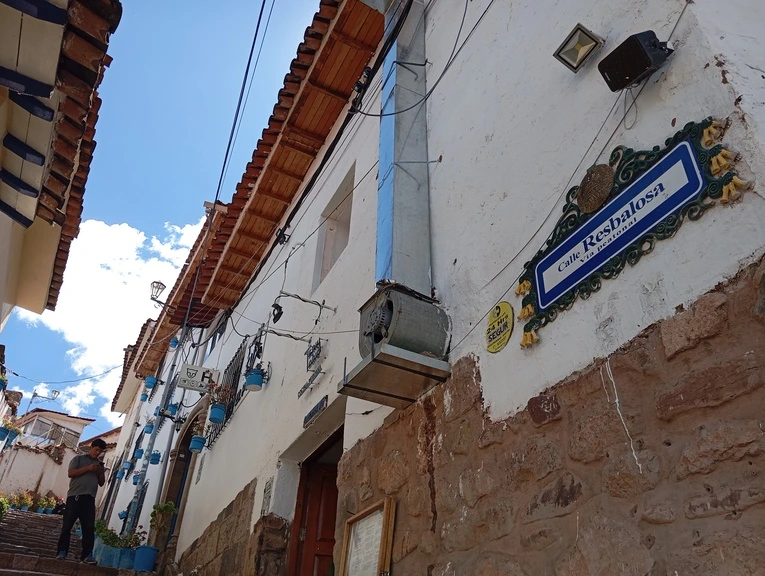
Over the centuries, the neighbourhood preserved much of its original layout. Its narrow streets, sillar stone passageways, and small squares reflect the traditional architecture that characterised the “White City” during the colonial period. Unlike other areas that were transformed by urban growth, San Lázaro maintained a quieter and more residential atmosphere.
Today, the neighbourhood is one of the areas with the greatest historical value in Arequipa. Surrounded by cafés, traditional picanterías, and walking routes, its alleyways offer visitors a close look at part of the city’s everyday past, just a few minutes from Arequipa’s historic centre and Plaza de Armas.
The Origins of Arequipa’s Oldest Neighbourhood

The San Lázaro neighbourhood is considered one of the oldest areas in Arequipa and preserves a history that dates back to the years before the Spanish foundation of the city in 1540. Long before the colonial period, this area already formed part of the settlements established in the Chili River valley, where different Indigenous communities developed agricultural and livestock activities by making use of the irrigation channels and fertile lands of the region.
In the past, the area was known as Llallinhuayo and was inhabited by the Yarabayas, as well as groups connected to the Collaguas, Lupacas, and other Andean populations that gradually arrived in the valley over time. The inhabitants lived in small hamlets built alongside pathways and water channels, forming one of the earliest populated centres in the area. Thanks to its strategic location, San Lázaro also became a meeting point between different cultures of the southern Andes.
In 1539, the Spanish arrived in the Chili River valley and found a territory that was already occupied and organised. The presence of water, the agricultural conditions, and the proximity to the river encouraged the establishment of the new colonial settlement. Shortly afterwards, the “Villa Hermosa de Nuestra Señora de la Asunta” was founded, becoming the origin of the present-day city of Arequipa. Decades later, the eruption of the Huaynaputina volcano in 1600 affected much of southern Peru and marked one of the most difficult periods for the population of the region.
The Yarabayas: The First Inhabitants of San Lázaro

The Yarabayas, belonging to the group known as the llactarunas — regarded as some of the earliest inhabitants of the Arequipa valley — were among the first communities to settle along the banks of the Chili River. Their presence in the area dates back several centuries before the Inca expansion and the arrival of the Spanish. The territory they occupied stretched from the present-day San Lázaro ravine to areas near Tingo, becoming one of the main pre-Hispanic centres of the valley.
Over time, the territory also came under the influence of other Andean groups, including populations linked to the Collaguas and the Chimbas, who settled near the banks of the Chili River. During this process, the Yarabayas developed agricultural systems adapted to the valley, building terraces and irrigation networks that allowed them to make use of water in a region characterised by arid land.
Hydraulic engineering was one of the greatest contributions of these communities. Through irrigation channels and underground canals, they managed to distribute water to farming areas and maintain supply across different parts of the valley. Part of these ancient hydraulic systems continued to be used during the colonial period and later served as the foundation for the urban growth of the city’s earliest neighbourhoods, including San Lázaro.
The Arrival of the Spanish and the Beginning of Change

The Spanish arrived in the Chili River valley in 1537 and found a territory already occupied by agricultural communities that had been established there for centuries. Among the first inhabitants to come into contact with the newcomers were the Yarabayas, settled on the left bank of the river in the area that would later become the San Lázaro neighbourhood of Arequipa.
During the early years, the relationship between the Spanish and the Indigenous population was shaped by the need for survival and adaptation to the territory. The Spanish made use of the agricultural knowledge developed by the Yarabayas, especially the systems of terraces, irrigation channels, and water canals that were already functioning in the valley. While the new colonial settlement was being organised, many of the newcomers temporarily settled in structures built by the local population.
On 15 August 1540, Captain Garcí Manuel de Carbajal, acting under the orders of Francisco Pizarro, officially founded the city under the name “Villa Hermosa de Nuestra Señora de la Asunta”. From that moment onwards, the territory began to be reorganised according to the colonial model, separating the Indigenous and Spanish populations into different administrative areas. Many native communities were relocated to towns such as Yanahuara and Cayma, although much of their agricultural and hydraulic knowledge continued to play an important role in the colonial economy of the region.
The Huaynaputina Eruption and the Disaster of 1600

One of the most devastating events of the colonial period in southern Peru took place on 19 February 1600, when the Huaynaputina volcano erupted. Recorded as one of the largest volcanic eruptions in the history of South America, the event had its epicentre in what is now the Moquegua region, around 65 kilometres from Arequipa. The explosion released enormous quantities of ash and gases that rose several kilometres into the atmosphere and altered the climate conditions across much of the Andean region.
The consequences quickly spread throughout the agricultural valleys of Moquegua, Arequipa, and Puno. Entire villages were covered in ash and mud, while crops, livestock, and trade routes suffered severe losses. Heavy rains, contaminated water sources, and food shortages led to famine and epidemics that affected both Indigenous and Spanish populations for years afterwards.
Despite the impact, the cities of the southern Andes gradually managed to recover. Reconstruction depended on agricultural reorganisation, the restoration of irrigation channels, and the reactivation of regional trade. In Arequipa, many of the hydraulic systems inherited from pre-Hispanic times once again became essential for sustaining production in the valley and supporting economic recovery during the 17th century.
San Lázaro During the Colonial Period

During the colonial era, the San Lázaro neighbourhood became established as one of the earliest Spanish settlements in Arequipa. Its development was closely linked to the city’s initial growth and it functioned as a transitional space between the ancient Indigenous settlements of the Chili Valley and the new urban layout imposed by the Spanish after the foundation of 1540.
Over the years, the neighbourhood became known for its narrow alleyways, cobbled passages, and houses built from sillar, the volcanic stone that would later become one of Arequipa’s main architectural symbols. Unlike the traditional grid layout used throughout much of the colonial city, San Lázaro preserved an irregular design inherited from ancient pre-Hispanic pathways and settlements.
Much of the sillar used in its buildings came from the Añashuayco ravine, an area that centuries later would become recognised as part of the present-day Sillar Route. Among the neighbourhood’s most representative spaces is Campo Redondo Square, one of the old gathering points of the area. Its name is linked to Captain Pedro Anzures de Campo Redondo, a figure associated with the first expeditions and colonial occupation processes in the region.
Expansion and Transformation of the Neighbourhood

The San Lázaro neighbourhood is considered the oldest area of Arequipa and one of the first spaces occupied during the early stages of the colonial city. Over the centuries, its growth and historical preservation helped consolidate the architectural identity of Arequipa’s historic centre, which is now recognised as a UNESCO World Cultural Heritage Site.
Unlike other areas designed under the Spanish grid system, San Lázaro developed in a more organic way. Its narrow alleyways, irregular passages, and small squares preserved part of the valley’s ancient layout. Among the best-known passages are Violín, Cristales, and Ripacha, all surrounded by buildings constructed from sillar, the volcanic stone characteristic of Arequipa. This material helped reinforce many homes against the constant earthquakes that shaped the city’s history from the 17th century onwards.
Already well established during the colonial period, the neighbourhood gradually acquired greater social and religious importance. The construction of the Church of San Lázaro and the development of Campo Redondo Square transformed the area into one of the main meeting points for the local population for several centuries.
The Coexistence of Two Cultures

The Yarabayas, ancient inhabitants of the Chili River valley, based their economy on agriculture and livestock long before the arrival of the Spanish. When the colonisers settled in the area during the 16th century, a process of coexistence and cultural exchange began that would directly influence the social and urban identity of Arequipa.
Unlike the rest of the historic centre, designed under the Spanish grid model, the San Lázaro neighbourhood preserved an irregular layout inherited from ancient Andean pathways. Its narrow streets, winding passages, and small squares reflect part of the valley’s original organisation before the official foundation of the city in 1540. In this context, Campo Redondo Square became established as one of the first meeting and transit spaces within the area.
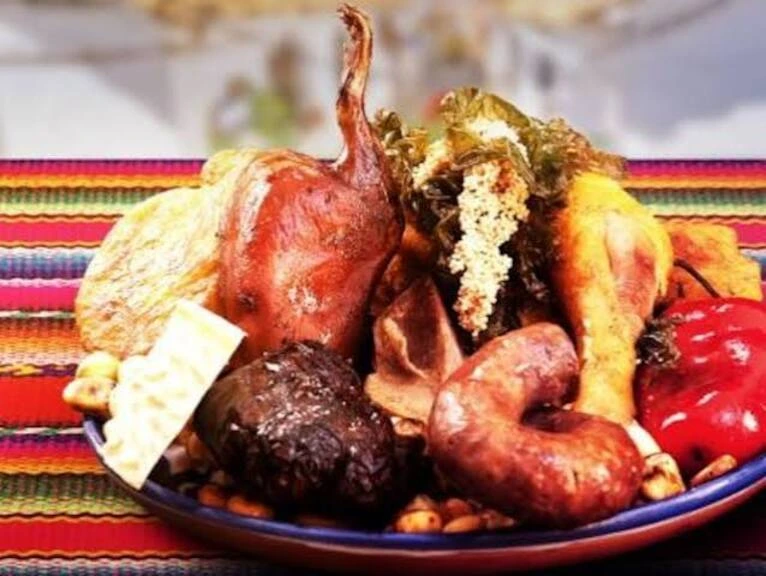
Over time, this coexistence also gave rise to new cultural and culinary expressions. Among the most notable are the traditional Arequipa picanterías, establishments that combined ingredients, techniques, and customs inherited from both Andean communities and Spanish cuisine. During the colonial period, these places served as gathering points for merchants, travellers, and local residents, preserving a culinary tradition that remains alive in the city today.
The Cultural Growth of San Lázaro

The San Lázaro neighbourhood, considered the oldest area of Arequipa, has undergone an important process of urban and heritage restoration in recent decades. What for many years was mainly a residential area has gradually become one of the city’s most representative historical and tourist spaces, while still preserving much of its traditional identity.
This process included the restoration of old sillar stone houses, small squares, and historic alleyways that form part of the neighbourhood’s original layout. Among the best-known spaces are Violín Alley and Combate Naval Alley, narrow streets that still preserve the urban structure inherited from the colonial period. This architectural restoration has helped protect the neighbourhood’s distinctive character and preserve part of the historical memory of central Arequipa.
Today, San Lázaro combines traditional homes with cafés, workshops, galleries, and small cultural spaces integrated into its historic surroundings. Its sillar streets and pedestrian passages have turned the neighbourhood into a quieter alternative to the constant movement of Arequipa’s historic centre.
Curious Facts About San Lázaro

After the foundation of Arequipa in 1540, the San Lázaro area began to be known as the “Old City” or the “San Lázaro scrubland”. During the colonial period, these names referred to its peripheral location in relation to the new Spanish urban centre. However, over time, the neighbourhood became established as one of the oldest and most representative historic sectors of the city.
Unlike the grid layout typical of colonial Arequipa, San Lázaro preserved narrow streets, irregular alleyways, and an urban organisation different from the rest of the historic centre. Although archaeology has not yet definitively confirmed the exact origin of this layout, several studies link its structure to ancient roads and settlements that existed before the arrival of the Spanish. This urban design has helped preserve part of the original configuration of the Chili Valley within the modern city.
The origin of the name “San Lázaro” is also part of the neighbourhood’s historical traditions. According to colonial accounts, one of the Spanish conquistadors became seriously ill shortly after arriving in the valley and was believed to have died. Some time later, he unexpectedly recovered, an event that local residents associated with the biblical figure of Lázaro, who is known for returning to life in the Gospel. From that moment onwards, the area began to be identified by that name, which has remained in use to the present day.
San Lázaro Neighbourhood Today

After centuries of urban and social transformation, the San Lázaro neighbourhood has become one of Arequipa’s main historical attractions. Its narrow streets, traditional alleyways, and sillar stone buildings now coexist with small hotels, cafés, galleries, and cultural spaces established inside former colonial mansions. The preservation of its original layout has allowed the neighbourhood to maintain an urban character distinct from the rest of the historic centre.
The neighbourhood has also become one of the city’s main gastronomic areas. Several traditional picanterías operate in and around San Lázaro, recognised for preserving recipes and culinary techniques inherited from the colonial period. Many of these dishes were born from the combination of Andean ingredients and customs brought by the Spanish during the 16th century, giving rise to one of the most representative cuisines in southern Peru. In addition to its architectural and culinary value, San Lázaro still preserves a daily atmosphere that reflects part of its historical past. Its small squares, sillar façades, and irregular alleyways maintain an urban structure that predates the Spanish foundation of the city. This legacy makes the neighbourhood one of the few areas in Arequipa where it is still possible to recognise elements linked to the ancient settlements of the Chili River valley.
What to See in the San Lázaro Neighbourhood

San Lázaro preserves much of the colonial urban layout that characterised the city’s earliest settlements. Its cobbled streets, narrow alleyways, and sillar stone buildings reflect the traditional architecture of Arequipa developed during the Viceroyalty of Peru. Among the main places to explore within the neighbourhood are the following:
- Sillar Architecture: Violín, Cristales, and Ripacha alleyways preserve houses built from white sillar, the volcanic stone characteristic of Arequipa. This material, historically extracted from nearby quarries such as Añashuayco, was used in many of the city’s colonial buildings.
- San Lázaro Square: Considered one of the neighbourhood’s main meeting points, this small square still preserves the traditional character of the area. Around it, visitors can still see old sillar houses, balconies, and alleyways that retain part of the neighbourhood’s original structure.
- San Lázaro Chapel: The neighbourhood chapel is one of the oldest churches in the city and formed part of the religious development of the early colonial years. Its presence helped establish San Lázaro as one of the most important urban centres of colonial Arequipa.
- Traditional Picanterías: San Lázaro is also well known for its picanterías, places where much of Arequipa’s traditional cuisine remains alive. Typical dishes and drinks such as chicha de guiñapo are part of a culinary tradition that combines both Andean and Spanish influences.
- Puente Grau and Surroundings: On the edge of the neighbourhood lies the area around Puente Grau, one of the historic connections between central Arequipa and districts such as Yanahuara. From this area, visitors can enjoy views of part of the Chili River valley and easily reach other historic sites in the city, including the Yanahuara Viewpoint.
How to Get to the San Lázaro Neighbourhood

The San Lázaro neighbourhood is located just a few minutes from Arequipa’s historic centre and can easily be explored from the Plaza de Armas. Thanks to its proximity, the most practical way to get there is on foot, although it is also possible to reach the area by vehicle from different parts of the city.
Walking Route
- The route begins at Arequipa’s Plaza de Armas, the main landmark of the historic centre. From there, head north along Santa Catalina Street, passing alongside one side of the Cathedral.
- Along the way, you will pass the Santa Catalina Monastery, located roughly two blocks from the square. Continue walking along the same street until you reach the intersection with Juan de la Torre Street.
- Turning right, you will find one of the main entrances to the San Lázaro neighbourhood. The full walk takes around 10 to 12 minutes and allows visitors to cross part of the historic centre before entering the neighbourhood’s traditional streets.
Route by Vehicle
- From different parts of the city, it is possible to arrive by taxi or private transport. The most commonly used route follows Jerusalén Street northwards and continues along Juan de la Torre Street, one of the main access roads to San Lázaro.
Must-Do Activities in the San Lázaro Neighbourhood

The San Lázaro neighbourhood is one of Arequipa’s most traditional areas and preserves much of the city’s historic layout. Its narrow streets, sillar stone buildings, and small squares have made it one of the most visited areas within the historic centre. Today, besides exploring it independently, many visitors include the neighbourhood in tourist circuits and guided walking tours.
Here are some activities worth including in your San Lázaro itinerary:
- Get Lost Among Its Sillar Streets: One of the main activities in San Lázaro is simply wandering through its alleyways and traditional passages. Streets such as Violín, Bayoneta, and Cristales preserve part of the urban structure inherited from the colonial period and allow visitors to admire old houses built from white sillar, the stone that characterises Arequipa.
- Join a Free Walking Tour of Arequipa: Many free walking tours around the historic centre include a visit to San Lázaro. During the tour, guides usually explain episodes related to the city’s foundation, colonial architecture, and the neighbourhood’s old legends. Some tours also connect the area with churches, viewpoints, and other nearby historic sites. If you are looking for a more personalised experience, private tours are also available and often provide more exclusive and memorable visits.
- Visit Traditional Cafés and Restaurants: Several former sillar mansions now house cafés, artisan bakeries, and small restaurants. These spaces are part of the neighbourhood’s urban restoration process and blend into the historic surroundings without altering its traditional structure. In addition to local cuisine, many establishments still preserve interior courtyards and architectural elements typical of colonial homes in Arequipa. There are also culinary tours that guide visitors to some of the city’s best spots to try Arequipa’s most traditional and flavourful dishes. If you have the opportunity to join one of these tours, it is definitely worth it!