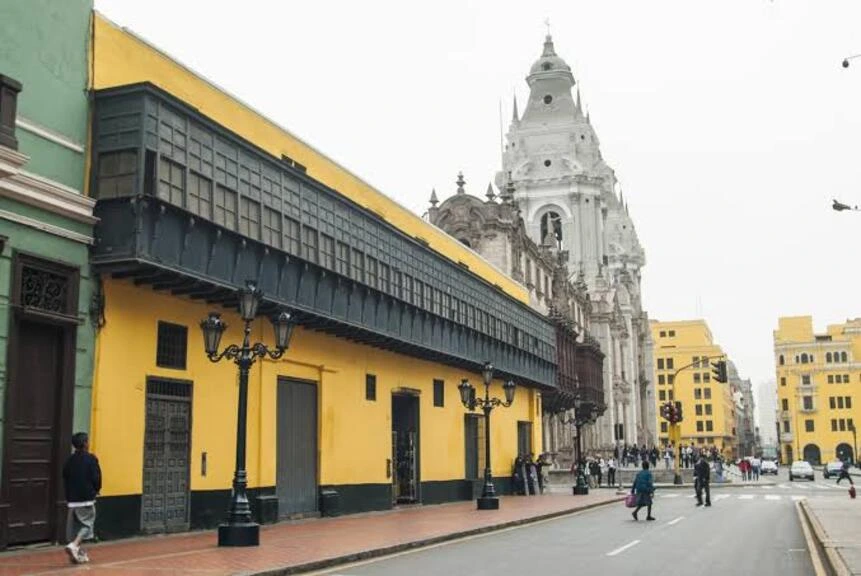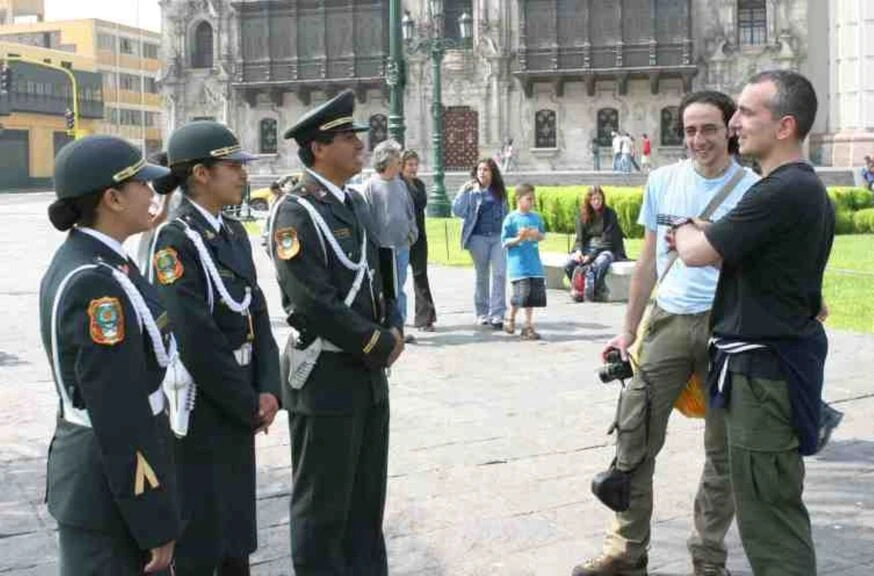

Every day in Lima’s Historic Centre, locals and visitors to the “City of Kings” pause in front of the gates of the Government Palace to witness a military ceremony that, due to its brilliance and emotion, stands out as one of the most striking traditions in the Peruvian capital.
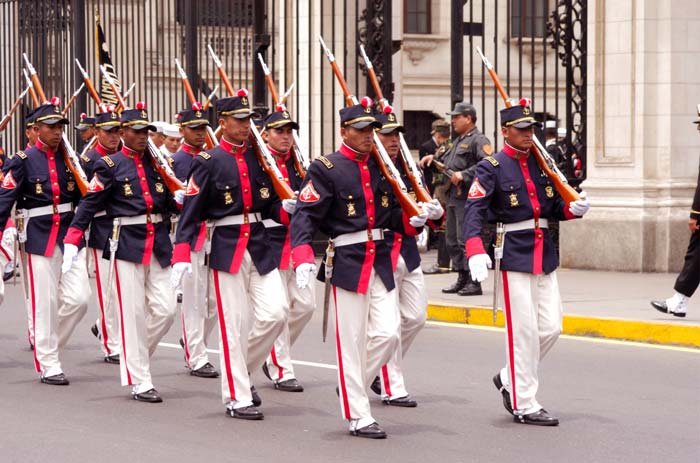
The Changing of the Guard is a military ceremony that dates back to colonial times. During this display, the energetic and perfectly synchronised movements of the soldiers who guard the seat of government and the presidential residence are accompanied by the stirring melodies of a live military band.
For these and many other reasons, it’s always a good idea to take a break from the rush and admire this patriotic and ceremonial ritual performed by the members of the Cavalry Regiment “Mariscal Domingo Nieto”, who serve as the Honour Guard of the Government Palace and the Official Escort of the President of the Republic.
When planning your visit to the old town, be sure to set aside time in your itinerary to enjoy the vibrant Changing of the Guard in the historic heart of the city — right at the centre of political power in a country that declared its independence on 28 July 1821.
A Journey Through History
The Changing of the Guard is a centuries-old tradition that began during colonial times, when what we now know as the Government Palace was referred to as the “House of Pizarro”, named after Francisco Pizarro — the conquistador of Peru and the first resident of this historic building in central Lima.
Back then, protection of the Viceroy — the representative of the Spanish Crown and the highest authority in the newly conquered land — was the responsibility of the Royal Spanish Infantry.
Once the republic was established, the duty of guarding the President and the Government Palace fell to various battalions of the Peruvian Army and the Civil Guard of Peru (now the National Police of Peru).
In the final decade of the 20th century and the early years of the 21st, the prestigious Cavalry Regiment “Glorious Hussars of Junín” served as the Government Palace Honour Guard, a role they proudly held from 1987 to 2012.
Today, it is the members of the “Mariscal Domingo Nieto” Regiment who carry out the perfectly timed and visually captivating Changing of the Guard you’ll see in the Honour Courtyard of the historic “House of Pizarro”.
How the Changing of the Guard Takes Place
Every day of the year, as the clock approaches noon, the Honour Courtyard of the Government Palace becomes a stage of tradition and splendour during the Changing of the Guard — a military ceremony carried out by the soldiers of the Escort Regiment “Mariscal Domingo Nieto”.
On special occasions, other military units or members of the National Police take charge of the guard change. In those cases, the music and uniforms vary, as do the ceremonial drills performed before the captivated audience, who delight in every detail of the spectacle.
The Beginning
At 11:45 a.m., the sound of a trumpet rings through the Honour Courtyard. Its piercing melody signals the beginning of the guard change — a much-anticipated ceremony for both locals and tourists who gather behind the iron gates that guard the grand residence of the President of Peru.
If you’re planning to visit Lima’s Historic Centre, it’s worth knowing that no ticket is required to enjoy this ceremonial event. If you’d like to secure the best view, it’s a good idea to arrive a few minutes early. The entire ceremony lasts around 30 minutes.
To the Rhythm of Music
The military band plays a key role in the Changing of the Guard. During the ceremony, they often perform European cantatas by composers such as Johann Sebastian Bach and Carl Orff, the latter known for the scenic cantata Carmina Burana. You’ll also hear stirring Peruvian marches such as:
- Peruvians pass by (Los peruanos pasan)
- Sesquicentenario
- Túpac Amaru
- The three guns (Las tres armas)
- Zarumilla
- Mayor state (Estado Mayor)
- The Salaverrina
As the band plays these rousing tunes, the soldiers march slowly and with measured precision. The guard change involves the relief of the current guards stationed in the courtyard by a fresh contingent taking over their post and duties.
Come and listen to some of Peru’s most iconic military themes — many of which are deeply influenced by the sounds and spirit of the Andes.
The Final Tunes
As the ceremony nears its end, the band plays classic and iconic pieces of Peruvian music — including marineras, huainos, and the world-famous El Cóndor Pasa, a zarzuela composed by the renowned Peruvian musician Daniel Alomía Robles.
Listen to Peru’s most internationally recognised piece of music: El Cóndor Pasa
Key Questions About the Changing of the Guard
Where does it take place?
In the Honour Courtyard (Patio de Honor) of the Government Palace, located on one side of Lima’s Plaza de Armas.
When and what time can I see it?
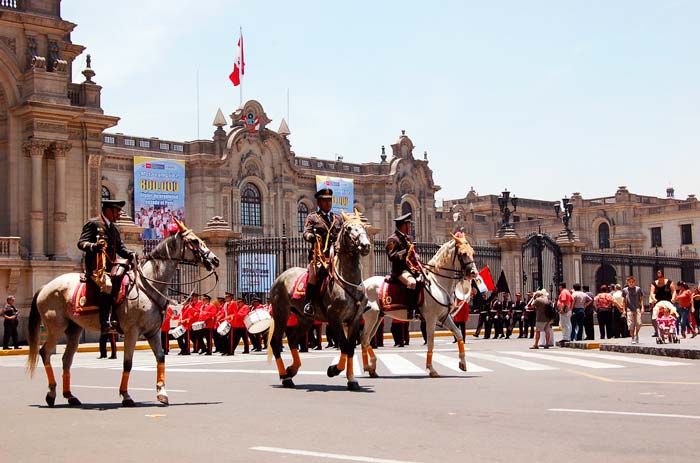
From Monday to Sunday at 11:45 a.m. The ceremony lasts until approximately 12:15 p.m. On special occasions, horses are also featured in this military ritual.
Do I need to pay to watch it?
No. You simply need to head to the gates of the Government Palace to witness this symbolic and majestic display of military tradition.
Can I join a guided tour for the Changing of the Guard?
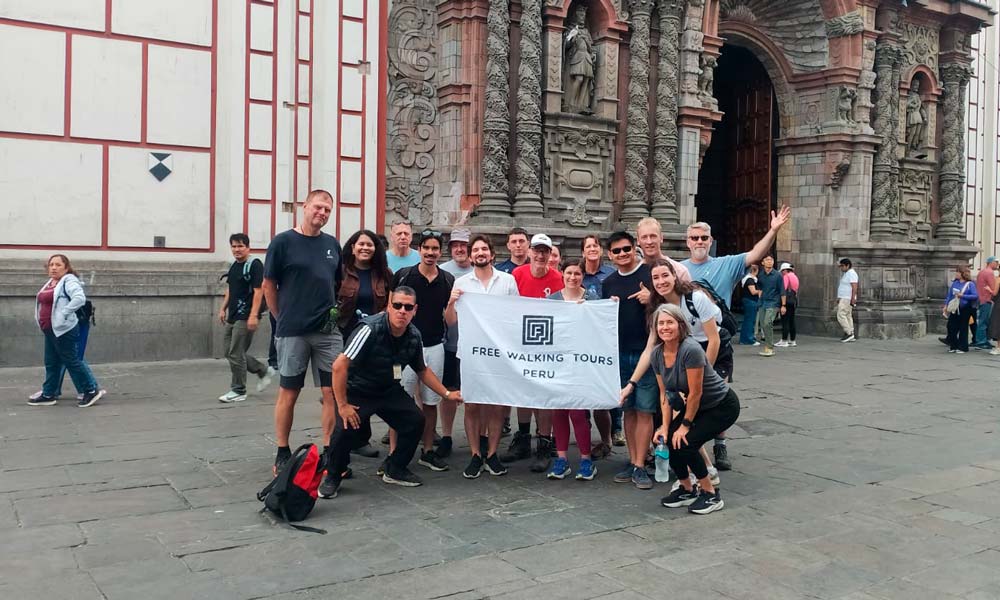
Absolutely! If you join our Free Walking Tour through Lima’s Historic Centre, you’ll be accompanied by a professional, knowledgeable guide on a 2.5-hour walk through the old city’s highlights — completely free of charge!
How do I join the Free Tour?
Just head to our meeting points or book your spot on Free Tour Lima from the Historic Centre or from Miraflores. Still unsure? Have a look at what our guests are saying on Facebook and Google — their reviews speak for themselves!
Nota para peruanos: Los free tours son solamente para el turismo receptivo. Los turistas nacionales pueden realizar el city tour clásico del Lima colonial y moderna.
Important: The Plaza de Armas is not our meeting point. Please check our website for full details.
How to Get to the Changing of the Guard?
If you’re staying in districts like Chorrillos, Barranco, Miraflores, San Isidro, Lince or La Victoria, your best option is the Metropolitano — a fast bus service that runs from south to north along a dedicated lane.
From any of those districts, hop on a Route C bus and get off at the Jirón de la Unión stop, a historic street just a few minutes’ walk from the Plaza de Armas.
If you’re coming from the north side of Lima (districts such as San Martín de Porres, Los Olivos, Independencia, Comas, or Carabayllo), take Route A and also get off at Jirón de la Unión. From there, it’s a 5-minute walk to the main square.
To use the Metropolitano, you’ll need a special card, which costs S/ 4.50 and can be bought at any station. The standard fare is S/ 3.20 per journey (trunk line fare).
If you’re in another district or don’t have access to a Metropolitano station, consider using a ride-hailing app like Uber, Cabify, Yango, or InDrive — these are generally the safest options.
There are also traditional street taxis in Lima. If you choose one, make sure to agree on the fare before getting in (don’t be afraid to negotiate a little). Be cautious — take a quick look at the driver’s face. If they inspire trust, hop in and enjoy the ride.
Free Walking Tours Peru
Secure your spot on our free tours led by professional, authorized, and expert guides in Free tour Cusco, Free tour Lima, and Free tour Arequipa. Booking is free!