

In Miraflores, one of Lima’s most cosmopolitan and touristic districts, you don’t have to leave the urban area to travel back to the pre-Hispanic past of ancient Peru. Just a 20-minute walk from Central Park (also known as Kennedy Park) takes you to an 1,800-year-old pyramid.
Surrounded by modern buildings, Huaca Pucllana—meaning “place to play” in Quechua—was a ceremonial and administrative centre built by the Lima culture. These were the first settlers of the area, long before the arrival of the conquistadors, and the site was later inhabited by various coastal and Andean civilisations.
Get ready to explore, by day or night, a pyramid made of adobe and clay, built in seven staggered platforms. Here, priests held ceremonies and performed rituals in honour of their gods—sun, moon, and other deities once banned by Western colonisers, but still alive in the hearts of Peru’s Indigenous peoples.
Step into millenary Lima, a city whose ancient heritage is often overshadowed by the grandeur of its Historic Centre. But this legacy is very real—and it’s stunning. It shows that ancestral cultures flourished in several of what are now the capital’s modern districts.
Huaca Pucllana is proof of this: a powerful archaeological site you must visit when in Miraflores. The great adobe pyramid is waiting for you.
A Glimpse into its History
The origins of Huaca Pucllana lie with the Lima culture, which thrived along Peru’s central coast between AD 200 and 700. They were the first—but not the only—people to settle in what is now the district of Miraflores.
Excavations carried out in the 20th century unearthed textiles, decorated ceramics, animal bones, stone tools, and remains of alpacas, llamas, guinea pigs, fish, bird feathers, and seeds and skins from squashes, beans and native fruits such as cherimoya, lúcuma, pacae and guava.
Archaeological research confirmed that the findings corresponded to the Lima, Wari (AD 500–1000), Ychsma (AD 1000–1470), and Inca (AD 1470–1535) cultures. Despite this rich history, the site was long neglected by citizens and the state alike, and urban development threatened its very existence.
It wasn’t until 1984 that serious archaeological work began. Three years later, the site was declared an untouchable archaeological zone, finally receiving the recognition and protection it deserves. You’ll feel this sense of historical importance as you walk through the site museum and the various areas of Pucllana, once the “playground” of the first residents of Miraflores.
Site Description


This archaeological jewel—the most important in Miraflores—survived the city’s expansion and is divided into two main sections: the administrative/urban sector and the ceremonial sector, separated by a large adobe wall running north to south.
Here’s what you’ll find in each area:
Administrative and urban sector: Located east of the wall, this area includes small buildings, plazas, ramps and courtyards. Experts believe it hosted public meetings to discuss local affairs such as managing the huaca and improving agricultural production.
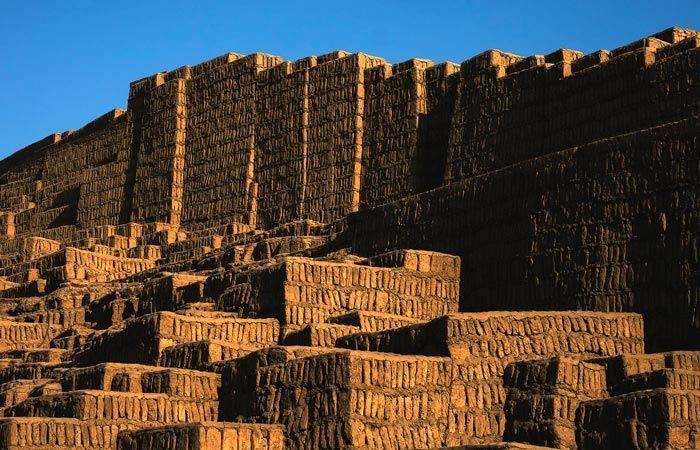
Ceremonial sector: To the west lies the largest pyramid on the site. Built entirely of adobe, it measures 500 metres long, 100 metres wide and 22 metres high. On top of this truncated pyramid, pre-Hispanic priests conducted sacred rituals honouring their gods and mythical ancestors.
What to See at Pucllana?
Your guided visit to the Huaca begins at thebase of the truncated pyramid, where you’ll see ceramics from the various cultures and civilisations that once inhabited Pucllana, long before the arrival of the Spanish and the founding of Lima—“The City of Kings”—on 18 January 1535.
At the start of the tour, you’ll be shown a technical scale model of the archaeological site, giving you a clear idea of its layout and the location of its sectors and enclosures within this historic corner of Miraflores.
Next, your guide will introduce you to Peru’s native flora and fauna. On the site, you’ll find llamas and alpacas—two of the four species of South American camelids (the others being the vicuña and the guanaco). These animals were, and still are, essential to the economy and culture of Andean peoples.
But the main attraction is the stepped, truncated pyramid itself. Oriented from southwest to northwest, it was built using adobe bricks placed vertically, following what is known as the “bookshelf technique”. This method involves leaving small gaps between the bricks to allow the structure to better withstand earthquakes.
An article published by Infobae explains that the walls of the huaca are “coated in fine clay, often painted yellow—a sacred colour for its builders. The pyramid and surrounding structures were built over layers of pebbles and sand, which cover even older constructions underneath.”
The excellent state of preservation of Pucllana is another highlight. If Lima is your first stop in Peru, this site offers a fascinating window into the country’s pre-Hispanic past.
The Site Museum: Opened in 1984, the on-site museum displays the artefacts and archaeological remains unearthed during excavations and restoration work. It is essential for understanding the cultural evolution of this ancient site, and is fully integrated into the visitor experience.
The Restaurant: Savour history—this could well be the motto of the Huaca Pucllana Restaurant. The menu offers creative, modern takes on traditional Peruvian dishes, all in a unique setting. The kitchen is led by chef Marilú Madueño, winner of the 2017 Summum Award, one of Peru’s top culinary honours.
Opening Hours & Ticket Prices
The Huaca Pucllana is closed on Tuesdays, but from Wednesday to Monday, you can visit both the archaeological site and the site museum between 9:00 a.m. and 5:00 p.m.
The general admission fee is 15 soles (around 4 USD).
If you’re planning a special evening visit, keep in mind that from Wednesday to Sunday, night tours are available from 7:00 p.m. to 10:00 p.m. Due to safety regulations, access to the upper section of the pyramid is restricted during night hours. The general admission fee for evening visits is 17 soles (around 5 USD).
Please note that in addition to Tuesdays, the site is also closed on major public holidays: 1 January, 1 May, 28 July, and 25 December.
How to Get to Huaca Pucllana?
If you’re staying near Kennedy Park in Miraflores or anywhere central within the district, skip the buses and taxis—walking or cycling is the best way to reach Huaca Pucllana, located on block 8 of General Borgoño Street.
The walk takes around 20 minutes. The easiest route is along Arequipa Avenue (which has a cycle lane), until you reach the intersection with Ayacucho Street. Turn onto Ayacucho and you’ll soon see the archaeological site come into view.
If you’re coming from Lima’s Historic Centre or the Barranco district, take the Metropolitano bus system, which runs from north to south across the city. In both cases, get off at Angamos station, then walk to Arequipa Avenue and follow the walking route mentioned above.
From downtown Lima (Cercado de Lima), board line C of the Metropolitano at stations like Central, Jirón de la Unión, or Colmena. From Barranco, go to Bulevar station and board line C. The fare is 3.20 soles and you’ll need a rechargeable transport card, available at the stations.
If you’re travelling from other parts of the city, taking a taxi is a good option. We recommend using ride-hailing apps like Uber, InDrive, Yango, or Cabify. Independent taxis (not painted a specific colour) are also available. In this case, agree on a fair price with the driver before getting in.
Free Walking Tours Peru
Secure your spot on our free tours led by professional, authorized, and expert guides in Free tour Cusco, Free tour Lima, and Free tour Arequipa. Booking is free!