Lima is not just the capital of Peru; it is a city where every street whispers stories that transport you back to the early days of the colonial era. As you walk through its squares and wander along its streets, it is impossible not to wonder: who was behind its foundation, and why did this event change the course of South America forever?
In this article, we invite you to travel back in time and discover how the ancient “City of Kings” was born, who the key figure behind this historic moment was, and how its creation transformed Lima into one of the most influential cities on the continent. It is a story that is not only told… it is experienced in every corner of the city, explaining why Lima continues to captivate those who visit it today.
Who founded Lima?
To uncover this story, we need to go back to the moment when the Spanish first arrived in America. From the city of Panama, in 1531, the first expeditions set out towards the territory of Peru, driven by ambition and the desire to explore the unknown. It was during the third expedition, led by Francisco Pizarro, that the Spanish landed on the shores of Tumbes and began their journey inland until they reached Cajamarca. There, one of the most decisive events in history took place: the capture of the last Inca ruler, Atahualpa.
This event, in 1532, marked the official arrival of the Spanish in Inca territory and triggered a series of conflicts that would change the destiny of the continent. However, the mighty Tahuantinsuyo was already going through a period of great instability. A civil war between the brothers Huáscar and Atahualpa had severely weakened the Inca Empire, leaving its foundations vulnerable.
In the middle of this situation, Francisco Pizarro knew how to take advantage of the circumstances. With the support of his men, superior weaponry, and the impact of diseases previously unknown in America, he managed to overpower the Inca civilisation. Thus began a new chapter: the colonial era. Shortly afterwards, on 18 January 1535, the city of Lima was founded under the name “City of Kings”. Today, as you stroll through its streets, you can still feel how this past remains alive in every corner of the city.
Francisco Pizarro and the conquest of Peru

Francisco Pizarro, born on 16 March 1478, was a key figure in the fall of the Tahuantinsuyo between 1532 and 1533. This process was the result of several years of explorations, failed attempts, and strategic alliances.
After the conquest of Mexico, stories began to spread about a wealthy territory in the south known as “Birú”. In 1524, Pizarro formed a partnership with Diego de Almagro and the priest Hernando de Luque to organise the so-called “Empresa del Levante”. Pizarro took command of the expedition, Almagro was responsible for recruiting men and gathering supplies, while Luque provided the financial support.
After two unsuccessful expeditions, during the third attempt in 1532, the Spanish finally reached what is now Peruvian territory. The circumstances worked in their favour. The Inca Empire had already been weakened by the civil war between Atahualpa and Huáscar. The capture of Atahualpa in Cajamarca allowed the Spanish to strengthen their position.
From this point onwards, Spanish control expanded rapidly. In 1535, Pizarro founded the city of Lima, initially known as the “City of Kings”, which would later become the main political centre of the territory. Inca resistance continued in remote regions. The Kingdom of Vilcabamba remained active for almost 40 years until its fall in 1572. With this event, Spanish control was firmly consolidated and the Viceroyalty of Peru became fully established.
The original name: City of Kings

Following the events that took place between 1532 and 1533, the process that would lead to the foundation of Lima began, culminating on 18 January 1535. This moment not only marked the beginning of the colonial era, but also the birth of a name filled with symbolism: the “City of Kings”.
This title was largely linked to its proximity to the Feast of the Three Wise Men (6 January), a coincidence that reinforced its religious significance. In addition, the name reflected the city’s political importance as the capital of the Viceroyalty, honouring the Spanish monarchs Carlos I of Spain and Juana I of Castilla.
This symbolism was also represented in the city’s coat of arms, where the Star of Belén and three crowns stand out as a clear reference to the Three Wise Men. Over time, the name “City of Kings” gradually fell out of use and was replaced by “Lima”, a term derived from the word “Rímac”, referring to the river that runs through the city.
The importance of Lima’s foundation
Following the foundation of the “City of Kings” in 1535, Lima gradually established itself as the main political centre of the territory. Years later, in 1542, with the creation of the Viceroyalty of Peru, the city officially assumed the role of capital.
The choice of location responded to strategic considerations. At first, Jauja was considered as the seat of power. However, its high altitude and distance from the sea made communication and supply routes difficult.
Faced with these limitations, the Spanish chose the Rímac Valley instead. This area offered permanent access to water, a more stable climate, and close proximity to the coast. It also provided a direct connection to the port of Callao, a key point for trade with Spain. Following this decision, the urban core that today corresponds to Lima’s historic centre was laid out. From there, the administrative, religious, and economic functions of the viceroyalty were organised, consolidating Lima as the centre of colonial power in South America.
Political centre of the viceroyalty of Peru

From its foundation in 1535, Lima gradually became the main centre of control within the territory. In 1542, with the creation of the Viceroyalty of Peru by Carlos I of Spain, the city was officially established as its capital.
The authority of the monarch in America was exercised through the viceroys. The first to arrive was Blasco Núñez de Vela, who assumed office in 1544. His government relied on the Royal Audience of Lima, the institution responsible for the administration of justice and political balance.
From Lima, the administration of vast territories across South America was directed, including present-day Peru, Ecuador, Bolivia, Colombia, Chile, and Argentina. This system was further consolidated in 1569 with the arrival of Francisco de Toledo, who reorganised the administrative structure, regulated the collection of taxes, and strengthened territorial control.
As a result of these reforms, Lima became firmly established as the principal political and administrative centre of the viceroyalty.
Cultural and religious influence

During the Viceroyalty of Peru, between the 16th and 19th centuries, life in Lima was deeply shaped by the organisation of the Catholic Church. The Archdiocese of Lima played a central role in the social structure and in the religious administration of the territory.
The Spanish Crown maintained control over ecclesiastical institutions through the system known as the Royal Patronage, which allowed religion to become closely integrated into the functioning of the government. Within this context, education, art, and cultural practices developed under strong religious influence.
Over time, these traditions blended with local customs. This process gave rise to a form of syncretism between Andean and European elements, visible in festivals, artistic expressions, and everyday practices that continued throughout the viceregal period.
Urban growth and colonial architecture

During the Viceroyalty of Peru, Lima experienced steady urban growth. From its foundation in 1535, the city was designed in a grid layout, following the Laws of the Indies, which regulated the organisation of cities throughout the Americas.
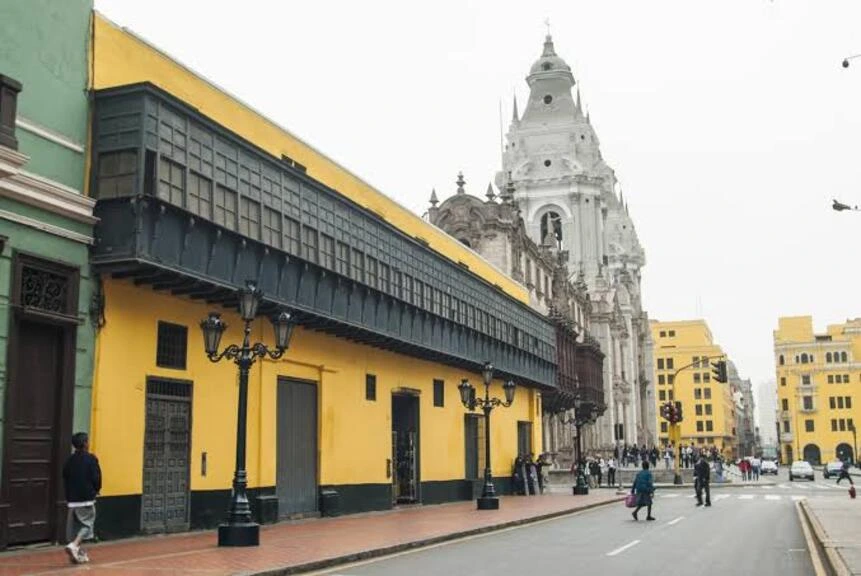
Development was concentrated around Lima’s Main Square. The principal institutions of power were located there, including the Government Palace of Peru, Lima Cathedral, and the residences of the ruling classes. From this central core, the city gradually expanded into new residential and commercial districts.
The architecture reflected this evolution. European styles such as Renaissance, Baroque, and Neoclassical were introduced and adapted to local conditions. Churches and convents fulfilled religious, educational, and social functions within the urban landscape.
Construction techniques also adapted to the region’s seismic activity. Materials such as quincha and adobe were widely used, as they were better suited to earthquake-prone areas. These methods allowed for the construction of more flexible structures capable of withstanding the frequent tremors experienced in the region.
Importance in South America
During the period of the Viceroyalty of Peru, especially between the 16th and 17th centuries, Lima established itself as the main centre of Spanish power in South America. From the city, the administration of vast territories across the continent was directed under the authority of the viceregal government and the Royal Audience of Lima.
Its importance was also shaped by the economy. The silver extracted from Potosí drove Lima’s growth and its integration into the commercial routes of the Spanish Empire. These resources were transported to the coast and shipped to Europe through Callao, which functioned as the main outlet of the viceroyalty.
As a result of this dynamic, Lima became firmly established as both a political centre and a key commercial hub within the Spanish colonial system.
Historical and cultural heritage

The legacy of the Viceroyalty of Peru shaped the political and cultural organisation of the territory. During this period, a colonial system was established that integrated Indigenous, European, and African populations within the same administrative structure.
On an institutional level, the viceroyalty introduced systems of government that would later influence the republican era. Institutions such as town councils, royal courts, and administrative systems organised territorial control and the administration of justice.
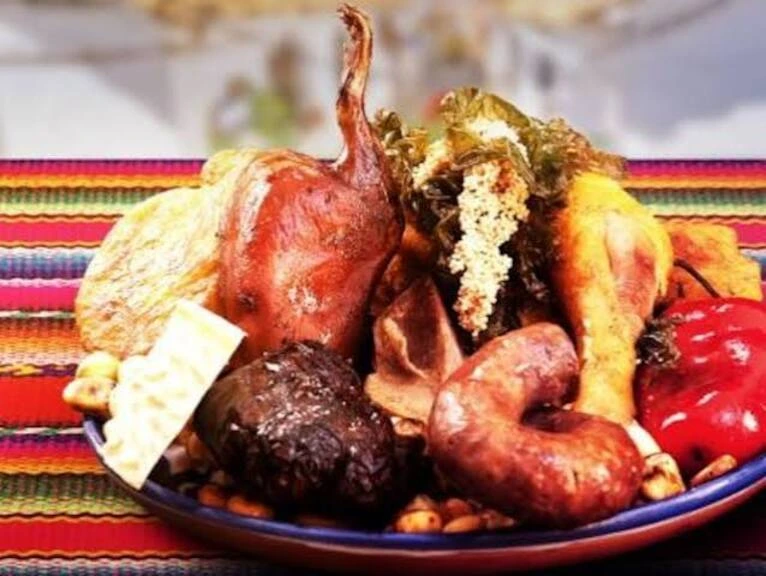
In the cultural sphere, this process gave rise to mestizaje, or cultural mixing. The blending of traditions can still be seen in language, gastronomy, and everyday customs. Within this context, the Catholic religion became firmly established as the centre of social life, integrated into political structures through the colonial system.
The foundation of Lima, led by Francisco Pizarro on 18 January 1535, established an urban centre intended to concentrate the political, religious, and administrative power of the Viceroyalty of Peru. This original space was designed following an organised layout, with the central square serving as the main point of organisation.
From this starting point, the principal buildings and institutions that shaped the city during the colonial period were developed. These spaces guided Lima’s urban expansion and defined how the city functioned in the centuries that followed.
Below are some of the most representative places for understanding the historical formation of the city.
Plaza de Armas of Lima

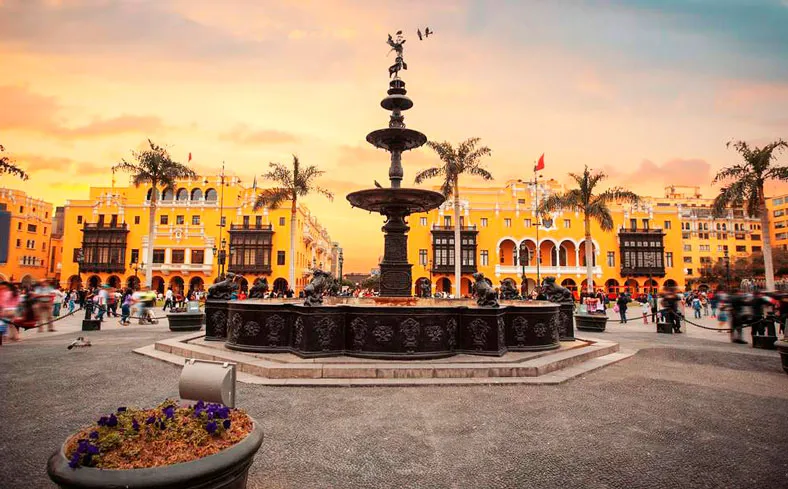
The Plaza de Armas of Lima, also known as Plaza Mayor, is the exact place where the city was founded in 1535. From the very beginning, it served as the central point of the urban layout designed according to the traditional grid system.
Around the square, the main institutions of colonial power were established, including the government, the church, and the residences of the ruling classes. This space concentrated political administration and social organisation throughout the viceregal period.
Over time, the square maintained its central role. To this day, it continues to be the main setting for official ceremonies and public events in the city.
Lima Cathedral

Lima Cathedral was built shortly after the foundation of the city in 1535, on one side of the Plaza Mayor. From that moment onwards, it became part of the institutional core that shaped the urban space during the colonial period.
Its construction developed in stages and evolved over time, incorporating elements of Renaissance, Baroque, and Neoclassical styles. These transformations responded both to changing artistic trends and to reconstruction efforts following the earthquakes that affected the city.
In addition to its religious function, the cathedral played a role in the evangelisation process promoted by the Spanish Crown. Inside, several spaces and elements connected to the early years of Spanish presence have been preserved, including the tomb of Francisco Pizarro.
Government Palace of Peru

The Government Palace of Peru stands on the very site where Francisco Pizarro established his residence after the foundation of Lima in 1535. Since then, this space has remained closely linked to the exercise of political power.
During the Viceroyalty of Peru, it served as the residence of the viceroys, who governed the territory on behalf of the Spanish Crown. From here, decisions were made that affected much of South America.
Today, the palace continues to fulfil this role as the seat of the Executive Branch. Its location facing Lima’s Plaza de Armas connects it directly to the original core from which the city was organised.
Lima today: living history for tourism
The process of conquest and colonial organisation transformed the ancient territory known as “Birú” into the Viceroyalty of Peru, establishing new political, economic, and social structures from the 16th century onwards.
Within this context, Lima became the main centre of power. From its foundation in 1535 as the “City of Kings”, it concentrated administrative decisions and territorial control. Over the centuries, it became the setting for the most important events of colonial Lima. Below, we present Lima’s Historic Centre, one of the key places for understanding this stage in the city’s history.
The Historic Centre as a tourist attraction

To understand what makes Lima’s Historic Centre so special, it is important to look at its different layers of history. Within this space, traces of pre-Hispanic settlements — such as those of the ancient Ychma culture — coexist with the urban layout established after the Spanish foundation in the 16th century.
This area was declared a UNESCO World Heritage Site in 1988, in recognition of its historical and urban value. Its grid-style design, defined from 1535 onwards, organised the city’s growth and concentrated the principal institutions of colonial power.
Within this historic core stand important landmarks such as Lima’s Plaza de Armas, Lima Cathedral, and the Government Palace of Peru. Around them, churches, convents, and colonial mansions developed, shaping the city’s urban structure throughout the viceregal period.
Experiences such as walking tours

If you decide to explore Lima’s Historic Centre on your own, you will be able to follow the city’s original layout, admire its architecture, and identify the main spaces linked to the colonial period. It is a direct way to understand how Lima was organised following its foundation in 1535.
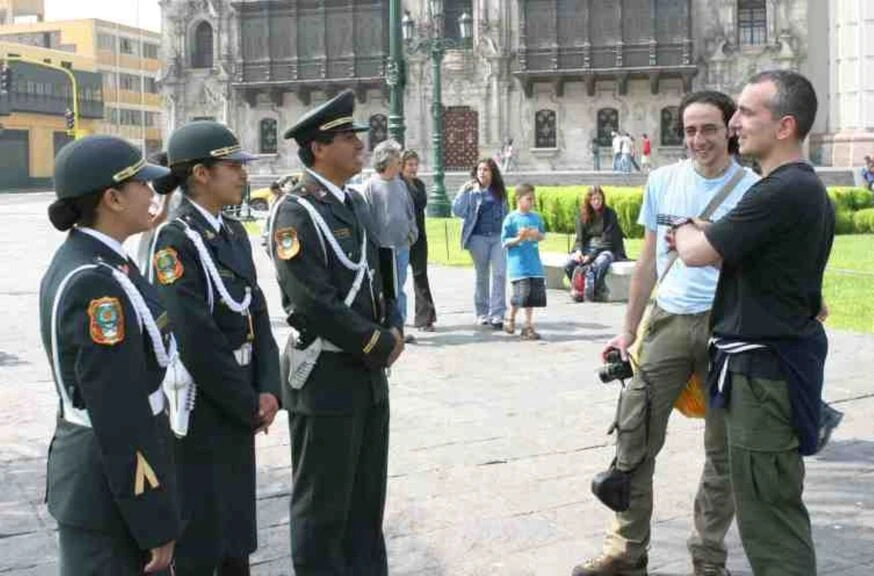
For a guided visit, free walking tours offer a more detailed interpretation of the area. With the help of a guide, it becomes easier to identify streets, buildings, and key locations connected to the origins of the city and the functioning of the Viceroyalty of Peru. These tours usually operate on a voluntary contribution basis at the end of the experience.
There are also options with specific schedules, such as Sunday tours, as well as private services for those seeking a more personalised experience within the same historic circuit.