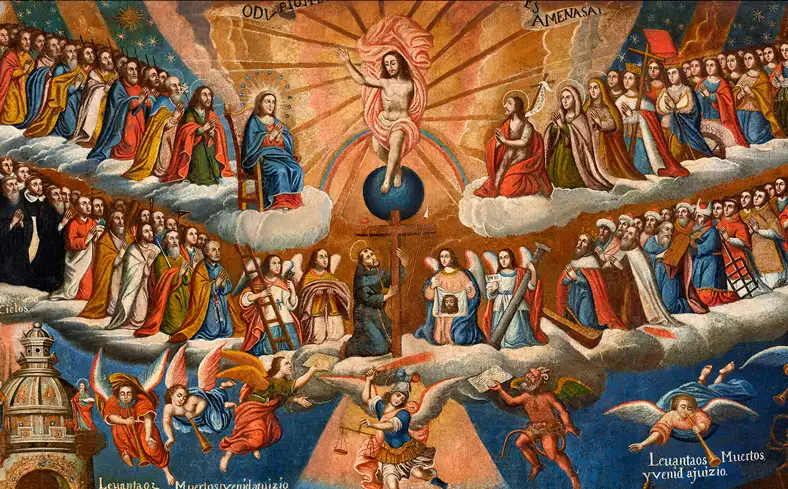
Behind the gold leaf and majestic biblical scenes that adorn viceregal temples lies one of the most fascinating artistic revolutions in Latin America: the Cusco School of Painting. Born in the heart of the Andes between the 16th and 18th centuries, this artistic movement was not simply a copy of the European Renaissance or Baroque, but rather a complex process of religious syncretism and cultural resistance. In each brushstroke, Indigenous and mestizo masters managed to assimilate Western academic techniques and reinterpret them through their own cosmology, infusing sacred art with the symbolism of Pachamama, the apus, and native iconography.
If you are passionate about art history or are planning your cultural tour of Cusco’s Historic Center, join us as we explore its evolution, its leading figures such as Diego Quispe Tito and Marcos Zapata, and the masterpieces of colonial painting that turned the former Inca capital into the artistic center of South America.
1. Origins and Characteristics of Cusco Painting
The Cusco School of Painting emerged during the Viceroyalty of Peru between the 17th and 18th centuries, as a result of profound cultural mestizaje in which Italian and Spanish artists introduced late Renaissance and Mannerist techniques to Andean culture. These techniques were later reinterpreted by Indigenous and mestizo masters to express their own worldview. It all began with the arrival in Cusco and Lima of painters such as Bernardo Bitti, Mateo Pérez de Alesio, and Angelino Medoro, who around 1583 introduced these European artistic currents. Their development accelerated when friars and masters established workshops to teach drawing and oil painting to Indigenous and mestizo artists for the purposes of Catholic evangelization. The process gained new momentum after the 1650 earthquake, when Bishop Manuel de Mollinedo y Angulo promoted the reconstruction of temples under artistic patronage that paved the way for the Cusco Baroque.
Diego Quispe Tito (1611–1681), born in the parish of San Sebastián and a nobleman of Inca ancestry, is considered the spiritual leader and initiator of the Cusco School’s autonomous identity. He was the first Indigenous painter to demonstrate that European art could be assimilated and radically transformed. His legacy rests on three major contributions:
- The appropriation of the Andean landscape: Instead of reproducing Europe’s idealized backgrounds, he introduced landscapes featuring local flora and fauna, particularly birds—including the jungle parrot—which some researchers interpret as a hidden symbol of Andean resistance.
- The use of Flemish prints: He used prints from the Low Countries as a foundation, reinterpreting them with a vibrant color palette that broke with traditional European geometric perspective.
- The introduction of Inca nobility: In works such as The Last Judgment, he dared to portray members of the Inca aristocracy wearing the mascapaicha and inhabiting paradise.
Years later, Indigenous painters themselves would break away from the rigidity of European academic traditions. In 1688, following persistent tensions over who should carry the triumphal arches during the Corpus Christi festivities, Indigenous and mestizo masters formally separated from the Spanish guild, citing the exploitation they suffered at the hands of their colleagues, a minority that had controlled the trade until then. This separation gave them complete freedom to paint according to their own sensibilities and worldview, thereby consolidating a genuinely autonomous and Andean Cusco School.
Historical Context: Cultural Resistance
Although colonial painting emerged as a tool for religious instruction due to the difficulty of catechizing people in native languages, over time it became a means of cultural resistance. Local artists adopted European techniques without abandoning their own worldview.
The work was carried out in collective workshops where recognized masters supervised journeymen and apprentices. This production model was so effective that, by the 18th century, the fame and export of Cusco canvases had spread to regions such as Puno, La Paz, Sucre, Buenos Aires, and Santiago de Chile.
Cultural Mestizaje and Religious Syncretism
Unlike other Spanish American centers (such as Quito or New Spain) and Spanish painting, which was characterized by asceticism, Cusco’s artistic production stood out for its pantheistic perspective linked to the land, nature, festivities, and sumptuous clothing.
From this convergence emerged a syncretic aesthetic that incorporated biblical sacred figures dressed in traditional clothing and featuring Andean iconography. The greatest testimony to this fusion of European sacred elements and Andean earthly traditions is the famous series of sixteen Corpus Christi canvases, preserved at the Museum of Religious Art of the Archdiocese of Cusco.
2. Historical Evolution of Cusco Painting

The Cusco School underwent a continuous process of transformation over three centuries, shaped by the local assimilation and reinterpretation of three major European artistic movements: Mannerism, Baroque, and Neoclassicism.
Italian Influence and Mannerism
During the economic boom of the Viceroyalty, between the 16th and 17th centuries, prominent European masters arrived in Peru, bringing new techniques with them. Among them was Mateo Pérez de Alesio, a former collaborator of Michelangelo at the Sistine Chapel, and the Jesuit Bernardo Bitti, whose Mannerist elegance and use of color laid the iconographic foundations for evangelization in the region.
Colonial Baroque and the New Local Style
During the 17th and 18th centuries, under the spirit of the Counter-Reformation, Italian and Flemish influences evolved into an American Baroque that adopted diagonal composition, aerial perspective, and chiaroscuro. During this mature period, several major local masters stood out:
- Diego Quispe Tito: A leading figure of the early Baroque, characterized by formal freedom in his treatment of the Andean landscape, as seen in works such as The Flight into Egypt.
- Basilio de Santa Cruz Pumacallo: A representative of the mature Baroque, with a strong influence from Spanish painting and a dynamic, highly decorative compositional style.
- Marcos Zapata: One of the most prolific painters of the 18th century, renowned for leading large collective workshops alongside masters such as Mauricio García, Chacón, Vilca, and Tadeo Escalante.
Neoclassicism and the End of the Colonial Era
By the end of the 18th century, Neoclassicism was introduced, a style that sought a return to academic rigidity and Greco-Roman ideals. However, this movement never achieved the popular appeal or expressive power that mestizo Baroque had consolidated within Cusco’s identity.
3. Famous Works of the Cusco School You Should Know
The Cusco School produced thousands of canvases over three centuries, but certain works masterfully bring together its most distinctive conceptual and stylistic elements. These paintings stand out not only for their technical and compositional value, but also because they are among the most accomplished visual expressions of the dialogue between European art and the Andean worldview.
Below, we examine some of the most representative paintings that you should see during your visit:
The Last Supper by Marcos Zapata

Located on a wall between the central nave and the sacristy of Cusco Cathedral, this work was painted in 1753 at the request of treasurer Diego Felipe de Barrio y Mendoza and measures approximately 6.35 metres high by 5.67 metres wide. It is the most famous example of Andean-Spanish syncretism: instead of the traditional Paschal lamb, the Eucharistic table features a roasted guinea pig—although some scholars argue that it could be a vizcacha, considered a spiritual guardian of lakes and mountains in the Andean worldview—accompanied by chili peppers, local fruits, and chicha de jora. Likewise, the face of Judas Iscariot has been interpreted by various critics as a disguised portrait of Francisco Pizarro.
Our Lady of Almudena and the Mountain Virgins
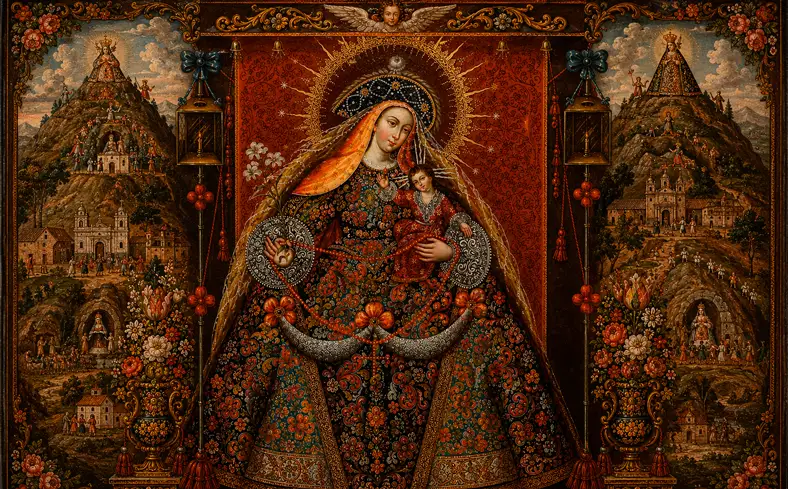
These Marian devotions, whose popularity in painting grew from 1673 onwards with the patronage of Bishop Mollinedo y Angulo, show how the figure of the Virgin Mary was conceptually associated with Pachamama (Mother Earth). The so-called Mountain Virgins feature triangular silhouettes that directly allude to the shape of the apus (sacred guardian mountains), decorated with meticulous gold brocade and floral details. Meanwhile, Our Lady of Almudena, attributed to the prominent Indigenous master Juan Tomás Tuyro Túpac, became one of the most venerated and representative Marian images in Cusco Cathedral.
The Return from Egypt by Diego Quispe Tito
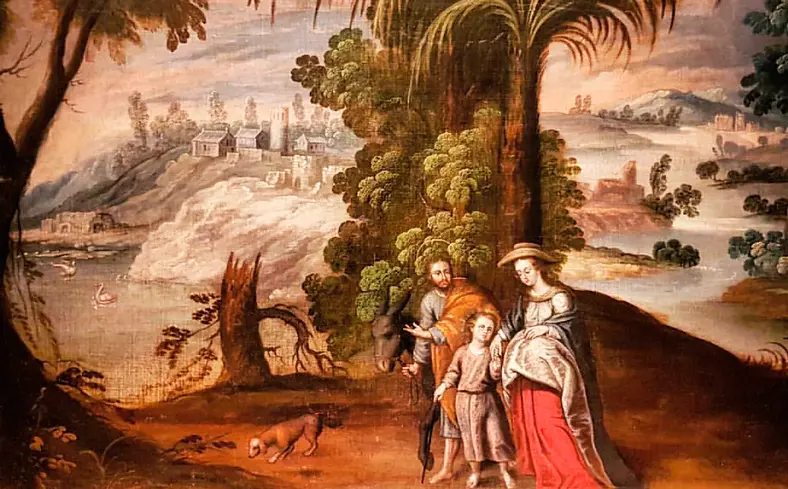
Painted around 1675 by the artist considered the leading figure of the Cusco School, this canvas is a quintessential example of the use of local space to narrate biblical stories. The sacred figures move through an environment dominated by the geography, fauna, and native architecture of the Cusco Andes. The clothing worn by the Virgin and the angels also stands out, adorned with sumptuous details and brocade that reflect the distinctive Andean decorative sensibility.
4. Where to See the Cusco School During Your Trip to Cusco
To fully appreciate the artistic and historical value of the Cusco School, it is essential to view its works in the settings for which they were originally created. Much of this artistic production is preserved inside the churches, convents, and museums of the Historic Center, where the viceregal architectural setting enhances the richness of each canvas.
Below are the main collections and must-see churches to include in your cultural itinerary:
Cusco Cathedral: The Largest Collection
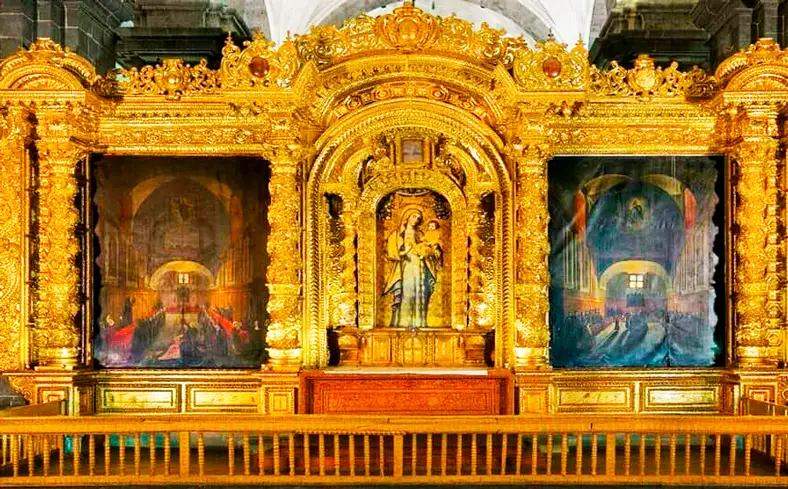
Built between 1560 and 1664, the Cathedral Basilica houses the largest concentration of Cusco School canvases preserved in their original setting. Its naves and chapels display complete pictorial series by masters such as Marcos Zapata and Basilio de Santa Cruz, including the famous Last Supper.
Travel note: A visit to this monument is included in the traditional Cusco City Tour itinerary.
La Compañía de Jesús and La Merced Church
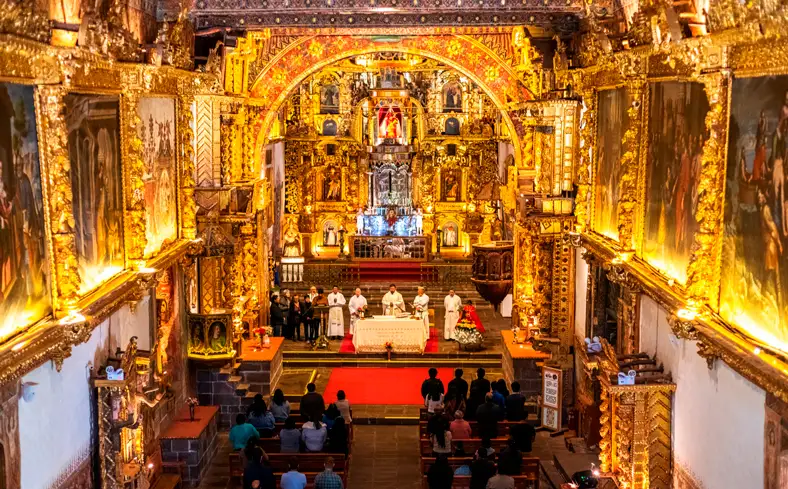
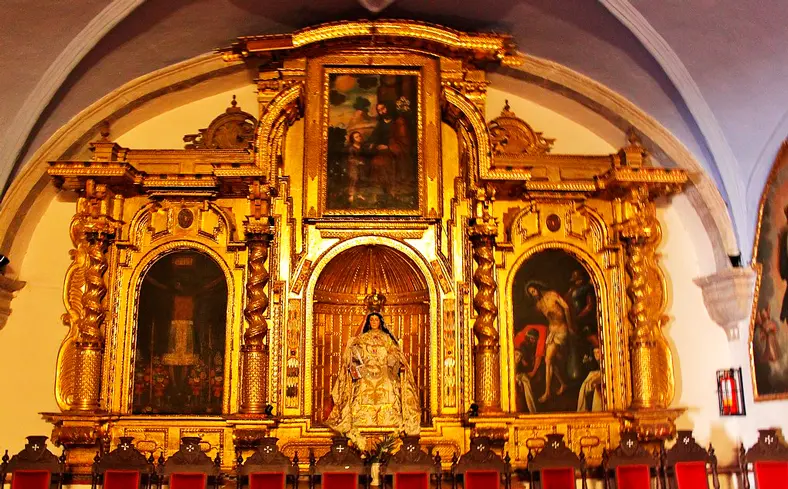
Located in the heart of the Historic Center, these emblematic Baroque churches house outstanding collections from the 17th century:
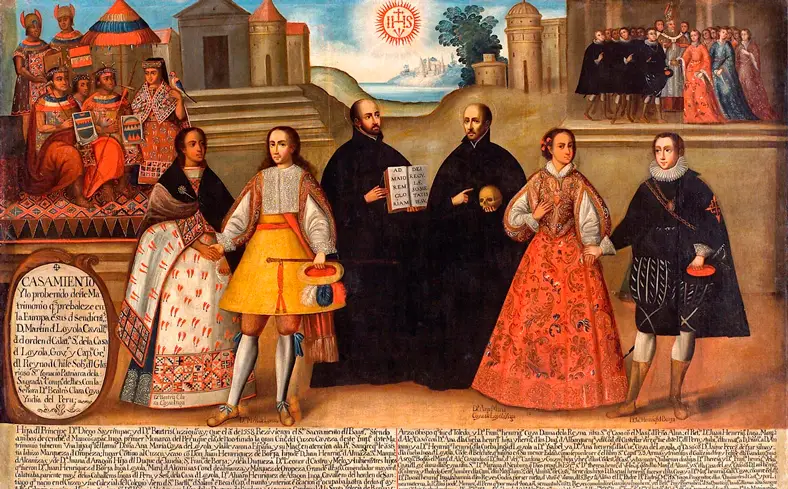
- La Compañía de Jesús: Built over the former palace of the Inca Huayna Cápac and declared a World Heritage Site in 1983, it preserves original works by Bernardo Bitti. Particularly noteworthy is the iconic anonymous canvas depicting two important marriages of the period: the union of Captain Martín García de Loyola and the ñusta Beatriz Coya in 1572, and that of their mestiza daughter, Ana María Lorenza, with Juan de Borja in Madrid in 1611.
- La Merced Convent: It displays important series dedicated to the lives of Saint Peter Nolasco and Saint Francis of Assisi.
Museum of Religious Art (Archbishop’s Palace)
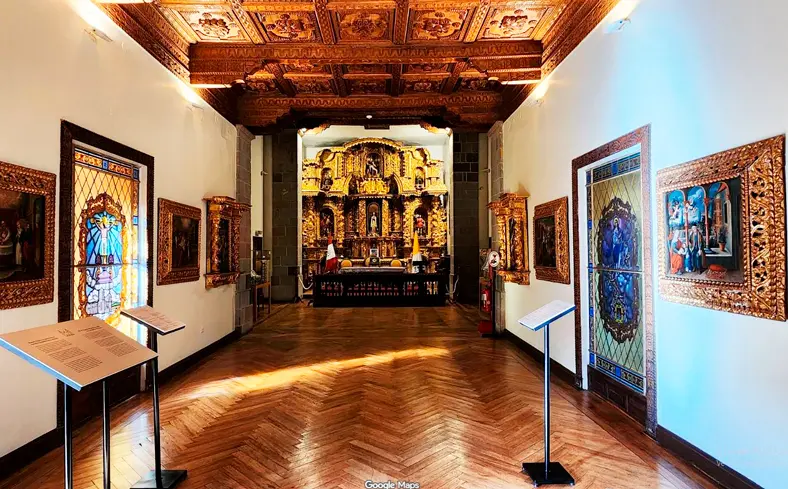
Located at the intersection of Hatun Rumiyoq and Herrajes streets—on the foundations of the former palace of the Inca Roca—this museum houses treasures of colonial art. Its main attraction is the complete Corpus Christi series: sixteen canvases from the late 17th century that constitute an invaluable sociological and historical record of the procession, clothing, and hierarchical society of viceregal Cusco.
Final Recommendations for Visitors

Before setting out to explore the legacy of the Cusco School, it is worth keeping a few practical details in mind that will enhance your experience:
- Photography and conservation: In most churches and museums, the use of flash and even direct photography is strictly prohibited. This is an essential measure to protect pigments that are more than three centuries old from light-related deterioration.
- Take advantage of natural light: It is recommended that you visit the Cathedral and La Compañía de Jesús Church in the early morning, when natural light filtering through the windows illuminates the details of the gold leaf (brocade) and the color nuances of the canvases more clearly.
Discover Colonial Art with Experts
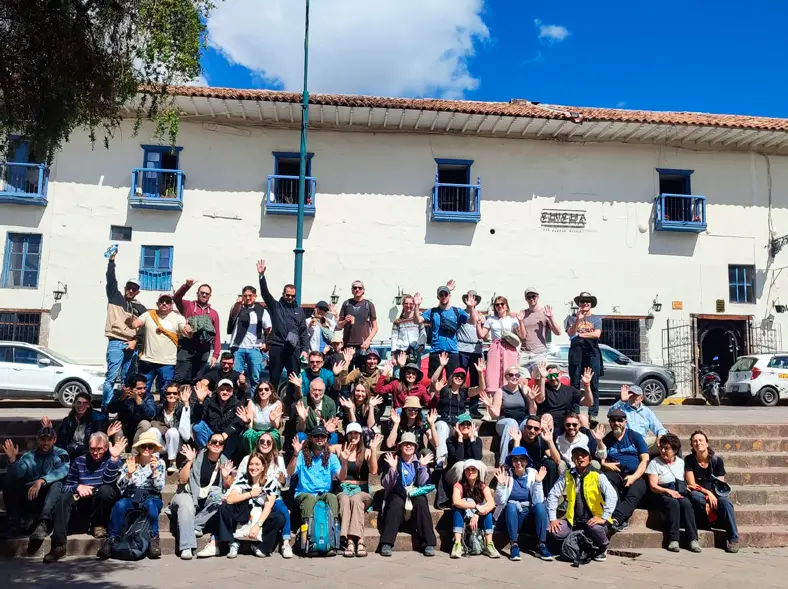
If you would like to explore the history of the Cusco School in greater depth and see its works in their original context, you can join our guided tours: Free Walking Tour Cusco, Free Tour Lima, and Free Tour Arequipa. Led by accredited professional guides, these tours will help you decipher, canvas by canvas, the hidden codes of Andean-Spanish syncretism that continue to fascinate art historians around the world.