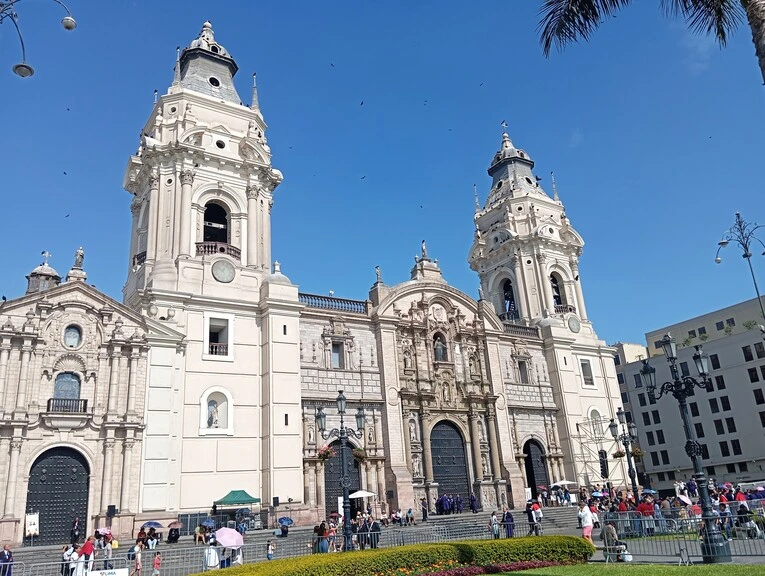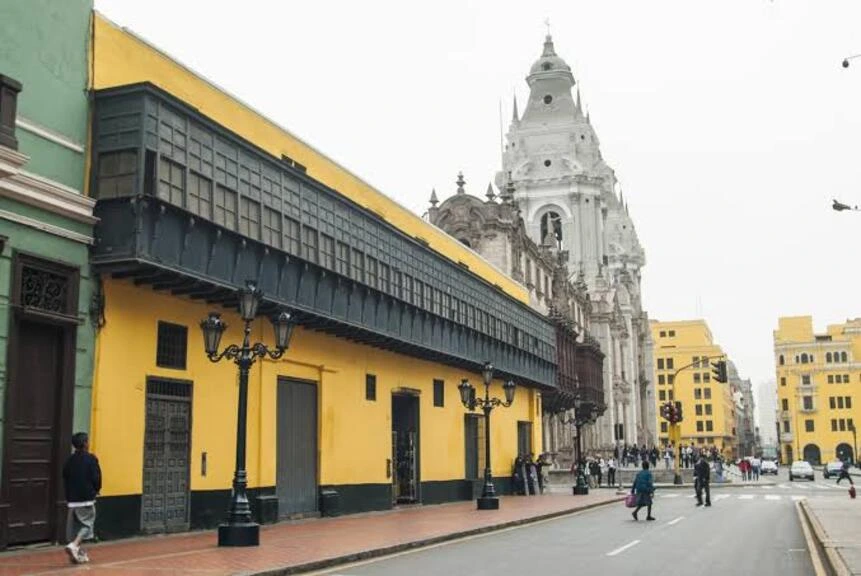
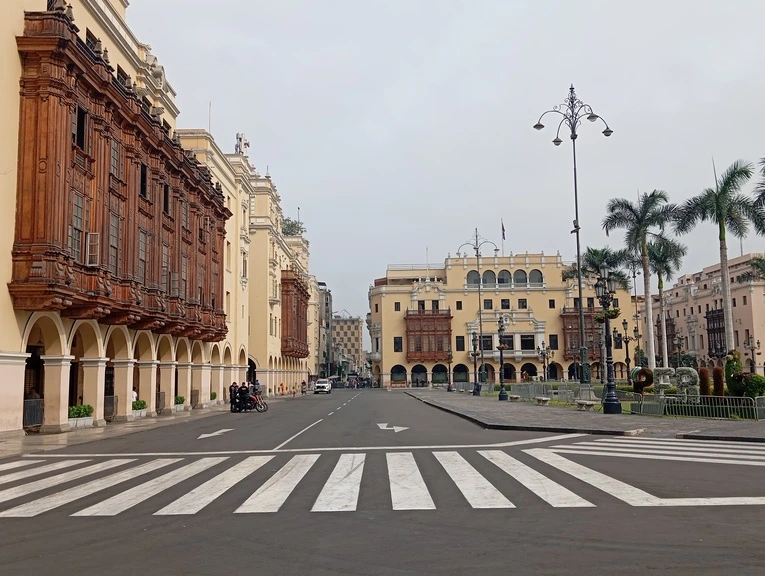
The Lima of old, the Lima of today, the Lima that captivates visitors with its grand mansions, churches, and convents, also enchants through its streets steeped in tradition and history. These characteristics transform its avenues into pathways that connect you with the viceregal past of the city founded by the Spanish conqueror Francisco Pizarro in the Rímac River Valley on 18 January 1535.
Declared a UNESCO World Heritage Site in 1991, the Historic Centre of the “City of Kings” — its original founding name — “possesses all the elements and physical characteristics that convey its Outstanding Universal Value”, serving as “a testimony to the architecture and urban development of a Spanish colonial city of great political, economic, and cultural importance in Latin America”.
These are some of the criteria that justified UNESCO’s decision and, at the same time, they are compelling reasons to explore “Old Lima”. So, get ready to wander through the city centre, discovering its architecture, historical events, and the stories that give a distinctive character to the streets, avenues, and passageways awaiting you. You will enjoy uncovering them at a leisurely pace when your travel plans bring you to Peru and the “City of Kings”.
To inspire and tempt you, below you will find a guide to the most famous streets of the “Three Times Crowned City”, another name given to the metropolis that, during the viceregal period, was the most important political, economic, and administrative centre in South America. This significance is still evident in its architecture, which, despite the passing of centuries and numerous earthquakes, remains standing to this day.
Jirón de la Unión
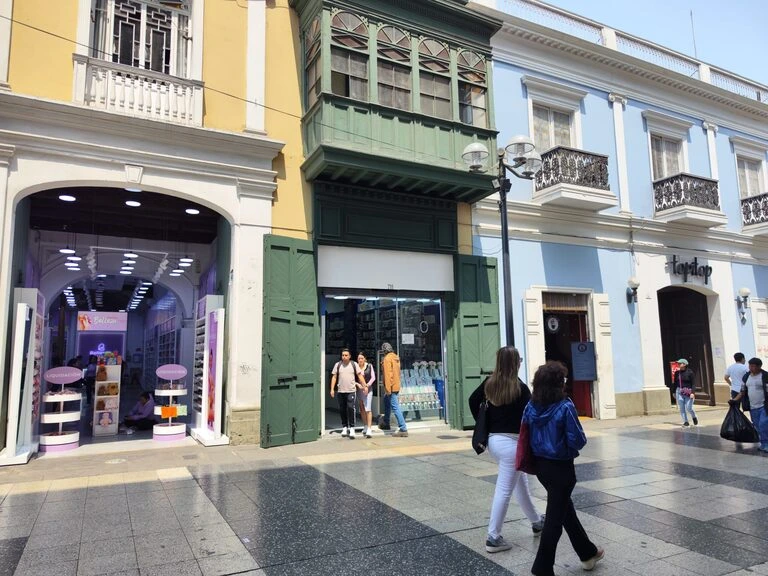
Photo: Perú-Retail.com
The heart of the heart of Lima. An unmissable pedestrian street for any traveller. This urban thoroughfare connects Plaza de Armas — the centre of the country’s political and religious power — with Plaza San Martín, dedicated to the liberator who proclaimed Peru’s independence on 28 July 1821. In doing so, it serves as a symbolic corridor or bridge between the colonial and republican eras.
The origins of this famous street date back to the Spanish founding of Lima in 1535. It was Francisco Pizarro who laid out its original design, although he did not give it its current name. At that time, each of its 11 blocks had a different name. It was home to wealthy families and, at the same time, a key centre of commercial activity. In fact, one section was known as Mercaderes (Merchants).
Its current name was adopted in 1862 through the initiative of the military hero Mariano Bolognesi and the writer Manuel Atanasio Fuentes. The street was pedestrianised in 1981 during the administration of Mayor Manuel Orrego. Despite the many changes and Lima’s transformation into a modern metropolis, Jirón de la Unión has retained its architectural and commercial splendour. Its golden age came in the late 19th century and the first half of the 20th century.
As you stroll along the street, take time to admire Plaza San Martín, with its equestrian monument to the liberator and its distinctive Neo-Colonial and Neo-Baroque architecture. Also worth visiting is the Church of La Merced, dating from the 16th century and renowned for its impressive Churrigueresque Baroque façade. The colonial and republican balconies are another highlight, as is Plaza de Armas itself, framed by the Cathedral and the Government and Municipal Palaces.
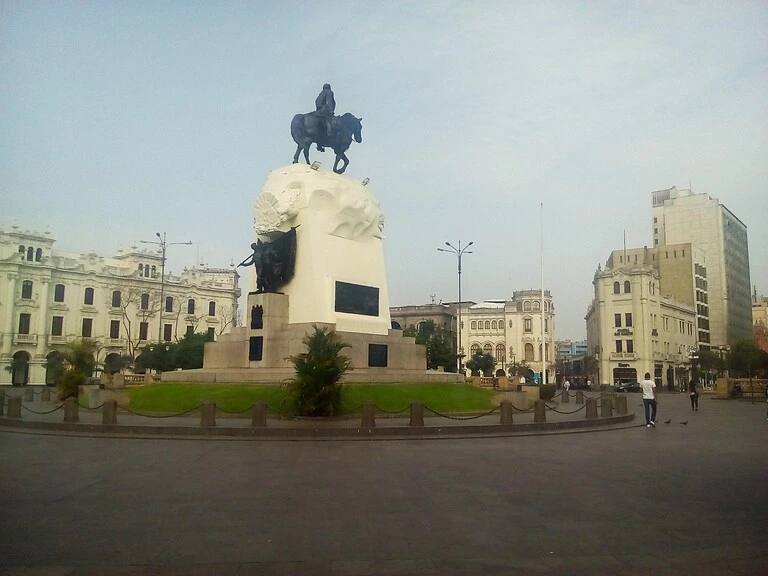
Jirón Carabaya
During the colonial period, this street, which runs parallel to Jirón de la Unión, was known by several names, including Fish Market (as it housed Lima’s first seafood market), Cathedral Steps, Rag Dealers’ Street, and Coca Street. Its current name, Carabaya, honours one of the provinces of the department of Puno, located in southern Peru. The change took place in 1862 as part of a reorganisation process of the historic “Pizarro Grid”.
Jirón Carabaya links Plaza San Martín with the Desamparados Railway Station, now home to the Peruvian House of Literature. Several figures of great historical significance lived along this street, including Marshal Ramón Castilla, the president who abolished slavery in 1854, and Augusto B. Leguía, who governed the country for fifteen years (1908–1912 and 1919–1930).
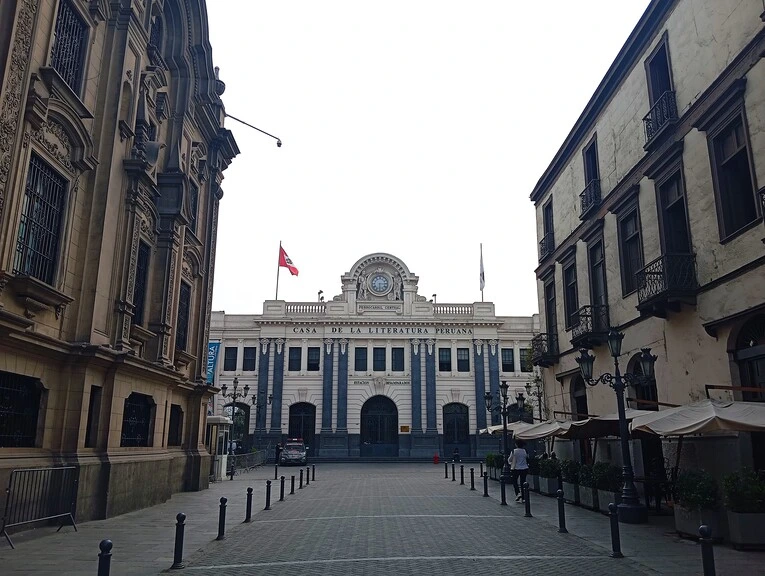
Your journey should not end at Plaza de Armas. It would be a serious travel mistake not to continue all the way to Desamparados Station. Make your way along the fourth block of Carabaya, considered by both visitors and Lima residents to be one of the hidden gems of the Historic Centre thanks to its peaceful atmosphere, beautiful colonial and republican architecture, and traditional commercial establishments.
Here, you will walk between one of the side walls of the Government Palace and a series of historic buildings where fine leather goods—especially shoes—have long been sold, alongside cafés and a variety of shops. At the end of the street stands the impressive railway station, and directly opposite is the traditional Cordano Bar, a favourite gathering place for presidents and many notable figures in Peruvian politics.
Jirón Áncash
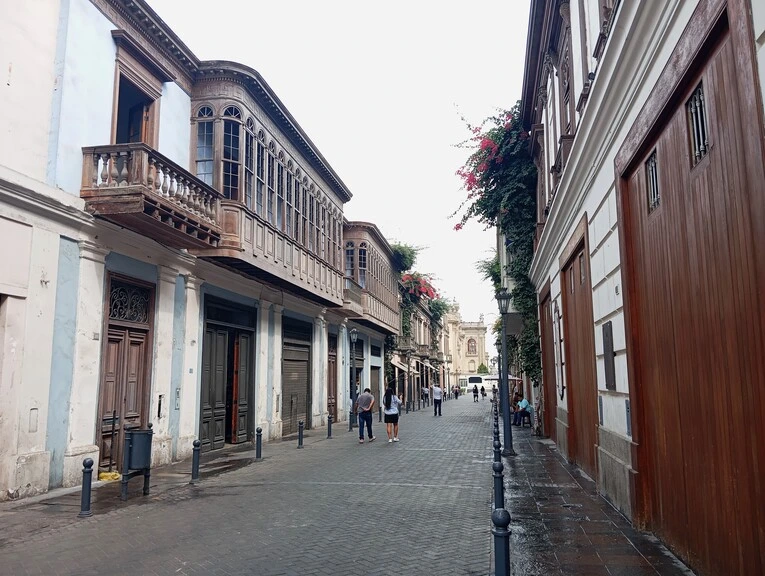
A place seemingly frozen in time, where the hustle and bustle of modern life fades into the tranquillity of a street best explored at a leisurely pace. Walk it step by step to discover Desamparados Station, with its French-inspired design typical of early 20th-century Limeño architecture; the Bodega y Cuadra Museum; and the Afro-Peruvian Museum, housed in the colonial Casa de las Trece Monedas (House of the Thirteen Coins).
The greatest reward of this journey, however, is the Church and Convent of San Francisco, located at the end of Jirón Áncash, at its junction with Jirón Lampa. Declared a UNESCO World Heritage Site, this architectural and religious complex is one of the most important in the Americas. Make the most of your visit by exploring its museum and its atmospheric underground catacombs.
Like Jirón de la Unión and other streets in the Historic Centre, this road was originally laid out by Francisco Pizarro. Its current name, adopted in 1862, commemorates a mountainous region in the northern Peruvian Andes. Áncash is home to the Cordillera Blanca, the highest tropical mountain range in the world. Among its peaks stands Huascarán, the highest mountain in Peru at 6,768 metres.
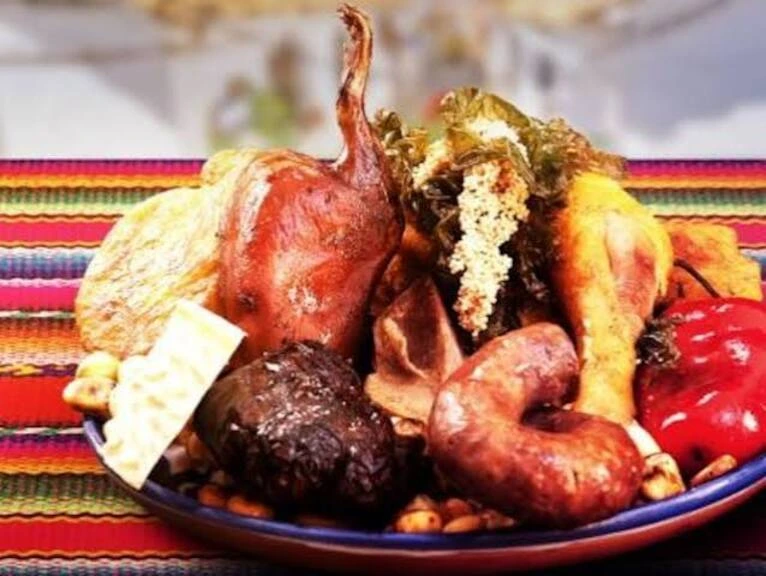
Returning to Lima and Jirón Áncash, it is worth noting that during the colonial era the city’s first butcher’s shop operated here, on the second block of the street, then known as Rastro de San Francisco. At the end of your day, enjoy a chilcano or a pisco sour at the traditional Cordano Bar (on the corner with Jirón Carabaya). Pair your drink with a butifarra (a classic Limeño sandwich) or a serving of tacu tacu with breaded steak.
Olaya and Santa Rosa Passages
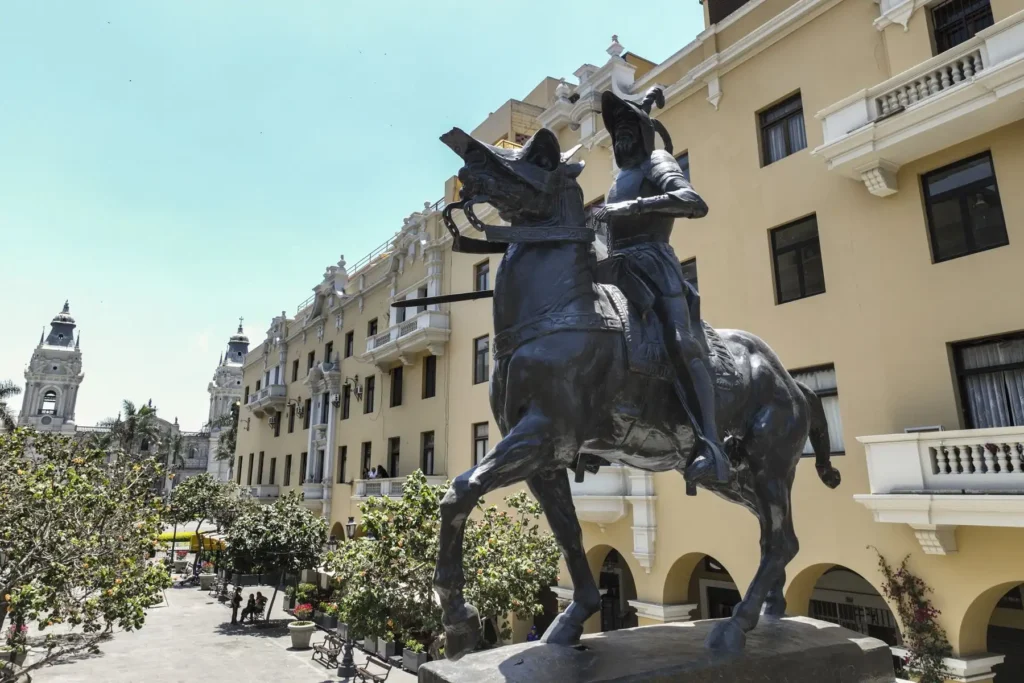
Photo: Peruvian News Agency Andina
These are two charming pedestrian passages that lead directly to Lima’s Plaza de Armas. Olaya Passage is as old as the city itself and lies between Jirón de la Unión and Jirón Carabaya. Throughout its history, it has been known by several names, including Petateros Alley (named after mats woven from palm leaves), Hatmakers’ Alley, and Merchants’ Alley, reflecting its bustling commercial activity.
It was also known as Cross Alley because, during the colonial period, criminals were executed at a cross that stood in the Plaza Mayor (now Plaza de Armas). Its current name dates from the 20th century and honours José Olaya, a national martyr and courageous fisherman from the district of Chorrillos. During Peru’s struggle for independence, he used his skills as a swimmer to carry secret messages between the patriots of Lima and Callao.
Santa Rosa Passage is located beside the Municipal Palace and extends as far as Jirón Camaná. It originated during the republican era, dating from 1940, and its name honours Saint Rose of Lima, the first saint of the Americas. A number of restaurants give this passage a distinctive character. In 1985, a commemorative stone was placed here in honour of Curaca Taulichusco, who governed the Rímac Valley until the arrival of Francisco Pizarro.
Interestingly, the monument to the Spanish conquistador was recently relocated to this passage after spending several years in the Park of the Wall (Parque de la Muralla).
Other Streets, Other Experiences

Photo: Francisco Anzola, capture in Flickr
If you are exploring the Historic Centre, be sure to visit Jirón Conde de Superunda, Jirón Huancavelica, and Jirón Ucayali, to mention just a few of its notable streets. Wherever you go in “Old Lima”, you will discover a colonial church, a republican-era building, a museum or cultural centre, a gallery showcasing the finest local handicrafts, and a bar or restaurant serving the exquisite flavours that make Peruvian cuisine so renowned.
*Conde de Superunda: This street links Tacna Avenue with Plaza de Armas. Highlights include the Osambela House, the House of the Columns, and the Church and Convent of Santo Domingo, originally built in 1535. The Count of Superunda, José Antonio Manso de Velasco, served as Viceroy of Peru between 1745 and 1761.
*Huancavelica: This street crosses important thoroughfares such as Tacna Avenue and Jirón de la Unión (near La Merced Church) and Jirón Carabaya. Along its blocks you will find the Miguel Grau House Museum, dedicated to the naval hero of the War of the Pacific and voted Peru’s Person of the Millennium; the Carbone delicatessen, famous for its butifarras; the Segura Theatre; and the Sanctuary of Las Nazarenas (on the corner with Tacna Avenue), home to the revered Lord of Miracles, the patron saint of Lima.
*Ucayali: Stretching between Jirón de la Unión and Jirón Paruro, this seven-block street is home to several landmarks of interest, including the Torre Tagle Palace, renowned for its magnificent Baroque façade; the Aliaga House, continuously inhabited by the same family since the colonial era; and the 16th-century Church of San Pedro. If you fancy a drink, Maury Bar is the perfect place to enjoy a traditional pisco sour. If you’re in the mood for Oriental cuisine with a distinctive Peruvian touch, pay a visit to Lima’s Chinatown.
Now you know: Peru’s capital has a wealth of experiences waiting for you. Don’t hesitate any longer—start planning your journey to the “City of Kings”.