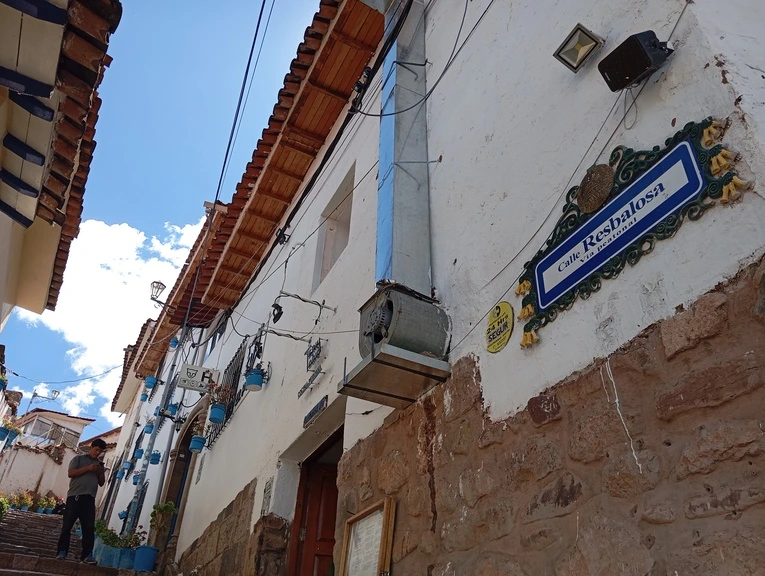
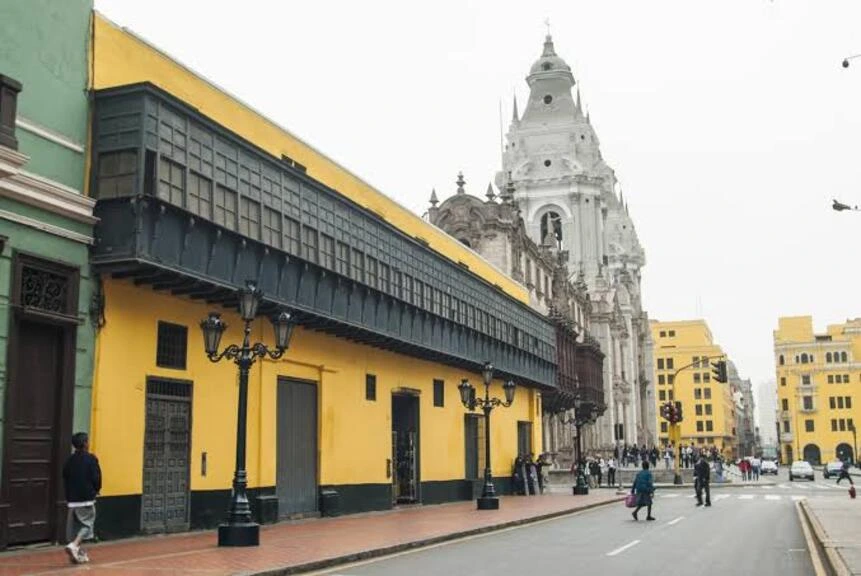
Photo: Luis Gamero (PromPerú)
Exceptional is one of the words that accurately defines the centuries-old colonial architecture of Lima, whose Historic Center was declared a UNESCO World Heritage Site on December 12, 1991. But that is not the only word that describes the artistic monumentality of the Peruvian capital’s churches, convents, palaces, historic mansions, and balconies.
The World Heritage declaration was based on the exceptional nature, integrity, and authenticity of the Historic Center, which, according to UNESCO experts, is “a unique expression of a regional cultural process, preserving its architectural values and largely retaining the original characteristics of its urban foundation layout.”
A city with ancestral roots. A city of churches, historic mansions, and balconies. A colonial and republican city with so much to see and discover. Explore the downtown area and let your steps guide you into the past of this city founded on January 18, 1535, to become the capital of the most powerful viceroyalty in South America. That was the goal of Spanish conqueror Francisco Pizarro.
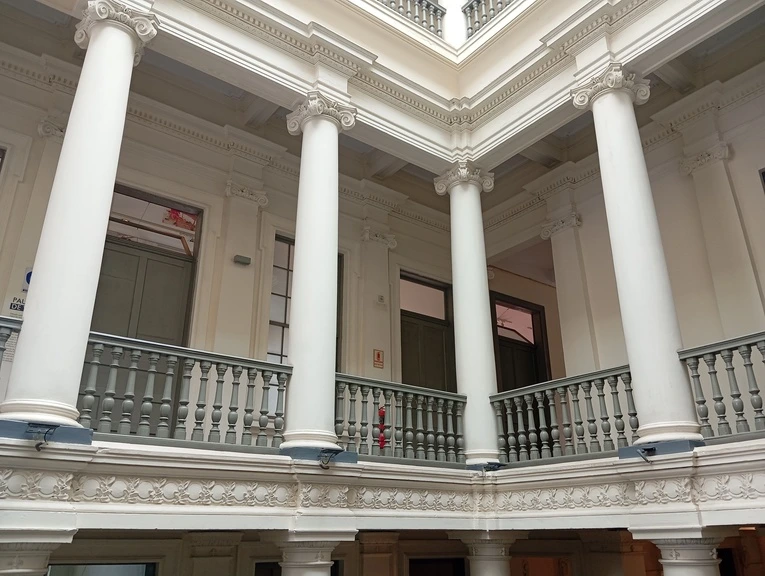
During your vacation in Peru, do not ignore the “City of the Kings,” as it was named by its founder. Visit the “Damero de Pizarro” (another way of referring to the Historic Center) and walk through the dawn streets of “the Pearl of the Pacific”—a phrase coined by 19th-century travelers. You will admire the monumental and artistic heritage of “the Three Times Crowned City,” a title granted to it in 1537 by King Charles I of Spain.
That Lima which has soul and tradition, to paraphrase the lyrics of a Peruvian waltz, is what we will show you in our tours and free walking tours. Join us to the ancient city. We want to walk with you along its streets and stop in front of its striking buildings to tell you the story of a city that arose to transcend across the continent and the entire world.
What to See in the Historic Center:
The Balconies of Lima
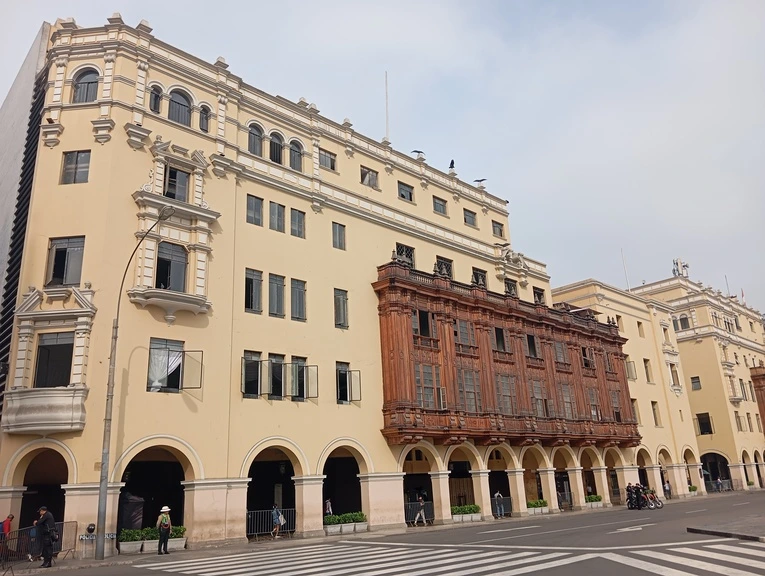
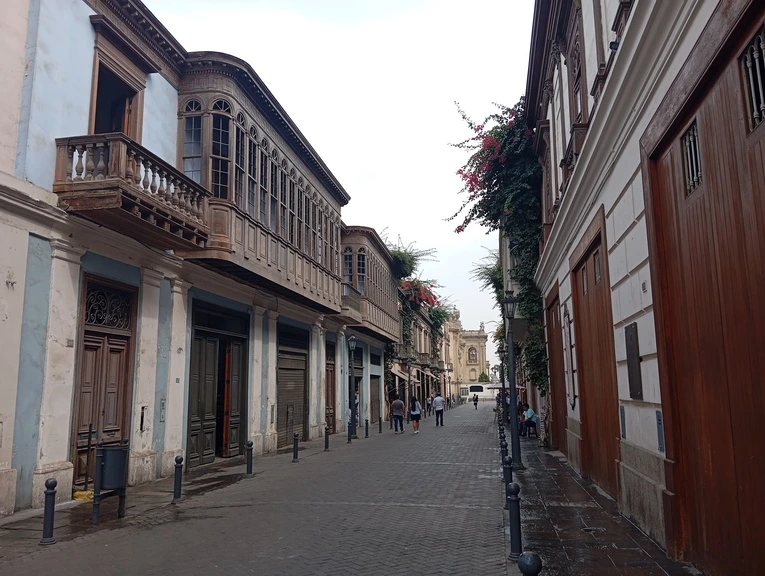
When you walk through the Historic Center, an architectural detail will make you look up more than once. You will not be the only one. Travelers walking through the “City of the Kings” have always raised their eyes and even stopped in their tracks to contemplate “the streets in the air,” as Lima’s balconies were called by chroniclers Antonio de la Calancha and Juan Meléndez.
“They are so many and so large that they look like streets in the air,” they expressed in wonder upon seeing the magnificent carved wood box balconies of various styles. These stand out on the facades of historic mansions and palaces, serving as the “uniting link between the private mansion and the street,” as national poet José Gálvez Barrenechea highlighted during republican times.
Their origin in “the Three Times Crowned City” dates back to the founding years. In the 16th century, these were open and simple; however, starting in 1620, closed and box-like balconies began to appear. One of their main features is the latticework, a decorative openwork panel that allowed residents to observe the coming and going of passersby without them realizing they were being watched.
For that reason, “the streets in the air” were the perfect watchtower for the discreet tapadas limeñas. From their balconies, they kept up with daily events. Colonial history tells that these women concealed their faces behind a silk veil, leaving only a single eye uncovered. They did not do this out of obligation or religious mandate. Quite the contrary: their anonymity was a symbol of autonomy and freedom.
That autonomy and freedom led them to peek out from those architectural gems that will make you raise your eyes. Indeed, the streets of the Historic Center treasure Baroque-style colonial balconies, Republican balconies with Neoclassical or Rococo lines, and Neocolonial ones. The latter were built in the 20th century, but following ancient canons.
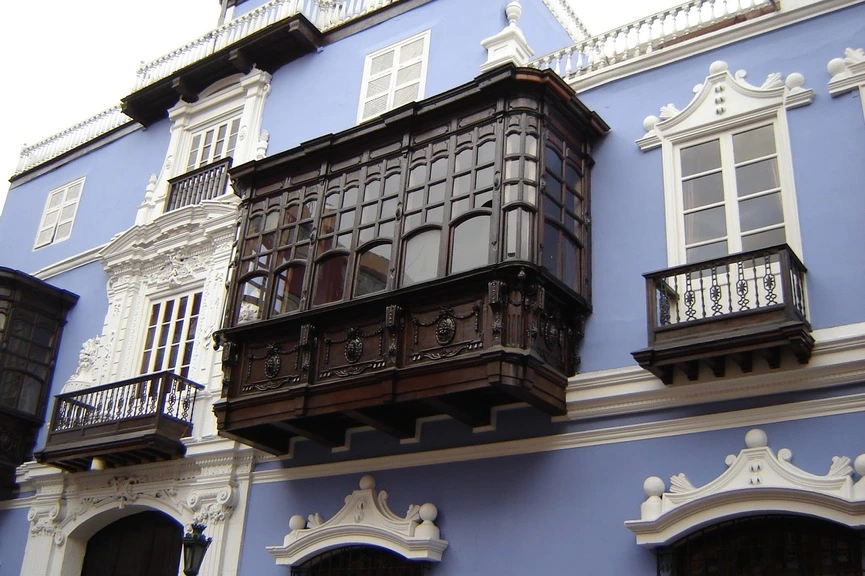
Photo: Digital Architecture Magazine
During your visit to the ancient city, pay special attention to these balconies:
° Torre Tagle Palace (363 Ucayali Street): made of cedar and mahogany, it is the most representative balcony in the capital.
° Osambela or Oquendo House (298 Conde de Superunda Street): garlands and other wood carvings stand out on its five closed Rococo-style balconies. They date back to the 19th century.
° Archbishop’s Palace of Lima (in front of Plaza de Armas): they belong to the Neoclassical period, but faithfully reflect the Baroque style of the capital’s balconies.
° Calvetti Mansion (Jirón de la Unión): its nearly 70 meters make it the longest closed balcony in Peru. It is Neoclassical in style.
° Casa del Oidor (in front of Plaza de Armas): its dark, continuous wooden balcony contrasts with the yellow tones that stand out in its urban surroundings.
Historic Mansions and Palaces of Lima
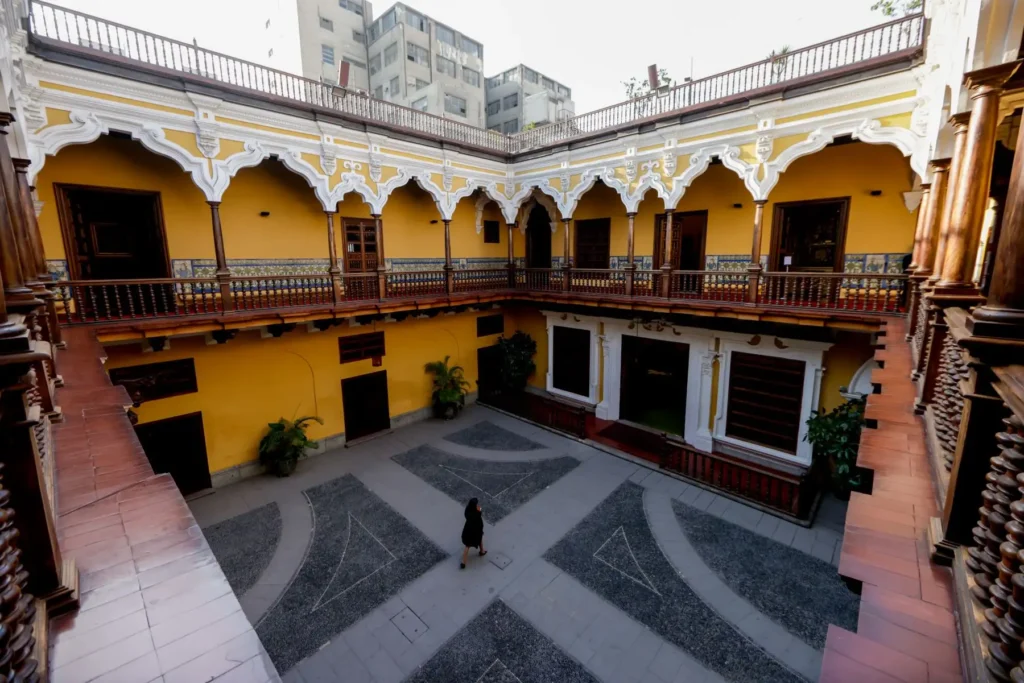
Photo: Andina Peruvian News Agency
Balconies are “streets in the air,” but they do not float in midair. They grace the facades of the historic mansions and palaces in the Historic Center—a vast colonial and republican architectural heritage that you will discover on your independent outings through the old town or, even better, on our private tours and classic free walking tours, led by a local guide who knows their city inside out.
During your urban journey, you will learn that colonial mansions—several of them built in the early days of Spanish presence—are essentially Moorish and Baroque in style, while Republican constructions dating between 1820 and 1940 display Neoclassical and French-inspired elements. This diversity reveals the social, political, economic, and artistic trends and changes experienced in the city.
Old historic mansions and palaces were organized around one or several courtyards, following Spanish tradition. Other recurring details include finely carved granite portals, highlighting family coats of arms. Entryways (zaguanes)—the corridors connecting the main door to the first courtyard—are also traditional. Their purpose was to distance family living spaces from the hustle and bustle of the streets.
The end of the viceroyalty brought changes in many aspects, including architecture. Lima began to transform its colonial face. New constructions featured symmetrical facades with classic touches (columns, cornices, and capitals appeared, among other details), and French, Italian, and English influences became evident. Plaza San Martín is a clear example of this period.
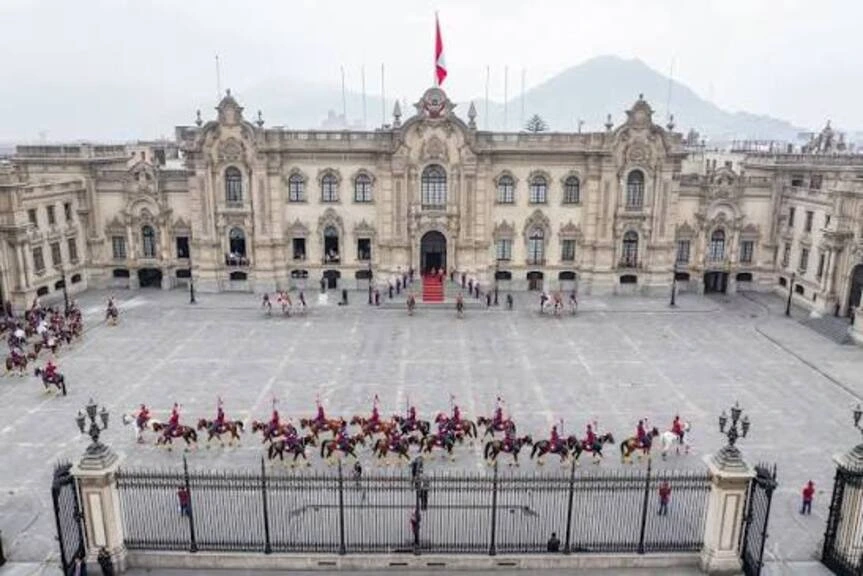
Photo: Andina Peruvian News Agency
° Casa Aliaga (224 Jirón de la Unión): dates back to 1535 and was built over a pre-Hispanic huaca. To this day, it is inhabited by the descendants of the conqueror Jerónimo de Aliaga.
In the “Damero de Pizarro,” you must visit the following palaces and historic mansions:
° Torre Tagle Palace (363 Ucayali Street): it is the headquarters of the Ministry of Foreign Affairs. Built in 1735 in Baroque and Mudéjar styles, its carved balcony is stunning.
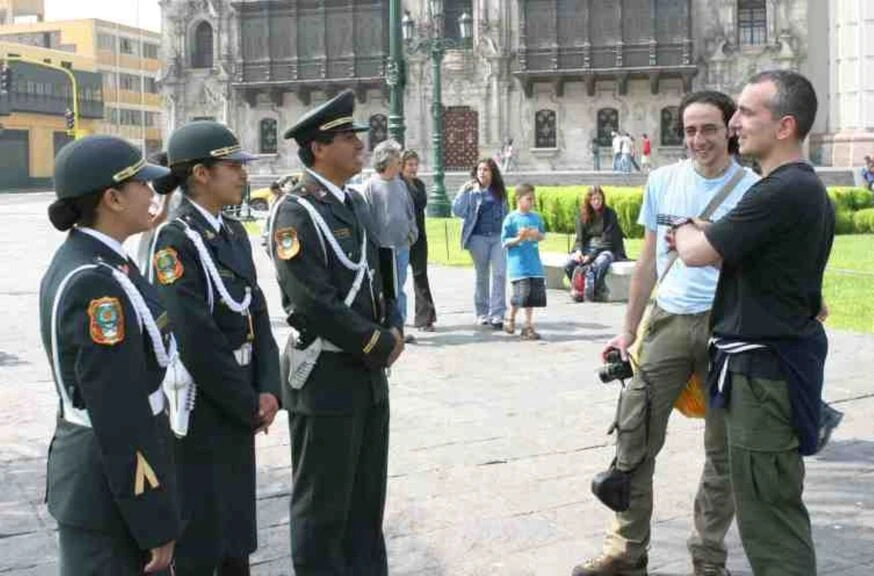
° Government Palace (Plaza de Armas): Republican in style, it stands on the spot where Francisco Pizarro built his residence. The current seat of the Executive branch was constructed in the 20th century and is famous for its Changing of the Guard.
° Casa Fernandini (400 Ica Street): built in 1914, its facade combines Art Nouveau, Modernist, and Classical elements. It featured the city’s first elevator.
° Casa de las Trece Monedas (536 Áncash Street): this 17th-century colonial gem is home to the Afro-Peruvian Museum of the Congress of the Republic.
° Osambela or Oquendo House (298 Conde de Superunda Street): due to its size, it is one of the largest in the Historic Center. It was built between 1803 and 1805.
° Casa del Oidor (Plaza de Armas): its history dates back to the 16th century, and its name evokes the colonial judges of the Real Audiencia, known as oidores.
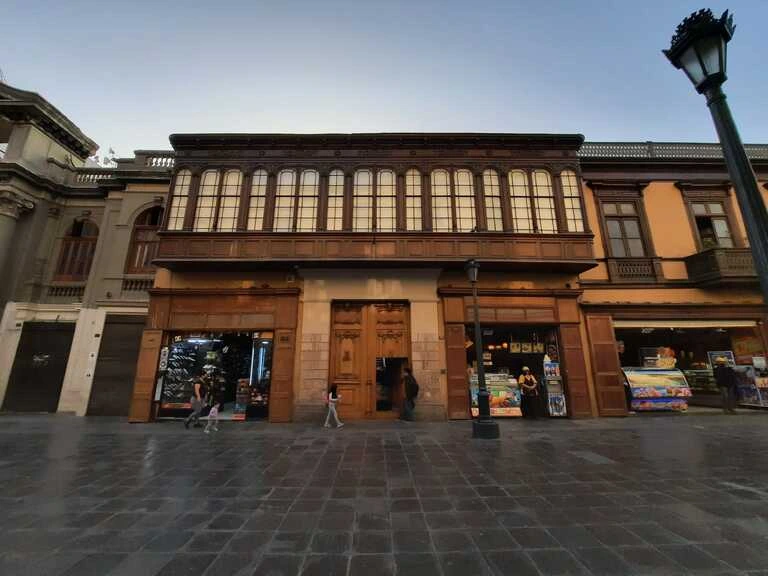
Photo: Mincetur Tourism Resources Inventory
Monuments of Faith
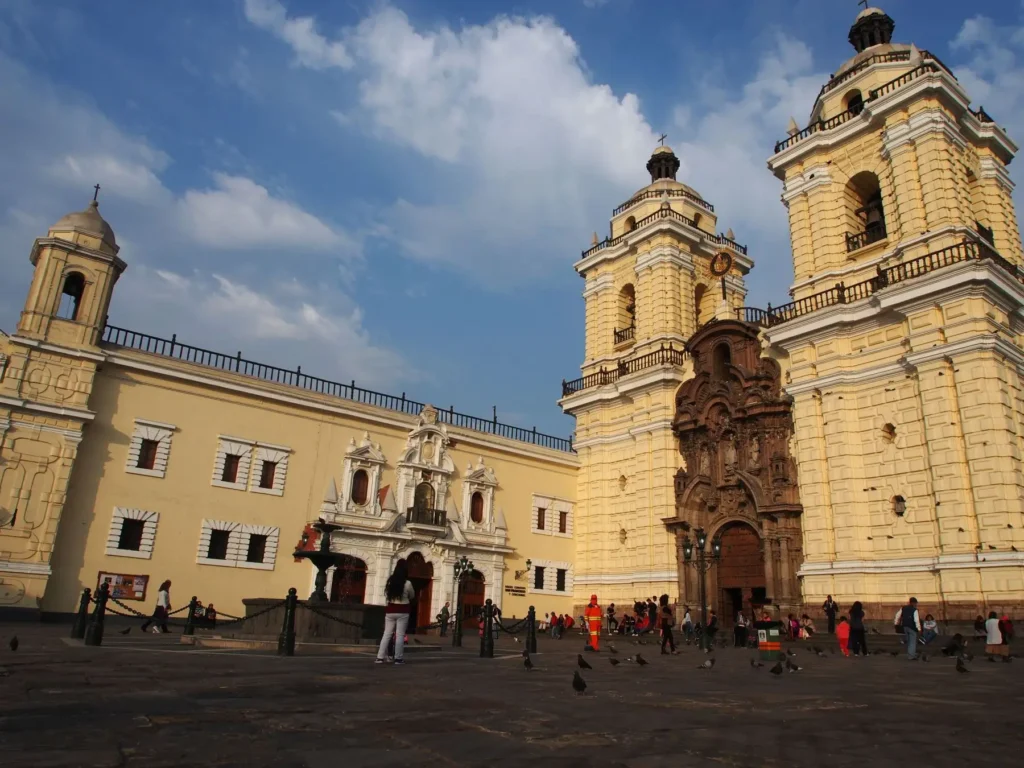
Photo: Andina Peruvian News Agency
The Historic Center of Lima would not be the same without its convents and churches. Their portals and bell towers are symbols not only of the faith brought by Spanish conquerors, but also an sublime showcase of colonial religious architecture. The legacy is so impressive that experts consider it the greatest expression of Spanish-American Baroque and artistic syncretism in the Viceroyalty of Peru.
Imposing and beautiful inside and out, you do not need to be religious to feel moved and thrilled before this formidable collection of temples, dominated by altarpiece facades and profuse Baroque ornamentation, as well as coffered ceilings (carved wood ceilings). These are characteristic of Mudéjar architecture—a style originating in the Iberian Peninsula that fuses Christian and Islamic artistic traditions.
So prepare yourself to invoke God more than once in the following churches, temples, and convents:
° Church and Convent of San Francisco (corner of Áncash and Lampa streets): its construction began in 1546, standing as the ultimate expression of viceregal religious architecture. Declared a UNESCO World Heritage Site, it stands out for its Baroque architecture—represented by its ochre facade and interior altarpieces—as well as its Moorish dome carved in cedar and walnut. Its catacombs and library are especially attractive.
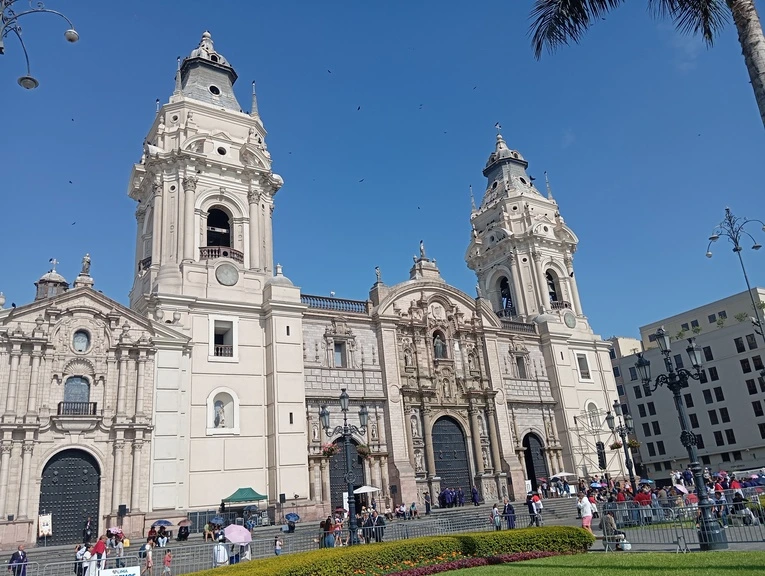
° Cathedral Basilica of Lima (Plaza de Armas): its construction began on the day of Lima’s Spanish foundation (January 18, 1535), but it was not consecrated until 1625. Rebuilt and remodeled several times, it displays Baroque and Neoclassical characteristics, among other architectural styles. For instance, its facade has Renaissance lines with Plateresque ornamentation, while its two Neoclassical towers are topped with slate spires.
° Basilica and Convent of Santo Domingo (170 Camaná Street): it is the oldest in Lima and features Rococo, Mudéjar, and Baroque details, along with Mannerist elements. The walls of its main cloister feature 17th-century Sevillian tiles depicting the life of Saint Dominic. During your visit, pay attention to its 46-meter-tall lookout tower. An additional detail: the relics of Saint Rose of Lima, Saint Martin de Porres, and Saint John Macias are kept here.
° Other temples of great architectural value are San Pedro on Azángaro Street—a 17th-century Jesuit construction; the Sanctuary of Las Nazarenas at the intersection of Tacna and Emancipación avenues—where the Señor de los Milagros, the patron saint of Lima, is venerated; and finally, La Merced on Jirón de la Unión—with its impressive Churrigueresque Baroque facade.
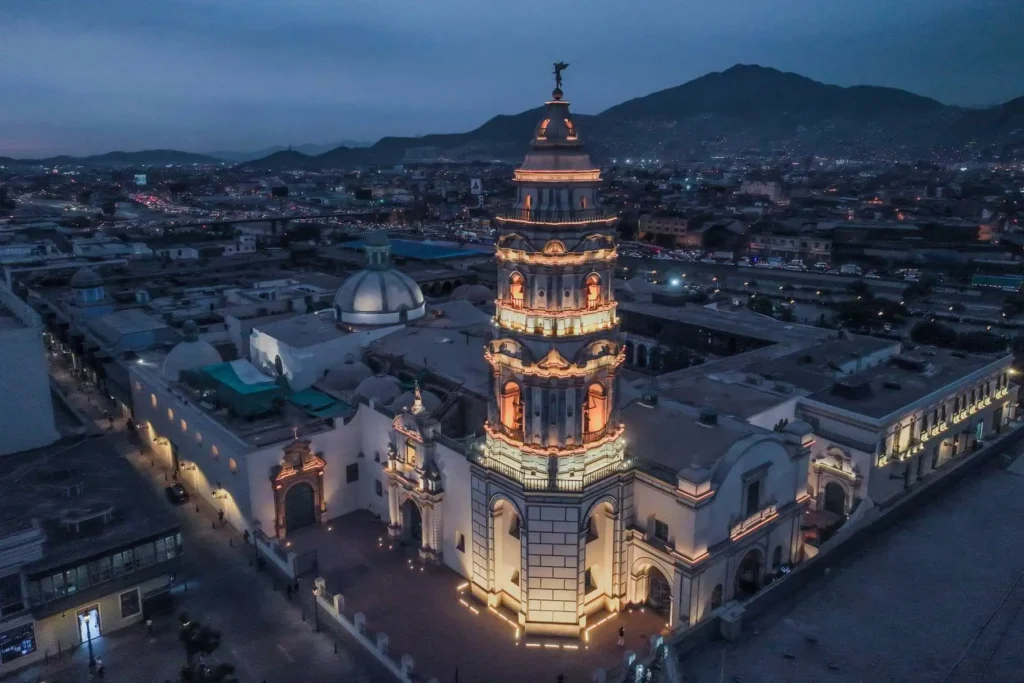
Photo: Andina Peruvian News Agency
Advice and Tips for Visiting the Historic Center
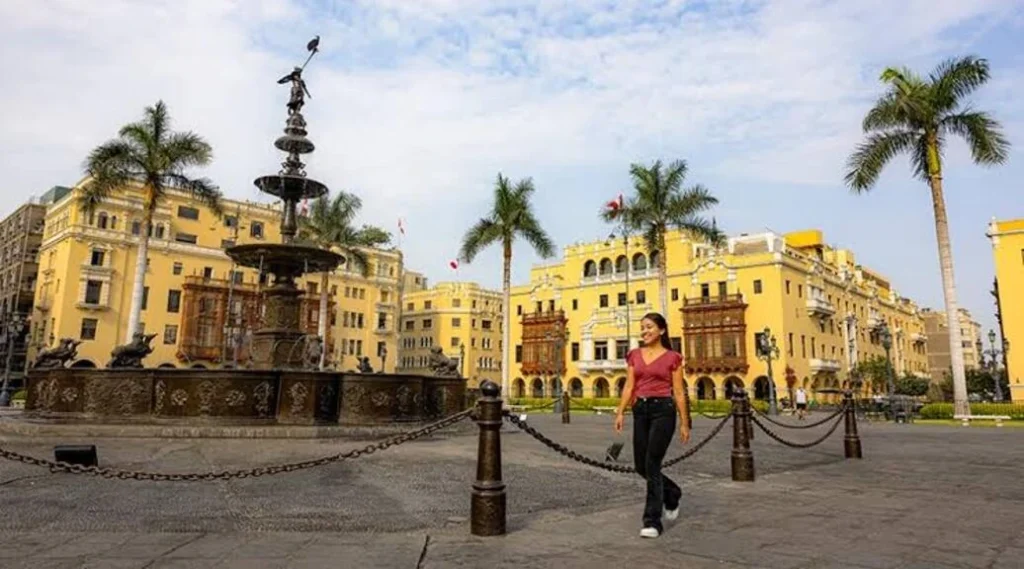
Photo: ¿Y tú qué planes?
° Early. Visit the Historic Center of Lima in the morning. Between 09:00 and 10:00 are perfect times to start your tour. There are not too many people in the streets, allowing you to peacefully appreciate the tourist sites and take better photographs of the churches and historic mansions.
° Prevention. Although the old town is safe, be cautious and careful with your belongings. Only carry what is indispensable.
° In a group. If you have the opportunity, visit the old town with your travel companions. If you are traveling alone and want to learn more about the city, book one or several of our tours.
° Money. Carry local currency for any expenses you might have during your tour. Avoid 200 and 100 soles banknotes, as they are sometimes difficult to break.
° Access. It is possible to enter several of the emblematic buildings in the Historic Center. For some, you will have to pay an entrance fee, while others offer free access at specific times.