Cambio de Guardia Lima

Every day in Lima’s Historic Centre, locals and visitors to the “City of Kings” pause in front of the gates of the Government Palace to witness a military ceremony that, due to its brilliance and emotion, stands out as one of the most striking traditions in the Peruvian capital.

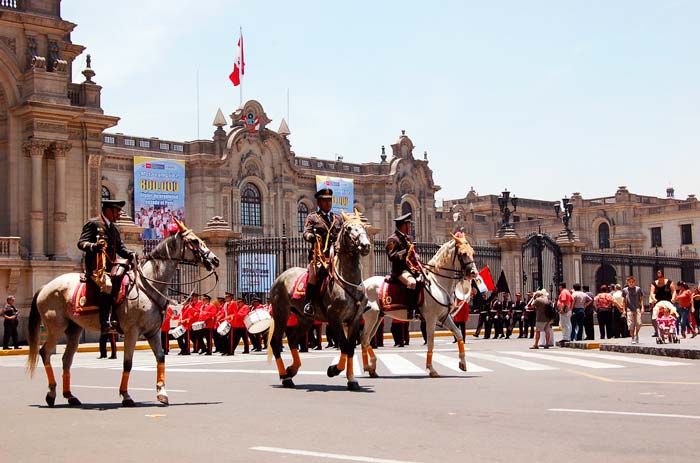
The Changing of the Guard is a military ceremony that dates back to colonial times. During this display, the energetic and perfectly synchronised movements of the soldiers who guard the seat of government and the presidential residence are accompanied by the stirring melodies of a live military band.

For these and many other reasons, it’s always a good idea to take a break from the rush and admire this patriotic and ceremonial ritual performed by the members of the Cavalry Regiment “Mariscal Domingo Nieto”, who serve as the Honour Guard of the Government Palace and the Official Escort of the President of the Republic.

When planning your visit to the old town, be sure to set aside time in your itinerary to enjoy the vibrant Changing of the Guard in the historic heart of the city — right at the centre of political power in a country that declared its independence on 28 July 1821.

A Journey Through History

The Changing of the Guard is a centuries-old tradition that began during colonial times, when what we now know as the Government Palace was referred to as the “House of Pizarro”, named after Francisco Pizarro — the conquistador of Peru and the first resident of this historic building in central Lima.

Back then, protection of the Viceroy — the representative of the Spanish Crown and the highest authority in the newly conquered land — was the responsibility of the Royal Spanish Infantry.

Once the republic was established, the duty of guarding the President and the Government Palace fell to various battalions of the Peruvian Army and the Civil Guard of Peru (now the National Police of Peru).

In the final decade of the 20th century and the early years of the 21st, the prestigious Cavalry Regiment “Glorious Hussars of Junín” served as the Government Palace Honour Guard, a role they proudly held from 1987 to 2012.

Today, it is the members of the “Mariscal Domingo Nieto” Regiment who carry out the perfectly timed and visually captivating Changing of the Guard you’ll see in the Honour Courtyard of the historic “House of Pizarro”.


How the Changing of the Guard Takes Place

Every day of the year, as the clock approaches noon, the Honour Courtyard of the Government Palace becomes a stage of tradition and splendour during the Changing of the Guard — a military ceremony carried out by the soldiers of the Escort Regiment “Mariscal Domingo Nieto”.

On special occasions, other military units or members of the National Police take charge of the guard change. In those cases, the music and uniforms vary, as do the ceremonial drills performed before the captivated audience, who delight in every detail of the spectacle.
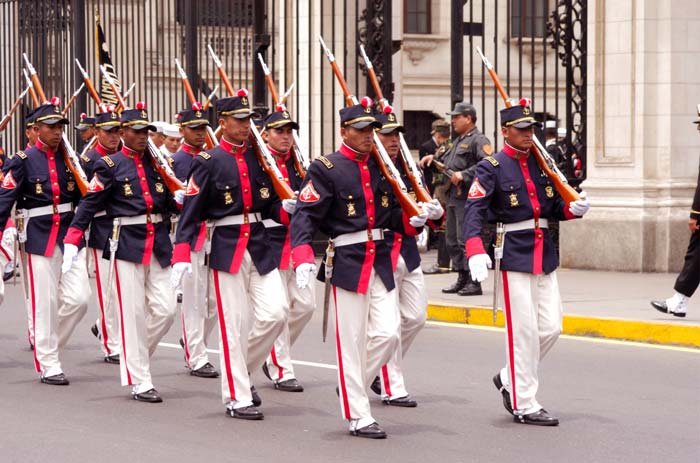
Cambio de Guardia Lima

The Beginning

At 11:45 a.m., the sound of a trumpet rings through the Honour Courtyard. Its piercing melody signals the beginning of the guard change — a much-anticipated ceremony for both locals and tourists who gather behind the iron gates that guard the grand residence of the President of Peru.

If you’re planning to visit Lima’s Historic Centre, it’s worth knowing that no ticket is required to enjoy this ceremonial event. If you’d like to secure the best view, it’s a good idea to arrive a few minutes early. The entire ceremony lasts around 30 minutes.


To the Rhythm of Music

The military band plays a key role in the Changing of the Guard. During the ceremony, they often perform European cantatas by composers such as Johann Sebastian Bach and Carl Orff, the latter known for the scenic cantata Carmina Burana. You’ll also hear stirring Peruvian marches such as:

  • Peruvians pass by (Los peruanos pasan)
  • Sesquicentenario
  • Túpac Amaru
  • The three guns (Las tres armas)
  • Zarumilla
  • Mayor state (Estado Mayor)
  • The Salaverrina

As the band plays these rousing tunes, the soldiers march slowly and with measured precision. The guard change involves the relief of the current guards stationed in the courtyard by a fresh contingent taking over their post and duties.

Come and listen to some of Peru’s most iconic military themes — many of which are deeply influenced by the sounds and spirit of the Andes.


The Final Tunes

As the ceremony nears its end, the band plays classic and iconic pieces of Peruvian music — including marineras, huainos, and the world-famous El Cóndor Pasa, a zarzuela composed by the renowned Peruvian musician Daniel Alomía Robles.

Listen to Peru’s most internationally recognised piece of music: El Cóndor Pasa


Key Questions About the Changing of the Guard

Where does it take place?

In the Honour Courtyard (Patio de Honor) of the Government Palace, located on one side of Lima’s Plaza de Armas.

When and what time can I see it?

From Monday to Sunday at 11:45 a.m. The ceremony lasts until approximately 12:15 p.m. On special occasions, horses are also featured in this military ritual.

Do I need to pay to watch it?

No. You simply need to head to the gates of the Government Palace to witness this symbolic and majestic display of military tradition.


Can I join a guided tour for the Changing of the Guard?

Absolutely! If you join our Free Walking Tour through Lima’s Historic Centre, you’ll be accompanied by a professional, knowledgeable guide on a 2.5-hour walk through the old city’s highlightscompletely free of charge!

Cambio de Guardia Lima

How do I join the Free Tour?

Just head to our meeting points or book your spot on Free Tour Lima from the Historic Centre or from Miraflores. Still unsure? Have a look at what our guests are saying on Facebook and Googletheir reviews speak for themselves!

Plaza de Armas Lima
Free Tour Lima

Nota para peruanos: Los free tours son solamente para el turismo receptivo. Los turistas nacionales pueden realizar el city tour clásico del Lima colonial y moderna.

Note for Peruvians: Free tours are intended for international visitors. Local tourists can enjoy the classic city tour of Colonial and Modern Lima.

Important: The Plaza de Armas is not our meeting point. Please check our website for full details.


How to Get to the Changing of the Guard?

If you’re staying in districts like Chorrillos, Barranco, Miraflores, San Isidro, Lince or La Victoria, your best option is the Metropolitano — a fast bus service that runs from south to north along a dedicated lane.

From any of those districts, hop on a Route C bus and get off at the Jirón de la Unión stop, a historic street just a few minutes’ walk from the Plaza de Armas.

If you’re coming from the north side of Lima (districts such as San Martín de Porres, Los Olivos, Independencia, Comas, or Carabayllo), take Route A and also get off at Jirón de la Unión. From there, it’s a 5-minute walk to the main square.

To use the Metropolitano, you’ll need a special card, which costs S/ 4.50 and can be bought at any station. The standard fare is S/ 3.20 per journey (trunk line fare).

If you’re in another district or don’t have access to a Metropolitano station, consider using a ride-hailing app like Uber, Cabify, Yango, or InDrive — these are generally the safest options.

There are also traditional street taxis in Lima. If you choose one, make sure to agree on the fare before getting in (don’t be afraid to negotiate a little). Be cautious — take a quick look at the driver’s face. If they inspire trust, hop in and enjoy the ride.

Free Walking Tours Peru

Secure your spot on our free tours led by professional, authorized, and expert guides in Free tour Cusco, Free tour Lima, and Free tour Arequipa. Booking is free!
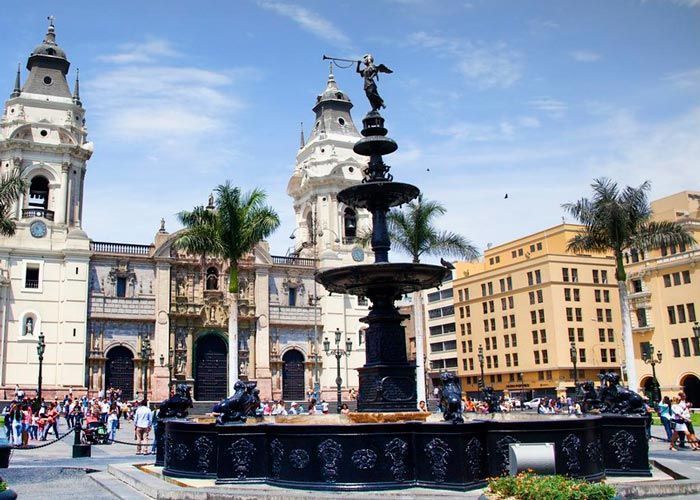
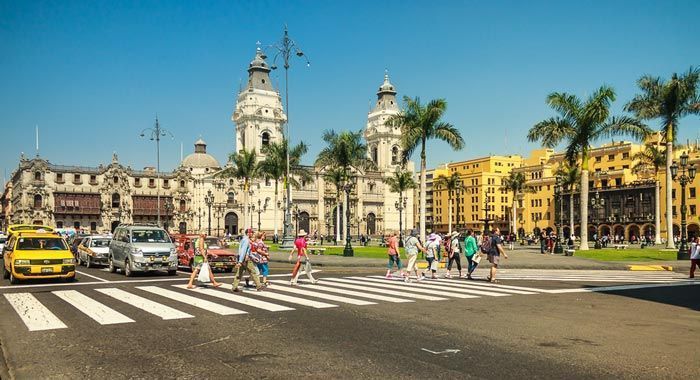
A valley in the desert. A valley near the sea. In this unique geographical setting — inhabited since ancient times by various pre-Hispanic peoples — the Spanish conquistador Francisco Pizarro founded a city that would become the capital of a vast viceroyalty, and later the capital of an entire nation.

That is the origin of Lima — the “City of Kings”, the “thrice-crowned town”, and the metropolis of many cultures. Its Historic Centre preserves the grandeur of its colonial and republican mansions, churches, and plazas — a priceless cultural legacy for humanity.

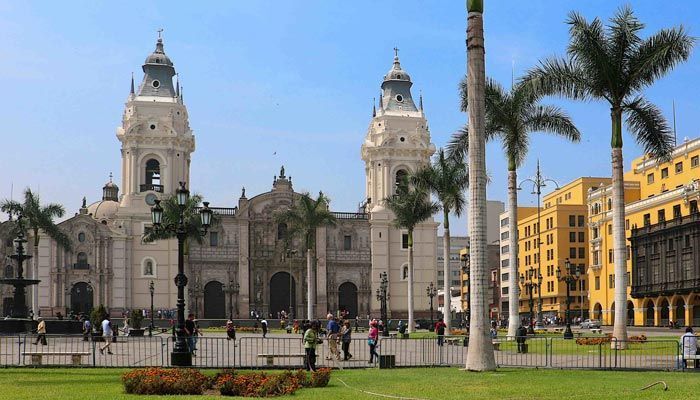
At the heart of this Historic Centre lies a truly special and significant place: the Plaza de Armas, also known as the Main Square. Surrounded by iconic landmarks such as the Cathedral and the Government Palace, this urban space still echoes the foundational spirit of the modest town laid out by Pizarro in early 1535.

Lima was born in the Plaza de Armas. This is where its colonial history began. This is where Peru’s independence was proclaimed on July 28, 1821. This is where, for nearly 500 years, the country’s future has been shaped. So much history and meaning make it an unmissable destination.

The Plaza Mayor awaits you. Don’t miss the chance to visit, explore, and feel it — only then will you truly understand the essence of Lima: the city that blossomed in a desert stretching all the way to the shores of the Pacific Ocean.

A Square Steeped in History

On 18 January 1535, conquistador Francisco Pizarro founded the “City of Kings” in the Rímac Valley. This historic act, carried out in territory once ruled by the local leader Taulichusco, was based on Spanish royal regulations known as the Ordinances for the Foundation of New World Cities.

These laws, issued by King Charles I of Spain, dictated that new cities must be laid out in a grid pattern resembling a chessboard. This design — drawn using ropes and rulers — had a starting point: the site chosen as the Plaza de Armas or Main Square.

From this perspective, it’s clear that Lima, now home to more than 10 million people, took the Plaza de Armas as the cornerstone of its urban development and expansion.

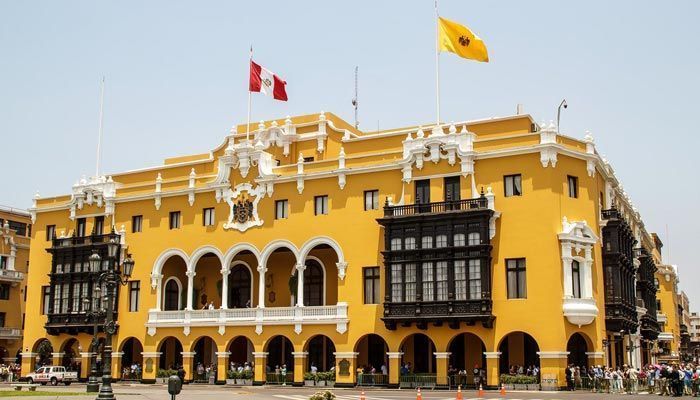
Following the city’s foundation, several key buildings were erected around the plaza: the Cathedral, Pizarro’s house (eventually replaced by today’s Government Palace), the City Council building (now the Municipal Palace), and the House of the Royal Judge (Oidor). A fountain was also added to provide water.

In colonial times, this open public space served many purposes — it was a market, a bullring, and a social gathering spot. Locals came here to collect water from the fountain, mingle with neighbours, or witness public executions, often for political or religious offences.

A question: is it Plaza de Armas or Plaza Mayor?

What’s the correct name—and which one is used more often? Is it wrong to say Plaza de Armas, or are those who call it Plaza Mayor mistaken? What do you think? Do you tend to cling to historical facts, or do you believe everyday use should take precedence?

In this “debate”, history tells us that in Spain, the main square of any city is called the Plaza Mayor. This name was established by the Catholic Monarchs through an ordinance issued in 1480—twelve years before the “discovery” of the Americas.

As a result, all cities founded by the Spanish in the New World were, by regulation, to have a Plaza Mayor.

Plaza de Armas Lima
Plaza de Armas or Main Square of Lima

At the beginning of the 19th century, as the winds of independence swept through the viceroyalties, both royalist troops and patriots held political events in the main squares. That’s when the term Plaza de Armas started to be used.

Mayor or de Armas? That question didn’t seem to trouble Ricardo Palma. The famous author of Peruvian Traditions referred to it as Mayor 48 times in his writings, and only once as Armas. Another interesting point comes from the book Lima, Walks Through the City and Its History.

On page 29 of that publication by Expreso, Editora Nacional S.A., it’s clearly stated that the original name of the city’s main square was Mayor, and that this term remained in use throughout the colonial era.

Today, most people in Lima call it Plaza de Armas, even though historical records show that Mayor was its original name. But cities are living, changing places—especially vibrant capitals like Lima. Everything evolves. And this historic square might just be your next destination!


What will you see in the square?

You’ll see—and feel—the echoes of the colonial past and the awakening of the republic in this square laid out on 18 January 1535, back when Lima wasn’t yet Lima but rather La Ciudad de los Reyes (The City of Kings). That’s the name used by those who remember and want to highlight the Spanish roots of the Peruvian capital.

Those roots remain deeply embedded in the Plaza de Armas, the original heart of urban life and a must-see attraction for visitors who want to discover the architectural wealth of Lima’s Historic Centre—declared a World Heritage Site by UNESCO.

Surrounded by colonial and republican buildings, your eyes will be captivated by the grandeur of the Cathedral and the Archbishop’s Palace—two powerful symbols of the founders’ deep faith. A faith that still lives in the hearts of most of Lima’s people, as seen in their many religious celebrations.

And just as God has His place in the square, so too does political and civic power—within the Government Palace (built over the house of Pizarro) and the City Hall (formerly the colonial Cabildo). Other significant buildings include the House of the Oidor and the Club de la Unión.

Don’t miss the Portal de Botoneros or the colonial fountain dating back to the mid-17th century. Situated at 160 metres above sea level, this fountain marked kilometre zero of the national road system starting from Lima—at least until just a few decades ago.


What to Do In and Around the Plaza de Armas

Walk, look around, take photos of the green areas, the fountain, the balconies and the colonial and republican façades. That’s the simplest plan—and “strategy”—for enjoying the Plaza de Armas and its surroundings without booking a tour or spending a penny.

The changing of the guard in the Honour Courtyard of the Government Palace (held every day at 11:45 a.m.) should definitely be part of this budget-friendly plan, which is perfect for travellers who like to explore tourist spots on their own. This approach has the added bonus of giving you full control over your time.

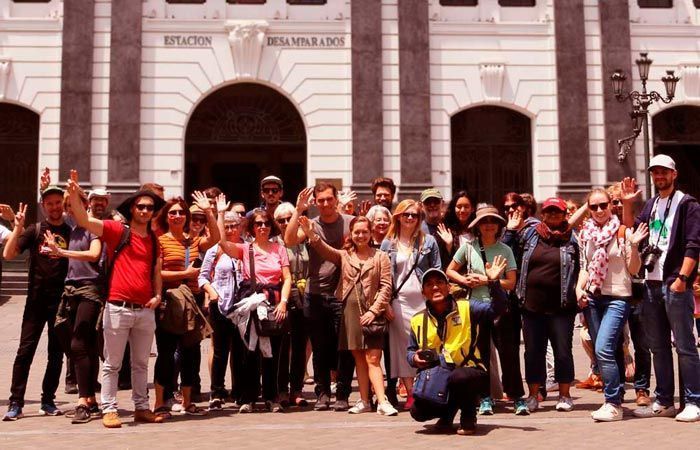
So take all the time you need to rest or “escapeto nearby spots like the Santa Rosa and José Olaya passageways, the Jirón de la Unión—a pedestrian street that leads to San Martín Square—, as well as Plaza Perú (formerly Francisco Pizarro Square) and the House of Peruvian Literature, located in the old Desamparados train station.

Plaza de Armas Lima
Changing of the guard

Discover the Plaza de Armas with a Free Walking Tour

If you’re the type who prefers exploring with a guide who tells you the stories, legends and quirky facts behind the places you visit, then join our free walking tour of Lima’s Historic Centre. This is the best way to explore the old city safely, confidently, and at no cost.

Book a free walking tour of Lima to discover the squares, streets, old mansions and churches of the “Grid of Pizarro”. The tour lasts around 2 hours and 30 minutes, and throughout the route a fully professional, 100% Peruvian guide will share with you fascinating details about what you’re seeing and snapping pictures of.

Want to know what people think of our tours? Check out the amazing reviews from past guests. You can also follow us on Instagram! And once you’ve finished exploring Lima, don’t forget to leave a tip for your guide—it’s always appreciated.

Note for Peruvians: These free tours are exclusively for inbound international travellers. Peruvian nationals are welcome to book the classic city tour of Colonial and Modern Lima instead.

Important to Know: The Plaza de Armas of Lima is not our meeting point. Visit our website for all the details.


Eating and Drinking During Your Visit to the Plaza de Armas

Lima is a world-renowned gastronomic destination, which means every outing is the perfect excuse to try the capital’s amazing flavours. Make the most of your trip to the Plaza de Armas by checking out these restaurants:

  • Senior Blue – This is a great budget-friendly option, offering the perfect mix of good, nice, and affordable (in Spanish: bueno, bonito y barato). Prices range from S/10 to S/15 (about $3 to $5). You’ll find it at Pasaje José Olaya 145.
  • Perú GourmetA restaurant tailored to tourists looking for comfort and flavour. Prices range from S/35 to S/70 (around $10 to $20). It’s located at Pasaje Santa Rosa 153.

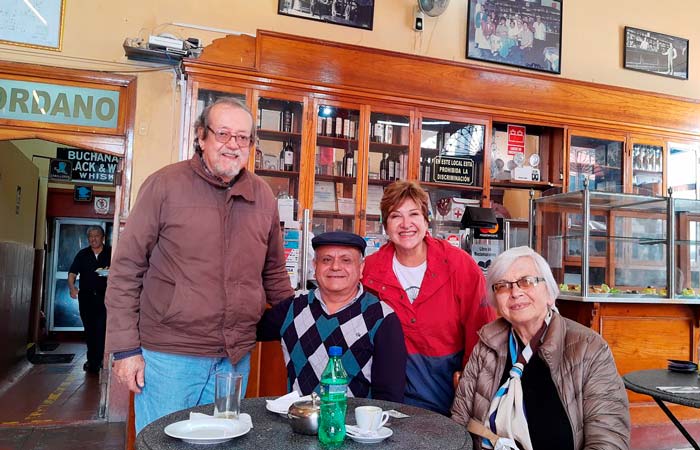
If you fancy a delicious butifarra (a traditional Peruvian sandwich) paired with a great pisco sour, then Bar Cordano (Jirón Áncash 202) is the place to go. Located very close to the Government Palace, Cordano is a true classic of the Historic Centre and one of the oldest bars and restaurants in Lima.

Another iconic spot to try Peru’s national cocktail is the Hotel Maury bar (Jirón Ucayali 201), famed as one of the original homes of the refreshing pisco sour. It’s the perfect place to relax and wrap up your walking tour of this monumental city.


Useful Info for Visiting the Plaza de Armas

Where is it?

It’s located in the Historic Centre of Lima. You can reach the square through the following streets: Jirón de la Unión, Carabaya, Junín, or Huallaga.

Is there a set visiting time?

Technically, the plaza is open 24 hours a day. Access is free and unrestricted, although on certain occasions public entry may be limited. It’s a good idea to check in advance to avoid any surprises during your visit to the “heart” of the Historic Centre.

How do I get there?

Public buses do not enter the Plaza de Armas itself. You’ll need to walk 5 to 10 minutes from nearby streets, which is actually a plus—it gives you the chance to enjoy the stunning colonial and republican architecture of the area.

An economical, reliable, and safe alternative (except during rush hour) is the Metropolitano, the bus service that connects the city from north to south. If you’re in Chorrillos, Barranco, Miraflores, San Isidro, Lince, or La Victoria, wait for the Route C buses at the station closest to your accommodation.

If you’re in the north of the city (Carabayllo, Comas, Independencia, Los Olivos, and San Martín de Porres districts), take the Route A buses. In both cases, you’ll get off at the Jirón de la Unión station. From there, you’ll walk to your destination.

Keep in mind you’ll need a rechargeable card to use the Metropolitano (cost: S/4.50). You can purchase one at any station. The standard fare is S/3.20.

For more comfort, consider using a ride-hailing app such as Uber, InDriver, Cabify or Yango. You could also opt for a street taxi, but be sure to negotiate the price before getting in—it’s acceptable to haggle. If the driver doesn’t seem trustworthy, simply wait for the next one.

No hay excusas. La plaza Mayor o de Armas te está esperando porque más allá de las dudas sobre su nombre, existe una certeza: es un magnifico atractivo histórico, cultural y turístico. ¡Ahí nos vamos, ahí nos vemos!

There’s no excuse not to go—the Plaza Mayor, or Plaza de Armas, is waiting for you. Whatever you choose to call it, one thing’s certain: it’s a magnificent historical, cultural, and tourist attraction. See you there!


Photos of the attractions around Plaza de Armas

Free Walking Tours Peru

Secure your spot on our free tours led by professional, authorized, and expert guides in Free tour Cusco, Free tour Lima, Free tour Arequipa, Free tour Barranco, Free tour Magic Water Circuit. Booking is free!

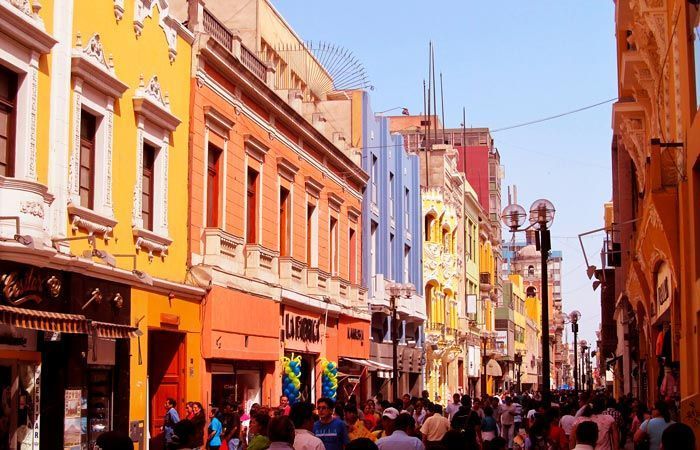
If you had to choose just one urban space to visit in the Peruvian capital, it would have to be the Historic Centre. Declared a World Cultural Heritage Site by UNESCO, the old town of the “thrice-crowned city” is a refuge of the past where every step takes you back to foundational Lima, to the Lima of the viceroyalty.

que hacer en el centro historico de lima

Mansions, churches, and colonial convents shape the old town of a destination steeped in tradition and history, evoking memories, art, and culture. Here, every square, every street or “jirón”, every Baroque, Neoclassical or even Gothic façade has something to show you, something to tell you.

The Historic Centre is the beginning, the origin, the genesis of the metropolis that is now home to more than 10 million people. It all started on 18 January 1535, when Francisco Pizarro founded and mapped out the original layout of the City of Kings, in what is now the Plaza de Armas, also known as the Main Square.

According to the regulations of the time, the conquistador planned the fledgling city in a grid or military square pattern. This included what was known as the “Cercado de Lima” (until the 17th century the city had a wall) and the district of Rímac. These two areas were divided by the course of the Rímac River, meaning “the talking river” in Spanish.

Urban development remained within “Pizarro’s Grid” until the 18th century, when the defensive walls surrounding the city were demolished. Lima then began to expand – and it hasn’t stopped since. The Peruvian capital keeps growing and “distancing” itself from its Historic Centre, the place you absolutely must visit today, tomorrow… and always!

Peruvian Heritage, World Heritage

“The Historic Centre of Lima bears witness to the architectural and urban development of a Spanish colonial city of major political, economic, and cultural significance in Latin America,” reads one of the reasons why UNESCO declared Lima’s Historic Centre a World Cultural Heritage Site in 1988.

According to UNESCO, the centre “represents an outstanding expression of a regional cultural process, conserving its architectural, technological, typological, aesthetic, historical and urban values adapted to the availability of materials, climate, earthquakes and the needs of society.”

Today, the essence of Lima’s Historic Centre “remains intact, as it still preserves much of the original characteristics of its foundation layout, in grid form, and of the expansion areas from the 16th to 19th centuries, including ancient pre-Hispanic routes heading north (Chinchaysuyo) and east (Antisuyo).”

Because of its immense monumental value, the 277.99 hectares of the Historic Centre, shared between the Cercado and the district of Rímac, are protected by various legal regulations. Their management and preservation fall under the responsibility of the Metropolitan Municipality and the Rímac district council.

These are just some of the reasons why the founding core of the city feels like an open-air museum, where every street, every square, and every balcony (a defining feature of the city) holds historical significance for the people of Lima, for Peruvians, and ultimately, for all humanity.

What to Do in Downtown Lima?

Join the FREE Walking Tour

Stroll through the centre, pausing at its main landmarks while listening to the stories told by a local, certified guide who knows the city’s history inside out. This is an experience you can enjoy in Lima free of charge with our free walking tours.

We are pioneers in offering FREE walking tours in Lima. Book with us and get ready to discover the City of Kings step by step – just like the many happy travellers who leave amazing reviews of our tours on social media. Read their feedback and browse thousands of photos on Instagram and Facebook.

We’re waiting for you in Lima to show you the very best of the old town. At the end of the tour, don’t forget to acknowledge your guide’s knowledge by leaving a tip. It helps them continue sharing the story of their city with visitors who come to the heart of the Peruvian capital.

Note for Peruvians: Free tours are exclusively for inbound tourism. If you are Peruvian, book our Lima city tour. You’ll love it!

Wander Around the Plaza de Armas

que hacer en el centro historico de lima

Visit, explore, and enjoy the urban space where the colonial and republican history of Lima first began. Surrounded by imposing buildings such as the Cathedral, the Government Palace (Casa de Pizarro), the Municipal Palace, and the House of the Oidor, among others, the Plaza de Armas – or Main Square – was, is, and will always be the centre of that Spanish town which became a melting-pot metropolis.

Take a Walk Down Jirón de la Unión

que hacer en el centro historico de lima

“Peru is Lima, Lima is Jirón de la Unión,” wrote Abraham Valdelomar in the 20th century. Much has changed since then, but the importance of this pedestrian street still endures. It symbolically links the colonial city (Plaza de Armas) with the republican city (Plaza San Martín).
Before independence, this thoroughfare was known as Calle de los Mercaderes (Street of the Merchants). In the 19th century, it received its current name, without losing its commercial character, as you’ll notice while strolling through it.
During your visit, be sure to check out the Church of Nuestra Señora de la Merced and the historic Palais Concert building.

Just behind the Government Palace and along the banks of the Rímac River, you’ll find a promenade named after María Isabel Granda y Larco—Chabuca Grandaa celebrated singer-songwriter who composed iconic pieces of Peruvian and Lima’s traditional music, such as La flor de la canela, El puente de los Suspiros, and José Antonio.

que hacer en el centro historico de lima

A popular spot among locals, the Chabuca Granda promenade offers a taste of traditional Limeñan street food like picarones and anticuchos, and lively street performances, including shows by the famous cómicos ambulantes (travelling comedians). Entry is free.

Dine at a Chifa in Chinatown

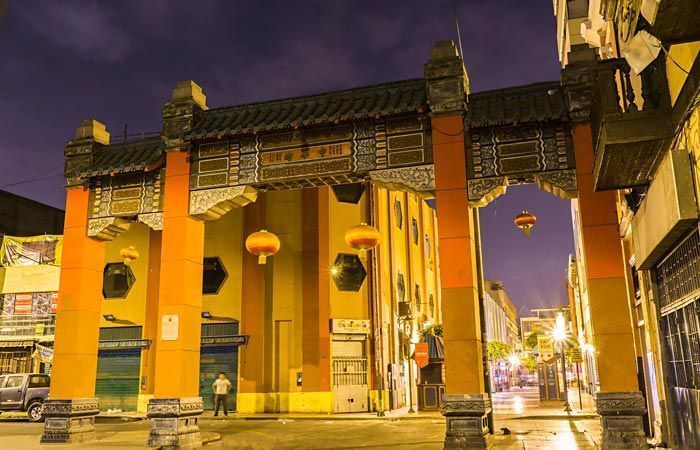
Ordering a lomo saltado or a chaufa rice in one of the chifas on Capón Street in Lima’s Chinatown is a tribute to the cultural blend and fusion of culinary techniques that have enriched Lima’s gastronomy since colonial times. Back then, pre-Hispanic ingredients were blended with those brought over by the Spanish.
In the mid-19th century, Peru welcomed thousands of Chinese migrants. Over time, Chinese restaurants began to appear. Lacking ingredients from their homeland, the cooks substituted them with local products, sparking an intense culinary fusion.

que hacer en el centro historico de lima

This fusion gave birth to chifas (the name given to Chinese-Peruvian restaurants) and to classics like arroz chaufa and lomo saltado, prepared in a wok, the large oriental pan. Make sure to taste these dishes right in the neighbourhood where they were born – they’ll have a truly special flavour.

Explore the Catacombs of San Francisco

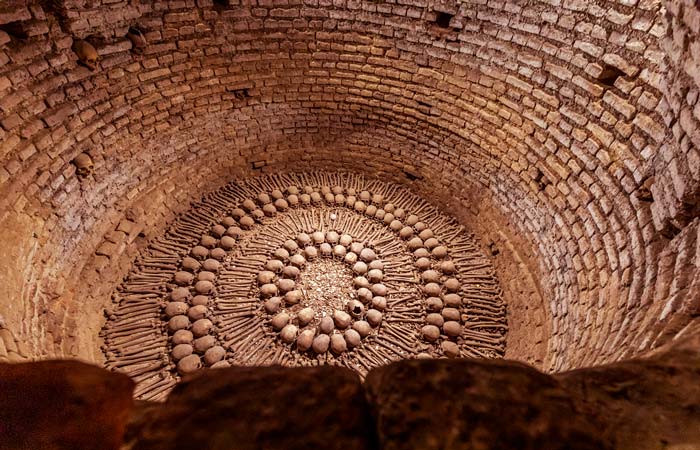
Around 36,000 people found their “eternal rest” in the catacombs beneath the Convent and Church of San Francisco. Considered the oldest cemetery in the city, its crypts are 10 meters deep and its five graves are interconnected by narrow, low tunnels.

que hacer en el centro historico de lima

The custom of burying the dead in the underground galleries of temples began during early Christianity, when believers were persecuted. Shrouded in mystery and darkness, these tunnels are said to have once connected to the Cathedral, Pizarro’s House (now the Government Palace), and even the Real Felipe Fortress in Callao.

Visit the Aliaga House

This is one of the oldest houses in Lima’s Historic Centre. A unique feature of this colonial home is that its current owners are direct descendants of its first resident, the Spanish captain Jerónimo de Aliaga y Ramírez, who accompanied Francisco Pizarro during the conquest.

que hacer en el centro historico de lima

As old as the city itself, the house was originally built using adobe and quincha (a traditional building method), but due to Lima’s seismic activity, it has undergone several renovations. This architectural gem has 18 rooms, with the most impressive being the Golden Room in baroque style. You’ll find it on Jirón de la Unión, very close to the Plaza de Armas.

Wander Through the ‘Home’ of Peruvian Saints

The cloisters of the Santo Domingo Convent housed Saint Rose of Lima and Saint Martin de Porres, two of the five Peruvian saints. All of them lived during the viceregal era, between 1570 and 1660, demonstrating the religiosity and faith that prevailed at that time.

que hacer en el centro historico de lima

Saint Rose of Lima (1586–1617) was canonised by Pope Clement X in 1671, becoming the first saint of the Americas. In 1669, Isabel Flores de Oliva (her birth name) was proclaimed patron saint of Lima. A year later, she was declared patroness of the New World and the Philippines.
Saint Martin de Porres (1579–1639) was the first American of mixed race to be canonised. He is believed to have had the gift of bilocation (being in two places at once) and to heal with herbs, which is why he is the patron saint of pharmacists. Pope John XXIII canonised him in 1962.

Discover the Monument to Taulichusco

Along the Santa Rosa Passage, beside the Municipal Palace, a monolith commemorates and honours Taulichusco the Elder, the Inca curaca (chief) who governed the Rímac Valley when Francisco Pizarro and his troops arrived at what is now Peru’s capital. The commemorative stone was placed in 1985 by Mayor Alfonso Barrantes.

que hacer en el centro historico de lima

Admire the Balconies of the Historic Centre

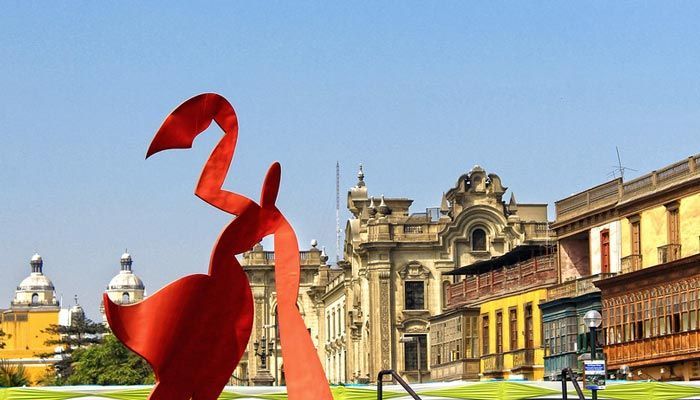
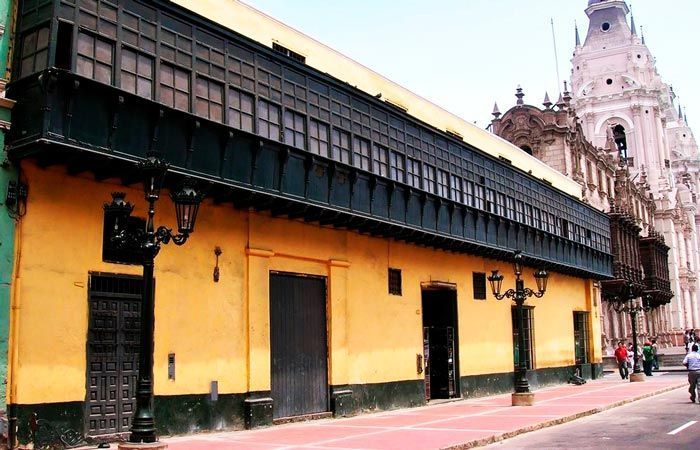
Lima, the city of balconies. As you walk through the Historic Centre, always look up—you’ll spot plenty of them, in many styles, adorning colonial buildings. Among the most notable are the balconies of the Torre Tagle Palace and the House of Osambela.

que hacer en el centro historico de lima

Although balconies originated in the Arab world, their use was prohibited in Spain after the Moors were expelled. But this law was disregarded in Lima. In the newly founded city, balconies continued to appear in palaces and mansions, eventually becoming one of the defining symbols of the Peruvian capital.

What to Do at Night?

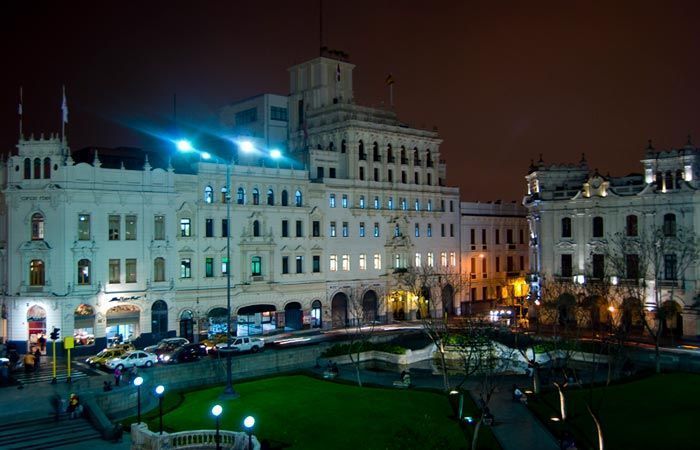
Nights hold a special charm in the foundational city of Lima. It’s not just that its architectural landmarks take on a different beauty under the moonlight and street lamps. There’s another reason: its streets hide more than a few cosy spots where you can enjoy a drink and a good time.

que hacer en el centro historico de lima

An excellent starting point for your evening (or perhaps late-night) plans is Bar Cordano, one of the city’s most traditional bars. Just a stone’s throw from the Government Palace, it’s famous for its butifarras (ham sandwiches) and tacu tacu with steak. It’s also well-known for its pisco-based drinks – pisco being Peru’s national spirit. Make sure to visit early, as it closes at 8pm.

If you’d like to explore the flavours of Peru’s famous grape-based spirit, try a pisco sour at the Bar of Hotel Maury, considered one of the birthplaces of this iconic cocktail. Another excellent option is the bar at the Gran Hotel Bolívar, right on Plaza San Martín. Here you can order a catedral (an extra-large pisco sour) or a well-made chilcano.

que hacer en el centro historico de lima

Near the square, you’ll find other lively spots such as the popular Queirolo – a bar and restaurant offering a variety of dishes and a great selection of piscos and wines. Just as fun are Estadio FC, a football-themed bar, and Rincón Cervecero, where the star of the menu is cold, refreshing beer.

Dining Recommendations

If you’re after tourist-friendly restaurants, head to Pasaje Santa Rosa (access it from the Plaza de Armas). In this peaceful corner of the Historic Centre, you’ll find more than one excellent spot to enjoy both Peruvian criollo and international dishes. Prices range between 40 and 70 soles (approx. 10 to 20 USD).

If you’re on a budget and join one of our free walking tours, your guide — a true expert in the city — will recommend a restaurant that not only offers great value for money, but also tasty dishes served in generous portions. Prices here typically range between 10 and 15 soles (approx. 3 to 5 USD).

How to Get to Lima’s Historic Centre?

From Miraflores:

  • Option one: Take an app-based taxi (Uber, Cabify, InDrive, or Yango), or a street taxi (exercise caution and choose a trustworthy driver). The ride usually costs between 15 and 20 soles (around 5 to 7 USD).
  • Option two: Board the C line of the Metropolitano from any of the Miraflores stations (if you’re near Central Park, head to Ricardo Palma Station). Get off at the Jirón de la Unión station and walk to your destination. The fare is 3.20 soles. Note: you’ll need a transport card to board the bus, which you can purchase at the station booths.
  • Option three: Our free tour is the safest, most reliable, and most enjoyable way to get to the Historic Centre from Miraflores.

From Barranco:

  • As Barranco is quite close to Miraflores, getting to the Historic Centre is very similar. From Lima’s bohemian district, you can take a taxi or the Metropolitano. If you decide to join our free tour, we’ll meet you in Miraflores.
Free Walking Tours Peru

Secure your spot on our free tours led by professional, authorized, and expert guides in Free tour Cusco, Free tour Lima, Free tour Arequipa, Free tour Barranco, Free tour Magic Water Circuit. Booking is free!

With its beaches, green areas, ancient history, cosmopolitan vibe, excellent tourist services, and the safety of its streets, Miraflores is one of the top and most beloved destinations for travellers visiting Lima, the capital of Peru.
Exploring Miraflores is always a great idea, and staying in one of its hotels is an even better choice. This way, you’ll be close to its main attractions, such as Kennedy Park (also known as Central Park), the Huaca Pucllana—a pre-Hispanic adobe pyramid—and the scenic clifftop boardwalks offering stunning views of the Pacific Ocean.
Whether it’s day or night, there’s always something fun to do in Miraflores. Another perk is its proximity to the bohemian district of Barranco and its easy connection to Lima’s Historic Centre, making it simple to discover the colonial and republican monuments of the “City of Kings”.
On your next trip to Peru, we recommend visiting the following must-see spots in Miraflores. We’re certain you’ll have such a wonderful time that saying goodbye will leave you feeling nostalgic.


What to Do in Miraflores During the Day?


Stroll Around Kennedy Park

It’s the ideal place to relax and stroll peacefully among the greenery of this urban space, where you’ll find a range of opportunities for fun, relaxation, and entertainment, such as shows at the Chabuca Granda Amphitheater and the works of art on display on the Paseo de los Pintores.

¿Qué hacer en Miraflores?

In Central Park, comprised of John F. Kennedy and 7 de Junio ​​parks, there is a free children’s play area. Other features include the street food stalls and the friendly kittens that live here. Carefully cared for and protected, the cats interact with visitors.

Take advantage of your visit to Kennedy Park to walk to the Municipal Palace and the Virgen Milagrosa Mother Church. Admission is free to this urban area, located between José Larco and Diagonal Avenues.


Travel Back in Time at Huaca Pucllana

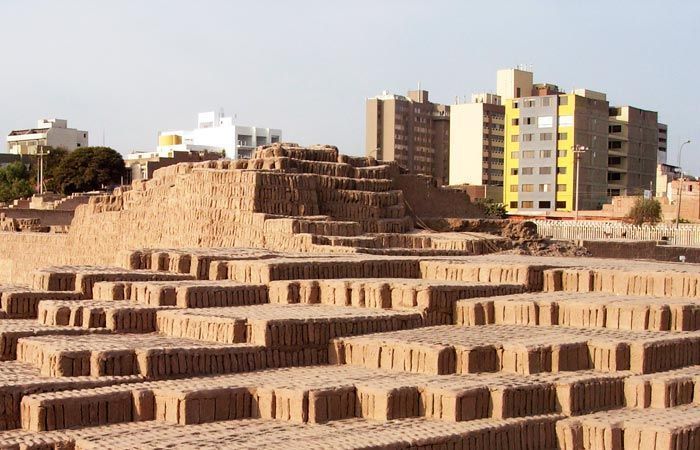
Amidst the modernity of Miraflores, Huaca Pucllana stands out as a bastion of the pre-Hispanic past. In this archaeological site from the 5th century AD, built with adobe bricks by the Lima culture, a striking pyramid stands where rituals were performed for ancient deities such as the sun and the moon.

¿Qué hacer en Miraflores?

Unlike most pre-Hispanic destinations in Peru, Pucllana can be visited at night. The experience is fascinating because inside the huaca you’ll find a restaurant—ideal for trying some of the classics of Peruvian cuisine.


Start a FREE Tour to the Historic Centre

If you want to explore Lima’s Historic Centre in a fun and safe way, with a group and a professional guide, join our free walking tours that start in Miraflores.
During the walk through the foundational squares and streets of Peru’s capital, your local guide will show you the iconic landmarks of Lima’s historic core and recommend what and where to eat in Lima, along with other tips only known to those who were born or live in the “City of Kings”.

¿Qué hacer en Miraflores?

How to join the free tour of Lima from Miraflores?

Visit Free Tour of Lima through the Historic Centre to find all the details (meeting point, duration, what to bring, tipping) and book your adventure with us. You can also check out the fantastic comments from our guests on Facebook and other social media platforms.
Note for Peruvians: Free tours are exclusively for inbound tourism. National travellers can take part in the classic city tour of Colonial and Modern Lima.


Find a Tasty and Affordable Menu

If the food in Miraflores’ tourist restaurants seems too expensive—don’t worry! We have the solution for you: head to Esperanza Street, just a few steps from Central Park. On this street, you’ll find several budget-friendly restaurants offering set menus. These typically include a starter or soup, a main course of your choice, a soft drink, and dessert.

¿Qué hacer en Miraflores?

There are other parts of the district, such as Alcanfores and Porta streets, where you’ll also find good prices, considering the district’s general cost of living. When planning your meals, budget at least 20 soles.


Go Shopping at Larcomar

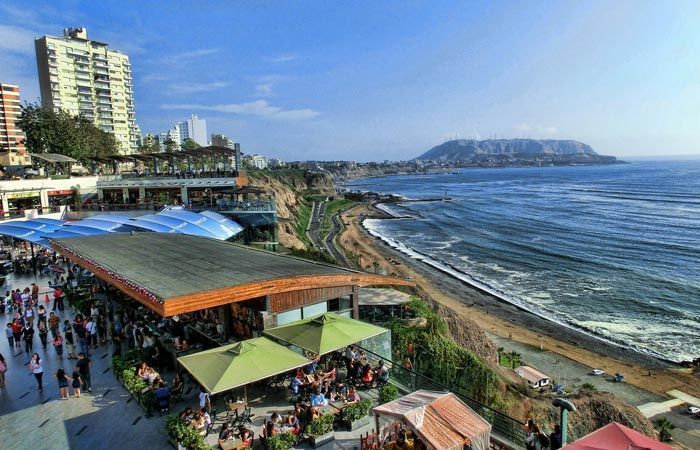
Thanks to its spectacular view of Lima’s bay, its delicious restaurants, cinemas, and exclusive shops offering a wide variety of products, this shopping centre is one of the main tourist attractions in Miraflores. Spacious and modern, it’s an excellent option for shopping, having fun, and admiring the Pacific Ocean.

¿Qué hacer en Miraflores?

Opened in 1998, Larcomar is located at 610 Malecón de la Reserva, just a 20-minute walk from Central or Kennedy Park. A perfect opportunity to enjoy the peaceful streets of Miraflores.


Feel the Passion at the Park of Love

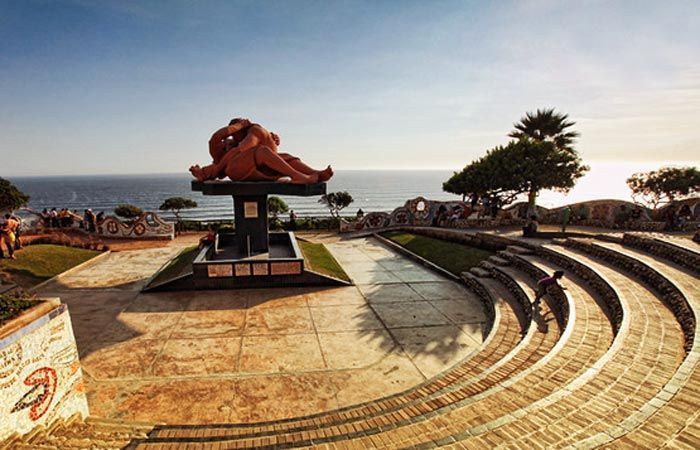
Inaugurated on Valentine’s Day (14 February) in 1993, the Park of Love is one of Lima and Miraflores’ main attractions. Its extraordinary view of the capital’s bay, the monumental sculpture The Kiss by renowned Peruvian artist Víctor Delfín, its well-kept gardens, and benches decorated with poems and inspiring messages all make this spot a true tribute to romance.

¿Qué hacer en Miraflores?

Due to its proximity to Central Park, it’s a lovely idea to walk over to this romantic corner, from which you can admire the Pacific Ocean. Entry is free every day of the year.


Stroll Along Larco Avenue

If Jirón de la Unión is the iconic and unmissable street in Lima’s Historic Centre, then José Larco Avenue (commonly referred to as simply “Larco”) plays that role in Miraflores. It stretches from Central (or Kennedy) Park all the way to the Larcomar shopping centre.

¿Qué hacer en Miraflores?

Vibrant and cosmopolitan, Larco offers everything a traveller might need: accommodation, restaurants, cafés, bars, and nightclubs, as well as banks, currency exchange offices, and casinos. You’ll also find bookshops, pharmacies, and boutiques, among other shops. This wide range of services makes it an excellent place to stay.


Snap a Photo of the Marina Lighthouse

Rising like a watchman over the sea and its waves, the Marina Lighthouse stands proudly along the Cisneros promenade. Measuring 22 metres in height, it was moved to Miraflores in 1973, where it started its operations in 1921.

¿Qué hacer en Miraflores?

It was moved to Miraflores in 1973, where it quickly became a district icon. Thanks to its strategic location, the lighthouse is perfect for snapping stunning photos that include the coastal landscape of the Costa Verde and the city’s beach circuit. Without a doubt, it’s a fantastic place to enjoy the sunset.


Surf the Pacific Waves

¿Qué hacer en Miraflores?

The coast of Miraflores offers a sea of adventure, with surfing available all year round. Take on the waves of Waikiki and Makaha beaches to show off your skills on the board—or to learn the secrets of this sport, which first began to gain popularity on Lima’s coast in the early 20th century.

On Miraflores’ beaches, you’ll share the waves with local athletes and enthusiasts. But if you’ve never surfed before, your visit is a great opportunity to take one or more surf lessons with experienced instructors.


Discover the Best of Peruvian Handicrafts

You’ll find variety and quality at the artisan galleries and centres along the Petit Thouars Avenue boulevard. Often referred to as “Indian markets”, these spaces offer the finest examples of popular art from Peru’s coast, highlands, and rainforest. Once you’ve seen them, you won’t be able to resist buying several pieces.

¿Qué hacer en Miraflores?

And while haggling is a commonly accepted practice in these markets, be mindful and respectful of the ancestral knowledge of the artisans. Ideally, you should agree on a price that’s fair for both sides.


What to Do in Miraflores at Night?


Your tourist adventure doesn’t end when the sun goes down. Night-time in Miraflores has plenty in store for you. From theatre performances and film premieres to memorable dinners on its culinary boulevard—and of course, a great selection of bars, pubs and clubs to keep the fun going and brighten up your evening.


Savour the Fun on the Culinary Boulevard

Known for many years as “Pizza Street”, this area—once packed with Italian restaurants, bars and pubs—was renovated by the local authorities into a tidy and attractive culinary boulevard.

Exploring it at night is a fantastic option. You’ll find plenty of spots to grab a drink and spark up a great conversation. So, get ready to fully immerse yourself in a feast of flavours and sensations on one of the liveliest and most vibrant corners of Miraflores.


Try Your Luck at the Casinos

Miraflores isn’t Las Vegas or Monte Carlo, but its slot machines and roulette tables offer the chance to enjoy a few lucky and exciting nights. Try your hand and have fun at the district’s top casinos—La Hacienda and Fiesta. Just keep in mind: the minimum age for entry is 18.


Frequently Asked Questions – FAQs


Where can I find good accommodation in Miraflores?

Where can I exchange foreign currency in Miraflores?

You’ll find currency exchange houses on José Larco Avenue and at the Miraflores roundabout. Another option is the “cambistas” (street money changers) located outside the Banco de Crédito del Perú (on the corner of Pardo Avenue and the roundabout).

Street changers offer better rates than formal exchange houses and banks. Transactions in dollars and euros are safe. These changers are easily identified by their vests and are always located in the same spots.

Which is the best area of Miraflores?

The whole district is safe and well-organised, but we recommend staying near Central Park (also known as Kennedy Park), as this area offers the most convenience for tourists, including hotels, hostels, restaurants, banks, and craft markets, among many other services.

Free Walking Tours Peru

Secure your spot on our free tours led by professional, authorized, and expert guides in Free tour Cusco, Free tour Lima, and Free tour Arequipa. Booking is free!
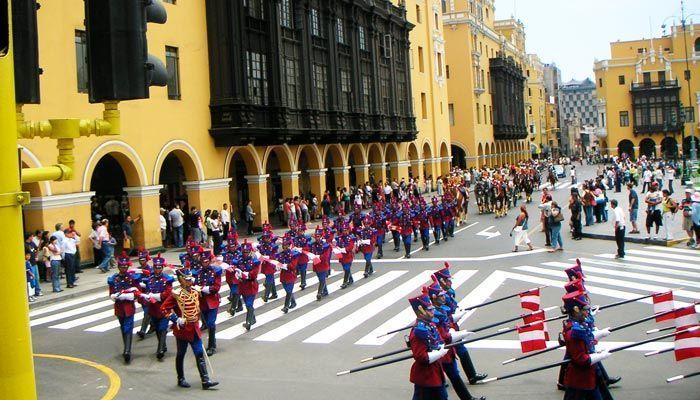
Lima is a museum in itself—not just because of the architecture in its Historic Centre, declared a World Cultural Heritage Site by UNESCO, but also for the impressive archaeological, artistic and cultural collections displayed in its magnificent public and private museums.

It’s no exaggeration to say that skipping these museums when planning your visit to the “City of Kings” would be a serious travel mistake. These spaces will help you uncover the pre-Hispanic, colonial and republican history of both Lima and Peru.

We won’t rank them—it’s tough to say which museum is the best in the city. We’d rather let you decide based on your own interests and preferences. What we can assure you is this: whichever museum you choose, you’ll have a great time while expanding your knowledge and cultural perspective.

Lima awaits not only for you to wander its streets, enjoy the ocean breeze, and savour its cuisine—it also wants to show you its past, its stories, and its cultural treasures. These are proudly displayed and preserved in the stunning museum spaces we recommend, and many more you’ll discover as you explore the Peruvian capital.

Gold Museum of Peru and Weapons of the World (MOdP)

Two museums in one place. One displays an extensive collection of gold, silver and bronze artefacts, while the other showcases a vast array of weapons and uniforms from different eras and regions. At first, this combination may seem unusual—but in truth, it’s both appealing and fascinating.

museos de Lima

Both are private museums that originated from the personal collections of founder Miguel Mujica Gallo, who opened them to the public in 1966. Here, you’ll find funeral masks, tumis (ceremonial knives), and pre-Columbian ornamental pieces, as well as unique weaponry from around the world.

The Gold Museum of Peru and Weapons of the World is located at Jirón Alonso de Molina 1100, Santiago de Surco.
Opening hours: Monday to Sunday, 10:00 AM to 5:00 PM.
Admission: Peruvian and foreign adults – S/40; seniors over 60 – S/30; children (ages 5 to 17) and students – S/17; children under 5 enter free.

Larco Museum – Treasures of Ancient Peru

Its halls display over 5,000 years of Peru’s ancestral history. A fascinating journey that, as stated on the website of this private museum founded in 1926 by archaeologist and researcher Rafael Larco Hoyle, “helps you understand the development of pre-Columbian societies.”

museos de Lima

The museum is housed in an 18th-century colonial mansion with beautiful gardens that will surely charm you. You’ll also love the open storage rooms and diverse exhibition halls showcasing an extraordinary collection of archaeological artefacts from various regions of Peru—including the famous erotic huacos of the Moche culture.

The Larco Museum is located at Avenida Simón Bolívar 1515, Pueblo Libre.
Opening hours: Monday to Sunday, 9:00 AM to 7:00 PM. On December 24, 25, 31 and January 1, the museum is open from 10:00 AM to 6:00 PM.
Admission: General – S/40; seniors over 60 (with ID) – S/30; minors (under 17) and students (with ID) – S/20; children up to 8 years old enter free.


National Museum of Archaeology, Anthropology and History of Peru (MNAAHP)

This museum is a must-visit as it is “Peru’s first museum” and “the largest, oldest and most representative.” According to its official website, it houses “around 300,000 pieces that make up the legacy of our pre-Hispanic, colonial and republican past.”

museos de Lima

Among the archaeological treasures on display are the Crossed Hands of Kotosh, the Tello Obelisk from the Chavín culture, Paracas textiles, as well as colonial paintings from the Cusco School and the republican era. It truly is a rich summary of Peru’s national history.

The MNAAHP is located in the historic Palacio de la Magdalena, once home to the liberators José de San Martín and Simón Bolívar. The building itself “combines features from the late colonial and republican periods,” as the museum’s website points out.

You’ll find the museum in Plaza Bolívar in Pueblo Libre—a peaceful and evocative urban space.
Opening hours: Tuesday to Sunday, 9:00 AM to 7:30 PM; Mondays from 12:00 PM to 7:30 PM.
Admission: Peruvian and foreign adults – S/10; guided visits – S/20.

Natural History Museum

Dinosaur bones, fossilised whales, and taxidermy animals are just part of the impressive collection at this museum, which belongs to the National University of San Marcosthe oldest university in Peru and the Americas.

museos de Lima

If you’re particularly interested in the evolution of fauna or travelling with children who love learning through play, this museum is a fantastic choice. Its exhibits help visitors of all ages understand the species that once lived—and still live—in Peru. You’ll find the museum at Avenida Arenales 1256, Jesús María.
Opening hours: Tuesday to Friday, 9:00 AM to 5:00 PM; Saturdays, 10:00 AM to 5:00 PM.
Admission: Adults – S/10; children from age 3, school pupils and university students – S/10; visitors aged 60 and above enter free.

Museum of the Nation

The main mission of this museum is to preserve Peruvian art. It holds over 15,000 archaeological, historical and ethnographic objects from the pre-Hispanic, colonial and republican eras.

museos de Lima

You can find the Museum of the Nation at Avenida Javier Prado Este 2465, in the district of San Borja.

Museums in Lima’s Historic Centre

Museum of Art of Lima (MALI)

Even before stepping inside, you’ll be amazed by its building: the Palacio de la Exposición, described on MALI’s website as “one of the finest examples of Lima’s eclectic architecture. It was conceived and built as the venue for the first major public exhibition in our country.”

museos de Lima

Inaugurated on 10 March 1961, MALI is one of the most dynamic cultural spaces in the capital. Its outstanding temporary exhibitions and its collection of over 17,000 works of Peruvian art span 3,000 years of history, making it a truly exceptional attraction.

For a deep and inspiring cultural experience, visit MALI at Parque de la Exposición, Paseo Colón 125, in Lima’s Historic Centre.
Opening hours: Wednesday, Thursday, Friday and Sunday from 10:30 AM to 6:00 PM. Saturdays until 5:00 PM. On the last Friday of each month, open from 6:00 PM to 10:00 PM.
Admission: General – S/40; Peruvians and residents – S/15; students (over 8 years) – S/7.50; children under 8 and adults over 65 enter free.

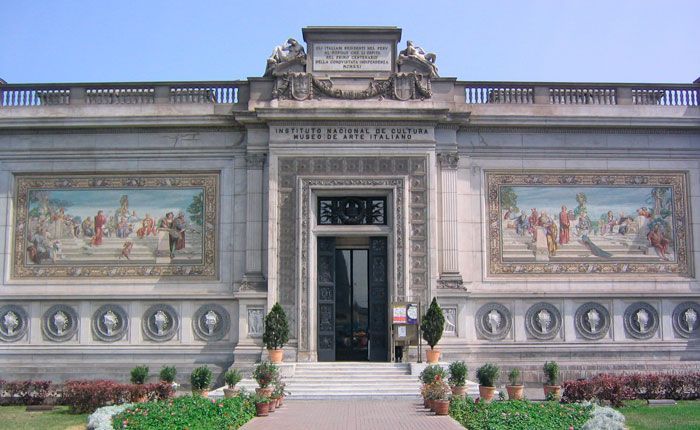
Italian Art Museum

Opened on 11 November 1923, this is the only museum in Latin America with a collection of around 200 pieces of Italian art from the early 20th century. Its sculptures, paintings, engravings, watercolours, drawings and ceramics were acquired from galleries across Italy between 1921 and 1922.

museos de Lima

If you’re interested in a unique display of early 20th-century Italian art, visit this neo-Renaissance museum located at Avenida Paseo de la República 250, in the Historic Centre of Lima.
Opening hours: Tuesday to Saturday from 10:00 AM to 5:00 PM. On the first Sunday of each month, open from 10:00 AM to 3:00 PM.
Admission: Adults – S/6; higher education students – S/3; school pupils – S/1.50.

José Carlos Mariátegui Museum

One of the most influential thinkers of republican Peru, José Carlos Mariátegui, spent the last five years of his life at Jirón Washington 1938, in the heart of Lima. Born in Moquegua, José Carlos Mariátegui La Chira (1894–1930) wrote his most renowned work, Seven Interpretive Essays on Peruvian Reality, in this humble house.

museos de Lima

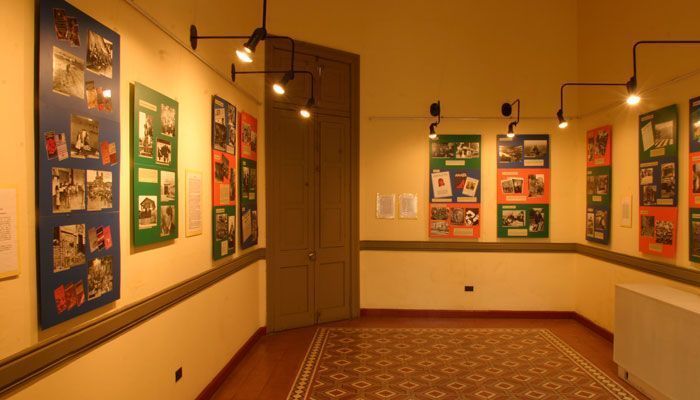
A Marxist intellectual, Mariátegui carried out intense work during his short life. The traces of his thought remain in the museum, where you’ll find his documents, books and personal belongings. He is affectionately remembered as El Amauta, or “the wise one.”

Opening hours: Monday to Friday from 9:00 AM to 5:00 PM; Saturdays from 9:00 AM to 3:00 PM.
Admission: Free entry.

National Afro-Peruvian Museum

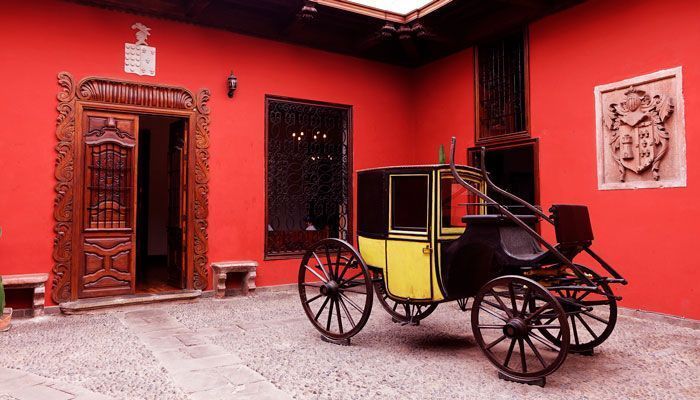
Opened on 4 June 2009 in a historic colonial house in central Lima, this museum’s nine rooms trace the historical and cultural journey of Afro-Peruvians—a group whose ancestors endured slavery during the colonial period and the early republic.

museos de Lima

For centuries, thousands of Africans—mainly from Angola—were brought to Peru’s coast as slaves. This forced migration is explained through infographics, alongside shackles once used on hands and feet in a time of lost freedom.

Located at Jirón Ancash 542, the museum also highlights the cultural contributions of Afro-Peruvians to today’s Peru—a country ready to welcome you with its rich diversity.
Opening hours: Monday to Sunday from 9:00 AM to 5:00 PM.
Admission: Free entry.

Frequently Asked Questions

What are the opening hours of the museums?

Opening days and times vary, but most museums are open to the public from 10:00 AM to 6:00 PM.

Which is the best museum in Lima?

There’s no definitive answer—it all depends on your personal interests and expectations. However, if you’re passionate about history, we recommend the National Museum of Archaeology, Anthropology and History of Peru and the Larco Museum. You won’t be disappointed!

Do I need to book in advance to visit the museums?

No booking is required. You can buy your ticket at the museum’s entrance. It’s best to carry cash in soles to make the process easier.
If you’re visiting as part of a large school group or tour, it’s a good idea to notify the museum in advance.

Are museums open every day?

Not all of them. Most museums are closed one day a week, and on weekends they may have shorter opening hours. Before your visit, check each museum’s schedule to make sure it’s open.
Many museums are closed on Mondays, so keep this in mind when planning your itinerary in Peru’s capital.

Which districts have the best museums in Lima?

If you want to visit several museums, head to the Historic Centre of Lima, and also explore the districts of Miraflores, Pueblo Libre, San Borja and Barranco.

On which days can you visit Lima’s museums for free?

If you’re a Peruvian national, you can enjoy free entry to the following museums on the first Sunday of each month:

  • Huallamarca Site Museum
  • House of Peruvian Gastronomy
  • Arturo Jiménez Borja–Puruchuco Site Museum
  • Italian Art Museum
  • Museum of Art of Lima (MALI)
  • Pachacamac Site Museum
  • Huaca Pucllana Site Museum
  • National Museum of Archaeology, Anthropology and History of Peru
  • National Museum of Peruvian Culture

After exploring Lima’s top museums, continue your adventure through the Historic Centre with one of our local guides. Join our free walking tours (available in Spanish and English) every day!

Don’t miss the chance—book the best Free Tour in Lima now. Still unsure? Check out the fantastic reviews from past travellers and browse through our photo galleries on Facebook, Instagram and Google.

Note for Peruvian citizens: Free walking tours are designed for international visitors. Locals are welcome to explore the capital through the Classic City Tour: Colonial and Modern Lima.

Free Walking Tours Peru

Secure your spot on our free tours led by professional, authorized, and expert guides in Free tour Cusco, Free tour Lima, and Free tour Arequipa. Booking is free!

Eating well—and eating with variety and delight—is a source of pride for locals in Lima. In this city, the question What should I have for lunch or dinner? is not a dilemma due to lack of options, but because of the overwhelming number of tempting choices. Restaurant menus are a true invitation to indulge.

Lima is not only considered the gastronomic capital of Peru, but also of South America. Its restaurants regularly appear on the world’s most prestigious culinary rankings. This success is the result of a unique blend of cultural fusion that has slowly simmered in pre-Hispanic, colonial, and republican kitchens.

Other key factors include Peru’s vast array of native ingredients—used since ancient times—the revival of Andean products like quinoa, maca and potato (once marginalised for not appearing in the Bible), and the incorporation of international techniques and ingredients.

Peru—and especially its capital—is home to all the bloods. This diversity is reflected in its cuisine, which has been enriched by the influences of the Spanish conquistadors, enslaved Africans, and immigrants from China, Japan, Italy, France and beyond.

This fusion of traditions and flavours gives Peruvian food its distinctive character. During your holiday in Lima, you’ll discover an exquisite variety of land and sea dishes that make the city one of the world’s top culinary destinations. Enjoy your meal!

What Are the Must-Try Dishes in Lima?

Ceviche: A 100% Peruvian Dish

¿Qué comer en Lima? La Gastronomía de Lima

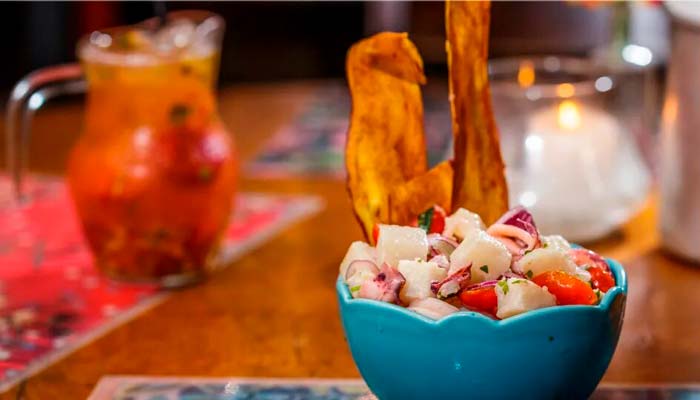
Declared an Intangible Cultural Heritage of Humanity by UNESCO in December 2023, ceviche is a brilliant mix of fresh fish, lime juice, limo chilli, and finely sliced onions. Seasoned with salt and pepper, this ocean treasure is traditionally served with toasted corn (cancha) and sweet potato.

Thanks to its coastal location, Lima is a true ceviche city. Try it at a local market stall or in a renowned restaurant. Pair it with a glass of chicha morada or an ice-cold beer. Feeling bold? Go for the mixed version, combining fish and seafood, and ask for plenty of ají (chilli).

As locals love to say: “Ceviche that doesn’t burn, isn’t real ceviche.” Dare to test it yourself?


Ají de Gallina: When Looks Can Be Deceiving

¿Qué comer en Lima? La Gastronomía de Lima

It may not be the most visually striking dish in Lima’s culinary scene, but ají de gallina is a favourite among both locals and visitors. Don’t judge it by its looks—one bite and you’ll fall for the shredded chicken (or hen) combined with garlic, yellow chilli, and bread soaked in milk.

Usually the chicken chili served with sliced boiled potatoes, hard-boiled egg, and black olives, this creamy and comforting dish comes with a generous portion of fluffy rice. It’s a staple in everyday Peruvian menus, both at home and in restaurants.


Causa Rellena: A Dish with History

¿Qué comer en Lima? La Gastronomía de Lima

“For the cause,” the women would tell the soldiers fighting for Peru’s independence when they gave the combatants their austere but delicious lunch: a mixture of mashed potatoes seasoned with yellow chili, lemon, salt, and pepper.

True or false, that’s one of the versions of the name of the causa limeña. It’s not the only one; there are others, but never as many as the variations of this popular appetizer, in which two or more layers of boiled potatoes are formed, between which is placed a filling usually mixed with mayonnaise.

Traditional fillings include tuna, shredded chicken, and avocado with various vegetables. There are more sophisticated options, such as causa stuffed with shrimp or crab meat. Whichever you choose, you’ll enjoy it. You can’t go wrong when it comes to a good cause.


Lomo Saltado: From Chifas to Creole Tables

¿Qué comer en Lima? La Gastronomía de Lima

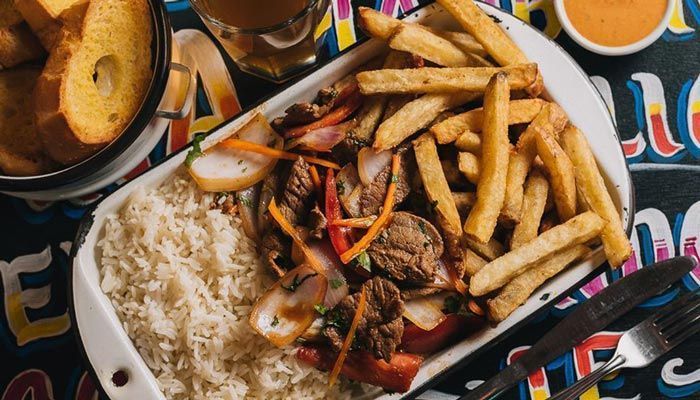
In Lima, the ancient flavours of Chinese cuisine became “criollised” in the famous chifas — the Chinese-Peruvian eateries. It was in these kitchens that Chinese immigrants, cooking in their traditional woks over intense heat, prepared the first lomo saltado dishes in Peru.

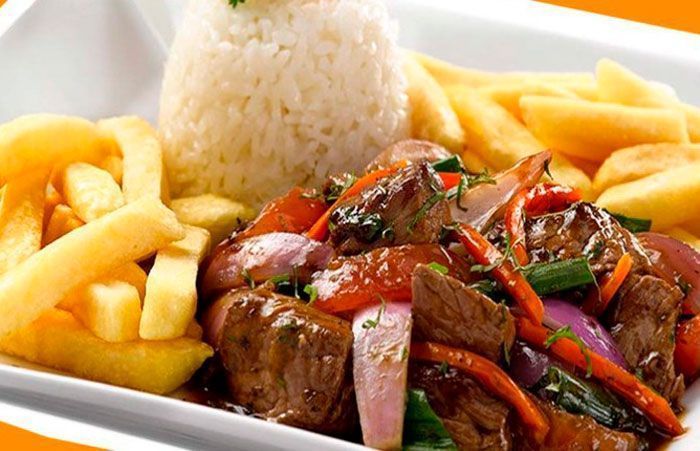
This mouth-watering delight, made of juicy beef strips, onions, tomatoes, yellow chilli (ají amarillo), vinegar, soy sauce (sillao), and other spices, comes together in a hot wok where flavours and aromas blend beautifully — a perfect example of the fusion of two ancient culinary traditions.

But no self-respecting lomo saltado is complete without a generous serving of crispy chips and fluffy white rice. This grain, a staple both in China and Peru, represents the deep gastronomic connection between the two nations.


Limeñan Carapulca: The Taste of Dried Potato

¿Qué comer en Lima? La Gastronomía de Lima

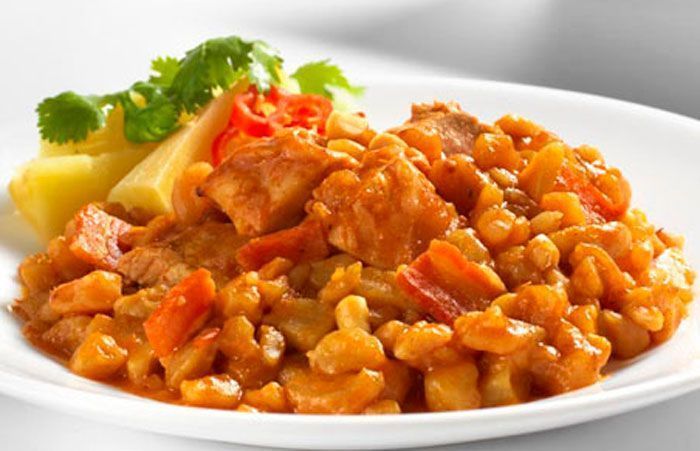
Its main ingredient — and even its name — comes from the Andes and the Altiplano. But the version known today is the result of cultural fusion and Afro-Peruvian influence. Carapulca limeña is a rich stew made with dried potato, whose name comes from the Aymara phrase qala phurk’a, meaning “to cook over stones”.

Besides dried potato, carapulca includes pork, hen or chicken. It’s seasoned with ají panca (red chilli), garlic, toasted and ground peanuts, cloves, sweet wine, and a variety of spices. It’s usually served with boiled cassava, replacing the more traditional rice.


Pollo a la Brasa: A Golden Temptation

¿Qué comer en Lima? La Gastronomía de Lima

Most Limeñans — and Peruvians in general — are passionate devotees of pollo a la brasa, or rotisserie chicken. In cities and small towns alike, you’ll always find a spot to enjoy this modern classic of Peruvian cuisine. Its origin dates back to 1950 at La Granja Azul in Santa Clara, owned by Swiss national Roger Schuler.

In search of a way to sell the chickens raised on his farm, Schuler, with help from his partner Franz Ulrich, invented a method that rotated the bird over hot coals, ensuring even and perfect cooking.

Today, pollo a la brasa is seasoned with various spices and served with chips, salad, and a wide range of sauces — from spicy ají, to mustard, ketchup, and mayonnaise. There are also variations, such as the mostrito, which includes a portion of chaufa rice. Perfect for sharing with family and friends, Pollo a la Brasa Day is celebrated on the third Sunday of July across the country. Will you join the celebration?


Cau Cau: A Love or Hate Affair

¿Qué comer en Lima? La Gastronomía de Lima

You either love it or you don’t — there’s no in-between when it comes to cau cau, one of the most debated dishes in Creole cuisine. It often features in lists of both the best and the most controversial Peruvian dishes. But the only way to know which side you’re on is to try it for yourself.

Cau cau is prepared with beef tripe, cut into pieces and seasoned with garlic, onion, yellow chilli, turmeric, coriander, and bay leaves. This stew, blending Indigenous, European, and Afro-Peruvian influences, includes cubed potatoes and is served with fluffy white rice.


Anticuchos: A Delicious Dish Straight from the Heart

¿Qué comer en Lima? La Gastronomía de Lima

Two hearts are needed to make great anticuchos. One comes from the cow — the beef heart, marinated with garlic, vinegar and ají panca (red chilli), and grilled over hot charcoal. The other is the heart of the anticuchero or anticuchera — the vendor who adds love and soul into preparing this beloved street food.

Anticuchos are skewers typically served with boiled potatoes, corn on the cob, and a special spicy sauce. With Afro-Peruvian roots, anticuchos are a popular dish sold on corners and alleyways. Thanks to their unbeatable flavour, they’ve made their way into top restaurants and have become a true symbol of Creole gastronomy.


Seafood Dishes in Lima:     

Chupe de camarones: a soup that came from the south

¿Qué comer en Lima? La Gastronomía de Lima

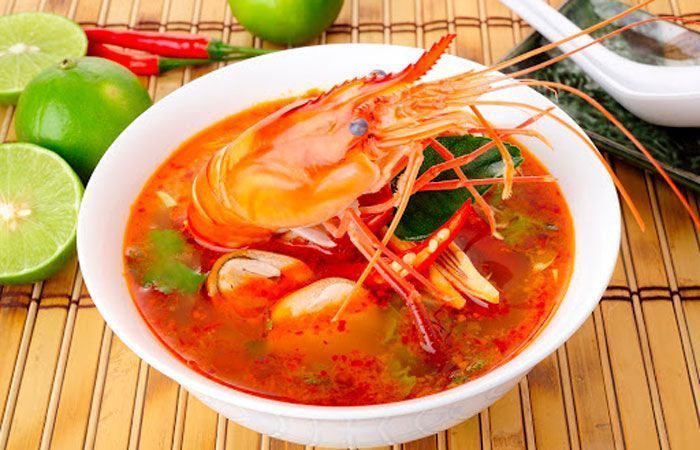
Although it originates from the city of Arequipa, in Peru’s capital you’ll find more than one spot to try this hearty soup whose star ingredient is shrimp. These freshwater and saltwater crustaceans are so large, they almost jump out of the bowl.
Chupe (from the Quechua word chupi, meaning “soup”) is prepared with milk, rice, potatoes, chilli, garlic, red onion, salt, pepper, oregano, and oil. A combination of flavours that will turn your meal into a real party for your taste buds. If you want to savour a taste of Arequipa while in Lima, we definitely recommend this finger-licking soup.


Fish and seafood parihuela: a soup to bring the dead back to life

¿Qué comer en Lima? La Gastronomía de Lima

If you ask a local in Lima how they’d describe this soup, you’ll probably hear: “Parihuela brings the dead back to life.” That’s how powerful and energising this dish is—it intensifies the flavours of Peru’s seafood, some of the richest in the world.
If you’re worn out from walking around the city, or your night went on a bit too long, recover with a steaming hot parihuela. It’s made with white fish, mussels, octopus, onion, tomato, yellow chilli and other ingredients that chase fatigue away.


Tacu tacu: the resurrection of the bean

¿Qué comer en Lima? La Gastronomía de Lima

This dish was born from the custom of scraping the concolón—the crispy leftovers stuck to the bottom of the pot. When a little bit of beans, lima beans or lentils are left over from the previous day, they’re thrown into a pan. Rice and a Creole-style seasoning are added, mixing all the ingredients together in rhythm.

Tacu tacu is ready when it forms a compact, golden crust. Once plated, it’s livened up with a seafood sauce and fried fish. It can also be served with a crispy breaded steak or lomo saltado, with some versions even including a humble fried egg. Today, this Afro-Peruvian dish proudly features on the menus of many traditional restaurants.


Arroz con mariscos: two of Lima’s great loves

¿Qué comer en Lima? La Gastronomía de Lima

Limeños love their rice, and their city faces the sea—so it’s no surprise that someone thought to combine the ever-present grain with the wide variety of seafood fished from the Pacific. The result is one of the capital’s most popular dishes.

Arroz con mariscos is seasoned with onion, garlic, tomato, bell pepper, ají panca, and yellow chilli. The seafood—previously boiled—is then added (scallops, prawns, sea snails, squid, octopus and more), along with cooked rice. Finally, peas and more bell pepper are stirred in (some cooks also add corn and carrots).


Where to eat in Lima?

Limeños often say that in their city, you can eat well everywhere—on the street, in markets, in hidden huariques (local gems only true foodies know), and in exclusive restaurants, in short, everywhere and in every home.

That’s why you’ll find a wide and diverse culinary offering. In districts like Miraflores, San Isidro, and Barranco, prices tend to be higher. These areas are home to trendy spots, signature restaurants, and innovative food proposals.

If you’re looking for the “three Bs” (good, nice, and cheap), we recommend visiting Lima’s Historic Centre—either on your own or through one of our free walking tours. Your guide will help you find delicious food without breaking the bank. Prices usually range between 10 and 30 soles (around 4 to 10 USD).

So now you know: your holiday in Lima won’t be complete without exploring its food scene, where you’ll find the very best of Peruvian cuisine. You can even join a culinary tour around Lima!

Free Walking Tours Peru

Secure your spot on our free tours led by professional, authorized, and expert guides in Free tour Cusco, Free tour Lima, and Free tour Arequipa. Booking is free!
Huayna Picchu or Machu Picchu Mountain — You are about to travel to Cusco and you don´t know which of these mountains to choose, don´t worry, in this article we will tell you everything you need to know to take the best decision!.

Both mountains offer magnificent panoramic views and unforgettable experiences, however they are located on opposite sides, it will depend a lot on your traveler profile to decide for on one of them, but the good experience is guaranteed.

Keep in mind that the Inca citadel and the Mountain, use the same name, to avoid confusion, we will use the word “Citadel” to refer to the Ruins of Machu Picchu and the word “Mountain” to refer to the Summit.


1. What is the difference between Huayna Picchu vs Machu Picchu Mountain?

TYPE OF INFORMATION HUAYNA PICCHU MACHU PICCHU MOUNTAIN
Elevation 2720 masl (8923 feet) 3082 masl (10,111 ft)
Duration of the hike From the citadel to Huayna Picchu is about 1 hour – the Return is about 40 min. From the Machu Picchu citadel to Machu Picchu Mountain is about 1:20 hour – the Return is about 45 min.
Hike distance From Machu Picchu cidated to Huayna Picchu it is 2 km (1.25 miles) From Machu Picchu citadel to Machu Picchu Mountain it is 2.3 km (1.4 miles)
Difficulty Hard Intermediate
Archaeological sites Agricultural Platforms and the Temple of the Moon None
Best panoramic view Panoramic view of the Machu Picchu citadel and other mountains The best panoramic view of all the mountains of the Archaeological Park, higher altitude, better angle
Entry schedules 1st schedule: 07am – 08am and
2nd schedule: 10am – 11am
1st schedule: 07am – 08am and
2nd schedule: 09am – 10am
Number of visitors 400 daily tickets available (200 visitors on each schedule) 800 daily tickets available (400 visitors on each schedule)
The most popularHuayna Picchu is the most popular because of the challenging climbing and it has been in the tourism market for many years. It is not so popular because it has been in the market for a few years but the route is super rewarding.
The most beautiful route ————- Machu Picchu Mountain has the widest, the safest and the most beautiful route.
For adrenaline loversHuayna Picchu won´t disappoint you ————-
For family and children ————- The Machu Picchu Mountain is the most popular for family groups and children

2. Price difference:

Both of them have an additional cost to the price of Machu Picchu “Solo” ticket, but the price difference is not much, find out more on Cost and Ticket Types to Machu Picchu.


3. Photos of Huayna Picchu or “Young” Mountain


4. Photos of Machu Picchu Mountain or “Old” Mountain


5. Which one to choose?

Choose Huayna Picchu, as long as:

Choose Machu Picchu Mountain, as long as:

  • You want to walk at a higher altitude for photos with a better angle
  • You travel with your family, for example if you have children, remember that in order for children to access the mountain, they must be over 12 years old, otherwise you and kids can go to the Inca bridge of Machu Picchu
  • You want a quieter route, without many tourists and with a lesser degree of difficulty

Don’t choose any, if you suffer from Acrophobia!


6. Can I do both Mountains in the same day?

  • You could do it, but you cannot buy this type of ticket Online because there isn´t an option for “Machu Picchu Inca citadel + Huayna Picchu and Machu Picchu Mountain”, therefore you need to buy in person or better contact your travel agent.
  • The other issue is the schedule, you would have to first visit Huayna Picchu, access in the first hour from 7am to 8am, and be back in the citadel of Machu Picchu at 10am and then access Machu Picchu Mountain before 10am, and be back in the Inca citadel at about 11:30 am.
  • At about noon, get outside the Inca citadel of Machu Picchu to meet your Guide and RE-ENTER Machu Picchu for the guided tour of the Inca citadel.
  • Conclusion: Under this itinerary that includes the visit of both Mountains, you will end the day super tired, so we strongly only recommend you choose one of the mountains only and perhaps alternate with the Inca Bridge.

Free Walking Tours Peru

Secure your spot on our free tours led by professional, authorized, and expert guides in Free tour Cusco, Free tour Lima, and Free tour Arequipa. Booking is free!
Hiking Machu Picchu Mountain | Most tourists who visit Machu Picchu Inca citadel alternate their excursion with Huayna Picchu which is an attraction that has been on the tourism market for many years; However there is an alternative non-touristy mountain located on the opposite side of Huayna Picchu, we call this competitor mountain as “Machu Picchu Mountain”, climbing Machu Picchu Mountain is quiet (except on June), ideal for families with kids, although you climb higher than Huayna Picchu.

Hiking up this mountain used to be Free, but due to the demand of visitors in the past 3 years, the Ministry of Culture has set is an additional price to climb the Machu Picchu Mountain.

1. What is the difference between Machu Picchu Mountain and Machu Picchu?

  • Machu Picchu: When we say Machu Picchu, we mean the whole Natural and Archaeological park.
  • Machu Picchu Citadel: This word is used to mean only the ancient Inca city, archaeological site, ruins.
  • Machu Picchu Mountain: This is the highest peak that exist in the whole park.
  • Huayna Picchu Mountain: This is the steep mountain that appears as the main background image of most of the classic photos with Machu Picchu Inca citadel.

2. Before climbing Machu Picchu Mountain

  • Consider being in good physical condition.
  • If you plan to travel to Cusco in the high season (April-August), the tickets may run out, in order to get your preferred schedule to enter this Mountain buy it in advance.
  • The entrance to the Mountain is not free, you have to pay an additional cost to the Machu Picchu “Solo” ticket.
  • The maximum limit of visitors allowed per day is 800, divided into two schedules.
  • The path to the access door to Machu Picchu Mountain is inside the Inca citadel of Machu Picchu (up to a certain point it is the same path that also takes you to the “Puerta del Sol”), please go to the quarry or “Mirador de Machu Picchu”, which is in the highest point in the citadel, you can also check with the park rangers.
  • At the Control booth, present your Machu Picchu Ticket + Machu Picchu Mountain, your Original Identity Document.

3. What are the scedules to climb Machu Picchu Mountain?

There are two schedules to enter Machu Picchu Mountain (The first schedule is from 7am to 8am and the second schedule is from 9am to 10am), it will depend wether you want first the guided tour Machu Picchu Inca citadel and then climb the Machu Picchu Mountain or Viciversa.

3.1 First option:

  • Most visitors first do the guided tour of the Inca citadel of Machu Picchu in the morning, which ends at about 9:30 am, then you can start climbing the Picchu Mountain on your own.
  • Choose your schedule below in the second schedule from the 3rd Group.
    • 1st Group: Enter Machu Picchu Inca citadel starting 6 am | Enter Machu Picchu Mountain from 7 am until 8 am
    • 2nd Group: Enter Machu Picchu Inca citadel starting 7 am | Enter Machu Picchu Mountain from 7 am until 8 am
    • 3rd Group: Enter Machu Picchu Inca citadel starting 8 am | Enter Machu Picchu Mountain from 9 am hasta 10 am
  • Conclusion: You will enter the Inca citadel of Machu Picchu starting 8am (Not before) with your guide and other visitors, you will do the guided tour that ends at about 9:30am and once your guided tour is done you will look for the access door to Machu Picchu Mountain before 10am (Not after).
  • Please coordinate the meeting time with your guide in the city of Aguas Calientes or directly at the main door to enter Machu Picchu citadel.
  • Buy the MACHU PICCHU INCA CITADEL + MACHU PICCHU MOUNTAIN Ticket, specify that you want to hike up to Machu Picchu Mountain at the second schedule(between 9am and 10am) from the 3rd Group.
  • Keep in mind that if you do this itinerary, your guided tour of Machu Picchu citadel will be very quick, if you don´t like this schedule apply for the second option, read below please.

3.2 Second Option:

  • First visit the Machu Picchu Mountain on your own and then do the guided tour of Machu Picchu Inca citadel.
  • Buy your Machu Picchu Inca citadel + Machu Picchu Mountain Ticket for the 1st Group or 2nd Group, so that you can access Machu Picchu citadel starting 6am or 7am, and enter Machu Picchu Mountain in between 7am and 8am (Not before or after).
  • Please be at the Main Entrance Door to Machu Picchu On Time at 6am or 7am, the earlier the better because you will have more time to climb Machu Picchu Mountain.
  • After having visited the Machu Picchu Mountain, return to the Inca citadel of Machu Picchu and get outside (to the Main Entrance Door) so that you meet your Tour Guide and RE-ENTER the Inca citadel of Machu Picchu for the guided tour.
  • Please coordinate well at what time you will meet your guide at the Main Entrance of Machu Picchu, most tour guides gather at 11am for the group tour.
  • This itinerary may change a lot if you book a private guide or excursion.

4. On the route and the summit of the Mountain:

  • Unlike the hike to Huayna Picchu and Inca bridge, the path to Machu Picchu Mountain is super wide.
  • The hike is not very steep and challenging as it is for Huayna Picchu.
  • As you climb up the views of the mountains that surround Machu Picchu become more impressive.
  • At the top of Machu Picchu Mountain there is a cabin with wooden benches so that you can rest and then take the best panoramic photos of the Huayna Picchu, Machu Picchu citadel and Putu Cusi mountain.

5. How long is the Machu Picchu mountain hike?

From the Inca citadel of Machu Picchu to the summit of the Machu Picchu Mountain takes about 1:20 hours and on the way back 45 minutes downhill hike, this timing is for slow walker with no rish at all.


6. How hard is it to climb Machu Picchu Mountain?

  • From a scale from 1 to 10 – (1 is super easy and 10 is very diffucult), the degree of difficulty is 5, so almost everyone can do it.
  • It is still recommended to be in good physical condition.
  • Only people over 12 years old can climb Mahcu Picchu Mountain.
  • Please do respect the signs along the mountain.
  • If you want a short and a super easy hike, do the hike to the Inca Bridge of Machu Picchu.
  • If you suffer from Acrophobia, please don’t do it!

7. What things to bring?

  • Good trekking shoes, please buy it in your country
  • To enter the Mountain is mandatory to carry the Original Identification Document, if you are a foreigner bring your Passport, if you are from the Andean Community bring your Passport or your Identification Card, and if you are a Peruvian bring your DNI
  • Bring your Machu Picchu Inca citadel + Mountain Machu Picchu Ticket with you
  • Caps or Hats
  • Sunscreen
  • Mosquito repellent
  • Water
  • If you want you can also take a walking stick, but this is optional
  • Warm clothes and a waterproof jacket
  • Rain ponchos
  • Snacks such as cookies, dried fruit, you can buy it in San Pedro market – Cusco

8. Price to pay:

Machu Picchu ticket prices are differentiated according to nationality and certain regional agreements in South America, for example: Citizens from the Andean Community Countries (CAN) pay less. We assume that the Peruvian government established differential prices, due to the difference in the cost of living between Peruvian citizens and first world countries.

Super Important: All kinds of Ticket to the Inca citadel of Machu Picchu DOES NOT include: Tourists Guide, Tips, Food, Bus transportation and Accommodation.

8.1 Price for Foreigners:

VisitorMachu Picchu Inca Citadel “Solo” Machu Picchu Inca Citadel + Huayna Picchu Machu Picchu Inca Citadel + Machu Picchu Mountain
Adult

66 USD

81 USD

81 USD

Student

41 USD

56 USD
56 USD

Kids*

39 USD

54 USD

54 USD

8.2 Price for Andean Community Countries:

Visitor Machu Picchu Inca Citadel “Solo” Machu Picchu Inca Citadel + Huayna Picchu Machu Picchu Inca Citadel + Machu Picchu Mountain
Adult 37 USD

52 USD

52 USD
Student 29 USD

44 USD 44 USD
Kids* 27 USD

41 USD 41 USD

8.3 Price for Peruvians:

Visitor Machu Picchu Inca Citadel “Solo” Machu Picchu Inca Citadel + Huayna Picchu Machu Picchu Inca Citadel + Machu Picchu Mountain
Adult 105 Soles

175 Soles

175 Soles
Student 77 Soles  

125 Soles

125 Soles

Kids* 53 Soles

123 Soles* 123 Soles*

8.3.1 To consider:

  • Kids* for Huayna Picchu and Machu Picchu Mountain – In order for the kids to hike up Huayna Picchu and Machu Picchu Mountain, they must be over 12 years old.
  • It is considered an Infant from 0 to 7 years and 11 months, and all Infants have Free admission to the Inca Citadel of Machu Picchu, if your kid is in this range of ages, you don´t have to reserve a ticket for them, just show up at the main and make sure your present the original Identity Document of the minor.
  • It is considered Kid from 8 years to 17 years and 11 months, the age must be accredited with the Original Identity Document at the main entrance.
  • If you are a foreigner student or you are a student from the Andean Communities over 18 years old, you must carry your Student Card or ISIC, you must also present your Original Identity Document.
  • If you are a Peruvian student, bring your student card issued by the Ministry of Education, you must also bring your Original Identity Document.
  • Local people from Cusco region have free access to Machu Picchu on Sundays, but only to the Inca citadel, it does not include the other attractions such as Huayna Picchu or Machu Picchu Mountain.

9. Where do I buy the tickets?


10. Frequently Asked Questions – FAQS

10.1 Can I leave Machu Picchu citadel for a while and Re-enter once again?

Yes, you can! Only if you have the Machu Picchu citadel + Machu Picchu Mountain Ticket or Machu Picchu citadel + Huayna Picchu Ticket, otherwise it does not apply.

Some tourists first do the Huayna Picchu Hike on their own, then they do the guided tour of Machu Picchu citadel, if this is your case, you will have to LEAVE the Inca citadel of Machu Picchu and meet your Tour Guide at the Main Gate of access to Machu Picchu, to RE-ENTER Machu Picchu citadel and take the guided tour.

It is not so logical for your Tour Guide to search for you inside the Machu Picchu citadel, because the Inca citadel is immense and there are hundreds of tourists that is the reason why the Guides and visitors always meet outside by the main entrance to the Inca citadel. If you really want your guide to meet inside the Inca citadel, book a private tour.

10.2 Can I enter Machu Picchu without a Tourist Guide?

It is mandatory to hire a Tourist Guide to enter Machu Picchu, however if you have the Machu Picchu + Machu Picchu Mountain Ticket or the Machu Picchu + Huayna Picchu Ticket, you can enter the Inca citadel without a Guide because of schedules reasons.

10.3 Can I change the schedule to visit Machu Picchu Moutain?

Yes you can, but only for the next schedule, for example if you bought your ticket to enter Machu Picchu Mountain starting 7am until 8am, but you couldn´t arrive on time (because of serious reasons that will be verified at the access door), you can enter Machu Picchu Mountain at the following schedule from 9am until 10am; However if your ticket is for you to enter Machu Picchu Mountain from 9am until 10am, you will NOT be able to enter Machu Picchu Mountain on the first schedule from 7am until 8am.

10.4 How many visitors are allowed to enter Machu Picchu Mountain?

Only 800 visitors per day (400 visitors on each schedule), so it is important to buy the tickets in advance of at least 3 months – especially in June.

11. Conclusion:

TYPE OF INFORMATION MACHU PICCHU MOUNTAIN
Elevation 3082 masl (10,111 ft)
Duration of the hike From the Machu Picchu citadel to Machu Picchu Mountain is about 1:20 hour – the Return is about 45 min.
Hike distance From Machu Picchu citadel to Machu Picchu Mountain it is 2.3 km (1.4 miles)
Difficulty Intermediate
Archaeological sites None
Overview The best panoramic view of all the mountains of the Archaeological Park, higher altitude, better angle
Entry schedules 1st schedule: 07am – 08am and
2nd schedule: 09am – 10am
Number of visitors 800 daily tickets available (400 visitors on each schedule)

Ticket for Machu Picchu | The Machu Picchu ticket is an official document that grants the right of entry to the Inca citadel of Machu Picchu, and you can also pay a little more to explore Huayna Picchu, Machu Picchu Mountain or Manuel Chávez Ballón Museum.

There are only 2,500 daily tickets available for the Inca citadel of Machu Picchu, 400 daily tickets available for Huayna Picchu and 800 tickets available for Machu Picchu Mountain.

Tickets for the Inca citadel of Machu Picchu and Machu Picchu Mountain sometimes run out in the high season(April to December), but the rest of the year there is always a space; However, the tickets for Huayna Picchu have to be booked at least 3 months in advance.


1. Ticket Types for Machu Picchu

There are three types of ticket for Machu Picchu, each one gives you a different experience, however all tickets allow you to enjoy the Inca citadel of Machu Picchu and the Inca Bridge.

BOLETO MACHU PICCHU

The entrance to Manuel Chávez Ballón on-site Museum is also issued by the Ministry of Culture, however you can buy it separately or add it to Machu Picchu ticket, we suggest buying this museum ticket the same day of your excursion, the tickets for Manuel Chavéz never run out.

1.1 Machu Picchu Inca Citadel “Solo” Ticket

  • 2500 tickets are available per day.
  • With this ticket you can only access the Inca citadel of Machu Picchu.
  • With this ticket you can explore the whole Inca citadel, you will see the most important temples of Machu Picchu, such as the temple of the Sun, the temple of the condor, the main temple, the temple of the three windows, the guinea pig, the sacred stone, the Intihuatana, etc.
  • You can also explore the Inca Bridge with this ticket.
  • With this ticket you won´t be able to enter Huayna Picchu neither Machu Picchu Mountain.
  • Choose below, starting what time you want to enter the attraction:
    • 1st Group:
      • Enter Machu Picchu Inca citadel starting 6 am
      • Enter Machu Picchu Inca citadel starting 7 am
      • Enter Machu Picchu Inca citadel starting 8 am
    • 2nd Group:
      • Enter Machu Picchu Inca citadel starting 9 am
      • Enter Machu Picchu Inca citadel starting 10 am
      • Enter Machu Picchu Inca citadel starting 11 am
    • 3rd Group:
      • Enter Machu Picchu Inca citadel starting 12 pm
      • Enter Machu Picchu Inca citadel starting 1 pm
      • Enter Machu Picchu Inca citadel starting 2 pm

1.2 Machu Picchu Inca Citadel + Huayna Picchu Ticket

  • 400 tickets are available per day.
  • With this Ticket you can access the Inca citadel of Machu Picchu and also Huayna Picchu.
  • You will see all the temples of Machu Picchu Inca citadel and also the Temple of the Moon located at Huayna Picchu, you will also enjoy a magnificent panoramic view from Huayna Picchu Mountain, get to know more about this experience on The Magic Route to Huayna Picchu.
  • You can also explore the Inca Bridge with this ticket.
  • Choose your preferred schedule below:
    • 1st Group: Enter Machu Picchu Inca citadel starting 6 am | Enter Huayna Picchu from 7 am until 8 am
    • 2nd Group: Enter Machu Picchu Inca citadel starting 7 am | Enter Huayna Picchu from 7 am until 8 am
    • 3rd Group: Enter Machu Picchu Inca citadel starting 8 am | Enter Huayna Picchu from 10 am until 11 am

1.3 Machu Picchu Inca Citadel + Machu Picchu Mountain Ticket

  • 800 tickets are available per day.
  • With this ticket you can access the Inca citadel of Machu Picchu and the Machu Picchu Mountain.
  • Climbing the Huayna Picchu requires a lot of physical effort and the route to the Inca Bridge is very easy, if you want something in between, the route to Machu Picchu Mountain is your best option.
  • You can also explore the Inca Bridge with this ticket.
  • Choose your preferred schedule below:
    • 1st Group: Enter Machu Picchu Inca citadel starting 6 am | Enter Machu Picchu Mountain from 7 am until 8 am
    • 2nd Group: Enter Machu Picchu Inca citadel starting 7 am | Enter Machu Picchu Mountain from 7 am until 8 am
    • 3rd Group: Enter Machu Picchu Inca citadel starting 8 am | Enter Machu Picchu Mountain from 9 am until 10 am

2. Prices of Machu Picchu Ticket:

Prices are differentiated according to nationality and certain regional agreements in South America, for example: Citizens of Andean Community Countries (CAN) pay less. We assume that the Peruvian government established different prices, due to the difference in the cost of living between Peruvian citizens and first world countries.

2.1 Price for Foreigners:

Visitor Machu Picchu Inca Citadel “Solo” Machu Picchu Inca Citadel + Huayna Picchu Machu Picchu Inca Citadel + Machu Picchu Mountain
Adult

66 USD

81 USD

81 USD

Student

41 USD

56 USD
56 USD

Kids*

39 USD

54 USD

54 USD

2.2 Price for Andean Community Countries:

Visitor Machu Picchu Inca Citadel “Solo” Machu Picchu Inca Citadel + Huayna Picchu Machu Picchu Inca Citadel + Machu Picchu Mountain
Adult 37 USD

52 USD

52 USD
Student 29 USD

44 USD 44 USD
Kids* 27 USD

41 USD 41 USD

2.3 Price for Peruvians:

Visitor Machu Picchu Inca Citadel “Solo” Machu Picchu Inca Citadel + Huayna Picchu Machu Picchu Inca Citadel + Machu Picchu Mountain
Adult 105 Soles

175 Soles

175 Soles
Student 77 Soles  

125 Soles

125 Soles

Kids* 53 Soles

123 Soles* 123 Soles*

2.3.1 To consider:

  • Kids* for Huayna Picchu and Machu Picchu Mountain – In order for the kids to hike up Huayna Picchu and Machu Picchu Mountain, they must be over 12 years old.
  • It is considered an Infant from 0 to 7 years and 11 months, and all Infants have Free admission to the Inca Citadel of Machu Picchu, if your kid is in this range of ages, you don´t have to reserve a ticket for them, just show up at the main and make sure your present the original Identity Document of the minor.
  • It is considered Kid from 8 years to 17 years and 11 months, the age must be accredited with the Original Identity Document at the main entrance.
  • If you are a foreigner student or you are a student from the Andean Communities over 18 years old, you must carry your Student Card or ISIC, you must also present your Original Identity Document.
  • If you are a Peruvian student, bring your student card issued by the Ministry of Education, you must also bring your Original Identity Document.
  • Local people from Cusco region have free access to Machu Picchu on Sundays, but only to the Inca citadel, it does not include the other attractions such as Huayna Picchu or Machu Picchu Mountain.

3. Peruvian Government Regulations for Machu Picchu

Machu Picchu is one of the 7 wonders of the world and every year it receives more tourists and we are happy about it, but we must also protect this tourist attraction for the next generations, which is why we present below all the regulations implemented by the Ministry of Tourism Cusco (Dircetur), Ministry of Culture and the National Service of Natural Areas Protected by the State (SERNANP).

  1. The opening hours of the Inca citadel is from 6am and closes at 5:30 pm
  2. As we have pointed out above, there are 9 admission times (6am, 7am, 8am, 9am, 10am, 11am, 12pm, 1pm and 2pm), which are divided into three groups of schedules.
  3. The tourist’s stay in Machu Picchu Inca citadel, is 4 hours maximum, from the time of entry, however this policy does not apply if you have the Machu Picchu Ticket with additional alternate routes such as Huayna Picchu and Machu Picchu Mountain.
  4. To enter any attraction in the archaeological park of Machu Picchu, you must carry an Original Identification Document, for example passport, immigration card or diplomatic card and if you are Peruvian, carry your Original ID – No copies.
  5. If you are a foreign student, you must carry your document or carnet that proves your student status, apart from your Passport. It can be the ISIC card – only under these conditions, you can get the discount and enter the archaeological site – Expired cards or carnets are not accepted.
  6. If you are a Peruvian student, you must carry your ID and your carnet issued by the Ministry of Education – Expired cards are not accepted.
  7. If you are a citizen from the Andean Community of Nations – CAN, you must have your original identity card or document to get discounts and you will also be asked to show them at the main entrance.
  8. No Tourist Guide can lead a group bigger than 16 tourists and he/she will necessarily have to carry an identification flag with the name of the company he/she works for.
  9. Solid waste is prohibited in Machu Picchu.
  10. It is prohibited to carry backpacks with a capacity greater than 20 kg.
  11. It is prohibited to enter with professional filming cameras for commercial purposes – You can always use your cell phone or your traveling camera to film without any commercial purposes – If you want to make a documentary, you have to ask the authorization in the Ministry of Culture Cusco.
  12. It is forbidden to make inscriptions or paint on Inca floors and walls.
  13. Taking samples of lithic material and plants from the park is prohibited.
  14. It is prohibited to consume alcoholic beverages within the Machu Picchu Archaeological Park.
  15. It is forbidden to climb any Inca walls throughout the Machu Picchu archaeological park.

4. What is Not included on the Machu Picchu Ticket?

  • To enter Machu Picchu you require a tourist guide, the cost of the Guide service and tips are not included in the Machu Picchu Ticket.
  • From the city of Aguas Calientes to the Inca citadel of Machu Picchu there is a section of 9 km highway, there are buses that connect both places, the Machu Picchu ticket does not include these costs, find out more about this topic on buses from Aguas Calientes to Machu Picchu.
  • The Machu Picchu ticket doesn´t include the price of the train, if you are local or Peruvian buy the Local Train ticket, if you are a foreigner please buy your ticket on Peru Rail or Inca Rail.

5. Do I need to buy Machu Picchu tickets in advance?

Yes please, at least Two Days Before, however if you also want to visit Huayna Picchu or Machu Picchu Mountain, please buy the ticket at least 3 months in advance.


6. Do Machu Picchu tickets sell out?

The Tickets for Machu Picchu Inca citadel sometimes run out, but you can wait for a couple of days, they always have an spot for you.

In most cases, the problem is not the ticket availability but the schedule, usually the morning schedules are the most demanded ones, and that is why they have available spots for the afternoon schedules, so if you really want to explore Machu Picchu Inca citadel in the morning time, do your best to buy your ticket in advance.


7. How to buy the Machu Picchu Ticket?

  • The official entity in charge of selling the Ticket to Machu Picchu is the Ministry of Culture, you can reserve online via their page, they will ask you to fill up a form with in all your personal data, you must also choose the Type of Ticket and the respective group and schedule, please keep in mind that you have your train tickets to Machu Picchu ready.
  • After completing the form online you will receive a Reservation Code, use the code to do the payment at the offices in Cusco or in Aguas Calientes city, keep in mind that the reservation code is valid only for three days, if you don´t pay during within the three days, you will lose all rights over the virtual reservation.
  • You can make the payment in Soles at calle Maruri 324 and at calle Garcilaso 225 or in Aguas Calientes city next to Manco Capac square, we suggest doing the payment in Cusco city.
  • If you don´t want to make your reservation online you can also go to their offices in person and buy your ticket, please bring your original documents for identification.

8. Where do I buy and pay for Machu Picchu ticket?

You can book online and pay at the addresses indicated below, however if you don´t like to fill out the forms online, you can also buy the ticket in person at:

  1. Calle Garcilaso 225Cusco, open from Monday to Saturday from 7 am to 7:30 pm – No operations on holidays, for more information dial + 51-084 255805
  2. Calle Maruri 324Cusco, open from Monday to Saturday from 7am to 7:30 pm – No operations on holidays, for more information dial + 51-084 582030
  3. Next to Plaza Manco Capac in Aguas Calientes, open from Monday to Sunday from 5:30 am to 8:30 pm, for more information dial + 51-084 211196

9. About the Manuel Chávez Ballón Museum

BOLETO MACHU PICCHU
  • If you have time, you can also visit this beautiful on-site Museum called “Manuel Chávez Ballón”
  • In the museum you will find many valuable objects found by Dr. Manuel Chávez, for example ceramics, stone utensils, wood, etc. Dr. Manuel Chávez’s excavations were carried out towards the end of the 20th century; however all the objects found by the historian Hiram Bingham at the beginning of the 20th century are in the Cusco city.
  • The “Manuel Chávez Ballón” museum also has a beautiful botanical garden where you can spend pleasant moments with your family.
  • Schedule:
    • Monday to Sunday from 8am to 4pm
  • Address:
    • Please visit this link and you will also find also other activities in Aguas Calientes city.

9.1 Price for Manuel Chávez Ballón Museum

VisitorPrice in American Dollars and Soles
Foreign Adult7 USD
Foreign student4 USD
Foreign High Schooler3 USD
Peruvian Adult22 Soles
Peruvian Student11 Soles
Perivian High Schooler 8 Soles

We’re here to help you!

If you have any questions about your excursion in Cusco, do not hesitate to contact us, you can also see our comments on Facebook and tripadvisor.