Inca Bridge Machu Picchu | If you don´t like walking climbs like the hike to Huayna Picchu, do the Inca bridge hike starting at Machu Picchu citadel, no matter how old you are or how fit you keep, it is 100% flat walk; what’s more if you have children they can also do this route, you don´t require a Tourist Guide for this short walk, and you don´t have to pay extra money.

Check out all the details about the Inca bridge of Machu Picchu below!


1. Bridge Location

It is located in the western part of Machu Picchu Inca citadel, 30 minutes away on foot from Machu Picchu ruins, just follow the signs in the archaeological park and you will reach the bridge without any problem.


2. What is Machu Picchu Inca Bridge?

The Inca cities mostly had city walls that protected their inhabitants against enemies, in the case of Machu Picchu there was no city wall that enclosed the entire citadel, the perimeter of the city that had no city wall was protected by ravines or chasms.

puente inca machu picchu

There is an Inca Trail that connects Machu Picchu citadel with the inhabitants from the western part of this city, if you start walking on the Inca trek to the western side of Machu Picchu, you will see that the trek is carved on the rocks, the carving of the trek makes even more dangerous the narrow path.

The Inca Bridge of Machu Picchu is located in one of these very narrow trek sectioning carved on granite stone, the bridge itself is made of logs and stones so that it can be easily dismantled and thus prevent the access to the enemies, in this way what is dangerous becomes safe and efficient for the inhabitants of Machu Picchu Inca citadel.

The Incas bridges are normally made of braided straw like the Queswachaka Bridge, but in this case, the Andean people decided to use logs and stones for safety purposes.


3. How to get to the access door of the Inca Bridge?

  • It is very easy, once you have done with your guided tour of Machu Picchu citadel, ask for the quarry which is located at the highest part of Machu Picchu citadel, tour guides call this place also “El Mirador”, right at this place lots of tourists take the classic picture of Machu Picchu.
  • From the “Mirador” make your way to the west, you will find a control booth, the park ranger only registers tourists for security reasons, so bring your Machu Picchu Ticket, your Passport or Original Identity Document, present it and you will be ready to start walking.

4. Can I go to the Inca Bridge before I do the Machu Picchu guided tour?

  • Keep in mind that the access door to the Inca bridge is inside the Inca citadel of Machu Picchu, according to the regulations of the Ministry of Tourism – DIRCETUR, it is mandatory to have a tour guide so that you can enter Machu Picchu Inca citadel.
  • Once you enter Machu Picchu citadel with your guide and other attendees you will have your guided tour of Machu Picchu, which will last about 2 hours, then you can go to the Inca Bridge on your own.
  • In conclusion, it is NOT possible, first visit the ruins of Machu Picchu and then get to Inca bridge on your own, if you really want to do the trek first, you will have to hire a private guide.

5. Useful information before going to the Inca Bridge

  • You don´t need extra money to enter the Inca bridge, just pay the fee to enter Machu Picchu Inca citadel and you are ready for the short trek.
  • On the route, there are small lookout places so that you can take the best photos of the Andean and Amazon landscape.
  • The Inca Trail to the bridge has an original Inca stone paved route and it is fully signposted, you won´t get lost.
  • The path is safe, but narrow and during the route there are several precipices, please be very careful, especially if you are going with your children.
  • The walk lasts about half an hour, it is not allowed to cross the bridge, because we want to preserve the bridge for the next generations, the other reason is the safety of our visitors.

6. Difficulty and Safety Note:

  • The route is safe and easy, it is a 100% flat walk, almost everyone can do it.
  • We have no accidents registered on this route, so be positive.
  • If you suffer from Acrophobia, please do not do this route.

7. Entry schedules for Machu Picchu Inca citadel

The following hours Applies Only if you are going to buy the Machu Picchu Inca Citadel “Solo” Ticket, this type of ticket will allow you to enter the Inca citadel and also the Inca bridge, but you won´t be able to access Huayna Picchu or Machu Picchu Mountain, for more information visit types of Tickets to Machu Picchu.

Choose below from what time you want to enter the Inca citadel:

  • 1st group:
    • Enter Machu Picchu Inca citadel starting 6 am
    • Enter to Machu Picchu Inca citadel starting 7 am
    • Enter to Machu Picchu Inca citadel starting 8 am
  • 2nd Group:
    • Ingreso a Machu Picchu a partir de las 9 am
    • Ingreso a Machu Picchu a partir de las 10 am
    • Ingreso a Machu Picchu a partir de las 11 am
  • 3rd Group:
    • Ingreso a Machu Picchu a partir de las 12 pm
    • Ingreso a Machu Picchu a partir de la 1 pm
    • Ingreso a Machu Picchu a partir de las 2 pm

7.1 To consider:

Keep in mind that the times mentioned above are the only ones available, you can access the citadel of Machu Picchu after the time indicated on your Ticket, but NOT before, for example if your ticket indicates that you are in the 2nd Group and you can enter Machu Picchu starting 9am, this means that if you were late for any reason you can still enter the citadel of Machu Picchu at any time after 9am.

7.2 Our advice:

  1. Always be at the indicated time, don´t be late.
  2. Find out more about this topic on: Ultimate Guide to Machu Picchu Ticket.

8. What is the price to enter the Inca Bridge?

  • You only need to buy the Machu Picchu Inca citadel “Solo” ticket and that is enough.
  • The entrance prices to Machu Picchu vary according to your nationality and other factors, ranging from 30 to 60 US Dollars.
  • It will also depend whether you only want to visit the ruins of Machu Picchu or you also want to explore Huayna Picchu.

9. Do I need to book in advance to visit this Inca Bridge?

  • There are two seasons for tourism in Cusco, the low season, which is from January to March, and we also have the high season, which is from April to December.
  • If you are coming to Cusco during the high season, we recommend buying in advance the Machu Picchu Inca citadel “Solo” ticket.
  • Keep in mind that there is no specific ticket for the Inca Bridge only
  • Any type of Ticket to Machu Picchu inca citadel will allow you to explore the Inca bridge of this archaeological park.
  • If by any chance during the high season, you couldn´t reserve in advance your ticket to enter Machu Picchu Inca citadel, don´t worry, you can always find a spot, it is just a matter of waiting a day or two days at most, sometimes there are no spots in the morning schedules, but they do have spots for afternoon times so that you can visit the Inca citadel also the Inca bridge.

10. What to bring to the walk?

  • Small backpack
  • Always carry water
  • Caps or hats
  • Sun glasses
  • Mosquito repellent
  • Sunscreen
  • Snacks
  • Poncho for rain
  • Trekking shoes
  • Photographic camera
  • Original identity card or passport
  • Machu Picchu Entrance Ticket

Free Walking Tours Peru

Secure your spot on our free tours led by professional, authorized, and expert guides in Free tour Cusco, Free tour Lima, and Free tour Arequipa. Booking is free!

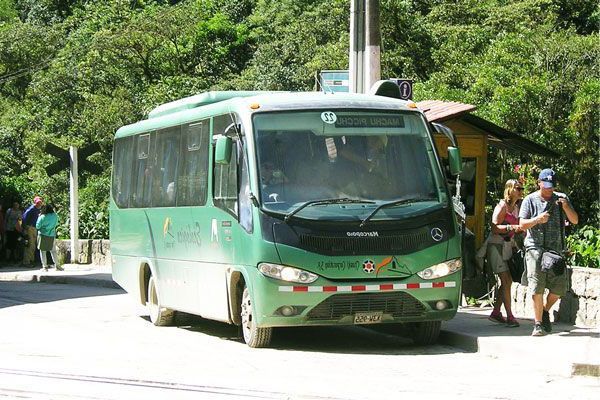
Bus Tickets from Aguas Calientes to Machu Picchu | The train ticket is not enough to get to Machu Picchu, you will also need to book your bus ticket to Machu Picchu from Aguas Calientes town, this road that connects the modern city and the inca ruins is called “La carretera Hiram Bingham” and it has a distance of 8 km in a zig-zag.

The concession company of this route is called Consettur, the buses of this company are Ecological and have different prices according to nationality. This is due to the difference in the cost of living between Peru and countries from the first world, it is true that many tourists don´t like this issue, because they say that there is an issue of discrimination, which is understandable, but it is also reasonable to think that a Local cannot pay like most of the tourists.

We also believe that the expensive prices of the bus tickets in Aguas Calientes is because Consettur has a monopoly of the Hiram Bingham route, they can technically and legally set any price they want as per the constitution, we hope to overcome this issue and make reasonable prices for both locals and foreigners.

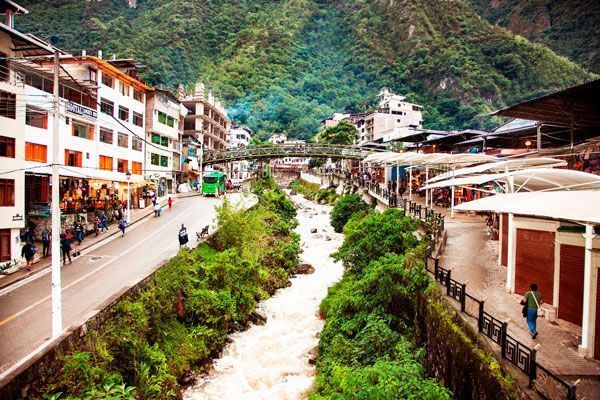
Super Important! Locals use the name “Machu Picchu Pueblo” or “Aguas Calientes” to refer to the same city, although we know that the official name of this town is Machu Picchu Pueblo, but many local people also use the term Aguas Calientes because of the Hot Springs that exist in this city.

1. Where to buy the bus tickets to Machu Picchu ruins?

1.1 In Cusco city:

1.2 In Aguas Calientes city:

  • Look for them at Avenida Hermanos Ayar, before Puente Ruinas: they are open from Monday to Sunday from 5am to 9pm.
  • Very important: We recommend calling the Consettur concessionaire company that operates the buses, this is to confirm the operation hours, please dial: (084) 262802.

1.3 Outside the Inca Ruins of Machu Picchu:

You can also buy the bus tickets at the entrance gate to Machu Picchu ruins, this can happen if you want to go to the Inca citadel from Aguas Calientes on foot and return by bus.


2. How to buy the bus ticket to Machu Picchu?

  • Bring your original Personal Identification Document, for example, a Passport. No photocopy is accepted!
  • Payment can be done in Soles or American Dollars, please bring cash.
  • You can also make the purchase online, if so, they will not ask for an Original Identity Document but rather fill out the form.

3. How much does the bus ticket cost?

Remember that the Bus Tickets Do Not Run Out, but it is recommended to buy in advance, if you do it the same day of your tour, there might be a problem because sometimes there is a huge queue of people, this can alter the schedule of your guided tour.

Tickets de Bus de Aguas Calientes a Machu Picchu
TYPE OF THE BUS TICKET FOR FOREIGNERS PRICE
ADULT FOREIGNER (Round trip) 24 USD
ADULT FOREIGNER (One way) 12 USD
CHILDREN FOREIGNER (Round trip) 12 USD
CHILDREN FOREIGNER (One way) 7 USD

TYPE OF BUS TICKET FOR PERUVIANS PRICE
ADULT NATIONAL (Round trip) 15 USD
ADULT NATIONAL (One way) 8 USD
STUDENT NATIONAL (Round trip) 10 USD
STUDENT NATIONAL (One way) 6 USD
CHILDREN NATIONAL (Round trip) 8 USD
CHILDREN NATIONAL (One way) 5 USD
TOUR GUIDE (One way)12 Soles
LOCALS FROM CUSCO REGION (Round trip) 19 Soles
LOCALS FROM MACHUPICCHU CITY (Round trip) 8 Soles

4. What are the bus Schedules?

Don’t worry, the buses usually leave every 10 minutes, both from Aguas Calientes and also from the ruins of Machu Picchu to Aguas Calientes.

5. Where is the bus station to Machu Picchu?

Do not worry about the station location, because the city of Aguas Calientes is very small, you won´t get lost, just make yourway to Avenida Hermanos Ayar, next to the train station.

On the way back there is a bus station located at the entrance to Machu Picchu ruins.

6. How long is the bus ride?

Tickets de Bus de Aguas Calientes a Machu Picchu

It is very close, an average of 30 minutes ride on a zigzag road, by the way, the distance of this road is about 8 kilometres.

7. What many people ask – FAQS

7.1 What time does the first bus leave to the Machu Picchu ruins?

Well, the first bus leaves at 5:30am, this bus is basically for people who work at the archaeological site and the Sanctuary Lodge hotel located next to Machu Picchu ruins; so stand in line to take the second bus. Consider that you will be able to access the ruins of Machu Picchu ruins from 6:30 am — the bus ride lasts about 30 minutes.

The last bus that leaves Machu Picchu ruins to Aguas Calientes is at 3:30pm, don’t forget.

7.2 When can I use my Bus ticket?

You can use them within three days.

7.3 Is there a helicopter that takes you directly to the ruins of Machu Picchu?

Well, believe it or not, there use to be a helicopter tour company a few years ago, but it had a negative impact on the fauna of Machu Picchu park, it would cause immense damage to the birds’ Auditive System, this is just an isolated example, but there were many other negative effects, that is why the Helicopter is forbidden in Machu Picchu and we are happy about it!

7.4 Is there a direct bus from Cusco city to Machu Picchu ruins?

No, there isn’t. Check the reason below:

  • Because there is no road.
  • Because there are economic interests of Peru Rail company to avoid the competition with buses, local people accuse this company of doing monopoly, that’s why for a few years there is another company that operates and competes with Peru rail on the same train route, this company is called Inca Rail.
  • Because we want to preserve Machu Picchu for the next generations, we know that its maximum capacity of visitors per day is 2500 people, if there were buses bringing more tourists to Machu Picchu, it would make it way more over-crowded that it is already, that’s why most of us who love history and nature are ok with the way it is nowadys (only trains).

7.5 Can I walk to Machu Picchu instead of taking buses?

  • Of course, you can!, many visitors do, it will take you about 1 hour to get to Machu Picchu ruins, please do this route if you are in good physical condition (it is steep-walking).
  • However, if you are going to climb to Huayna Picchu mountain or do the route to the Inca Bridge of Machu Picchu, just the bus so that you save your energy to do the extra trek to any of those attractions.

7.6 Why don´t you build a cable car, there would be less pollution?

Many people think that the Carbon Dioxide of the Machu Picchu buses contaminate this archaeological and natural park, because of this reason there is a project to build a cable car from Aguas Calientes to the Inca citadel of Machu Picchu, it would be good! However, there are many reasons why this project is not being carried out. We believe that the most important is the opposition of the bus company Consettur.

On the other hand, Consettur, adresess that their buses are ecological and that is why they don´t pollute, they also state that they are Local entrepreneurs.

Free Walking Tours Peru

Secure your spot on our free tours led by professional, authorized, and expert guides in Free tour Cusco, Free tour Lima, and Free tour Arequipa. Booking is free!

Local Train to Machu Picchu Pueblo | If you are Peruvian and you don´t want to pay the expensive cost of train tickets to Aguas Calientes, well you can book the Local Train. Peru Rail is the only one company that operates the train route from Cusco and Ollantaytambo to Aguas Calientes (Machu Picchu Pueblo city), the have exclusively wagons for Peruvians!

Please consider the Local Train can be booked only by Peruvians, not foreigners!

Can all Peruvians board this local train?

Asi es todos, incluso los ciudadanos nacionalizados peruanos, pero es muy importante aclarar que Perú Rail prioriza la venta de estos tickets a Peruanos que viven cerca de Aguas Calientes, por ejemplo el Valle Sagrado, la razón es muy sencilla, porque muchas veces son personas que viven en Aguas Calientes o trabajan llevando productos de primera necesidad.

Yes, all Peruvians! including nationalized Peruvian citizens, but it is very important to clarify that Peru Rail prioritizes the sale of these train tickets to Peruvians who live in Aguas Calientes city or closeby, the reason is very simple, many of those people bring basic products such us food or jet fuel, whats more there is no other transportation system that can drop them directly in Aguas Calientes city.

Why is there a Local Train? Isn’t it discriminatory?

Hay muchas poblaciones que viven y trabajan en Machu Picchu pueblo y también comunidades indígenas que viven en zonas cercanas al Parque Arqueológico de Machu Picchu, dichas poblaciones No pagarían los 100 USD promedio que cobra Perú Rail por un ticket de tren, ni siquiera un turista nacional promedio podria pagar ese precio, por el tema de costo de vida.

There are many populations that live and work in Machu Picchu town(Aguas Calientes city) and also indigenous communities that live in areas closeby to the Archaeological Park of Machu Picchu, these populations would not pay the average 100 USD that Peru Rail charges for a tourist train ticket, not even a national tourist from the middle class can pay that price, because of the cost of living issue between Peru and countries from the first world.

Tren Local a Machu Picchu

It is also true that Peru Rail and Inca Rail (it is a competitor company) charge an excessively expensive price to tourists, we don´t agree with this, however, both Peru Rain and Inca Rail are private companies, hopefully, our future governors can change this issue to make the prices fair enough for both tourists and locals.

La otra razón porque hay precios diferenciados, es porque es la única manera de llegar a Machu Picchu Pueblo, no hay carretera ni buses que conecte el a Machu Picchu Pueblo directamente.

The other reason why there are different prices for locals and tourists, it is because the Rail is the only one way to get to Machu Picchu Pueblo, there are no roads or buses that connect Machu Picchu Pueblo city to other cities.

Can you go to Aguas Calientes by bus?

Tren Local a Machu Picchu

No, the only way to get there is by train, unless you love walking!

How much does it cost to board a Local Train?

Route Price
Ollantaytambo-Machupicchu 10 Soles
Machupicchu-Ollantaytambo 10 Soles
Ollantaytambo-Machupicchu-Ollantaytambo 20 Soles

Where can you purchase the Local Train Ticket?

The purchase is made personally, please bring your Original National Identity Document, photo-copies are not accepted, buy it in advance, because as we already mentioned above, Peru Rail, gives preference to Local People who live in or near Machu Picchu Pueblo town.

If you are in Cusco city:

  • Go to the San Pedro station, they work from 7am to 2pm from Monday to Friday, we suggest you to call them so that you confirm the opening hours, dial +084 235201.
  • If you are staying in Wanchaq district, go to Avenida Pachacútec or el Sol, you can also dial +084 221931.

If you are in Ollantaytambo town:

Puedes ir directamente a la estación de Ollantaytambo desde las 4am a 9pm. Para la dirección solamente pregunta a cualquier local, pregunta por la avenida Ferrocarril s/n, la gente es muy comedida.(No está en google maps).

You can go directly to the Ollantaytambo train station from 4am to 9pm. Regarding the address, just ask any local people, ask for Avenida Ferrocarril, people are very helpful there (they are not on google maps yet).

At the Santa Teresa Hydroelectric:

Si deseas llegar a Machu Picchu Pueblo (algunos también los llaman Aguas Calientes) vía bus, es posible pero solamente te dejará en la Hidroeléctrica, desde ahí tendrás que caminar por tres horas hasta Machu Picchu Pueblo, sin embargo también puedes tomar un tren Local desde la estación de la hidroeléctrica a Machu Picchu Pueblo, cabe señalar que a veces no hay espacio, asi depende mucho también de la suerte.

If you want to get to Machu Picchu Pueblo via bus, it is possible but it will only drop you at the Hydroelectric, from there you will have to walk for three hours to reach Machu Picchu Pueblo, however you can also take a Local train from the hydroelectric station to Machu Picchu Pueblo, Please considera that sometimes there is no space, so you have to be lucky.

This is issue is unique because this is the only train station where non-Peruvians can get on the local train but remember it is only from the Hydroelectric station to Aguas Calientes. Not vice-versa.

If you are Peruvian, it is better to take the train on Ollantaytambo, it will be faster and less time.

Schedules for the local train to Machu Picchu Pueblo (or Aguas Calientes)

If you take the Sacred Valley tour, the tour ends at 4pm in Ollantaytambo and at 7pm in Cusco, many visitors stay in Ollantaytambo and board the 7pm local train towards Aguas Calientes city.

Route: Ollantaytambo – Machu Picchu Pueblo

TrainDeparture Arrival
Tren 71 5:05 am 6:34 am
Tren 21 9:50 am 11:49 am
Tren 73 12:58 pm 2:25 pm
Tren 75 7 pm 8:45 pm
Tren 51 9 pm 10:45 pm

Route: Machu Picchu Pueblo – Ollantaytambo

Train Departure Arrival
Tren 505:35 am7:44 am
Tren 728:53 am10:52 am
Tren 742:55 pm4:31 pm
Tren 226:30 pm8:17 pm
Tren 769:50 pm11:35 pm

Some extra data about the Local Train:

  • Please don´t expect the best quality experience ever, this local train has five wagons, most of them are for people, however, they are also used for cargo.
  • Probablemente no te guste porque incluso se puede viajar a pie, a veces ni siquiera hay espacio, ya depende muchos de las expectativas de uno y del bolsillo.
  • Travelling on foot inside these wagons are allowed, at least 1 out from the 5 wagons is available for travelling on foot, this is because Peru Rail doesn´t want to leave anyone behind since locals can complain and go into protests. That is why they make sure that they pick up everyone from the station.
  • We are in Peru, so the schedules are totally referential because they can change, due to a strike, bad weather, or simply technical problems, however always be punctual at the station.

Trenes Alternativos a Machu Picchu

Si eres un peruano y prefieres una buena comodidad, pues hay otros vagones de tren TURISTICO de la empresa Perú Rail como de Inca Rail, los precios No son anda Baratos, si el dinero no es problema para ti, pues adelante, te lo recomendamos, Ojo, los trenes turísticos no ofrecen descuentos para Peruanos, por eso existe el Tren local.

If you are a Peruvian and you prefer a good comfort, well there are other TOURIST train wagons operated by Peru Rail company as well as Inca Rail, the prices are not cheap if money is not a problem for you, the go-ahead. Note that if you are Peruvian, you will not have discounts on the tourist wagons, and they also have the local train, choose your cup of tea.

What are the names of the Wagons?

Peru Rail Wagons

  1. Expedition
  2. Vistadome
  3. Sacred Valley
  4. Hiram Bingham

Inca Rail Wagons

  1. The Voyager
  2. The 360º
  3. The First Class
  4. The Private

Nota: Inca Rail no ofrece trenes locales, esto es porque es una nueva compañía que opera los últimos años, para evitar el monopolio.

Note: Inca Rail does not offer local trains, they only operate wagons for tourists.

Alternative Train Prices

Peru Rail:

Peru Rail wagonsPrice in DollarsPrice in Soles
Tren “Expedition”140 USD459 Soles
Tren “Vistadome”190 USD623 Soles
Tren de lujo “Hiram Bingham”950 USD3115 Soles

Inca Rail:

Inca Rail wagons Price in Dollars Price in Soles
The Voyager140 USD459 Soles
The 360º150 USD491 Soles
The First Class398 USD1305 Soles

What People Ask The Most – FAQS

  • Are the trains leave and arrive on on time?
    Generally No, but if you arrive after the indicated time, you will loose all the rights ever your tickets, therefore do your best to be punctual.
  • Is there a local train service from Cusco city to Machu Picchu?
    Yes there is. However it is only available for local people who live in Machu Picchu Pueblo and surrounding areas, so if this is not your case you will have to catch your train from Ollantaytambo town.
  • Do I need to book in advance?
    That’s right, the earlier the better, at least two days in advance.
  • What happens if they run out of tickets?
    Well, you can travel on foot, many locals do, Peru Rail will enable a couple of wagons so that everyone can get on the local train, but you have to travel on foot, consider that it is 3 hours from Ollantaytambo to Machu Picchu Pueblo.
  • Are there stops along the way?
    That’s right, there are shortstops for the Locals to get on the train, however, it is not for you to get out of the train and spend some time outside of it.
  • If I am a foreigner, can I take my train at the Hydroelectric station?
    Sure you can! However, it only applies from the Hydroelectric to Aguas Calientes – Not vice-versa.
  • Is there another mean of transportation to get to Machu Picchu Pueblo?
    Yes, there is, by bus and foot, your route will be as it follows:
    • Hydroelectric to Machu Picchu pueblo:
      • Cusco – Ollantaytambo – Hidroelectrica by Bus
      • Hydroelectric to Machu Picchu Pueblo on Foot – some locals and foreigners board the train at the Hydroelectric, but most prefer to walk.
    • Machu Picchu pueblo to Hydroelectric:
      • Machu Picchu Pueblo to Hydroelectric on Foot
      • Hydroelectric – Ollantaytambo – Cusco by Bus

We are here to help you!

If you have any questions about your WALKING TOUR IN CUSCO, your train tickets, etc. Do not hesitate to contact us, you can also see our comments on Facebook and tripadvisor.

From an excursion to the sanctuary of a pre-Inca god to surfing lessons on a beach right on the city’s edge.
From a tour through the narrow passages of ancient catacombs to a dazzling water show with dancing fountains in a magical circuit.

From a square named France, where there’s a neo-Gothic church and people play chess, to the buzzing commercial energy of a Chinatown where Oriental food has a uniquely Peruvian flavour.

Yes, Lima really is this varied and wonderful—the ever-growing capital of Peru, a destination that will charm you with its Historic Centre, museums, bohemian and cosmopolitan neighbourhoods, and beaches so close it’s impossible not to see them, admire them, and explore them.

Come to Lima and let yourself be swept away by a metropolis with so much to show, teach and share with you. Go on, don’t hesitate—this is your next destination.

Cultural and Natural Sites

Historic Centre of Lima

A walled city of 50,000 inhabitants—this was colonial Lima: small and very different from the bustling metropolis it is today. Yet, despite all the changes, its Historic Centre has preserved the essence and elegance that led to its designation as a UNESCO World Cultural Heritage Site.

As you wander the streets of the so-called Damero de Pizarro, you’ll step into the past—mansions, churches, convents, squares, balconies and historic lanes shape the old city’s character. Highlights include the Plaza de Armas, the Cathedral, the catacombs of San Francisco, among other sites of major historical and cultural interest.

Cathedral of Lima

When Lima was founded on 18 January 1535, a baroque-style basilica was built on one side of the Plaza de Armas. However, it didn’t survive the 1741 earthquake. The deep religiosity of the time called for a new temple, and its construction began at the end of the 18th century.

The current Cathedral of Saint John was designed by Matías Maestro, who was tasked with making it earthquake-resistant. To achieve this, he used wood in its structure—an element that makes it both distinctive and unique in its design.

Convent and Church of Santo Domingo

One of the oldest religious monuments in the city, this convent was built in the 16th century. Over time, its cloisters housed Santa Rosa de Lima—the first woman from the Americas to be canonised—and Fray Martín de Porres, the first mulatto saint recognised by the Catholic Church.

Located at Jirón Camaná 170, just one block from the Plaza de Armas, Santo Domingo invites you to admire its colonial architecture, enjoy its religious art, explore the valuable books and manuscripts in its library, and feel the divine inspiration behind the paintings that adorn the temple.

Plaza Francia

Serene, modest, and often overlooked by visitors, this square will charm you with its simple beauty. It dates back to the 17th century, when the Dominican Order decided to build a church and retreat house away from the main square (now Avenida Garcilaso de la Vega).

Completed in 1611, the surrounding area became known as the Recoleta square, which we highly recommend visiting to admire the church of the same name. It stands out for its neo-Gothic style, setting it apart from most religious buildings in the city.

The square’s current name was adopted during Peru’s centennial independence celebrations in 1921, when the French community gifted a replica of the Statue of Liberty to the nation. It was placed in front of the Recoleta church. One more detail about this little corner of the Historic Centreif you’re a chess fan, get ready to play, as it’s a popular spot for enthusiasts of the game.

Convent and Church of San Francisco

This religious complex is considered one of the most beautiful in Latin America, both for its architecture and its treasures. Inside its colonial library, you’ll find the original document declaring Peru a Republic, signed on 15 July 1821, as well as the official declaration of independence made on 28 July that same year.

San Francisco is also famed for its catacombs. Built in the mid-17th century, these underground galleries served as burial sites for around 36,000 people during the colonial period—a practice that began when Christians were persecuted.

The convent of San Francisco is located at the intersection of Jirón Áncash and Jirón Lampa in Lima’s Historic Centre. You can visit it from Monday to Sunday, between 9:00 a.m. and 6:00 p.m.

Chinatown

In the mid-19th century, thousands of Chinese migrants—mostly from Hong Kong—arrived in Peru. In the early stages of this migration, many of them worked on coastal plantations, as there was a demand for cheap labour following the abolition of slavery.

Gradually, they began to establish themselves in their new homeland. Their talent for trade and cooking, coupled with their honesty and strong work ethic, helped them gain recognition in these areas. As with most migration waves, the Chinese tended to settle in specific neighbourhoods.

This is how Lima’s Chinatown, the oldest in South America, came to be. Located in the Historic Centre, Capón Street is its most important thoroughfare. Take the chance to have lunch or dinner at a chifa—a restaurant where Chinese cuisine meets unique Peruvian flavours.

Barranco

Quaint, romantic and bohemian—that’s the essence of Barranco, the coastal district with a republican charm, home to some of Lima’s most iconic spots, such as the Bridge of Sighs (Puente de los Suspiros) and the Bajada de los Baños. The area also boasts museums and art galleries that fuel a lively cultural scene.

Barranco’s nightlife is exceptional. Whether you fancy dancing and toasting, savouring delicious dishes, or simply enjoying a good chat, its bars, pubs, nightclubs, restaurants and cafés offer plenty of options for a fun night out.

Huaca Pucllana in Miralflores

In the modern, cosmopolitan district of Miraflores lies one of Lima’s best-preserved archaeological sites. Thanks to its central location, Huaca Pucllana is the perfect place to explore Peru’s pre-Hispanic past without leaving the city.

Before the arrival of the Spanish, Pucllana—believed to be primarily a temple—was occupied by various cultures, including the Lima people (its earliest inhabitants), the Wari (the first Andean empire), the Ychsma, and later the Incas.

The site’s main structure is a stepped pyramid located at block 8 of General Borgoño Street, just a 20-minute walk from Miraflores’ Central or Kennedy Park. You can visit by day or night—and be sure to treat yourself at the on-site restaurant afterwards.

Sanctuary of Pachacamac

Pachacamac was a revered god and oracle along the coast and the Andes. So much so that pilgrims from various regions would travel to his sanctuary to worship him. Even the Incas, who had their own gods, respected and trusted the prophecies of Pachacamac, “the soul of the earth and the one who animates the world.”

Today, the Pachacamac archaeological complex and museum are Lima’s most significant pre-Hispanic legacy. Located at kilometre 31.5 of the old South Pan-American Highway, the site includes temples, truncated pyramids, plazas and Inca structures such as the Acllawasi or “House of the Chosen Women.”

You can visit the sanctuary from Tuesday to Saturday between 9:00 am and 5:00 pm. On Sundays, it closes at 4:00 pm.

Beach Circuit of the Costa Verde

Lima is synonymous with the sea and surf. As the only South American capital that reaches the Pacific Ocean, a visit to its coastal beach circuit is a must—whether in summer or winter. The Costa Verde runs through several districts, including Miraflores, Barranco and Chorrillos.

If you love surfing or want to learn how to ride the waves, you’re in the right place—Lima’s coastline offers professional instructors ready to teach you the art of surfing.

But the city’s beach experience isn’t limited to the Costa Verde. Both north and south of Lima, you’ll find numerous beach resorts such as San Bartolo, Punta Negra, Santa María, Ancón and Santa Rosa, to name just a few. So when packing your bags, don’t forget your swimsuit!

Tres Picos

This beach in Miraflores is the perfect spot to watch the sunset on a clear day and take in the towering cliffs of the Costa Verde. Before the beach circuit was built, these steep natural walls reached directly down to the Pacific’s edge.

At Tres Picos, you’ll find a small fountain with surfboard sculptures and an accessible viewpoint with benches and parasols. A fun fact: in 2019, Lima and Peru’s first municipal helipad was inaugurated here, designed to provide aerial support during marine emergencies.

Places Near Lima

Sacred City of Caral

Known as the oldest city in the Americas and the mother of all cultures and civilisations that developed in ancient Peru, Caral holds immense historical value. This archaeological site in the Supe Valley, Barranca Province, lies just 182 kilometres north of Lima.

Caral, With an estimated age of around 5,000 years, Caral is the perfect destination for travellers fascinated by history and the cultural development of the Americas. If that’s you, you’ll feel fulfilled as you explore the 32 ceremonial and administrative adobe buildings of this sacred city.

Monumental Callao

In Peru’s main port, a cultural initiative is breathing new life into the city’s historic charm and promoting artistic expression. Monumental Callao has revived interest in the old port’s once-neglected plazas and streets.

Bordering Lima, Callao boasts a variety of attractions such as the Real Felipe Fortress, Grau and Gálvez squares, the district of La Punta, and several restored buildings turned into galleries and restaurants, all thanks to this tourism-boosting project.

Cavinzas Islands & Palomino Islets

When you’re near a port, the call of the sea is hard to resist. In Callao, you can hop on a yacht or tourist boat to visit the Cavinzas Islands and Palomino Islets—natural havens for numerous bird species and nearly 5,000 South American sea lions.

Don’t just stay on the shore! The sea off Callao (locals are known as “chalacos”) invites you to spot seagulls, Peruvian pelicans, cormorants, Humboldt penguins, guanayes, and Inca terns, among other ocean birds in this protected and tourist-friendly area.

Ballestas Islands

Sailing out to witness marine wildlife on these biodiverse islands is a must. Imagine the ocean breeze on your face as you gaze upon colonies of sea lions, pairs of Humboldt penguins, or the mysterious candelabra-shaped geoglyph carved by ancient peoples.

This is what you’ll experience on the boat tour to the Ballestas Islands, located in Paracas, Pisco Province (Ica). Just three hours south of Lima by road, many tour operators offer day trips to this globally renowned Pacific gem, become a world-famous destination.

Huacachina Oasis

Mirage or miracle? That’s the question you’ll ask upon arriving at Huacachina—a legendary lagoon surrounded by towering sand dunes. Nicknamed the “Oasis of the Americas”, this spot in Ica (4 hours south of Lima), and you’ll find the adventure and the quiet without distant to Lima.

If relaxation is your goal, sit back and admire the oasis’s stunning beauty. Craving excitement? Try sandboarding down the dunes or ride in a dune buggy for a heart-pounding thrill.

In Huacachina, you’ll also find hotels and restaurants to make your visit more comfortable.


Tourist Attractions for Families and Children

Magic Water Circuit

Think Lima is all colonial houses, churches, and museums? Worried your children might get bored in the capital? Think again! Lima, the “City of Kings”, has plenty of family-friendly attractions, including the Magic Water Circuit at the Parque de la Reserva.

Only water that… Jumping, dancing, laser-lit fountains steal the show in a magical nighttime performance your entire family will love. The show runs at 7, 8, and 9 p.m.

The Magic Water Circuit is waiting for you. It’s open daily on Jirón Madre de Dios, Cercado de Lima. General entry is 5 soles.

Park of Legends (Parque de las Leyendas)

Founded in 1964 by conservationist Felipe Benavides Barrera, this family park showcases wildlife from Peru’s coast, highlands, and jungle. Located on Avenida Las Leyendas 580, San Miguel district, the zoo also features animals from other continents.

Open daily (including holidays) from 9:00 a.m. to 4:30 p.m., adult entry costs 15 soles, and children’s (ages 3–12) entry is 8 soles.

Kennedy Park & Miraflores’ Clifftop Walks

Strolling or cycling from Miraflores’ main park to the floral clifftop promenades with stunning views of Lima’s bay is a perfect family activity.

Along the way, kids can enjoy the play area at Kennedy Park, while adults browse the artwork on display at the Painters’ Walk. Once at the cliffs, head towards the Park of Love, the iconic lighthouse, and the Larcomar shopping centre. Go on—your family will love it!

FREE Tours of Lima

If you enjoy exploring in a group with an expert guide, join one of our free walking tours! It’s a fun, cost-free way to discover the main attractions of Lima’s Historic Centre. At the end, feel free to leave a donation that reflects your experience.

For more info or to book your spot, visit Free Tour Lima. You can also check out rave reviews and thousands of photos on Instagram and Facebook.

Note for Peruvians: These free tours are exclusively for inbound international tourists. If you’re looking for other tours, contact us via WhatsApp at 958745640.

Free Walking Tours Peru

Secure your spot on our free tours led by professional, authorized, and expert guides in Free tour Cusco, Free tour Lima, and Free tour Arequipa. Booking is free!

Are you planning your next trip and want to know how to travel cheaply in Peru without sacrificing comfort or missing out on anything? You have come to the right place. Peru is an incredibly affordable destination if you know how to manage your budget, choose the right transportation, and make the most of the best local tips.

In this complete guide, we show you how much money you need per day, how to find affordable flights and accommodation, what to eat to save money, and how to take guided tours of the main cities on a backpacker budget.

1. How Much Money Do You Need to Travel Cheaply in Peru?

To travel around Peru on a backpacker or budget, plan to spend approximately S/ 115 to S/ 185 ($30 to $50 USD) per person per day. This amount will cover accommodation, three meals a day, basic local transportation, and some attractions.

¿Cómo Viajar Barato en Perú? Guía de Ahorro

To help you plan your daily expenses accurately, here is an estimated breakdown of costs by category:

  • Accommodation (Hostels and shared dorms): Between S/ 30 and S/ 60 ($8 to $16 USD) per night for a bed in a shared dormitory in Lima, Cusco, or Arequipa.
  • Food (Local food and set menus): Between S/ 35 and S/ 55 ($9 to $15 USD) per day when eating at local markets or restaurants offering a set menu (starter, main course, and non-alcoholic drink).
  • Local transportation (Urban buses and colectivos): Between S/ 10 and S/ 20 ($3 to $5 USD) per day for getting around the main cities.
  • Tours and basic admission fees: Between S/ 40 and S/ 75 ($10 to $20 USD) per day for museums or tourist tickets. (Tip: save money by joining Free Walking Tours in the main squares).

💡 Local money-saving tip: Always carry some cash in soles (S/) for small purchases at markets or craft stalls. Although credit cards are accepted at larger establishments, inexpensive food stalls and small businesses often accept only cash or local payment apps.

2. Tips for Finding Cheap Flights and Affordable Transportation

Getting cheap tickets in Peru does not depend on luck, but on knowing where and when to look. To travel around the country without spending more than necessary, follow these key tips:

Use tools such as Google Flights, Skyscanner, or Kayak to compare fares from different airlines in one place.

  • The flexibility trick: If your dates are flexible, turn on price alerts. Flying from Tuesday to Thursday is usually between 15% and 25% cheaper than flying on weekends.
  • Ideal booking window: For domestic flights in Peru, book 4 to 8 weeks in advance. If you are traveling during the high season (May to August or during holidays such as Peru’s Independence Day celebrations in July), book at least 3 months in advance.

Take Advantage of Low-Cost Airlines in Peru
Currently, the main airlines for finding affordable one-way fares are:

  • SKY Airline and JetSMART: Excellent options for flying between Lima, Cusco, Arequipa, Piura, and Tarapoto, with basic fares starting at S/ 90 to S/ 150 ($24 to $40 USD) per one-way trip.
  • LATAM Airlines: Although it is not strictly a low-cost airline, it often offers very competitive promotions if you book in advance.
¿Cómo Viajar Barato en Perú? Guía de Ahorro

💡 Local money-saving tip: The cheapest fares (Basic or Zero) only include a handbag or small backpack that fits under the seat. If you travel with a cabin bag or checked luggage, the price can double. Travel light and you will save quite a bit of money!

3. Traveling by Bus in Peru: The Cheapest Option

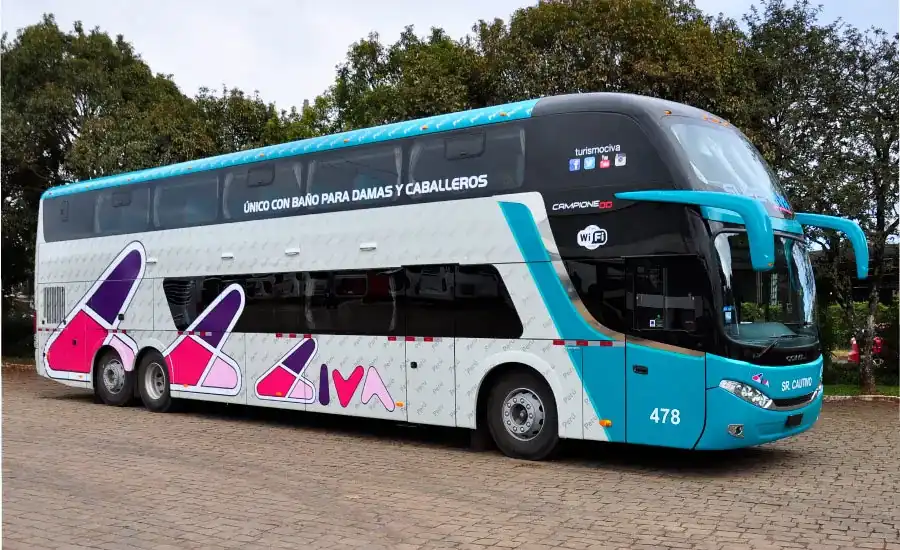
If you have time and want to save money on tickets or accommodation, traveling around Peru by bus is one of the most popular and affordable options. Unlike in some other countries, Peru’s intercity bus network has modern, high-quality vehicles equipped for long-distance journeys.

Advantages of Traveling by Bus in Peru

  • Save on accommodation (hotel nights): Taking an overnight bus on long routes (such as Lima–Arequipa or Cusco–Puno) allows you to sleep while traveling and save the cost of one night’s accommodation.
  • Superior comfort: Buses have Bus Cama seats (with a 140° to 160° recline) and Cama Ejecutivo seats (with up to 180° recline), air conditioning, individual screens, and onboard bathrooms.
  • Affordable prices: A long-distance bus trip usually costs 30% to 50% less than a last-minute flight ticket.

Recommended Bus Companies and Estimated Prices
Depending on your budget, you can choose from several reliable bus companies:

  • Cruz del Sur and OLTURSA: These are Peru’s traditional premium bus companies. They stand out for their high safety standards, private terminals, and excellent service. A trip from Lima to Arequipa costs an average of S/ 70 to S/ 130 ($18 to $35 USD).
  • Civa (Superciva / Excluciva services): One of the largest bus networks in Peru. It is a very popular option among backpackers thanks to its competitive prices and almost nationwide coverage. A ticket usually costs around S/ 60 to S/ 110 ($15 to $28 USD).
  • Movil Bus: Excellent mid-range buses connecting Lima with central Peru, northern Peru, and the highlands. Tickets range from S/ 50 to S/ 90 ($13 to $24 USD).
¿Cómo Viajar Barato en Perú? Guía de Ahorro

Instead of going directly to the terminal and waiting in long lines, use online bus ticket comparison platforms such as redBus.pe or Busbud. On these platforms, you can compare schedules, companies, reviews from other users, and find discounts or promotional welcome codes.

However, if for any reason you cannot buy your ticket online, you can purchase it at the private bus terminal of each company. They almost always have daily departures, especially to very popular destinations such as Cusco, Lima, Arequipa, Ica, and Puno. There is no need to buy tickets in advance; you may have to wait a few hours at the terminal, but departures are guaranteed.

It is also recommended that you call the companies’ telephone numbers and check the next available departures.

💡 Local money-saving tip: Always book with formal companies that depart from authorized bus terminals. Avoid taking informal buses on public roads or from unauthorized stops for reasons of safety and comfort.

4. Where to Stay: Hostels, Airbnb, and Couchsurfing

Accommodation usually takes up a large part of a travel budget, but in Peru there are comfortable, safe, and very affordable alternatives. Depending on your travel style and the level of social interaction you are looking for, these are the best options for staying without spending more than necessary:

¿Cómo Viajar Barato en Perú? Guía de Ahorro

Hostels and Backpackers (The Most Popular Option)
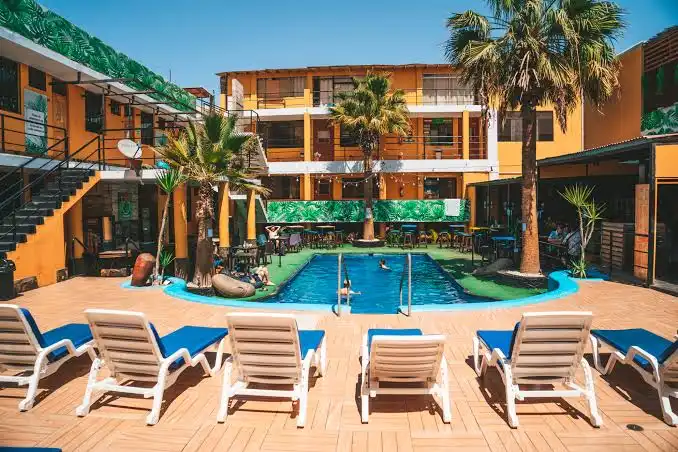
If you are traveling alone or want to meet other travelers, hostels are the number one option. Cities such as Cusco, Lima (Miraflores and Barranco), and Arequipa have a huge selection of backpacker hostels with great common areas and shared kitchens where you can prepare your own meals.

  • Bed in a shared dormitory: Costs an average of S/ 30 to S/ 65 ($8 to $17 USD) per night.
  • Private hostel room: If you prefer privacy while keeping the backpacker atmosphere, budget between S/ 80 and S/ 150 ($21 to $40 USD) per night for two people.
  • Recommended chains: Pariwana, Wild Rover, Kokopelli, and Selina are well-known options with good facilities and a social atmosphere.

Airbnb and Shared Apartments
If you are traveling as a couple, with friends, or planning to stay in the same city for more than a week, Airbnb is ideal for saving money.

  • Private room in a local home: From S/ 45 to S/ 85 ($12 to $22 USD) per night.
  • Entire apartment: From S/ 120 to S/ 220 ($32 to $58 USD) per night. By splitting the cost among several friends and having access to a fully equipped kitchen, the cost per person is significantly reduced.

Couchsurfing (100% Free Accommodation)
If your budget is extremely tight and you want an immersive cultural experience with locals, Couchsurfing continues to work very well in Peru’s main tourist destinations.

  • Cost: S/ 0 ($0 USD).
  • Recommendation: Keep in mind that to use the platform, you need to pay a very affordable verification membership fee. Always check hosts’ references and ratings before requesting accommodation.

💡 Local money-saving tip: Many hostels in Peru include free breakfast (usually coffee, coca tea, bread, jam, and fruit). Booking a hostel with breakfast included can save you between S/ 10 and S/ 18 ($3 to $5 USD) per day from your food budget.

5. Where to Eat Well and Cheaply in Peru

Peruvian cuisine is recognised worldwide, and the best part is that you do not need to go to expensive restaurants to try its best flavours! In fact, the most authentic, tasty, and affordable food can be found in the places that locals visit every day.

¿Cómo Viajar Barato en Perú? Guía de Ahorro

To eat really well during your trip around Peru while spending very little money, consider these options:

  • The famous “Menu of the Day”: Between 12:00 and 15:00, almost all local restaurants offer the classic menú. It includes a starter (soup, papa a la huancaína, or basic ceviche), a main course (chicken with rice, lomo saltado, seco de res, etc.), and a soft drink (usually chicha morada or passion fruit juice).
    • Estimated price: Between S/ 10 and S/ 18 ($3 to $5 USD) for a complete and filling lunch.
    • Where to find it: Walk a couple of blocks away from the main square in any city and look for the menu boards outside restaurants.
  • Local and food markets: Traditional markets in each city are the heart of local cuisine and some of the cheapest places to have breakfast and lunch.
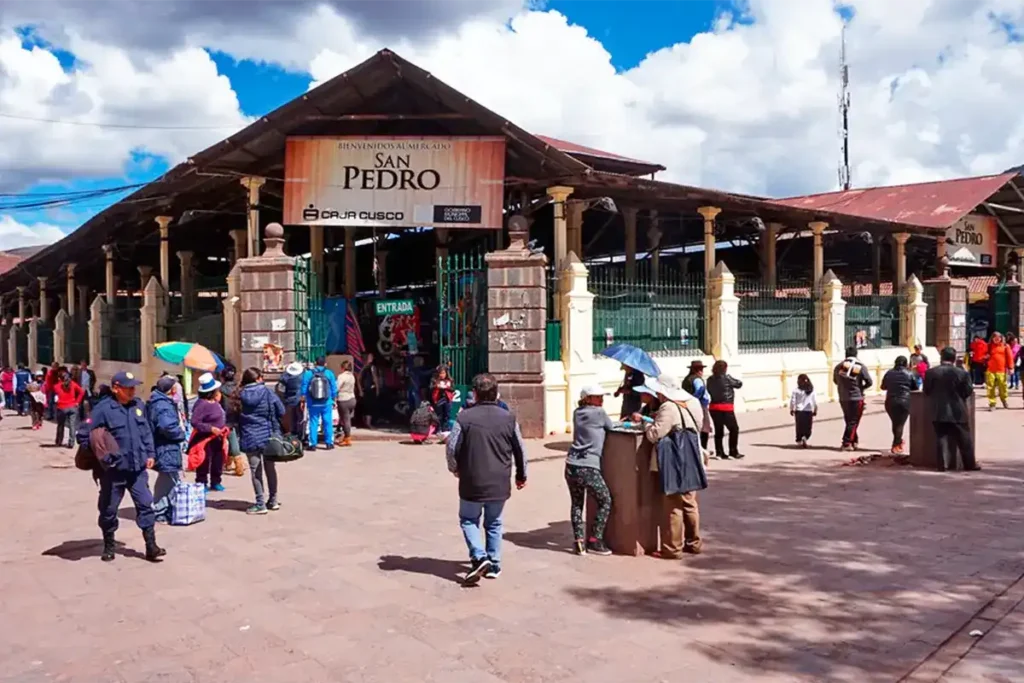
    • San Pedro Central Market (Cusco): Ideal for having caldo de gallina (chicken soup) or fresh juice for S/ 6 to S/ 10 ($1.50 to $2.80 USD).
    • Surquillo No. 1 Market and Central Market (Lima): Perfect for having fresh ceviche prepared to order for S/ 15 to S/ 25 ($4 to $7 USD).
    • San Camilo Market (Arequipa): An excellent place to try rocoto relleno or pastel de papa at affordable prices of S/ 12 to S/ 20 ($3.20 to $5.30 USD).
  • Huariques” y Chifas (Comida China-Peruana):
  • “Huariques” and Chifas (Chinese-Peruvian Food):
    • Chifas: These are Chinese-Peruvian fusion restaurants. Dishes such as Arroz Chaufa or Tallarín Saltado come in huge portions that can easily be shared between two people for just S/ 14 to S/ 22 ($3.80 to $6 USD).
    • Huariques: These are small local restaurants or food stalls specialising in a single dish (for example, only anticuchos or caldo de cabeza) and serving traditional recipes with outstanding flavour.

💡 Local money-saving tip: Portions in Peru tend to be very generous. Before ordering a starter and a main course from the menu, take a look at the neighbouring tables; in many places, a single à la carte dish is enough to satisfy two people.

6. Take Free Walking Tours to Save Money on Guided Tours

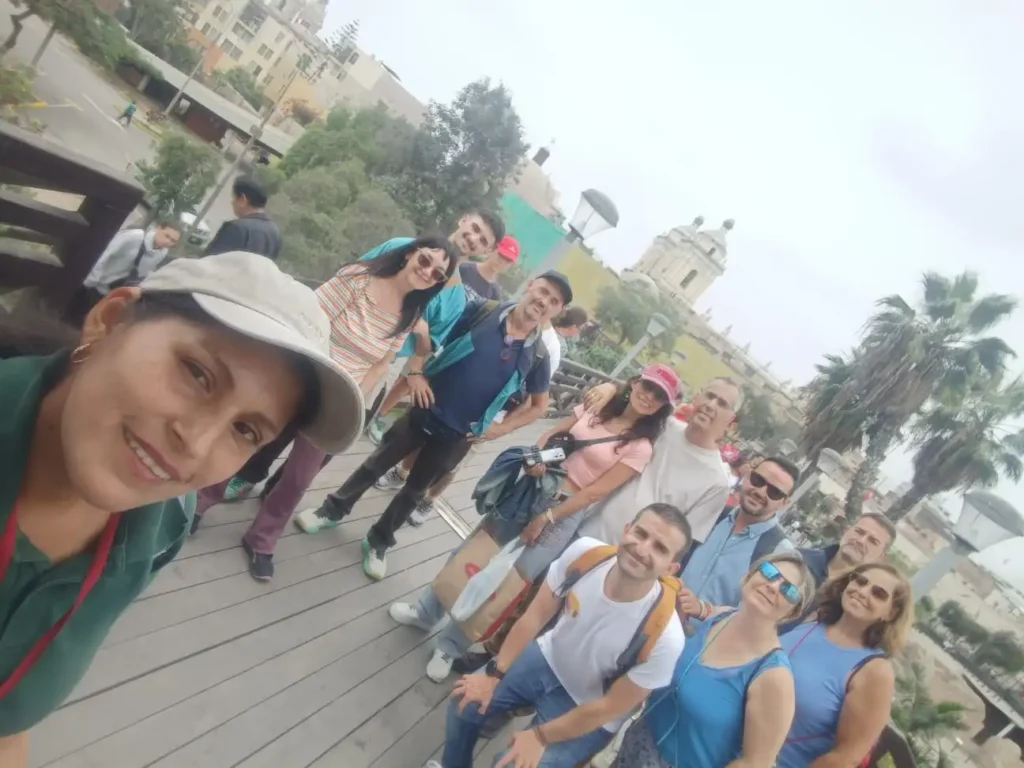
One of the smartest ways to save money on your trip to Peru without missing out on local history and culture is to join Free Walking Tours.

Unlike traditional private tours or expensive agencies that charge high fees before the tour begins, the concept of a free tour is based on satisfaction: you join the group, enjoy the tour led by a local expert, and at the end, you leave a voluntary tip based on your budget and how much you enjoyed the experience.

¿Cómo Viajar Barato en Perú? Guía de Ahorro

Recommended average tip: Most travelers usually leave between S/ 30 and S/ 40 ($9 to $10 USD) per person, which is still much cheaper than a traditional tour.

Which Cities in Peru Offer Free Tours?
You can book your place directly and at no cost in advance in the country’s main tourist cities:

  • Free Walking Tours in Lima: The Peruvian capital is home to centuries of colonial history, urban art, and impressive cuisine. You do not need to overpay to discover it; you can join our walking routes and visit Lima’s Historic Center: explore the Plaza Mayor, catacombs, and colonial churches, and learn about Inca and Spanish history. 👉 Book your Free Tour in Lima here.
  • Free Walking Tours in Cusco: The mythical capital of the Inca Empire can be expensive if you do not know where to start. Taking a walking tour on your first day will help you get your bearings, acclimate to the altitude, and receive tips from locals. Visit the Historic Center: discover the enigmatic Inca stone streets, the 12-Angle Stone, the Plaza de Armas, Inca palaces, and more. 👉 Book your Free Tour in Cusco here.
  • Free Walking Tours in Arequipa: Known as the “White City” for its architecture made from volcanic sillar stone, Arequipa is perfect for exploring on foot. Visit the Historic Center: explore its colonial mansions, temples, and more. 👉 Book your Free Tour in Arequipa here.
  • Other destinations for free tours in Peru: Barranco, Miraflores, the Magic Water Circuit, culinary free tours in Lima, and more.

💡 Local money-saving tip: We recommend taking a Free Walking Tour on your first day in each city. In addition to learning about the main historical highlights, our local guides will give you practical recommendations on where to eat cheaply, which markets to visit, and how to avoid tourist scams during the rest of your stay.

7. Final Tips for Saving Money on Your Trip to Peru

To wrap up this guide, here is a list of practical and lesser-known tips that will help you avoid unnecessary charges and make the most of every sol in your wallet:

  • Withdraw cash from MultiRed ATMs without a local fee: Banco de la Nación (MultiRed ATMs) is the only bank in Peru that does not charge a local withdrawal fee for foreign Visa or Mastercard cards, unlike most private banks (such as BCP, BBVA, Interbank, or Scotiabank), which charge between S/ 15 and S/ 35 ($4 to $9 USD) per withdrawal.
  • Use a debit or credit card with no foreign exchange fees: When you pay directly with a card from your home country, many banks charge high fees. Use travel cards such as Revolut, Wise, or N26 (or local cards with no international transaction fees), and always pay in Peruvian soles (S/) on the POS terminal, never in your home currency.
  • Get a local SIM card for internet access: Avoid activating international roaming. When you arrive, buy a prepaid SIM card from companies such as Claro, Entel, or Movistar. A 15- or 30-day data package will cost between S/ 40 and S/ 70 ($12 to $18 USD), giving you unlimited internet access for maps and transportation apps.
  • Use a water filter or insulated bottle: Tap water in Peru is not safe to drink. Instead of buying plastic bottles every day (which can cost around S/ 5 to S/ 10 / $1.30 to $2.60 USD per day), bring a reusable bottle with a filter or boil water in your hostel’s kitchen before heading out.
  • Avoid exchanging money at airports: Exchange rates at the international airports in Lima or Cusco are usually very unfavorable. Only exchange the minimum amount you need for your first trip into the city, then exchange your dollars or euros at official currency exchange offices in the city center, where you will usually get a much better rate.
  • Use transportation apps within cities: In Lima, Arequipa, and Cusco, hailing taxis on the street can be more expensive if you are a tourist. Use apps such as InDrive or Uber to get a fair price and avoid unnecessary bargaining.

Where to store luggage in Cusco? Hello, dear traveler, thanks for reading this blog you may be interested in, many tourists when they arrive in Cusco wonder about where to store luggage in Cusco, Leave your luggage with us!

We have an office in the historic center of Cusco city where we will leave your luggage safely.

1. Hours to drop off or pick up your luggage:

  • Please text us on WhatsApp to see opening hours: +51 997 054 557 (Jhon Geminis Peralta).

2. Where do I leave my luggage in Cusco?

Bring your luggage on your own to Calle Zetas 400 – indoors, 2nd floor, office 23. Keep in mind you shoukd contact us before bringing your luggage.

3. Price:

  • Hand Luggage: 5 Soles for 1 day (maximum 12 hours)
  • Large Luggage: 10 Soles for 1 day (maximum 12 hours)
  • If it exceeds 12 hours, we will charge 2 days fee

4. How do I pay?

Pay at the office preferably in cash before leaving the luggage. Pay in local currency or in USD.

5. Discounts:

We can make discounts as long as you have joined our classic tours and free walking tours in Cusco.

6. Is it safe to leave my luggage with you?

Sure, but regardless of the safety, don’t leave any money, jewelry or any valuable items in your luggage. See our reviews on TripAdvisor.

7. Lost luggage issue:

We will not take responsibility for any lost luggage because we are not a hotel, we only try to help tourists who trust us; however, this issue never happened before. We are honest people, what’s more, we never gave a reason not to trust us.

8. How to join our free tours:

Note for Peruvians: At the moment the free tours are only for non-Peruvian tourists; However, you can book our pre-paid tours for Cusco, Lima and Arequipa.

how to get from callao to lima?

How to get from Callao port to Lima? Are you on a cruise? Are you arriving at Callao port? You don´t know how to get from Callao port to Lima? Do you want to visit Miraflores or Barranco? Then you are on the correct page!
​Callao as port may seem like a mixed bag in terms of safety, however as long as you are very well informed, nothing will go wrong and once you are in Lima center or Miraflores you will come to the conclusion that it is absolutely worth getting off the ship and explore the colonial city and the cool modern neighbourhood of Callao, including other cool areas in Lima such as La Punta or Barranco.


What is the best way to get to Lima center, Miraflores and Barranco?


Take the shuttles organized by the cruise companies!

Most cruise lines organize a free shuttle from the ship to a few different destinations – usually Plaza San Miguel, La Punta or the JW Marriott hotel in Miraflores. Currently, there are no established, standard shuttle schedules for arrivals, which may make the process of disembarking and getting around seem overwhelming. Most ships inform passengers a day or two days before docking which shuttles will be offered at the port of Callao and from there you can fine-tune the rest of your transportation.

how to get from callao to lima? public transportation
Lima Shuttles

Note that if you are dropped off at San Miguel or La Punta you are still far away from Lima’s main attractions, so what would you do?

Take a Taxi or Uber to Get to Lima center, Miraflores or Barranco

Outside the port you will see many taxi drivers offering their services, the prices change a lot, many of them, unfortunately will try to overcharge you however we recommend you to negotiate the price, keep in mind that Negotiating in Peru is Very Polite, nothing wrong with that, so do it!

how to get from callao to lima? taxi
From Callao Port to Lima by taxi
  • From La Punta to Lima Center you should pay max of 10 USD(35 soles) to Lima center(Plaza de Armas or the Main Square of Lima)!
  • From San Miguel Mall to Lima Center you should pay a max of 9 USD(30 soles) to Lima center(Plaza de Armas or the Main Square of Lima)!
  • From San Miguel Mall to Miraflores (Kennedy Park) you should pay max of 8 USD(25 soles)
  • From San Miguel Mall to Barranco (Bohemian neighbourhood) you should pay max of 9 USD(30 soles)

  • From Callao Port to Lima Center (Plaza de Armas or the Main Square of Lima) you should pay max of 10 USD(35 soles)
  • From Callao Port to Miraflores (The Financial center of Peru), you should pay an average of 18 USD(50 soles)
  • From Callao Port to Barranco (Bohemian neighbourhood), you should pay 20 USD (60 soles).

Consider that all prices above are the Total Price (only one-way), most taxi drivers allow 5 passengers per taxi (One person will go in the front as co-pilot and four at the chairs at the back), you can pay them in dollars or local currency!

The average duration of transportation in all the destinations mentioned above is 1 hour to 1.5 hours!

Can I take a Local transportation system in Lima?

We suggest you no to do it because there are hundreds of companies, hundreds of routes and the traffic is terrible, so please take a taxi, uber or the shuttle that will be implemented by your cruise company.


Things to do in Lima


Free activities in Lima center:

If you head to the centre of Lima, you can explore the following attractions:

  1. The Presidential palace – exterior
  2. The Plaza de Armas
  3. The House of Peruvian Literature – interior
  4. The Colonial City Wall of Lima
  5. The Change of Guard – event
  6. The Chuch of Santa Rosa de Lima – interior
  7. The Free Walking Tour in Lima center based on tips

Make your reservation at Free Tour Lima, you can also see our comments on Facebook and google:

Nota para peruanos: Los free tours por el momento son solamente para el turismo receptivo; sin embargo puedes realizar el city tour clásico del Lima colonial y moderna.


Paid activities in Lima center:

  1. You can not miss definitely the Church of Santo Domingo, where you will learn about the 3 Peruvian Saints such as Santa Rosa de Lima, San Martin de Porres and San Francisco de Solano.
  2. Explore the Catacombs of San Francisco where around 36000 people have been buried during the colonial period!

To consider don´t worry about the fee, prices are very affordable, average 7 to 10 USD (please bring local currency), there are always guided tours in English and Spanish, separate groups based on the language. The Santo Domingo Church and the Catacombs of San Francisco are open from Mon to Sun (No Monday) from 8am to 5pm,


Activities in Miraflores:

how to get from callao to lima? miraflores boardwalk
Boardwalk in Miraflores

If the JW Marriott is the drop-off point, you will be right in the center of Miraflores and within walking distance of many points of interest such the Kennedy Park, the Love Park, Larcomar and Huaca Pucllana. You may also reach for some traditional Peruvian Restaurants in Miraflores! Note that if you do The Love Park and Larcomar you are doing a boardwalk which is fantastic!


Activities in San Miguel and La Punta:

If you are dropped off at San Miguel or La Punta, you can do the following activities:

  • San Miguel is a mall, so you can do shopping, you can even find some traditional restaurants nearby.
  • La Punta is the coolest part of Callao, where you can explore Graffiti Art, take a walk on the beaches and look for some cool Peruvian seafood restaurants.
how to get from callao to lima? la punta callao
La Punta in Callao

Activities in Barranco:

Barranco is one of the most charming and laid-back corners of the city, full of colour and life. It’s a great place to take a stroll and admire the republican architecture and El Puente de Los Suspiros! Are you looking for an awesome Restaurant in Barranco then try traditional Peruvian food at La Central Restaurant.

how to get from callao to lima? barranco 2
Street Art in Barranco
how to get from callao to lima? barranco
Mansions in Barranco

Is it possible to visit all those places mentioned above in one day?

Yes, you can do, but not recommended because you will have a very rushy day apart from that you will need private transportation, which will be very expensive. Therefore, you need to decide where you want to go, we strongly suggest you visit the historical center.

However if you have an overnight in the Port, that means you will have plenty of time, you visit most places mentioned above, still, try to be one of the first ones in going ashore and visit Lima center, Miraflores and Barranco.

Note that you can not add to this route La Punta since it is on the other side on the city, therefore if you want to visit La Punta you will have to skip Barranco and Miraflores, so alternatively you can do La Punta and Lima center.

Peru Street Food

Nowadays Peru “The Land of the Incas” is very trendy not just in terms of history but also in the culinary outlet, this is mainly because of its own history(the past 10 thousand years we have been a farming society) and the arrival of many other nations starting the mids of the 16th century like the Spaniards, Afro-people, some Arabs, Italians, French, Chinese and Japanese people who have migrated to Peru in search of better opportunities, alongside with them they brought also their culinary culture that enriched the delicious and nutritive Local Andean Food, check out below the best Peru Street Food recommended for you!

There are many types of street food that will depend on the city and the geographical location that you visiting, the price is normally very affordable, you can buy some hot drinks in the morning like “Maca” or some “Butifarras” in the afternoon and finally if you are in the evening try the “Anticuchos”.

What we mean is that you can find many options of delicious and clean street food in Peru, below we recommend you the must-try street food!

Four Peruvian street food you should try!

1. Anticuchos

The Anticuchos are the hearts of beef already clean and open to be macerated with a seasoning based on chilli pepper, garlic, yellow pepper, pepper and vinegar, among others. Then these pieces are embedded in sticks and grilled. This is a corner tradition that was born in the streets.

Some Anticuchos are made out of simple beef or chicken, still tastes delicious.

Anticuchos

1.1 The Taste of Anticuchos

Watching the preparation of the Anticuchos is fascinating. All the skewers are lined up and loaded with pieces of cow heart, beef or chicken. They are cooked for about about 5 to 7 minutes with a sauce applied regularly.

The first bite of Anticuchos is like biting into a piece of beef. The difference is in the texture. The heart meat feels slippery (compared to beef) and is like biting into muscle fiber. Tender, with lots of chewing. 

Note that the Antcicuchos are served with some hard-boiled potatoes and green coloured chilli pepper on the side known as “Uchucuta”, check the picture, please!

Surprisingly delicious, is what we thought after eating the Anticuchos. We enjoyed them so much that we had to have them a second time

1.2 Where to eat Anticuchos?

  • In Miraflores Lima, please go to La Casa de Los Anticuchos or Grimanesa Anticucheria note that those are restaurants! you would barely find some Anticuchos at the streets at Parque Kennedy in Miraflores, because of local regulations of the city hall of Miraflores, therefore we recommend those cool Anticucho restaurants, they are open in the evenings(locals don´t eat Anticuchos in the mornings)
  • In Cusco city go on the corner of Calle Loreto and Aflijidos, you will see a couple of women on the street cooking their Anticuchos. They open starting 6:30pm | You can also go on the corner of Avenida el Sol and Arrayanniyuq
  • In Arequipa go to El Ekeko.

2. Peruvian Sandwiches

To see Sandwich vendors are very popular in Peru since the prices are very affordable and you have many options, they are popular all day long but still they are more popular in the night time starting 7pm until midnight, some street vendors of sandwiches that offer their food outside Bars or Discos in the city centres open very late.

Peruvian Sandwiches

The vendors place their mobile carts on the sidewalk with their stock of food as well as a plancha (a flat metal piece of cast iron over fire) to cook on. Some will have a menu of sandwiches to choose from.

2.1Best Peruvian Sandwiches that we recommend!

2.1.1 “Butifarra” or “Jamon del Pais”
Butifarra

The “Butifarra” sandwich consists of slices of pork on a bread, similar to french bread. It comes with onion and aji (chilli pepper) and they add palta or avocado. Incredibly delicious, with a slight spicy kick,  smoothened out by the avocado.

2.1.2Hamburger Sandwich
Hamburger Sandwich

Prepared with fresh tomatoes, onions, bacon, and the patty. They always offer you sorted options of sauces like mayonnaise ketchup mustard sauce, including the spicy Picante sauce.

We understand that We the Pueruvias are not the creators of Sandwiches but we enriched them by adding local ingredients and the adding a unique way of preparing them, this process makes the favour very different from North American or European Sandwiches. You can have our word for it!

3. Peruvian Tamales

You will find them formed as if they were troop soldiers inside a basket or in a cart with wheels, most of them will be warm, others will be at room temperature.

Tamales

Tamales are a staple that can be found across South America with different flavours and ingredients. The Peruvian tamales are made with Peruvian white or yellow corn.

You normally find them in the mornings!

3.1 There are 2 types of tamales:

  • Dulces: filled with raisins apart from corn!
  • Salados: filled with meat, usually chicken or pork, boiled eggs, olives, nuts, and Aji (chilli pepper) topped with red onion.

They are typically steamed and wrapped in a corn leaf on the Andes and banana leaf on the amazon. Easy to eat, they make for an ideal Peruvian street food snack on the go.

4. Papa Rellena – Stuffed potato

This dish is quite peculiar because thanks to its shape it has become one of the favourite snacks. It is a potato dough plus oil and salt, this is round and filled with various stews, the most common are chicken and meat stew; finally, they are fried in abundant oil so that it is crispy on the outside. Many street stalls offer them ready to go, you can also find them nowadays in restaurants!

Papa Rellena – Stuffed Potatoes

Four Desserts you should try!

1. Arroz “Sambito”

Arroz Sambito

Arroz con Leche is the Peruvian version of rice pudding. Brought to Peru by the Spaniards in the colonial period, made with rice, sweetened condensed milk and evaporated milk. The purple part is like porridge and it is made from a concentrate of purple corn starch, sort of Hot Jelly!, it is also spiced with cinnamon and cloves and mixed with diced apples and apricots.

1.2 This sweet Peruvian dessert can be eaten 3 ways:

  • Arroz con leche by itself is one option (Rice Pudding)
  • You can choose only Mazamorra Morada (like porridge and it is made from a concentrate of purple corn starch)
  • Arroz “Sambito” is the Classic One, which means equal portions of the rice pudding and Mazamorra Morada.

2. Picarones

Picarones

The picarón is a must-try street food while you are in Peru, looks like a donut but shaped like a nut. What marks its Peruvian DNA is that it takes pumpkin and sweet potato. This is another traditional case and we can find it in malls, parks, corners of popular avenues and outside the churches. And although many restaurants have it on their menu, it is quite an experience to see how the dough is fried and how it is bathed in chancaca(natural sugar) honey. In addition, if you eat it on the street, you can always ask for more chancaca syrup.

3. Cachangas

Cachangas

It is a mix of flour, salt, anise, egg white, egg yolk and sugar, you can find it in different varieties as part of artisanal and regional baking, however, the one that many people eat on the streets look like a pizza-shaped fry.

  4. Suspiro Limeño

“Suspiro Limeño” literally means Sigh of Lima; we believe the dessert has this name because of the supreme flavour, meaning that the flavor is incredibly delicious; it is a two-layer candy that you will probably want to share because of its exorbitant sugar content. The cloying base of “Suspiro Limeño” is made of white delicacy caramel (also known as Dulce de Leche) and is then covered by meringue with an infusion of port wine and a touch of cinnamon is added.

Suspiro Limeño

The fruitiest versions contain custard apple and Lucuma (fruit) that grows in the Andean region.


Free Walking Tours Peru and street food!

Take a glance at our walking tours in action where you can also learn more about street food! We currently have three free tours in Peru: Cusco, Lima and Arequipa! Book now!

Starvation in the Inca Period | Why there was no starvation neither malnutrition back in the Inca Period? On the world there are seven geographical locations were the societies living in those areas were capable to domesticate plants and animals, and they learned about how to keep their crops or harvest for the months of shortage of food; The Andes is one of these locations where agriculture started 8000 years ago approx, mainly the Andes of Peru where the Ancient Peruvians were capable to overcome malnutrition and starvation even though the topography is not agricultural-friendly geography, then let´s get to the point, why there was not starvation neither malnutrition back in the Inca Period? Check it below and get yourself a little bit more informed about this social achievement made on the Creators of Potatoes: The Ancient Peruvians!

why there was no starvation neither famine in the inca period,?
Plants of Quinoa

Thanks to the principles of reciprocity and re-distribution of the food among the ancient societies, they were able to keep their families out of famine; they have also developed advanced techniques to dry their food such as grains, vegetables and even meat to keep them for more years.

Note the Ancient Peruvians use to speak Quechua, the language is still spoken nowadays and indeed the terms “Famine or Starvation” do not exist in Quechua language.

Four Techniques to preserve food developed by Ancient Peruvians

Food Refrigeration in Qollcas

why there was no starvation neither famine in the inca period, qollcas
Food Storages known as “Qollcas”

We have the dry and the wet season on the Andes and the “El Niño Fenomeno” on the coast of Peru, therefore the pre-Hispanic societies were aware of this weather issues and learnt about food preservation systems, one them is the usage of “Qolqas” which are ground floor, mud and stone constructions, with very thick walls, roofed with straw, efficient buildings designed to keep cool temperatures to store the food for even years, food like grains, vegetable and meat(Alpaca and Llama), note that the Qolcas were built by using volcanic stones, this causes a natural process known as Evapotranspiration which keeps these buildings without humidity.

“Chuños” Dehydration under freezing weather!

why there was no starvation neither famine in the inca period, chuños
Dry Potatos

One of the very unique techniques innovated by the indigenous people on the  Andes is the dehydration of potatoes under freezing temperatures, this process still takes place on some rural areas on the Andes where locals wake up early in the morning like 4 am to start the process and the on the same day they start to dry them out in the sunshine. Once you have the final process the dehydrated potatoes can be kept for even 20 years!

“Charqui” Dehydration under heating weather!

why there was no starvation neither famine in the inca period, charqui
Dry meat is known as “Charqui”
why there was no starvation neither malnutrition in the inca times? dry meat
Dry Fish

The Indigenous human groups before the Spaniards were not just capable to domesticate animals but also keep the meat of this South American Camelids for many years. The process was very simple by just drying out under the sunshine and adding some salt. This type of meat can be used for both main courses and soups, the meat source used for this process is alpaca or llama and on the Andes and fish was used on the coast.

Dehydration of Fruits and Vegetables!

In the Inca Empire there was no a fast way of transportation system like carriages or horses, not even the wheel was implemented nevertheless theses societies had the principle of rotation but since the geography is mainly made out of mountains, it would have been useless to implement the wheel, who or what would it pull the carriage? Therefore mainly llamas were used for transportation and these animals don´t necessarily walk fast with the cargo on!

why there was no starvation neither famine in the inca period?
Dry Fruits

Therefore, the llama caravans would take a long time to get to their final destinations and whatever food they would transport to exchange had to be dry, not just the meat or fish but also fruits and vegetables like seaweeds. When the fruits or meats are completely dehydrated they are also lighter! Note that Llamas can only carry 30 kg.

An Indigenous Agricultural Society

Definitely, the Indigenous people living mainly on the coast and the Andes of Peru were great farmers simply because of their geography, where there weren’t many animals to hunt like in North America where the natives had ownership of hunting grounds where they would hunt antelopes, bison or caribous.

why there was no starvation neither famine in the inca period?
An Indigenous Agricultural Society

On the other hand, on the Andes 5000 years ago there some animals like vicuñas or guanacos, which later on were domesticated together with the guinea pigs. But these sources of food were not enough so they had to enhance their agricultural techniques and interbreed the seeds, fruits and more at different ecological locations, thus nowadays in Peru we have around 5000 varieties of potatoes, 400 types of corn, 3000 types of Quinoa, Quiwicha, Tarwi, Cañihua, Ollucos, Ocas, Uncuchas, Sashapapas, Maca, Llacon, etc.

They were also capapble to domesticate fruits, vegetables and seeds such as: Lucumas, Chirimoyas, Piñas, Peanuts, Pacaes, Avocados, Poroporos, Granadillas, Capuli, Noga, Noni, Airampo, Ahupalla, Chamburo, etc.

One picture is worthy than thousands words

Check the picture of the most famous seeds, fruits or eatable roots from the Andes:

why there was no starvation neither famine in the inca period, lucuma
LUCUMA, caramel-flavoured fruits, they grow on the coast!
why there was no starvation neither famine in the inca period,  pacae
PACAE Fruits, note you don´t eat the beans by the whity thing, they grow on the rain forest!
why there was no starvation neither famine in the inca period,  chirimoya
CHIRIMOYA, they taste similar to vanilla, they grow on the Andes!
why there was no starvation neither famine in the inca period, uncucha
UNCUCHA, they are similar rot Potato but they grow on the Rainforest
why there was no starvation neither famine in the inca period, quinoa
QUINOA, Grains hing on the Protein, they grow on the Andes!
why there was no starvation neither famine in the inca period, olluco
OLLUCO, roots that are used to flavour soups, similar to Carrot, they grow on the Andes!
why there was no starvation neither famine in the inca period,  maca
MACA, super Inca Food, high on Omega content, they grow on the Andes!

The Original Blog was originally written in Spanish by the cool team of Peru Folklorico. They also write other cool historic topics that you will not find in Wikipedia!

Some of the Content above was enriched by the Team of Free Walking Tour Cusco!