Escuela Cusqueña de Pintura: Historia, Obras y Dónde Verlas en Cusco

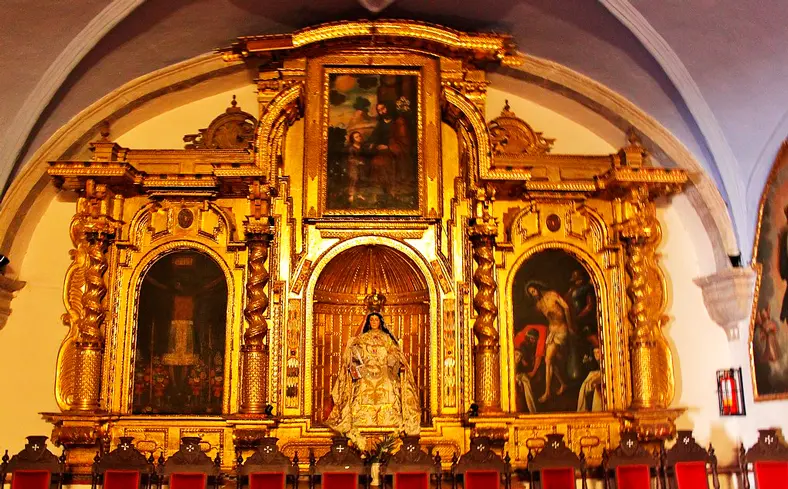
Behind the gold leaf and majestic biblical scenes that adorn viceregal temples lies one of the most fascinating artistic revolutions in Latin America: the Cusco School of Painting. Born in the heart of the Andes between the 16th and 18th centuries, this artistic movement was not simply a copy of the European Renaissance or Baroque, but rather a complex process of religious syncretism and cultural resistance. In each brushstroke, Indigenous and mestizo masters managed to assimilate Western academic techniques and reinterpret them through their own cosmology, infusing sacred art with the symbolism of Pachamama, the apus, and native iconography.

If you are passionate about art history or are planning your cultural tour of Cusco’s Historic Center, join us as we explore its evolution, its leading figures such as Diego Quispe Tito and Marcos Zapata, and the masterpieces of colonial painting that turned the former Inca capital into the artistic center of South America.

1. Origins and Characteristics of Cusco Painting
Escuela Cusqueña de Pintura: Historia, Obras y Dónde Verlas en Cusco

The Cusco School of Painting emerged during the Viceroyalty of Peru between the 17th and 18th centuries, as a result of profound cultural mestizaje in which Italian and Spanish artists introduced late Renaissance and Mannerist techniques to Andean culture. These techniques were later reinterpreted by Indigenous and mestizo masters to express their own worldview. It all began with the arrival in Cusco and Lima of painters such as Bernardo Bitti, Mateo Pérez de Alesio, and Angelino Medoro, who around 1583 introduced these European artistic currents. Their development accelerated when friars and masters established workshops to teach drawing and oil painting to Indigenous and mestizo artists for the purposes of Catholic evangelization. The process gained new momentum after the 1650 earthquake, when Bishop Manuel de Mollinedo y Angulo promoted the reconstruction of temples under artistic patronage that paved the way for the Cusco Baroque.

Diego Quispe Tito (1611–1681), born in the parish of San Sebastián and a nobleman of Inca ancestry, is considered the spiritual leader and initiator of the Cusco School’s autonomous identity. He was the first Indigenous painter to demonstrate that European art could be assimilated and radically transformed. His legacy rests on three major contributions:

  • The appropriation of the Andean landscape: Instead of reproducing Europe’s idealized backgrounds, he introduced landscapes featuring local flora and fauna, particularly birds—including the jungle parrot—which some researchers interpret as a hidden symbol of Andean resistance.
  • The use of Flemish prints: He used prints from the Low Countries as a foundation, reinterpreting them with a vibrant color palette that broke with traditional European geometric perspective.
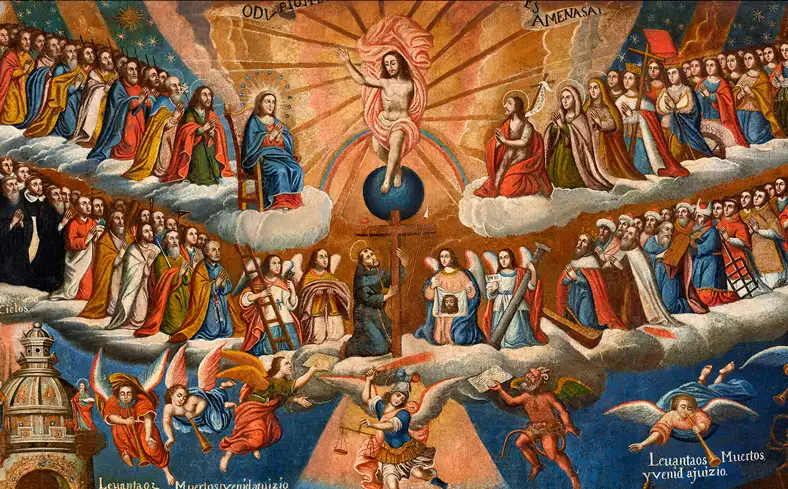
  • The introduction of Inca nobility: In works such as The Last Judgment, he dared to portray members of the Inca aristocracy wearing the mascapaicha and inhabiting paradise.

Years later, Indigenous painters themselves would break away from the rigidity of European academic traditions. In 1688, following persistent tensions over who should carry the triumphal arches during the Corpus Christi festivities, Indigenous and mestizo masters formally separated from the Spanish guild, citing the exploitation they suffered at the hands of their colleagues, a minority that had controlled the trade until then. This separation gave them complete freedom to paint according to their own sensibilities and worldview, thereby consolidating a genuinely autonomous and Andean Cusco School.

Historical Context: Cultural Resistance

Although colonial painting emerged as a tool for religious instruction due to the difficulty of catechizing people in native languages, over time it became a means of cultural resistance. Local artists adopted European techniques without abandoning their own worldview.

The work was carried out in collective workshops where recognized masters supervised journeymen and apprentices. This production model was so effective that, by the 18th century, the fame and export of Cusco canvases had spread to regions such as Puno, La Paz, Sucre, Buenos Aires, and Santiago de Chile.

Cultural Mestizaje and Religious Syncretism

Unlike other Spanish American centers (such as Quito or New Spain) and Spanish painting, which was characterized by asceticism, Cusco’s artistic production stood out for its pantheistic perspective linked to the land, nature, festivities, and sumptuous clothing.

From this convergence emerged a syncretic aesthetic that incorporated biblical sacred figures dressed in traditional clothing and featuring Andean iconography. The greatest testimony to this fusion of European sacred elements and Andean earthly traditions is the famous series of sixteen Corpus Christi canvases, preserved at the Museum of Religious Art of the Archdiocese of Cusco.

2. Historical Evolution of Cusco Painting

The Cusco School underwent a continuous process of transformation over three centuries, shaped by the local assimilation and reinterpretation of three major European artistic movements: Mannerism, Baroque, and Neoclassicism.

Italian Influence and Mannerism

During the economic boom of the Viceroyalty, between the 16th and 17th centuries, prominent European masters arrived in Peru, bringing new techniques with them. Among them was Mateo Pérez de Alesio, a former collaborator of Michelangelo at the Sistine Chapel, and the Jesuit Bernardo Bitti, whose Mannerist elegance and use of color laid the iconographic foundations for evangelization in the region.

Colonial Baroque and the New Local Style

During the 17th and 18th centuries, under the spirit of the Counter-Reformation, Italian and Flemish influences evolved into an American Baroque that adopted diagonal composition, aerial perspective, and chiaroscuro. During this mature period, several major local masters stood out:

  • Diego Quispe Tito: A leading figure of the early Baroque, characterized by formal freedom in his treatment of the Andean landscape, as seen in works such as The Flight into Egypt.
  • Basilio de Santa Cruz Pumacallo: A representative of the mature Baroque, with a strong influence from Spanish painting and a dynamic, highly decorative compositional style.
  • Marcos Zapata: One of the most prolific painters of the 18th century, renowned for leading large collective workshops alongside masters such as Mauricio García, Chacón, Vilca, and Tadeo Escalante.

Neoclassicism and the End of the Colonial Era

By the end of the 18th century, Neoclassicism was introduced, a style that sought a return to academic rigidity and Greco-Roman ideals. However, this movement never achieved the popular appeal or expressive power that mestizo Baroque had consolidated within Cusco’s identity.

3. Famous Works of the Cusco School You Should Know

The Cusco School produced thousands of canvases over three centuries, but certain works masterfully bring together its most distinctive conceptual and stylistic elements. These paintings stand out not only for their technical and compositional value, but also because they are among the most accomplished visual expressions of the dialogue between European art and the Andean worldview.

Below, we examine some of the most representative paintings that you should see during your visit:

The Last Supper by Marcos Zapata

Located on a wall between the central nave and the sacristy of Cusco Cathedral, this work was painted in 1753 at the request of treasurer Diego Felipe de Barrio y Mendoza and measures approximately 6.35 metres high by 5.67 metres wide. It is the most famous example of Andean-Spanish syncretism: instead of the traditional Paschal lamb, the Eucharistic table features a roasted guinea pig—although some scholars argue that it could be a vizcacha, considered a spiritual guardian of lakes and mountains in the Andean worldview—accompanied by chili peppers, local fruits, and chicha de jora. Likewise, the face of Judas Iscariot has been interpreted by various critics as a disguised portrait of Francisco Pizarro.

Our Lady of Almudena and the Mountain Virgins
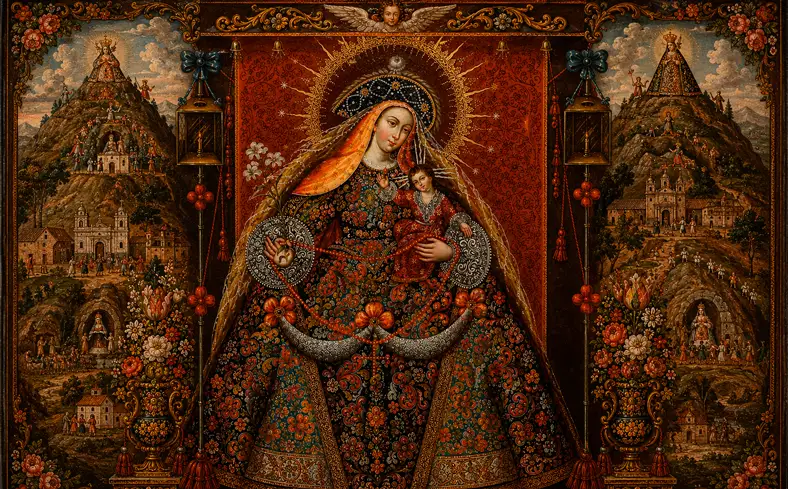
These Marian devotions, whose popularity in painting grew from 1673 onwards with the patronage of Bishop Mollinedo y Angulo, show how the figure of the Virgin Mary was conceptually associated with Pachamama (Mother Earth). The so-called Mountain Virgins feature triangular silhouettes that directly allude to the shape of the apus (sacred guardian mountains), decorated with meticulous gold brocade and floral details. Meanwhile, Our Lady of Almudena, attributed to the prominent Indigenous master Juan Tomás Tuyro Túpac, became one of the most venerated and representative Marian images in Cusco Cathedral.

The Return from Egypt by Diego Quispe Tito
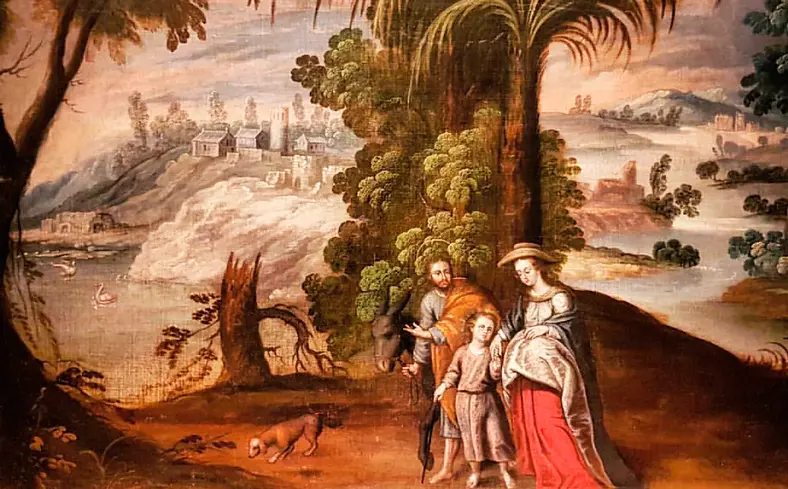
Painted around 1675 by the artist considered the leading figure of the Cusco School, this canvas is a quintessential example of the use of local space to narrate biblical stories. The sacred figures move through an environment dominated by the geography, fauna, and native architecture of the Cusco Andes. The clothing worn by the Virgin and the angels also stands out, adorned with sumptuous details and brocade that reflect the distinctive Andean decorative sensibility.

4. Where to See the Cusco School During Your Trip to Cusco

To fully appreciate the artistic and historical value of the Cusco School, it is essential to view its works in the settings for which they were originally created. Much of this artistic production is preserved inside the churches, convents, and museums of the Historic Center, where the viceregal architectural setting enhances the richness of each canvas.

Below are the main collections and must-see churches to include in your cultural itinerary:

Cusco Cathedral: The Largest Collection
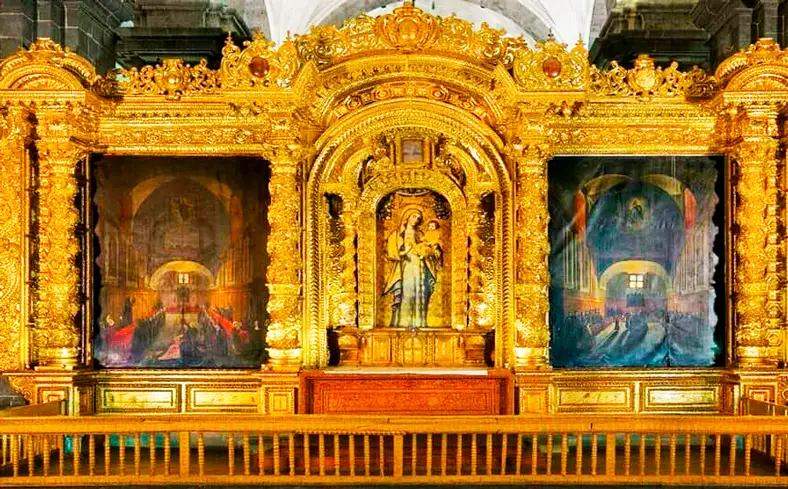
Built between 1560 and 1664, the Cathedral Basilica houses the largest concentration of Cusco School canvases preserved in their original setting. Its naves and chapels display complete pictorial series by masters such as Marcos Zapata and Basilio de Santa Cruz, including the famous Last Supper.

Travel note: A visit to this monument is included in the traditional Cusco City Tour itinerary.

La Compañía de Jesús and La Merced Church
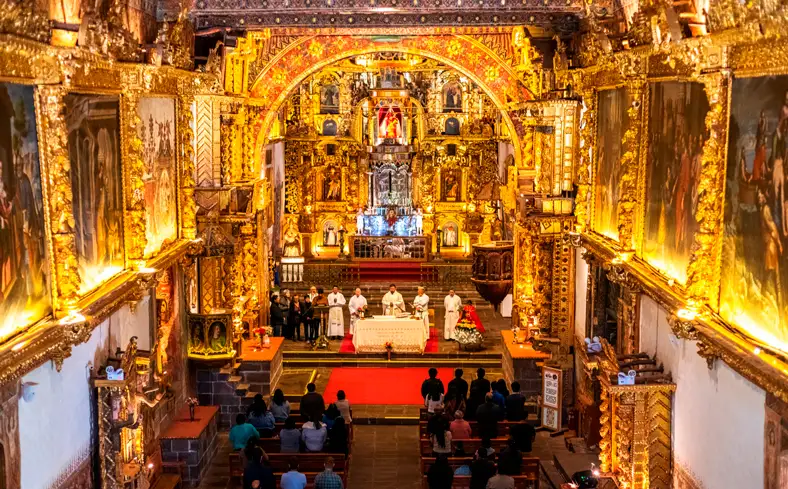
Located in the heart of the Historic Center, these emblematic Baroque churches house outstanding collections from the 17th century:

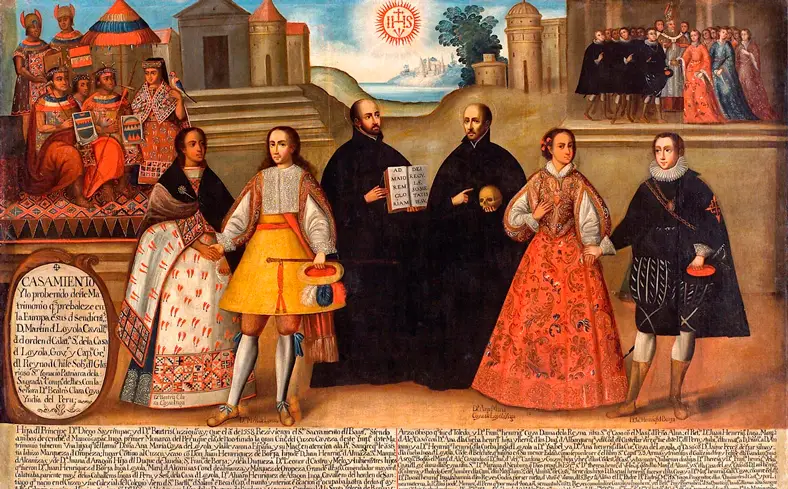
  • La Compañía de Jesús: Built over the former palace of the Inca Huayna Cápac and declared a World Heritage Site in 1983, it preserves original works by Bernardo Bitti. Particularly noteworthy is the iconic anonymous canvas depicting two important marriages of the period: the union of Captain Martín García de Loyola and the ñusta Beatriz Coya in 1572, and that of their mestiza daughter, Ana María Lorenza, with Juan de Borja in Madrid in 1611.
  • La Merced Convent: It displays important series dedicated to the lives of Saint Peter Nolasco and Saint Francis of Assisi.

Museum of Religious Art (Archbishop’s Palace)
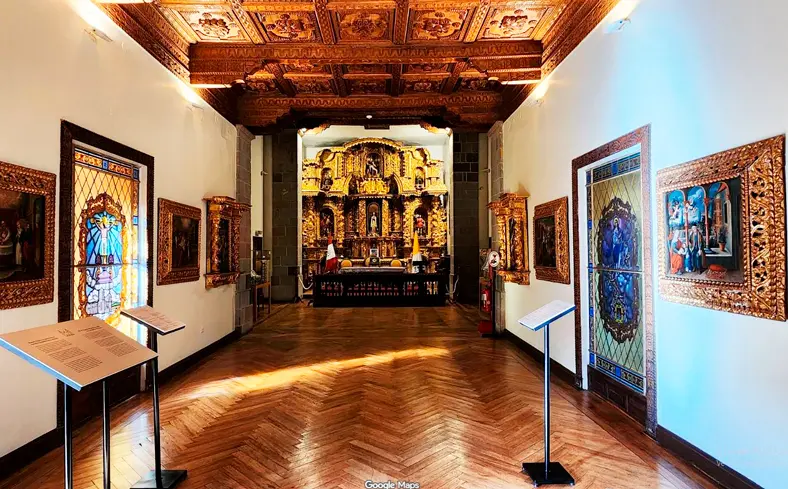
Located at the intersection of Hatun Rumiyoq and Herrajes streets—on the foundations of the former palace of the Inca Roca—this museum houses treasures of colonial art. Its main attraction is the complete Corpus Christi series: sixteen canvases from the late 17th century that constitute an invaluable sociological and historical record of the procession, clothing, and hierarchical society of viceregal Cusco.

Final Recommendations for Visitors

Escuela Cusqueña de Pintura: Historia, Obras y Dónde Verlas en Cusco

Before setting out to explore the legacy of the Cusco School, it is worth keeping a few practical details in mind that will enhance your experience:

  • Photography and conservation: In most churches and museums, the use of flash and even direct photography is strictly prohibited. This is an essential measure to protect pigments that are more than three centuries old from light-related deterioration.
  • Take advantage of natural light: It is recommended that you visit the Cathedral and La Compañía de Jesús Church in the early morning, when natural light filtering through the windows illuminates the details of the gold leaf (brocade) and the color nuances of the canvases more clearly.

Discover Colonial Art with Experts
Escuela Cusqueña de Pintura: Historia, Obras y Dónde Verlas en Cusco

If you would like to explore the history of the Cusco School in greater depth and see its works in their original context, you can join our guided tours: Free Walking Tour Cusco, Free Tour Lima, and Free Tour Arequipa. Led by accredited professional guides, these tours will help you decipher, canvas by canvas, the hidden codes of Andean-Spanish syncretism that continue to fascinate art historians around the world.

Cusco is known as “the archaeological capital of the Americas”, “the historical capital of Peru”, the capital of the Inca Empire, the cultural and political heart of the Andean people, and the home of the famous Cusco School of Art during colonial times. The city is clearly the result of a cultural clash between Andean and Spanish worlds. These are just a few of the reasons why you might want to spend a good amount of time here doing an internship and/or volunteering in a variety of fields such as teaching English in schools, working in tourist hostels, hospitality, healthcare, social projects in high-Andean communities, orphanages, travel agencies, and more.

Why volunteer and/or intern?

The people of Cusco are friendly, welcoming, and highly respectful. By supporting local communities, you will gain a deeper understanding of the social, political, and economic context behind many of the region’s challenges—where nearly 26% of the population lives in poverty.

Engaging in social work allows you to connect with vulnerable communities, who will be deeply grateful for your help. Travelling solely as a tourist often doesn’t offer the chance to witness the everyday reality of those most in need.

Additionally, while volunteering you’ll meet other kind-hearted individuals. In short, taking part in a volunteer programme can be a powerful experience for your personal growth.

It’s important to understand that volunteering aims to support a social or humanitarian cause, while an internship is designed to complement your academic training with practical experience in a professional setting. Whether you choose a volunteer placement or an internship, these roles are generally unpaid. However, in some cases, your university, host organisation, or company may cover accommodation, meals, or travel expenses.

Where can I volunteer/intern?

1. Cuso International

Cuso Internacional is an organisation that offers a variety of volunteer opportunities, including educational support for children in high-Andean communities, animal care, and environmental protection. You’ll also have the chance to combine your volunteer work with Spanish language courses, allowing you to contribute to the local community while improving your language skills.

Accommodation is typically with local host families. The organisation provides full orientation and induction to the project, as well as 24/7 support throughout your stay.

Requirements include being over 18, open-minded, respectful, empathetic, energetic, and creative. If you wish to volunteer with children, you will be required to submit a criminal background check.

2. World Wide Opportunities on Organic Farms

This organisation offers volunteer programmes specifically focused on agricultural work, animal care, construction, and environmental protection. If you enjoy being outdoors, working closely with nature, and experiencing rural life, then this is the ideal option for discovering the countryside around Cusco.

3. Free Walking Tours Perú

The FWTP project was founded in 2015 with the aim of showcasing the history of Cusco and Peru through free walking tours. At the end of each tour, participants are invited to leave a donation based on the quality of the experience. Over the years, our organisation has grown, and today we offer much more than just free tours in the tourism sector.

We currently offer an internship in the city of Cusco, where you’ll have the opportunity to meet our team at our office located in the historic city centre. The internship focuses mainly on digital marketing tasks, such as creating content for tourism products, blogs, photos, videos, and managing social media.

To join our team, the requirements are: a minimum stay in Cusco of 15 days, basic Spanish, strong grammar in your native language (English, French, German, or Portuguese), and knowledge of digital marketing. If Spanish is your native language, you are also welcome to apply.

Como parte de la pasantía FWTP, cubrimos tus gastos de alojamiento. Te proporcionaremos una habitación individual privada con baño privado, televisión por cable, wifi las 24 horas, ducha con agua caliente y una cálida hospitalidad. El hostal está ubicado en el centro histórico de Cusco, a solo 15 minutos a pie de la Plaza de Armas .

4. Exploor Peru

The social project of Exploor Peru is primarily dedicated to supporting the indigenous community of Palccoyo, located high in the mountains, with no access to internet or electricity. The aim of the organisation is to preserve and revitalise the ancestral traditions of this community, while also working to improve their economic and educational conditions for future generations.

Currently, the Palccoyo community relies mainly on alpaca herding and agriculture, particularly the cultivation of potatoes and quinoa. By joining this project, you’ll have the opportunity to interact with the community, learn about their way of life, and contribute to the sustainable development of the area.

5. Volunteering in Perú

El programa de voluntariado en Perú , con sede en Cusco, ofrece una variedad de programas que incluyen apoyo educativo para niños de zonas rurales, trabajo con ONG locales, cuidado de animales, construcción y asistencia a comunidades agrícolas.

6. Aldea Yanapay

The Aldea Yanapay volunteer programme in Cusco focuses on supporting indigenous communities in the region, especially children. Volunteers can take part in a range of projects, including running workshops for children aged 5 to 15 in the village schools. Currently, there are two active projects—one in the city of Cusco and the other in Lamay, a small town located in the Sacred Valley.

7. Human Actions

Human Actions is dedicated to helping abandoned dogs and other domestic animals. The organisation works to improve their quality of life by caring for them in a warm, safe, and welcoming shelter located in the district of Saylla, south of the city of Cusco.

The main goal of the Human Actions Dog Sanctuary and Shelter in Cusco is to protect rescued dogs, ensure their well-being, and promote their adoption into loving homes.

Free Walking Tours Peru

Secure your spot on our free tours led by professional, authorized, and expert guides in Free tour Cusco, Free tour Lima, and Free tour Arequipa. Booking is free!

1. What is Pachamama and what does it mean?

The Pachamama or Mother Earth is a divinity that represents nature for many Andean peoples of South America. In Inca mythology, she is recognized as a goddess associated with the feminine and fertility, as the spirit of the earth, which is why the Incas were very respectful of their environment. She is also known as the wife of lightning.

2. What is the Pachamama ritual?

The main ritual of Mother Earth is the “Challa”, payment or tribute. It can be done on the first Friday of any month, the best stage being the 1st of August or throughout the month. Just as it can be done on special occasions to ask the Pachamama for grace and good luck. This action includes a kind of ritual steps, which consist in the preparation of a special meal the night before and it is offered the next day in a special stone formation called the water hole or in the intake of an irrigation ditch where the main ritual is carried out. , in which the food prepared beforehand is offered together with drinks, mainly coca leaves and cigarettes.

En la actualidad el pago a la Pachamama se realiza también por familias cristianas y pachamamistas, teniendo así diferentes variaciones en la ofrenda y la comida.

3. Where did the Pachamama originate?

Pachamama in the legends is a young and beautiful divinity that has its origin in the Collao or Altiplano area. Since mother earth has a singular beauty, everyone wanted to marry Pachamama, one of them is Wacon, with a malevolent character, however, she chooses Pachacamac; Wacon’s brother, considered the maker of the world and the heavens. By winning the duel for the love of Pachamama, Wacon is dissatisfied and begins to create droughts and floods in the terrestrial world for which he is expelled from heaven to the caves. After this event Pachamama and Pachacamac have twin sons called the Wilcas.

4. What is Pachamama fed with?

  • This practice is based on the delivery of offerings in payment to the land on the day of the Pachamama celebration. The residents make these offerings as a sign of gratitude, requests or favors by delivering a payment in advance, with material elements of natural origin called dispatches.
  • The most popular and that are normally delivered together are the coca leaf, banana, chicha, wine and certain seeds from the jungle with symbolic and magical power such as the huairuro. And among some rarer we have rice, starfish, cookies, sweets, mixture; among others.
  • The offices are different according to the place, territory or ecological floor. This ritual revitalizes the energy borrowed from the Pachamama during the agricultural year.
  • In the area of Puno and Bolivia the dispatches are sweeter.
  • In Cusco they are more linked to their ecological floor in the sacred valley with products such as corn, beans, etc.
  • The dispatches are also made with the purpose of multiplying their herds. The horticulturists or fruit plantations smoke coca and dry skin of the snakes with incense in vegetable and rocoto orchards as well as offer llama and vicuña fetuses, people believe that these offerings are better received.
  • Normally these offerings are made on August 1, but they are usually made throughout that month.

5. When is Pachamama’s day?

August 1st is a very special date for Latin America; It is Pachamama Day. It is a day of gratitude to Mother Earth for her protection and providence, this date is characterized by an awareness of what the earth offers us as well as reminding us that we must respect and care for it above all else.


Free Walking Tours Peru

Secure your spot on our free tours led by professional, authorized, and expert guides in Free tour Cusco, Free tour Lima, and Free tour Arequipa. Booking is free!

Find more information about the guided walking tours in Cusco where more about the Pachamama is explained.

free walking tour Puno português
Free Walking Tour Puno

Puno city is the gateway to Lake Titicaca, therefore you will most likely have some free time to stroll the city on foot, but where to start? How to do it? Don´t worry! below we highlighted the must-see attractions in the historical center that you can visit for free by doing your own self-guided free walking tour Puno, just follow the instructions, we have also embedded a google map with the highlights!

Free Walking Tours no Peru

Book now our free walking tours conducted by professional, authorized guides and experts in Cusco, Lima and Arequipa — The reservation is free

This is the plan for the Free Walking Tour Puno

Check out all the recommendations below to see where you can start? What to see? Where to finish your walk? Where to eat the best food in Puno city?

Start at the Plaza de Armas of Puno

In pre-Hispanic times there were already human settlements of farmers and fishermen who lived on the shores of Lake Titicaca according to many chroniclers and historians, which suggests that when the Spaniards arrived Puno city´s location from today, they made a Re-foundation of the city in 1668 under the name of San Carlos de Puno.

free walking tour Puno português, plaza de armas puno
Plaza de Armas de Puno

Puno like many colonial towns in Peru still has a strong colonial Spanish background in architecture and the urban planning which resembles a Checkers´ board or quadratic cities and right in the center there is the Plaza de Armas which is the birthplace of the city.

In the central part of the square, there was a colonial water fountain that was removed and replaced in 1925, by the statue of General Francisco Bolognesi, a hero of the Pacific war against Chile.

Atrium of the Cathedral of Puno

The beautiful baroque-style cathedral was built in between 1669 and 1757 founded by Silvestre de Valdez, damaged by earthquakes. Many restorations were many by Emilio Hart Terre.

free walking tour Puno português, catedral de puno
Catedral de Puno

At the façade you will see many flora and fauna representations on high relief, there is also a mermaids figures holding  Charangos (Small Guitars made out from the Armadillo Schells), you cannot miss this place definitely when you free tour in Puno.

Conde de Lemos Balcony

free walking tour Puno português, varanda do conde lemos
Varanda do Conde Lemos

Laykakota was a mine and at the same time a city located approximately 6km in the northeast of Puno city from where silver was extracted, this mining was founded by the brothers Gaspar and José Salcedo in the mid-seventeenth century.

At the beginning of 1667 the conflicts and rebellions between the Spaniards from the north (Basque Country) and the Spaniards of the south (Andalusia) began, even though there was an express order of the Viceroy Count of Lemos to stop the conflicts, these rebellions did not cease, which is why the Viceroy of Peru, Don Pedro Antonio Fernández de Castro, better known as Count of Lemos, had to travel to the city of Puno and deal personally with this conflicts to restore order and peace.

Carlos Dreyer Spohr Museum

Carlos Dreyer Spohr was originally born in Germany at the end of the 19th century, then he migrated to Peru and lived in the city of Puno for around 30 years, he was an antique collector, painter and passionate about cultures that lived and lives around the Lake Titicaca.

free walking tour Puno en español, museo carlos dreyer
Museu Dreyer

All Carlos’s collections are now exhibited in this museum, where you can see ceramics, metallurgy, textiles and even sculptures from the Puno region. There are many artefacts from different historical periods, there are even human remains that come from the tombs of Sillustani.

Price: Adults pay 5 USD approx. | Students pay 3 USD approx. | Please bring local currency!

Opening hours: 9am to 7pm

This site is optional since there a fee for accessing this museum

The House of Corregidor

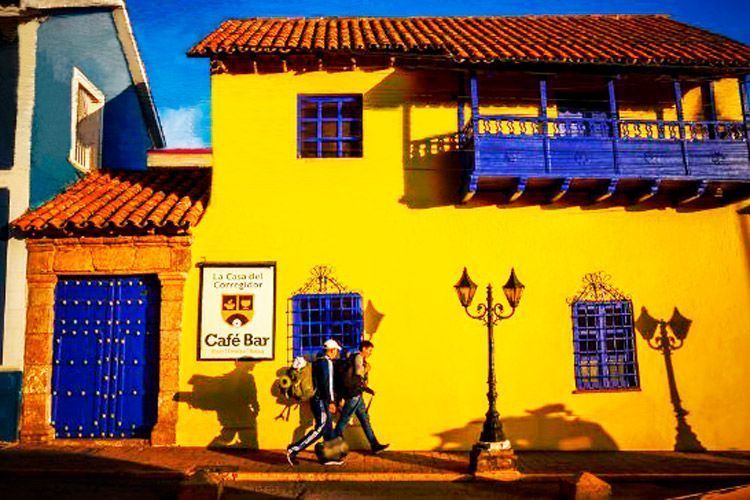
This beautiful colonial house was built in a total area of ​​600 square meters, dates back to the 16th century, the house still maintains its colonial-style through Sevillian tiles, patio and balconies; The house was an official residence for the most important authority from the colonial period who had the political title of “Corregidor”.

free walking tour Puno português, casa do corregidor
Casa do Corregidor

Corregidor literally means “a person who is responsible for making order and peace in a city”, at that time he was the highest authority of the city as it is the Mayor nowadays.

The house was badly damaged by the earthquakes of 1781, 1810 and 1981 and fortunately rebuilt and today is used for different exhibitions of art, music, literature, etc.

Jiron Lima

free walking tour Puno português, jiron lima
Jiron Lima

This is just a fun walking street where you will find arts and crafts, cafes, bars, restaurants, hotels, and travel agents, definitely the perfect place for a pleasant afternoon stroll, if you are looking for an awesome restaurant you can find it at this street.

Church de San Juan Bautista

free walking tour Puno português, igreja san juan bautista de puno
Igreja San Bautista de Puno

The original church was built in 1562 but unfortunately, it was destroyed by an earthquake, the current church we see today dates back to 1887 and has an Ogival French architectural style.

free walking tour Puno português, virgem da candelaria
Virgem da Candelaria

This church is also very famous because within it is the patroness saint of the Puno city known as The Virgin of Candelaria, the most famous in the southern part of Peru, the catholic festivity takes place on February the 2nd of each year, you definitely do your best free walking tour Puno with vivid Culture.

Parque Pino

The Park was built at the beginning of the 20th century in memory of Manuel Pino who is one of our heroes of the Pacific war against Chile; Manuel Pino was born to Puno city and studied law and politics in Arequipa city, he participated in the battle of Miraflores (Lima) in 1881 where he died heroically.

free walking tour Puno português, parque o pino
Parque O Pino

Nowadays the park is the main place where locals gather to talk about politics and social issues; this park is also used for cultural events, similar to Plaza San Martin in Lima city, make your way here when you do your free walking tour in Puno.

Mercado Central Puno

free walking tour Puno português, mercado central do puno
Mercado Central

If you haven´t visited a traditional place in Peru, you will surely love this market. Traveling for many tourists means not only visiting touristic attractions but also giving it a social sense by exploring non-touristic locations and thus helping locals through a purchase. In this market, you will find food, clothes, and souvenirs of Puno, each stall operates independently and the vendors are very friendly. If you are looking for food go upstairs to the second floor where you will find traditional food for 10 soles or 3 USD for a set menu (soup, main course, and infusion).

Plaza del Faro

This square is located about 7 minutes’ walk from the Central Market, visiting it is highly recommended! From here, you can see the immensity of the highest navigable lake in the World and the largest in South America. The place is also perfect for photos shooting, especially if the day is very sunny, the photo can be taken with the background of Puno city or Lake Titicaca.

Praça do Farol

There are also restaurants at this pier and square, after lunch, you can take a boardwalk along the coast of Puno, everything is sign-posted, or else you can take a boat to the floating Islands of Uros.


Become a Tour Guide or Affiliate in your City
If you are an Official Licensed Guide, work with us(not for us), run your own business, send us your CV  and grow professionally!

Metropolitano en Lima

From Barranco and Miraflores to Lima center— Hello, we are glad that you are reading this article, we won’t waste your time, we will get straight to the point, read below all the steps to get to the historic center of Lima— the simplest and fastest way.


How to get from Barranco neighborhood to our free tour meeting point in Lima historic center?

  • Take the Metropolitano local bus:
    • Get to Boulevard Metropolitano Bus station, which is just right across the Main Plaza of Barranco.
    • Buy your Card from the operator at the bus station. The price is 4.50 Soles and refill it—How much should you refill? The cost for any destination is 3.50 Soles per person
    • Inside the Bus station, get in Line C, heading to the North (Hacia al Norte). Ask local people by saying in Spanish: ¿De dónde tomo el bus para Jirón de la Union?.
    • Once you are on the bus, it will take you about 30 minutes to get to Estación Jirón de la Unión — Get off at this station, the names of the stations are displayed on the screen inside the buses and are also announced verbally.
    • Finally, from the Jirón de la Unión bus station, walk to La Merced Church (our meeting point for Lima center free tour), we will wait for you at 11 am and 3 pm in front of this church for the free tour; this is the reason why you need to reserve the 11 am or 3 pm schedule.
 De Barranco y Miraflores a Lima centro—Rápido y Barato
La Merced church

How to get from Miraflores neighborhood to our free tour meeting point Lima historic center?

You have 2 options:

  1. Leave with us from Miraflores to Lima center:
  2. Take the Metropolitano bus:
    • Get to Benavides Metropolitano Bus station, which is just right across the Main Plaza of Barranco.Buy your Card from the operator at the bus station. The price is 4.50 Soles and refill it—How much should you refill? The cost for any destination is 3.20 Soles per person
    • Inside the Bus station, get in Line C, heading to the North (Hacia al Norte). Ask local people by saying in Spanish: ¿De dónde tomo el bus para Jirón de la Union?.
    • Once you are on the bus, it will take you about 30 minutes to get to Estación Jirón de la Unión — Get off at this station, the names of the stations are displayed on the screen inside the buses and are also announced verbally.
    • Finally, from the Jirón de la Unión bus station, walk to La Merced Church (our meeting point for Lima center free tour), we will wait for you at 11 am and 3 pm in front of this church for the free tour; this is the reason why you need to reserve the 11 am or 3 pm schedule.
De Barranco y Miraflores a Lima centro—Rápido y Barato
Iglesia La Merced

How to Taxi or Uber?

If you take a Taxi from Barranco or Miraflores to La Merced Church (Lima historic center), pay 35 Soles average total price, you will be at La Merced Church in about 40 minutes to 1 hour time, make sure you take a Taxi or Uber beforehand.

If you ask where Kennedy Park is, chances are someone will tell you it’s inside Central Park and right next to 7 de Junio Park. While this might sound like a tongue twister or a joke meant to confuse you, it’s actually the absolute truth.

Yes, it can be a little confusing, and you might feel dizzy with so many parks. But don’t worry—none of that will happen when you visit this public space filled with greenery, art, culture, and even great food. To enjoy it, you don’t need to know the exact name of this charming corner of Miraflores.

Still, to spare you the confusion: “Central Park” refers to the joined area of Kennedy Park and 7 de Junio Park. The former is named after the American president who promoted the Alliance for Progress, while the latter commemorates the Battle of Arica in 1880.

That battle, part of the War of the Pacific against Chile, saw the heroic sacrifice of Colonel Francisco Bolognesi, who famously vowed to defend the hill of Arica “until the last cartridge is fired”, and Alfonso Ugarte, the young patriot who chose to throw himself off a cliff rather than surrender the flag to the enemy.

Because of these heroic acts, 7 June is now Flag Day in Peru—a date Peruvians never forget, just as you won’t forget your strolls through Kennedy Park. Yes, that’s what the locals call it, regardless of the official name. And what will you call it? You’ll know once you’ve been here.

What is certain is that you’ll have a great time—just like the locals and travellers who relax on its benches, watch performances in the amphitheatre, or play with the cats that roam freely in this park that is both one and many at once.

A Journey Through History

When the Spanish arrived in the Rímac Valley, the area now known as Miraflores was primarily agricultural. Its fields—nourished by irrigation canals that brought life to the desert—were used to grow maize, cotton, beans, squash, peanuts, cassava, and other crops from the Andes and coast.

During colonial times, this agricultural activity continued, although sugar cane and grapes brought by the conquistadors became the main products. The rural and peaceful character of this part of Lima began to change after the Republic of Peru was established on 28 July 1821.

A key date in its urban development was 2 January 1857, when President Ramón Castilla officially created the district of Miraflores. One of the most significant events in its history occurred during the devastating War of the Pacific (1879–1883), when Chilean forces occupied the “City of Kings”.

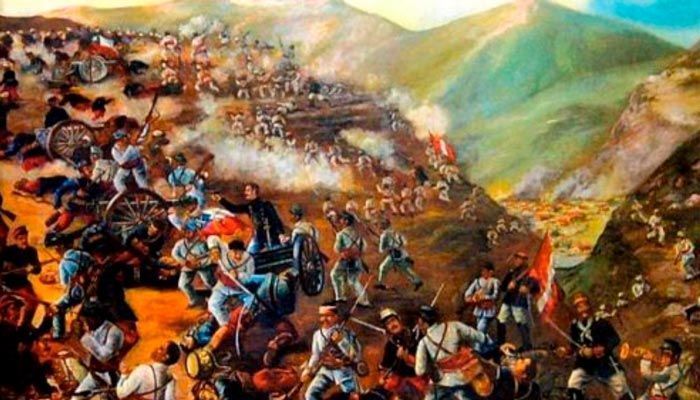
The capture of Lima came after the bloody Battle of Miraflores on 15 January 1881. On that heroic yet tragic day, the outnumbered Peruvian troops and brave residents were defeated by enemy forces with superior numbers and weaponry.

Since then, Miraflores has been known as a “Heroic City”, with Central Park as its urban heart and a green lung that breathes life into its streets—where history and modernity walk hand in hand.

Kennedy Park: The Reason Behind Its Name

It may seem a bit odd that the main park of Miraflores is commonly known as Kennedy Park. But there is a reason: the former U.S. president promoted the so-called Alliance for Progress in the mid-20th century to improve relations between the United States and Latin American countries.

“We offer a special pledge—to convert our good words into good deeds—in a new alliance for progress—to assist free men and free governments in casting off the chains of poverty,” declared John F. Kennedy on 20 January 1961 during the inaugural speech for this initiative.

His words and actions earned him a place of honour in the heart of Miraflores. And although today the official name of this green space is Central Park, many locals still refer to it as Kennedy Park. They do so out of habit—and perhaps with a hint of nostalgia for the past.

Many Reasons to Visit the Park

Greenery, cleanliness, and safety make Miraflores’ Central Park a place of peace and enjoyment, art and culture, tradition and flavour. Here, amid the daily bustle of one of Lima’s most dynamic districts, you’ll find plenty to do—and plenty of reasons to return.

Whether it’s whiling away the time on a bench while playing with the park’s resident cats, walking towards the Virgen Milagrosa Church and the Municipal Palace, or watching the performances at the Chabuca Granda amphitheatre and admiring the artwork on display—there’s always something to enjoy.

And that’s not all. No visit to Kennedy Park would be complete without tasting one or more of the delicious local treats available in this green refuge. The culinary offerings include hearty butifarras and turkey sandwiches, along with traditional Peruvian desserts like mazamorra and arroz con leche.

Rest well and eat well in the heart of Miraflores.

One Park, Many Activities

There’s a lot to do in Central Park. Here are several ideas to help you make the most of your time in Miraflores’ main meeting and gathering spot. Get ready to experience:

Take a Leisurely Walk Around the Park

Stroll through the entire park at your own pace. Admire the lush green areas, colourful flowers, and leafy trees. Stop to enjoy the paintings displayed by local artists or catch a live performance at the Chabuca Granda amphitheatre. You can also head towards the Virgen Milagrosa Church, the Municipal Palace, or the Miraflores roundabout.

Stay Fit with Some Exercise

Thanks to its spacious layout and calm atmosphere, jogging in Kennedy Park is a great way to stay active while on holiday. The best time is early in the morning, before the city fully wakes up. But don’t worry if you sleep in—there’s a dedicated path for those who want to exercise at any hour.

Relax on a Bench

If you’ve just visited Larcomar, the Love Park, or the Huaca Pucllana and need to return to central Miraflores, take a break on one of Central Park’s benches. It’s the perfect moment to recharge and enjoy the birdsong drifting from the trees above.

Try the Street Food

Enjoy local flavours at Miraflores’ main park, where you’ll find all sorts of tasty street food. Try the butifarra—a sandwich made with French bread and country-style ham topped with zarza criolla (lime, onions, and chilli). You can also sample churros, picarones, coffee, and hot chocolate.

Watch a Live Show

Poetry, dance, music, and more: free artistic events are held at the Chabuca Granda amphitheatre. Evenings are especially magical at this open-air venue. Don’t miss the chance to be part of the audience enjoying the shows that bring Kennedy Park to life.

Make the Little Ones Happy

Central Park has a dedicated children’s play area. If you’re travelling with kids, stop by! Entrance is free, and they’ll have hours of fun. End the adventure with a sweet treat at D’onofrio Park, a traditional ice cream parlour where little ones can cool off and enjoy delicious desserts.

Visit the Virgen Milagrosa Church

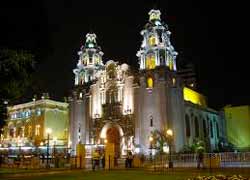
This is the district’s main church. Built in 1939 and designed by Polish architect Ricardo de Jaxa Malachowski, it has adorned the centre of Miraflores ever since. If you’re Catholic, feel free to join one of the Masses celebrated at Virgen Milagrosa.

Admire the Work of Local Artists

Enjoy open-air art at the Paseo de los Pintores—the section of Kennedy Park where local artists exhibit their paintings and sculptures. Most works follow a costumbrista style, portraying everyday customs and scenes. This artistic tradition began in the mid-19th century with the works of Afro-Peruvian painter Pancho Fierro.

Treat Yourself at the Gastronomic Boulevard

On San Ramón Street—popularly known as Pizza Street for the Italian restaurants that opened there in the 1970s—you’ll find a vibrant gastronomic boulevard. Located just across from Central Park, it offers a wide variety of food and drinks to satisfy every taste.

Start the FREE Lima Tour

Kennedy Park is the meeting point and starting location for the free walking tour to Lima’s Historic Centre. If you’re unsure or worried about heading to the capital’s old town on your own, join our free excursion to discover the city founded by Francisco Pizarro on 18 January 1535.

Your urban adventure will be led by a professional local guide. Together, you’ll take public transport to the Historic Centre and explore its streets on foot, uncovering the architectural gems of a UNESCO World Heritage Site.

Book with Us

If you want to explore old Lima on foot, as part of a group and guided by a professional — officially authorised by government institutions to showcase the Historic Centre — book our Free Tour Lima to make the most of your experience, completely free of charge, through what’s known as Pizarro’s Grid.

At the end of the tour, don’t forget to leave a voluntary tip for your guide. It’s a great way to support their work and encourage them to keep sharing the city’s rich history while recommending the best places to eat in Lima — a destination renowned for its outstanding cuisine.

Find more details and book the Free Tour Lima now. If you’re still unsure, read the glowing reviews from travellers who joined us, or browse through thousands of photos of our tours on Instagram and Facebook. The images will convince you that we’re the best option for visiting the Historic Centre from Miraflores.

Note for Peruvians: Free tours are reserved for international visitors. Local travellers are welcome to join the classic city tour of colonial and modern Lima.

Eating and Drinking Around Kennedy Parky

Your visit to Central Park won’t be complete until you’ve enjoyed the many restaurants and bars surrounding the green space or located just nearby. Keep in mind that Miraflores is one of the top culinary destinations in the Peruvian capital.

If you don’t want to venture too far, treat yourself at the gastronomic boulevard on San Ramón Street or at one of the restaurants lining the park. There’s something for every taste, from international fast food chains like KFC and McDonald’s to Peruvian favourites such as Bembos.

You could also explore restaurants run by world-renowned chefs, like Gastón Acurio — one of the pioneers of Peru’s culinary boomRafael Osterling, celebrated for his creative cuisine, or Mitsuharu Tsumura, who offers a refined take on Nikkei cuisine at his restaurant Maido.

If, after a delightful dinner, you’re looking for somewhere to extend the evening with drinks and laughter, consider the following recommendations:

How to Get to Kennedy Park?

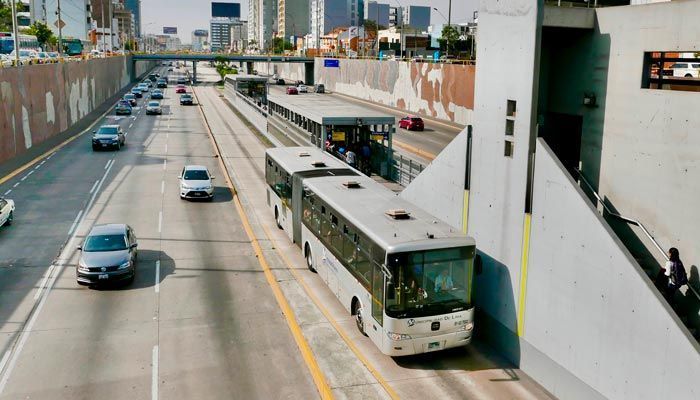
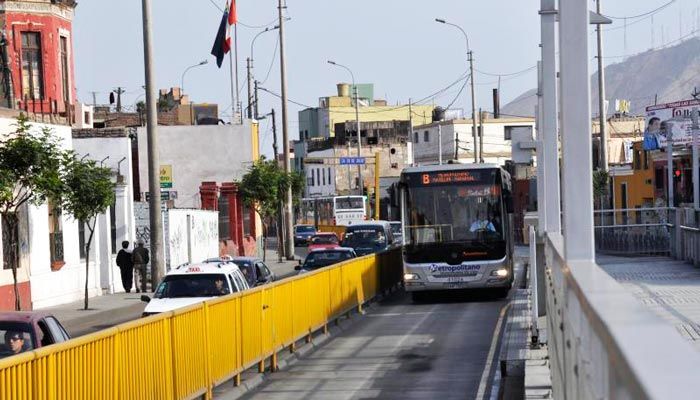
The easiest, most convenient and affordable way to reach Central Park in Miraflores is by taking the Metropolitano, the public transport service that connects the northern, central and southern districts of Lima via a segregated bus lane.

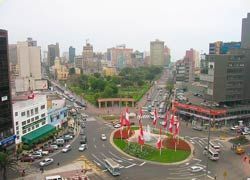
If you access the system from anywhere in the city, remember this name: Ricardo Palma station. That’s where you should get off the bus and walk along the avenue of the same name until you reach the Miraflores roundabout. From there, turn right and you’ll find your destination.

From the Historic Centre, catch a bus at Jirón de la Unión, Colmena (line C) or Central (lines B or C), among others. If you’re in Barranco, board at Bulevar station (line C). The fare is 3.20 soles, and you’ll need a special card to enter the system. You can purchase it at the various stations.

Urban tip: Avoid taking the Metropolitano during rush hours (from 7:00 to 9:00 and from 18:00 to 20:00).

Another option is using independent taxis. Keep in mind that taxis in Lima don’t use taximeters, aren’t painted in a specific colour, and there are no official taxi ranks. Always agree on the fare with the driver before getting in.

As for ride-hailing apps, the most commonly used in Lima are Uber, InDrive, Cabify and Yango. The cost generally ranges between 15 and 40 soles, depending on distance and traffic. Now you know—there’s no excuse not to enjoy one of the most magical places in Peru’s capital.

The park’s keys

  • Area: 22,000 m²
  • Hours: Visit at any time of day, year-round.
  • Price: Admission is free.

Galery of photos

Free Walking Tours Peru

Secure your spot on our free tours led by professional, authorized, and expert guides in Free tour Cusco, Free tour Lima, and Free tour Arequipa. Booking is free!

Many are mistaken in thinking that Lima was nothing but a desert before the arrival of the Spanish. Others are also wrong in believing that the ancient civilisations left no trace of their development and greatness in this city of over 10 million people.

This false idea—that there’s nothing pre-Hispanic to see in Lima—often misleads travellers. When planning their trips, they usually leave out the capital’s archaeological zones from their itineraries, convinced that all the important heritage is found only in Cusco, the Andes, or perhaps the northern coast.

But don’t worry—you won’t make that mistake after reading this text, in which you’ll “discover” the Pachacamac Archaeological Sanctuary. Its name comes from the Quechua words pacha (meaning earth, world, universe, space, and time) and camac (meaning creator, maker, or origin-giver).

Welcome to the oracle, the temples, and the pyramids built to worship Pachacamac—the creator or maker of the earth and the universe. This god was so powerful that various peoples and cultures from the coast and the Andes, including the Incas, worshipped him from the 3rd to the 15th century AD.

In pre-Hispanic times, pilgrims from distant regions made their way to this archaeological site in the Lurín district (31.5 km south of Lima’s Historic Centre). They believed in and trusted the will of Pachacamac, whose totemic image was displayed in one of the chambers of this vast ceremonial complex.

Don’t ignore the past or the native roots of Peru’s main metropolis. Visit Pachacamac, explore its adobe walls, and gaze from its high points toward the sea horizon, where you’ll see two small islands which, according to legend, were once a maiden and her young daughter. If you’d like to uncover that story and many others, continue your journey to the capital’s most important archaeological site—an ancient city that is pre-Inca, colonial, republican, and globalised, waiting to reveal its millennia-old past.

Pachacamac: Soul of the Earth

Oracle and deity, Pachacamac—“the soul of the earth”, one of the meanings of his name—was regarded as the “creator and energiser of the universe”. Thanks to his immense power, he could rejuvenate people, foresee the future, bring wellbeing to pilgrims, heal illnesses, and improve agricultural yields.

He also had control or influence over the elements of nature—such as water, fire, and even earthquakes. He was seen as the cause of tremors, but at the same time, he protected those who believed in him—so long as they worshipped and honoured him with tributes and offerings.

His influence endured over time. The various peoples and cultures who settled in Pachacamac upheld the sacred cult and respected the pilgrims. This was true for the Wari and later the Incas as well. “The Children of the Sun” beautified the sanctuary and incorporated the coastal god into their own worldview.

This attitude of openness was not shared by the Spanish. In 1533, the decline of Pachacamac began. There were no more prophecies or pilgrims in the temples and pyramids—but this was not the end of the story. Today, thousands of Peruvians and foreigners visit the sanctuary to discover the beliefs of the ancients.

las ruinas de Pachacamac

The Legend of Cavillaca

She was a stunningly beautiful woman—so beautiful that the gods themselves wished to make her their wife. They all tried, yet none succeeded in winning the heart of Cavillaca. Frustrated by their failure, the wise god Cuniraya Wiracocha devised a cunning and deceitful plan to overcome the young woman’s resistance.

His strategy was based on trickery and magic. That’s the only way to explain how the wise man transformed himself into a bird. In this form, he cleverly dropped a piece of fruit in front of the maiden. Surprised and delighted by the little bird’s charm and skill, Cavillaca gladly ate the unexpected gift.

What she didn’t know was that with every bite, her innocence was being stolen. Weeks later, she discovered she was pregnant. After giving birth to her daughter, she organised a gathering to uncover the identity of the father. But it was no use—no one spoke a word.

Yes, no one—not even Cuniraya Wiracocha. He didn’t sit at the head table. Instead, dressed in rags, he waited quietly in a corner, hoping for a scrap of food to fall so he could eat it. That’s when he heard Cavillaca tell her daughter, “Go and find your father—he is here among us.

The little girl obeyed and, without hesitation, crawled straight towards the ragged man in the corner. Horrified, Cavillaca scooped up her child and ran towards the sea, intending to drown herself in its waters. So desperate and swift was her escape that she didn’t hear the wise man’s explanation.

As she fled, Cuniraya—now dressed in a robe glittering with gold—confessed that his aim had been to humble the vain maiden. But Cavillaca, unaware of the truth, threw herself into the Pacific with her child. The gods then transformed them into two stone islets as punishment for rejecting a man in rags.

When you visit Pachacamac, turn your gaze towards the sea on the horizon. There, you’ll spot two rocky islets of different sizes. The larger one is Cavillaca, and the smaller one, her innocent daughter.

las ruinas de Pachacamac
The Legend of Pachacamac – “Cavillaca”

The Occupation of Pachacamac Over Time

Before the arrival of the Spanish in the Andean cultural sphere, Pachacamac was inhabited and administered by the following civilisations and peoples:

Lima Culture (250–650 AD)

The Lima culture were the first settlers and builders of Pachacamac. This society constructed the early temples in the religious sector. Their building techniques were very simple, using basic and rustic materials such as adobitos—small, thin, rectangular adobe bricks. The architectural simplicity is due to a lack of technological exchange with other civilisations.

Wari or Huari Culture (650–1200 AD)

Los hombres del que es considerado la primera organización imperial en los Andes, ocuparon los territorios de los lima, incluyendo Pachacamac en el 650 d. C. Durante su predominio se levantaron nuevas edificaciones, como el templo de Pachacamac, conocido como el templo Pintado.
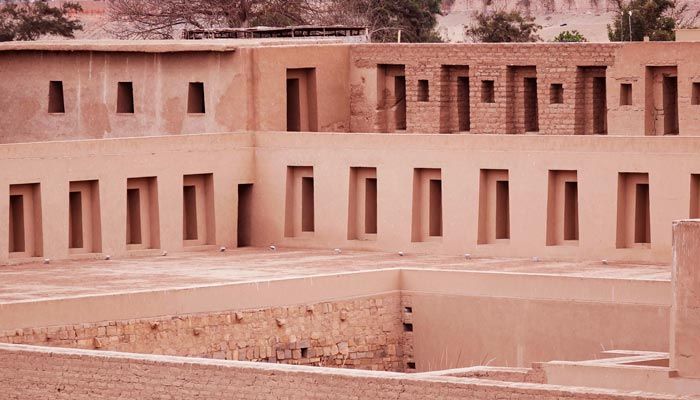
Las excavaciones en la zona arqueológica evidencian que los habitantes de la cultura wari derrotaron militarmente a los lima, pero los vencedores mantuvieron las tradiciones y el arte de los derrotados.

The Wari, considered the first imperial organisation in the Andes, occupied the Lima territories—including Pachacamac—around 650 AD. During their dominance, new structures were erected, such as the Temple of Pachacamac, also known as the Painted Temple.
Excavations in the archaeological zone show that the Wari defeated the Lima in battle, but despite their military victory, they preserved the traditions and artistic styles of the conquered people.

Ychsma or Ichma Culture (1200–1470 AD)

The decline of the Wari in the Andes—who were later defeated by the Incas—paved the way for the expansion of the Ichma, who took over Pachacamac in 1200 AD.
During their time, stepped pyramids with ramps and around 15 temples were built. They also established storage areas, fortified the Painted Temple, and increased the number of ceremonial patios for ritual activities.

Inca Empire (1470–1535 AD)

After defeating the Wari in the Andes, the Incas began expanding towards the coast around 1450 AD. Under the skilled leadership of Tupac Yupanqui, the “Children of the Sun” forcefully or diplomatically annexed the territories of the Chimú, Chincha, and Ichma cultures, among others.
The successful campaign, which lasted until around 1470 AD, allowed the Incas to take control of Pachacamac. Like the Wari and Ichma before them, the Incas allowed the worship of “the soul of the earth” to continue, while also introducing their own deities such as Inti (the Sun Father) and Wiracocha (the creator of the universe).

The Incas built the Temple of the Sun and the Acllawasi—the House of the Chosen Women. In this enclosure lived young women who were taught by the “mamaconas”. These elder women instructed them in honouring the gods and trained them in various manual skills such as weaving and cooking.

At the end of the 19th century, excavations revealed important buildings and burial areas that, sadly, had been destroyed during colonial times.

las ruinas de Pachacamac

Pachacamac: Pyramids and Much More

The archaeological site of Pachacamac is divided into two clearly defined sectors. In both, you’ll find stepped adobe pyramids, one of the most distinctive features of Pachacamac—the deity worshipped and respected along the coast and in the Andes.

Religious Sector

Here you’ll see three truncated, stepped pyramids, along with the following temples: the Painted Temple, which housed the sacred chamber and entrance of the idol of Pachacamac; the Temple of the Sun (Punchao Cancha), located at the top of the sanctuary facing the sea; and the Old or Ancient Temple, a large platform built from millions of small adobe bricks (adobitos). This area also contains a pre-Hispanic cemetery.

Pyramid Sector  

This part of the site dates from the late 14th to early 15th centuries. For many years, researchers and archaeologists believed this area of pyramids and open spaces served as a religious centre, offering rest and lodging for pilgrims from distant communities.
However, archaeologist Peter Eekhout has a different view. After studying and excavating the area with his team, he concluded that the structures lacked the typical features of religious centres of the time. He believes the area was a residential zone, reserved for the ruling elites.
In this space, you’ll be impressed by the secular stepped pyramids built with adobe blocks. You’ll also find ramps and open areas that functioned as plazas or canchas, as they were called before the Spanish conquest.

Pachacamac Museum

Established in 1965 as one of Peru’s first site museums, its modern design is inspired by pre-Hispanic architectural styles. Covering an area of approximately 1,000 m², its exhibition halls display “the cultural sequence of Pachacamac from around 200 AD to the Inca settlement in 1470,” as explained on the museum’s official website.
Thanks to its significance, the museum is referred to as the “gateway to the sanctuary,” as it preserves “the site’s most important archaeological finds,” including “the idol of Pachacamac and the ornamental textile doorway adorned with spondylus shells,” discovered in the Painted Temple by Alberto Giesecke.

Opening Hours and Admission Fees

From Tuesday to Saturday, the Pachacamac Archaeological Sanctuary welcomes visitors from 9:00 a.m. to 5:00 p.m. (ticket offices are open until 4:30 p.m.). On Sundays, it is open from 9:00 a.m. to 4:00 p.m. (ticket offices close at 3:30 p.m.).
Please note that on the first Sunday of each month, admission is free for Peruvian citizens and foreign residents with a valid DNI or residency card.

Below is a detailed chart of the current ticket prices at Pachacamac:


Type of visitorPrice in SolesPrice in USD
Adults15 Soles5 USD
Universities and institutes students (with vigent carnet)5 Soles1.8 USD
Teachers, active military personnel, and adults over 65 years of age with an identity document7.50 Soles2.5 USD
Children under 12 years old, primary and secondary school students1 Sol0.40 USD

The ticket includes:

  • Access to the archaeological site.
  • Access to the Pachacamac Site Museum.

The ticket does not include:

  • Guided tour service (guides charge approximately 30 soles for 1.5 hours of service).

How to Get to the Pachacamac Ruins?

How to Reach Pachacamac?

The museum and sanctuary are located at kilometre 31.5 of the old Panamericana Sur (Lurín district, Metropolitan Lima). The easiest and safest way to visit this archaeological and cultural site is by joining a tour offered by local travel operators.

If you prefer to go on your own, the fastest—though not the cheapest—option is to request a ride using a ride-hailing app (for safety reasons). From the Historic Centre of Lima, the journey takes approximately 90 minutes. From Miraflores or Barranco, it will take around 45 minutes.

If you want to save money, though not time, you can use public transport. This option is recommended for locals or travellers already familiar with the bus systems in the Peruvian capital. If that’s your case, the following companies offer direct routes to Pachacamac:

  • E.T. San José S.A. (purple and white) / Route 8504: San Bartolo–Breña.
  • E.T. Royal Express (white with black letters) / Route 8508: Lima–Pucusana.
  • E.T. GUSICSA (brown and orange) / Routes 8510/8511: San Miguel–San Bartolo.

Another option is to take the Metropolitano bus to the Matellini station in Chorrillos. From there, board the feeder line to Villa El Salvador (Route AS-04 – Platform 11) and get off at the Supro stop. Then cross the pedestrian bridge over the Panamericana, and at the bus stop near the Universidad Científica del Sur, hop on any of the routes mentioned above.

Despite the transfers and travel effort, your journey will be rewarded by the archaeological and cultural grandeur of Pachacamac.

Free Walking Tours Peru

Secure your spot on our free tours led by professional, authorized, and expert guides in Free tour Cusco, Free tour Lima, and Free tour Arequipa. Booking is free!

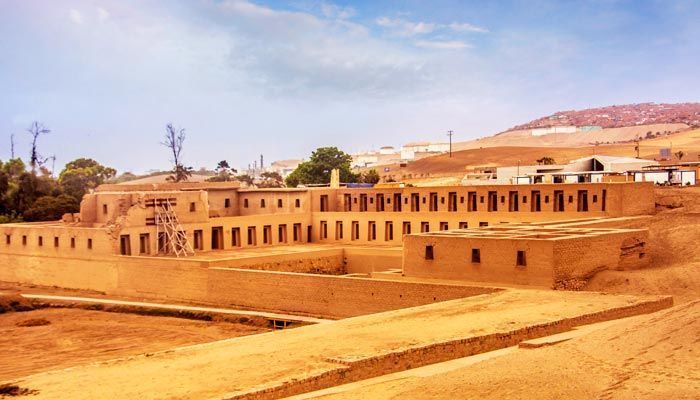
In Miraflores, one of Lima’s most cosmopolitan and touristic districts, you don’t have to leave the urban area to travel back to the pre-Hispanic past of ancient Peru. Just a 20-minute walk from Central Park (also known as Kennedy Park) takes you to an 1,800-year-old pyramid.

Surrounded by modern buildings, Huaca Pucllana—meaning “place to play” in Quechua—was a ceremonial and administrative centre built by the Lima culture. These were the first settlers of the area, long before the arrival of the conquistadors, and the site was later inhabited by various coastal and Andean civilisations.

Get ready to explore, by day or night, a pyramid made of adobe and clay, built in seven staggered platforms. Here, priests held ceremonies and performed rituals in honour of their gods—sun, moon, and other deities once banned by Western colonisers, but still alive in the hearts of Peru’s Indigenous peoples.

Step into millenary Lima, a city whose ancient heritage is often overshadowed by the grandeur of its Historic Centre. But this legacy is very real—and it’s stunning. It shows that ancestral cultures flourished in several of what are now the capital’s modern districts.

Huaca Pucllana is proof of this: a powerful archaeological site you must visit when in Miraflores. The great adobe pyramid is waiting for you.

A Glimpse into its History

The origins of Huaca Pucllana lie with the Lima culture, which thrived along Peru’s central coast between AD 200 and 700. They were the first—but not the only—people to settle in what is now the district of Miraflores.

Excavations carried out in the 20th century unearthed textiles, decorated ceramics, animal bones, stone tools, and remains of alpacas, llamas, guinea pigs, fish, bird feathers, and seeds and skins from squashes, beans and native fruits such as cherimoya, lúcuma, pacae and guava.

Archaeological research confirmed that the findings corresponded to the Lima, Wari (AD 500–1000), Ychsma (AD 1000–1470), and Inca (AD 1470–1535) cultures. Despite this rich history, the site was long neglected by citizens and the state alike, and urban development threatened its very existence.

It wasn’t until 1984 that serious archaeological work began. Three years later, the site was declared an untouchable archaeological zone, finally receiving the recognition and protection it deserves. You’ll feel this sense of historical importance as you walk through the site museum and the various areas of Pucllana, once the “playground” of the first residents of Miraflores.


Site Description

This archaeological jewel—the most important in Miraflores—survived the city’s expansion and is divided into two main sections: the administrative/urban sector and the ceremonial sector, separated by a large adobe wall running north to south.

Here’s what you’ll find in each area:

Administrative and urban sector: Located east of the wall, this area includes small buildings, plazas, ramps and courtyards. Experts believe it hosted public meetings to discuss local affairs such as managing the huaca and improving agricultural production.

Ceremonial sector: To the west lies the largest pyramid on the site. Built entirely of adobe, it measures 500 metres long, 100 metres wide and 22 metres high. On top of this truncated pyramid, pre-Hispanic priests conducted sacred rituals honouring their gods and mythical ancestors.


What to See at Pucllana?

Your guided visit to the Huaca begins at thebase of the truncated pyramid, where you’ll see ceramics from the various cultures and civilisations that once inhabited Pucllana, long before the arrival of the Spanish and the founding of Lima—“The City of Kings”—on 18 January 1535.

At the start of the tour, you’ll be shown a technical scale model of the archaeological site, giving you a clear idea of its layout and the location of its sectors and enclosures within this historic corner of Miraflores.

Next, your guide will introduce you to Peru’s native flora and fauna. On the site, you’ll find llamas and alpacas—two of the four species of South American camelids (the others being the vicuña and the guanaco). These animals were, and still are, essential to the economy and culture of Andean peoples.

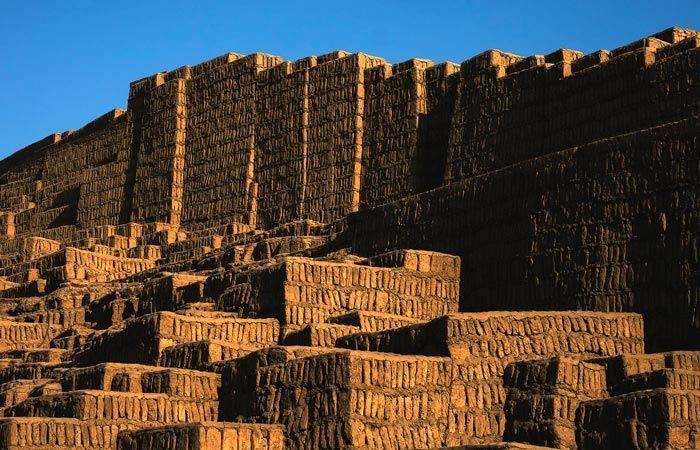
But the main attraction is the stepped, truncated pyramid itself. Oriented from southwest to northwest, it was built using adobe bricks placed vertically, following what is known as the “bookshelf technique”. This method involves leaving small gaps between the bricks to allow the structure to better withstand earthquakes.

An article published by Infobae explains that the walls of the huaca are “coated in fine clay, often painted yellow—a sacred colour for its builders. The pyramid and surrounding structures were built over layers of pebbles and sand, which cover even older constructions underneath.”

The excellent state of preservation of Pucllana is another highlight. If Lima is your first stop in Peru, this site offers a fascinating window into the country’s pre-Hispanic past.

The Site Museum: Opened in 1984, the on-site museum displays the artefacts and archaeological remains unearthed during excavations and restoration work. It is essential for understanding the cultural evolution of this ancient site, and is fully integrated into the visitor experience.

The Restaurant: Savour history—this could well be the motto of the Huaca Pucllana Restaurant. The menu offers creative, modern takes on traditional Peruvian dishes, all in a unique setting. The kitchen is led by chef Marilú Madueño, winner of the 2017 Summum Award, one of Peru’s top culinary honours.


Opening Hours & Ticket Prices

The Huaca Pucllana is closed on Tuesdays, but from Wednesday to Monday, you can visit both the archaeological site and the site museum between 9:00 a.m. and 5:00 p.m.
The general admission fee is 15 soles (around 4 USD).

If you’re planning a special evening visit, keep in mind that from Wednesday to Sunday, night tours are available from 7:00 p.m. to 10:00 p.m. Due to safety regulations, access to the upper section of the pyramid is restricted during night hours. The general admission fee for evening visits is 17 soles (around 5 USD).

Please note that in addition to Tuesdays, the site is also closed on major public holidays: 1 January, 1 May, 28 July, and 25 December.


How to Get to Huaca Pucllana?

If you’re staying near Kennedy Park in Miraflores or anywhere central within the district, skip the buses and taxis—walking or cycling is the best way to reach Huaca Pucllana, located on block 8 of General Borgoño Street.

The walk takes around 20 minutes. The easiest route is along Arequipa Avenue (which has a cycle lane), until you reach the intersection with Ayacucho Street. Turn onto Ayacucho and you’ll soon see the archaeological site come into view.

If you’re coming from Lima’s Historic Centre or the Barranco district, take the Metropolitano bus system, which runs from north to south across the city. In both cases, get off at Angamos station, then walk to Arequipa Avenue and follow the walking route mentioned above.

From downtown Lima (Cercado de Lima), board line C of the Metropolitano at stations like Central, Jirón de la Unión, or Colmena. From Barranco, go to Bulevar station and board line C. The fare is 3.20 soles and you’ll need a rechargeable transport card, available at the stations.

If you’re travelling from other parts of the city, taking a taxi is a good option. We recommend using ride-hailing apps like Uber, InDrive, Yango, or Cabify. Independent taxis (not painted a specific colour) are also available. In this case, agree on a fair price with the driver before getting in.

Free Walking Tours Peru

Secure your spot on our free tours led by professional, authorized, and expert guides in Free tour Cusco, Free tour Lima, and Free tour Arequipa. Booking is free!

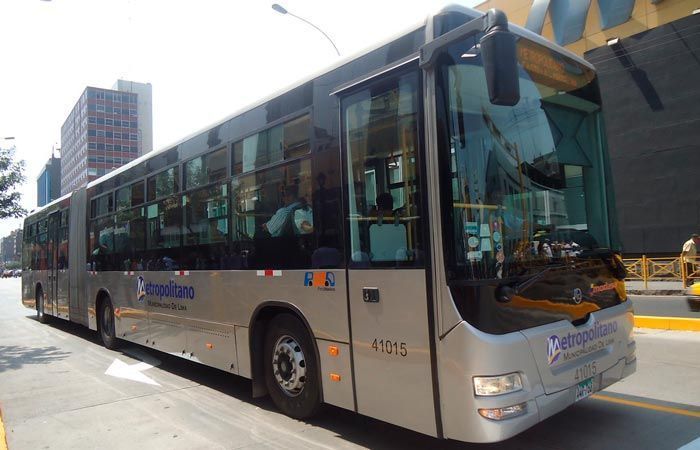
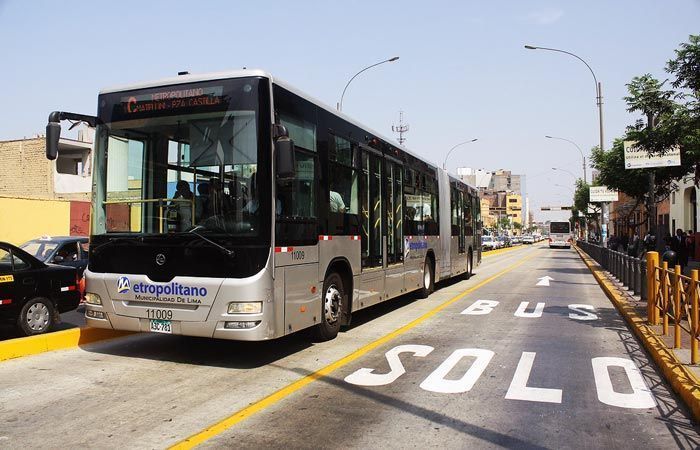
Metropolitano Bus Lima — É um sistema de transporte público integrado muito moderno, foi inaugurado em 2010 para descongestionar o transporte de veículos em Lima.

1. Why to use the Metropolitano?

Because it is Fast and Cheap, keep in mind the Metropolitan Buses have their OWN LANE, exclusively for them.

2. Is it comfortable to travel on the the Metropolitano buses?

As guides and travel agents, we have used the Metropolitano buses hundreds of times and the complaints were super minimal, because the buses are spacious and comfortable; however we do not recommend using this system in the following situations:

At rush hour

Por la comodidad y la rapidez de este sistema de buses, hay mucha gente local que prefiere usar este medio de transporte, por eso trata de no usar estos buses en horas puntas: de 6am a 9:30am y de 5:30pm a 9pm, sobre todo en verano (diciembre a marzo), en donde hace mucho calor.

If you travel with children

If, for example, you have a baby with your stroller, it will be very annoying to find comfort, especially in rush hour.

If you use a wheelchair

The bus stations and the buses themselves are signposted for people with disabilities, that is, you can use the Metropolitano; but we do not advise you to use this system in rush hour, the stations and buses are super crowded.

If you have never traveled by public transport

People, who are not used to traveling full and stopped buses, probably do not like it, so we recommend a private transport, it can be Uber or taxi.

This service is probably not the choice of many people who are not used to traveling standing on crowded buses; for this reason, we recommend a private transportation such a taxi or Uber beforehand.

3. What are the Metropolitan routes?

  1. La Ruta Troncal: It has a trajectory that connects the South part of Lima (Chorrillos) with the North of Lima (Comas) and the districts that are between Chorrillos and Comas, for example: Barranco, Miraflores, San Isidro, San Miguel, La Victoria, Cercado de Lima (Lima historical center) and others; if you are a tourist you have to use this route.
  2. La ruta Alimentadora: It is made up of a series of buses that travel along specific routes and whose destination is a bus stop that belongs to the Ruta Troncal.

4. What are the stations or bus stops?

Recommendations:

  • We always suggest you ask the staff at the control booth where do you want to go? — before entering the station.
  • Once you enter the station you will also see a huge sign with the name of all the stops and routes.

Attractions and bus stations:

Below we mention the tourist attractions that exist on the Ruta Troncal (south—north—south) and the Name of the Bus Stations where you must get off.

  1. To go to the free tour of Lima in the historic center — get off at Estación Jirón de la Unión, then walk to La Merced Church.
  2. To go to the Plaza de Armas in the historic center — get off at Estación Jirón de la Unión.
  3. To go to Plaza San Martín de Lima in the historic center — get off at Estación Colmena.
  4. To go to El Parque de la Exposición, Museo de Arte de Lima and Museo de Arte Italiano in the historic center — get off at Estación central.
  5. To go to Estadio Nacional and el Circuito Mágico del Agua (Parque de la reserva) in the historic center — get off at Estación Estadio Nacional.
  6. To get to Kennedy park en Miraflores — get off at Estación Ricardo Palma.
  7. Para ir a la Huaca Pucllana en Miraflores — get off at Estación Ricardo Palma (from the bus station to Huaca Pucllana is just 20 minutes on foot).
  8. To get to the most popular Casinos from Miraflores — get off at Estación Benavides.
  9. To go to Larcomar and el Malecón de Miraflores — get off at Estación 28 de julio.
  10. To go to the Plaza de Armas de Barranco and Bridge of sighs (Puente de los Suspiros) in Barranco district — get off at Estación Bulevar.
  11. To go to Barranco district, there are 2 bus stations: Estación Plaza de las flores and Estación Balta; it depends a lot on where exactly you want to go in the Barranco district.

Note: From the Bus Station to the Attraction on foot, it will take you an average of 3 to 5 minutes.

5. How to use the Metropolitano?

You have to buy the Metropolitano card at any bus station that is part of this metro-bus system, refill your card with local currency at the same station.

In each station, there are personnel in charge to assist users, sometimes you will not see any metropolitan personnel, especially on Sundays and holidays, for this reason there are also machines that issue the metropolitan card; for the card you pay 5 Soles – remember to bring local money in coins.

6. Which of the buses do I take inside the station?

  1. You must first orient yourself if you want to go north or south — the North direction is towards the historic center of Lima and the South direction is towards the Barranco district; this is the easiest way to understand La Ruta Troncal for tourists.
  2. The second step is to identify the bus line that you must take; The buses are classified into 4 bus lines: Line A, Line B, Line C and Line D.
  3. As a national or foreign tourist Always Take LINE C, forget about the other Lines because they are Express and the safest thing is that they do not stop at your destination. Line C is a regular service, that is, it will make stops at all stations.
Metropolitano en Lima
As a visitor to Lima, LINEA C of the Metropolitan is your bus, don’t forget it!

7. Which are the schedules?

Hours are according to the type of bus, but generally operate from 6am to 10pm

8. What are the prices?

  • Keep in mind, you have to buy a card that costs 5 Soles.
  • The general price is 3.20 Soles, to any destination.

Important:

  • If you travel as a couple or family, you don’t have to buy 2 or 3 cards, you can use the same card; however you have to recharge more money.
  • Do always carries money in Soles and preferably in coins.

9. Preguntas Frecuentes — FAQS

Can I use the Metropolitano buses without buying the card?

Yes, you can, just go to the station and before entering the bus station, ask a favor of any person who is queuing up and say Podrías pasar la tarjeta para mi—Can you sweep your card for me?, give to that person 3.20 Soles per person.

99% of people are ready to help you, you can also ask for help from Metropolitano bus staff.

How do I know if my bus stop is the next station?

The buses have an automatic voice system, where the name of the next station is verbally announced, before the bus arrives.

In addition, inside the buses there is a screen, where it is announced verbatim: what will be the next station.

How do I know if there are Metropolitan buses where I stay?

If you stay at the following districts: Chorrillos, Barranco, Miraflores, San Isidro, San Miguel, La Victoria and the Cercado de Lima (historic center) there are Metropolitano bus stations, we also suggest consulting with the reception of your hotel.

Is it safe to take the Metropolitano buses?

Sure, but it is always good to be aware of your things, especially when the bus is super full.


We are here to help you: If you have any questions about our free tours and excursions in Lima, do not hesitate to contact us, you can also see our comments on Facebook, Instagram, Tripadvisor and Google: