Sign up with your email. We will send you a verification email.
Already have an account?
Recover password
Enter your email and we will send you a link to reset your password.
Remembered your password?
Author: Michael
To discover the Santa Catalina Monastery, we must go back to the early years of the Viceroyalty of Peru, when Arequipa was beginning to establish itself as one of the most important colonial cities in the southern Andes. Founded on 10 September 1579, this vast religious complex was built using sillar, the volcanic stone that characterises Arequipa, the famous “White City”.
For centuries, the monastery served as a cloistered space for nuns belonging to wealthy Spanish and Creole families. Behind its towering walls, a small colonial town developed, complete with streets, courtyards, cloisters, and old dwellings that still preserve much of their original architecture. Today, the Santa Catalina Monastery is regarded as one of the most important and most visited colonial complexes in Arequipa.
History of the Santa Catalina Monastery
To understand the history of the Santa Catalina Monastery, we must return to the early colonial years in Arequipa. Founded in 1540, the city quickly became one of the most important centres of the Viceroyalty of Peru thanks to trade and its strategic location in the southern Andes.
In this context, the Santa Catalina Monastery was founded on 10 September 1579 through the initiative of María de Guzmán, an Arequipa widow of Spanish descent who devoted much of her fortune to the creation of the convent. From the very beginning, the complex was reserved mainly for women from wealthy Spanish and Creole families, who were required to provide a considerable dowry in order to enter.
For centuries, the nuns lived in a space that was almost entirely isolated from the rest of the city. Inside, a small organised community developed, with streets, courtyards, kitchens, laundries, and cloisters functioning as a true religious citadel within Arequipa.
The monastery covers nearly 20,000 square metres and was built mainly from sillar, the white volcanic stone that is characteristic of the city. Despite earthquakes and the various renovations carried out over time, much of its original structure has been preserved.
It was not until 1970 that an important section of the monastery was opened to the public. Since then, the site has become one of Arequipa’s main historical attractions, renowned for its colourful streets, peaceful cloisters, and colonial architecture. Within the monastery, visitors can still explore spaces that reveal what daily life was like for the nuns during the colonial period.
What to see inside the Monastery
The Santa Catalina Monastery, considered one of the most important religious sites in Latin America, houses colonial structures, works of art, and former convent spaces that reflect the cultural and historical importance of the complex since the arrival of the first nuns. Among the monastery’s most representative places are:
The Cloister of the Orange Trees
The Cloister of the Orange Trees is one of the oldest and most iconic spaces within the Santa Catalina Monastery. Since colonial times, this courtyard was used as a place of reflection and passage for the nuns living in the convent.
The cloister stands out for its sillar arches, its interior gardens, and the orange trees that gave the space its name. Its design reflects the influence of Spanish convents adapted to Arequipa’s architecture, where open spaces helped keep the monastery interiors cool.
Unlike other busier areas, this section preserves a peaceful atmosphere that allows visitors to imagine what daily life was like for the nuns during the Viceroyalty of Peru. Its richly coloured walls and the combination of vegetation and colonial architecture have also made it one of the most photographed spots within the complex.
Very close to this cloister is another of the monastery’s best-known spaces: Zocodover Square.
Zocodover Square
Zocodover Square was one of the main gathering places within the Santa Catalina Monastery. During the colonial period, this area functioned as a small internal square where the nuns would walk and carry out part of their daily life.
Its name comes from ancient Spanish squares dedicated to trade and public life, an influence that arrived in the Americas alongside colonial architecture and customs. Within the monastery, this space eventually became one of the most representative points of the religious citadel.
Today, Zocodover Square stands out for its narrow streets, intensely coloured walls, and details built from sillar. The blue and reddish tones contrast beautifully with the volcanic stone, creating one of the monastery’s most visited and photographed settings.
The cells and former living quarters
The former cells of the Santa Catalina Monastery offer a fascinating insight into what daily life was like for the nuns during the colonial period. Some rooms were simple and austere, intended for prayer and quiet reflection. Others, belonging to nuns from wealthy families in Arequipa, included private kitchens, furniture, and larger living spaces.
During the 16th and 17th centuries, many young women entered the convent accompanied by servants and bringing substantial dowries, a common practice among families of the colonial elite. These social differences were also reflected in the layout and size of the rooms.
Today, several of these cells still preserve original furniture, utensils, and objects that reveal the customs and internal organisation of the monastery.
Works of art and historic spaces
Inside the monastery, important collections of colonial paintings, religious sculptures, and objects connected to convent life have been preserved. Many of these works belong to the Escuela Cusqueña, one of the most representative artistic movements of the Viceroyalty of Peru, known for blending European techniques with Andean elements.
The tours offered by the monastery allow visitors to explore spaces that were essential to the daily life of the nuns. Among the highlights are the old kitchens, the stone laundries, and the communal courtyards that served as gathering places within the convent.
Why visit the Santa Catalina Monastery?
The Santa Catalina Monastery is considered one of the most important colonial religious complexes in South America. For centuries, it functioned as a small independent city enclosed within high sillar stone walls, where the nuns lived their lives separated from the outside world. The monastery is also renowned for its colonial architecture and the combination of Spanish influences with traditional elements from Arequipa. Its narrow streets, courtyards, cloisters, and passageways preserve much of their original structure from the colonial era. The use of volcanic sillar, characteristic of Arequipa, together with the intense reddish and blue tones of its walls, has made the complex one of the city’s most iconic landmarks.
Throughout the complex, visitors can see stone fountains, old wooden doors, laundries, kitchens, and communal spaces that offer a glimpse into how daily life functioned within the convent. The monastery also preserves important collections of religious art and paintings linked to the Escuela Cusqueña, one of the most influential artistic movements of the Viceroyalty of Peru.
Since 1970, a significant part of the complex has been opened to tourism and has welcomed visitors from around the world. Today, the monastery forms part of one of the most important cultural routes in the historic centre of Arequipa, which was recognised by UNESCO as a World Cultural Heritage Site in 2000.
Opening hours, tickets and recommendations
The Santa Catalina Monastery is open every day of the year and welcomes thousands of visitors interested in exploring one of Peru’s most important colonial complexes. Opening hours generally begin in the morning and continue into the evening, although they may vary on public holidays or during religious celebrations. For this reason, it is recommended to check the latest information before your visit.
Tickets can be purchased at the ticket office located at the monastery’s main entrance. There are different rates for adults, students, and Peruvian visitors. In addition, many travellers choose to join guided tours or free walking tours to better understand the history of the convent, its architecture, and the daily life of the nuns during the colonial period. Some cultural tours of Arequipa also include entrance to the monastery as part of their itinerary.
Due to the size of the complex, it is advisable to allow plenty of time for the visit. The monastery features internal streets, cloisters, courtyards, galleries, and former communal areas that are best appreciated at a relaxed pace.
The early morning hours and late afternoon are usually the best times to visit the monastery. At these times, the natural light beautifully highlights the colours of the sillar stone and allows visitors to explore the streets with fewer crowds.
How to get to the Santa Catalina Monastery from Arequipa City Centre
The Santa Catalina Monastery is located in the heart of Arequipa’s Historic Centre, just a few blocks from the Plaza de Armas. Thanks to its central location, one of the most convenient ways to get there is on foot from the main square. The walk takes between 5 and 10 minutes and passes through some of the city’s most traditional streets, lined with colonial mansions, cafés, and buildings constructed from sillar stone.
If you are arriving from the Arequipa Bus Terminal, you can take a taxi or use a ride-hailing app following routes such as Andrés Avelino Cáceres Avenue, Independencia Avenue, and Santa Catalina Street. The journey usually takes between 15 and 25 minutes, depending on traffic. From Rodríguez Ballón International Airport, the journey normally takes between 25 and 35 minutes, travelling along avenues such as Aviación, Ejército, and Puente Grau before entering the historic centre.
Many visitors also reach the monastery through free tours or private tours around Arequipa’s historic centre. These tours often include places such as the Plaza de Armas, Arequipa Cathedral, and former colonial mansions before finishing at the convent. Due to the large number of tourists and activities in Arequipa, the early morning hours and late afternoon are usually the best times to explore the monastery in a more peaceful atmosphere.
Is the Santa Catalina Monastery worth visiting?
The answer is yes. The Santa Catalina Monastery is one of the most important colonial sites in Arequipa and one of the best-preserved convents in Latin America. Since its foundation, this religious complex has preserved much of its original structure and offers a fascinating insight into convent life during the Viceroyalty of Peru.
Unlike many other historic sites, the visit here takes place through internal streets, courtyards, cloisters, and former rooms that once functioned as a small city within Arequipa. Many of its buildings still retain sillar stone walls, colonial kitchens, stone fountains, and objects used by the nuns several centuries ago.
Another of its main attractions is its architecture. The monastery combines Spanish influences with traditional Arequipa elements, especially the reddish and blue tones that characterise several sections of the complex. Spaces such as Zocodover Square, the Cloister of the Orange Trees, and the former cells have become some of the most photographed places in the city.
In addition to its historical value, the monastery is located just a few minutes from Arequipa’s Plaza de Armas, making it easy to combine the visit with other attractions in the historic centre, traditional restaurants, and guided tours around the White City. Today, it welcomes thousands of visitors each year and forms part of the main cultural tourist routes in southern Peru.
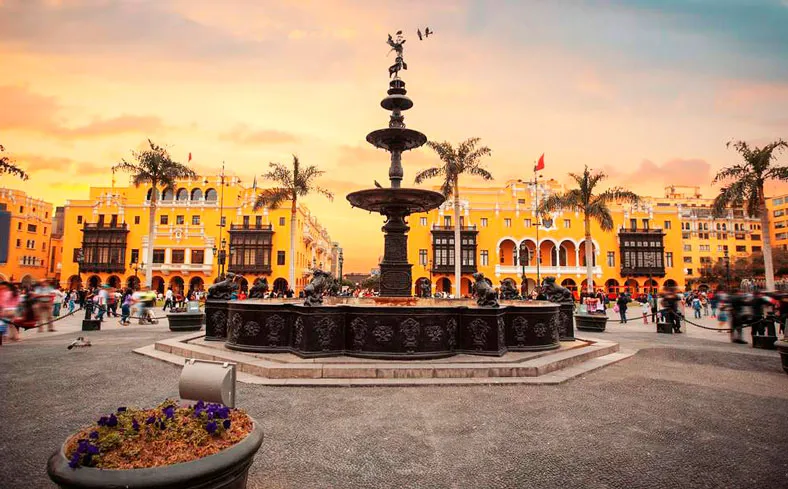
Plaza San Martín is not only one of the most representative spaces in central Lima; it is also a key place for understanding how the city entered modernity during the 20th century. Inaugurated in 1921 as part of the celebrations for the centenary of Peru’s independence, the square was conceived as a grand urban setting dedicated to José de San Martín.
Surrounded by monumental buildings, historic hotels, and elegant European-inspired façades, the square quickly became one of the capital’s main social and cultural spaces. Iconic landmarks such as the Hotel Bolívar and the old cafés in the surrounding area reflect the importance this district held in Lima’s social life during the last century.
Beyond its architectural value, the square has also been the setting for demonstrations, celebrations, and political events that marked different moments in the country’s history. Today, it remains one of the most visited places in Lima’s Historic Centre and an essential stop for those wishing to discover the city’s monumental and republican side.
The origin of the first Great Republican Square
Plaza San Martín was born during the modernisation process that transformed Lima at the beginning of the 20th century. Its official inauguration took place on 27 July 1921, during the government of Augusto B. Leguía, as part of the celebrations for the centenary of Peru’s independence.
Before becoming a square, this space was occupied by the former San Juan de Dios Hospital and by areas linked to the railway that connected Lima with Callao. The redevelopment of the area aimed to create a monumental environment that would represent the urban growth and republican image of the capital.
The project incorporated European-inspired buildings, wide avenues, and a central monument dedicated to José de San Martín. Over time, the square became established as one of Lima’s main public spaces and as a meeting point for the city’s political, cultural, and social life.
The Monument to the Liberator of America
At the centre of the square stands the monument dedicated to José de San Martín, a leading figure in South American independence and a key figure in the proclamation of Peru’s independence in 1821. Since its inauguration in 1921, this sculpture has become the main symbol of Plaza San Martín and one of the most recognisable landmarks in Lima’s historic centre.
The work was created by the Spanish sculptor Mariano Benlliure and depicts the liberator on horseback in a composition designed to convey authority, leadership, and triumph. Its location was not accidental: the monument was conceived as the central axis of a square intended to represent the republican spirit of Peru during the centenary celebrations of independence.
One of the most talked-about details of the sculptural ensemble can be found in the allegorical figure located at the back of the monument. Above her head appears a llama, an element that gave rise to a popular Limeño anecdote. According to the story, the artist supposedly confused the Spanish word “llama”, meaning the Andean animal, with “llama” meaning flame or fire when interpreting the instructions sent from Peru. This detail eventually became one of the square’s most famous curiosities.
The structural and architectural beauty of the square
Plaza San Martín stands out for the harmony of its urban design and for the monumental style of the buildings surrounding it. From its inauguration in 1921, it was conceived as a modern and elegant space inspired by the grand European squares of the period. French influence can be seen in the symmetrical façades, ornate balconies, and architectural uniformity that give the square its distinctive identity.
Many of the buildings surrounding the square were constructed during the first decades of the 20th century. Among them are historic hotels, theatres, and commercial buildings that combined Neocolonial style with republican and academic influences. This architectural balance transformed the square into one of the main meeting points of Lima’s social and cultural life.
Because of its historical and urban value, Plaza San Martín forms part of Lima’s Historic Centre, recognised by UNESCO as a World Cultural Heritage Site in 1988. Today, it remains one of the most representative and photographed spaces in central Lima.
The historic Hotel Bolívar
One of the most representative buildings in the square is the Gran Hotel Bolívar, inaugurated in 1924 during the urban modernisation process promoted in central Lima. From its earliest years, the hotel became a symbol of elegance and one of the most prestigious accommodations in South America.
Thanks to its location facing Plaza San Martín, the hotel became the setting for political meetings, social events, and visits by artists, intellectuals, and international figures arriving in the Peruvian capital. Its republican architecture, inspired by European styles, reinforced the modern image that Lima sought to project throughout the 20th century.
Beyond its historical importance, the hotel still preserves part of the classic atmosphere of republican Lima. Its halls, corridors, and cafés maintain period details that continue to evoke the years of greatest splendour of the square. It is also famous for popularising the traditional Pisco Sour, one of Peru’s most iconic drinks.
The role of Plaza San Martín in social and political life
Throughout the 20th century and up to the present day, Plaza San Martín has played a central role in Peru’s political and social life. Thanks to its strategic location in central Lima, this space became the setting for marches, demonstrations, national celebrations, and events that marked different moments in the country’s contemporary history.
Over the years, the square also became an important meeting point for citizens. Cultural activities, public events, and social gatherings regularly take place here, bringing together thousands of people in front of some of the capital’s most emblematic buildings.
This combination of historical value and everyday urban life has kept Plaza San Martín as one of the most representative spaces in central Lima and one of the city’s most visited locations.
Tourist attractions near Plaza San Martín
Jirón de la Unión
Jirón de la Unión is one of the most traditional and busiest streets in Lima’s historic centre. From the late 19th century and throughout much of the 20th century, it was one of the main meeting points of Lima’s social life, frequented by merchants, intellectuals, and families from the capital.
This pedestrian street connects Plaza San Martín with Lima’s Plaza Mayor, crossing an area filled with history and republican architecture. Along the route, it is possible to find old mansions, galleries, traditional cafés, and commercial buildings that showcase Lima’s urban evolution over the years.
Walking along Jirón de la Unión also allows visitors to discover some of the most representative corners of central Lima, following a route where historical heritage and the city’s everyday movement coexist side by side.
Plaza Mayor of Lima
The Plaza Mayor of Lima, also known as Plaza de Armas, is the place where Francisco Pizarro founded the city of Lima on 18 January 1535. Since the viceregal era, this space became the political, religious, and administrative centre of the Peruvian capital.
Around the square, some of the city’s most important buildings were constructed, including Lima Cathedral, the Government Palace of Peru, and the Municipal Palace. These buildings reflect the importance Lima held as the capital of the Viceroyalty of Peru and as one of the main centres of power in South America.
Thanks to its proximity to Plaza San Martín, both spaces can be explored within the same route through the historic centre, following some of Lima’s most traditional and monumental streets.
Church of La Merced
The Basilica and Convent of Nuestra Señora de la Merced is one of the oldest and most representative churches in Lima’s historic centre. Its origins date back to the 16th century, only a few years after the foundation of the city, when the Mercedarian order established itself in the then “City of Kings”.
Throughout the viceregal period, the church gained great religious and social importance. Its current Baroque façade, considered one of the finest in Lima, reflects both the artistic influence of the colonial era and the power held by religious orders within the city.
Located along the traditional Jirón de la Unión, the church forms part of the historic route connecting Plaza San Martín with Plaza Mayor, right in the heart of the former viceregal centre.
Tips before visiting Plaza San Martín
The best time to visit
Plaza San Martín can be visited at any time of the day, although many travellers prefer to explore it during the afternoon and the early evening hours. At that time, the lighting highlights the republican façades and the monument to José de San Martín, creating one of the most representative scenes in Lima’s historic centre.
In addition, the atmosphere is usually calmer for walking, appreciating the architecture, and exploring the cafés, hotels, and historic buildings surrounding the square.
How to get there from other parts of Lima
Reference map to get from Barranco to Plaza San MartínReference map to get from Miraflores to Plaza San Martín
Plaza San Martín is easily accessible from different parts of Lima and forms part of one of the best-connected areas in the historic centre.
If you are staying in Miraflores or Barranco, one of the most practical ways to get there is by using the Metropolitano bus system. From either district, you can head to the stations located along the Vía Expresa Paseo de la República and take a bus towards central Lima. The most recommended stations to get off at are Colmena or Jirón de la Unión. From there, you only need to walk a few minutes along Nicolás de Piérola Avenue or the traditional Jirón de la Unión until you reach the square.
You can also choose to travel by taxi or ride-hailing apps. In that case, the most common routes usually follow the Vía Expresa before connecting with important avenues such as Grau, Abancay, or Nicolás de Piérola, one of the most representative historic arteries of central Lima.
If you are already in Cercado de Lima or near Plaza Mayor, you can easily reach the square on foot via Jirón de la Unión. This route connects two of the city’s most emblematic spaces and allows visitors to admire old mansions, churches, and republican buildings throughout the historic centre.
What to see and do in Plaza San Martín?
Exploring Plaza San Martín is one of the best ways to discover the historical and republican character of central Lima. Its surroundings preserve buildings constructed during the first decades of the 20th century, featuring monumental façades, ornate balconies, and a strong European architectural influence that reflected the capital’s modernisation process.
In addition to admiring the square and taking photographs, you can visit iconic places such as the Gran Hotel Bolívar, inaugurated in 1924 and considered for many years one of the most important hotels in South America. Its halls, cafés, and traditional spaces form part of Lima’s urban memory.
The square has also become one of the main starting points for walking tours through the historic centre. These tours allow visitors to discover old passageways, republican buildings, and stories connected to Lima’s transformation from the viceregal era to the 20th century.
From here, you can also easily walk to other historic landmarks such as Jirón de la Unión, Plaza Mayor, and the Basilica of La Merced, following one of the most traditional urban routes in central Lima.
The current importance of Plaza San Martín
Today, Plaza San Martín continues to be one of the most representative spaces in Lima’s historic centre. Its importance lies not only in its republican architecture or in the events that shaped its history, but also in the role it continues to play in the social and cultural life of the capital.
Since its inauguration in 1921, the square has been the setting for patriotic celebrations, official ceremonies, public demonstrations, and civic gatherings that reflect different moments in Peru’s contemporary history. Thanks to its strategic location, it became firmly established as one of the main meeting points in central Lima.
Today, surrounded by monumental buildings, historic hotels, and traditional cafés, Plaza San Martín still preserves much of the atmosphere of republican Lima from the early 20th century. In addition, its connection with Jirón de la Unión and Plaza Mayor makes it an essential stop on any tour of Lima’s Historic Centre.
Lima is not just the capital of Peru; it is a city where every street whispers stories that transport you back to the early days of the colonial era. As you walk through its squares and wander along its streets, it is impossible not to wonder: who was behind its foundation, and why did this event change the course of South America forever?
In this article, we invite you to travel back in time and discover how the ancient “City of Kings” was born, who the key figure behind this historic moment was, and how its creation transformed Lima into one of the most influential cities on the continent. It is a story that is not only told… it is experienced in every corner of the city, explaining why Lima continues to captivate those who visit it today.
Who founded Lima?
To uncover this story, we need to go back to the moment when the Spanish first arrived in America. From the city of Panama, in 1531, the first expeditions set out towards the territory of Peru, driven by ambition and the desire to explore the unknown. It was during the third expedition, led by Francisco Pizarro, that the Spanish landed on the shores of Tumbes and began their journey inland until they reached Cajamarca. There, one of the most decisive events in history took place: the capture of the last Inca ruler, Atahualpa.
This event, in 1532, marked the official arrival of the Spanish in Inca territory and triggered a series of conflicts that would change the destiny of the continent. However, the mighty Tahuantinsuyo was already going through a period of great instability. A civil war between the brothers Huáscar and Atahualpa had severely weakened the Inca Empire, leaving its foundations vulnerable.
In the middle of this situation, Francisco Pizarro knew how to take advantage of the circumstances. With the support of his men, superior weaponry, and the impact of diseases previously unknown in America, he managed to overpower the Inca civilisation. Thus began a new chapter: the colonial era. Shortly afterwards, on 18 January 1535, the city of Lima was founded under the name “City of Kings”. Today, as you stroll through its streets, you can still feel how this past remains alive in every corner of the city.
Francisco Pizarro and the conquest of Peru
Francisco Pizarro, born on 16 March 1478, was a key figure in the fall of the Tahuantinsuyo between 1532 and 1533. This process was the result of several years of explorations, failed attempts, and strategic alliances.
After the conquest of Mexico, stories began to spread about a wealthy territory in the south known as “Birú”. In 1524, Pizarro formed a partnership with Diego de Almagro and the priest Hernando de Luque to organise the so-called “Empresa del Levante”. Pizarro took command of the expedition, Almagro was responsible for recruiting men and gathering supplies, while Luque provided the financial support.
After two unsuccessful expeditions, during the third attempt in 1532, the Spanish finally reached what is now Peruvian territory. The circumstances worked in their favour. The Inca Empire had already been weakened by the civil war between Atahualpa and Huáscar. The capture of Atahualpa in Cajamarca allowed the Spanish to strengthen their position.
From this point onwards, Spanish control expanded rapidly. In 1535, Pizarro founded the city of Lima, initially known as the “City of Kings”, which would later become the main political centre of the territory. Inca resistance continued in remote regions. The Kingdom of Vilcabamba remained active for almost 40 years until its fall in 1572. With this event, Spanish control was firmly consolidated and the Viceroyalty of Peru became fully established.
The original name: City of Kings
Following the events that took place between 1532 and 1533, the process that would lead to the foundation of Lima began, culminating on 18 January 1535. This moment not only marked the beginning of the colonial era, but also the birth of a name filled with symbolism: the “City of Kings”.
This title was largely linked to its proximity to the Feast of the Three Wise Men (6 January), a coincidence that reinforced its religious significance. In addition, the name reflected the city’s political importance as the capital of the Viceroyalty, honouring the Spanish monarchs Carlos I of Spain and Juana I of Castilla.
This symbolism was also represented in the city’s coat of arms, where the Star of Belén and three crowns stand out as a clear reference to the Three Wise Men. Over time, the name “City of Kings” gradually fell out of use and was replaced by “Lima”, a term derived from the word “Rímac”, referring to the river that runs through the city.
The importance of Lima’s foundation
Following the foundation of the “City of Kings” in 1535, Lima gradually established itself as the main political centre of the territory. Years later, in 1542, with the creation of the Viceroyalty of Peru, the city officially assumed the role of capital.
The choice of location responded to strategic considerations. At first, Jauja was considered as the seat of power. However, its high altitude and distance from the sea made communication and supply routes difficult.
Faced with these limitations, the Spanish chose the Rímac Valley instead. This area offered permanent access to water, a more stable climate, and close proximity to the coast. It also provided a direct connection to the port of Callao, a key point for trade with Spain. Following this decision, the urban core that today corresponds to Lima’s historic centre was laid out. From there, the administrative, religious, and economic functions of the viceroyalty were organised, consolidating Lima as the centre of colonial power in South America.
Political centre of the viceroyalty of Peru
From its foundation in 1535, Lima gradually became the main centre of control within the territory. In 1542, with the creation of the Viceroyalty of Peru by Carlos I of Spain, the city was officially established as its capital.
The authority of the monarch in America was exercised through the viceroys. The first to arrive was Blasco Núñez de Vela, who assumed office in 1544. His government relied on the Royal Audience of Lima, the institution responsible for the administration of justice and political balance.
From Lima, the administration of vast territories across South America was directed, including present-day Peru, Ecuador, Bolivia, Colombia, Chile, and Argentina. This system was further consolidated in 1569 with the arrival of Francisco de Toledo, who reorganised the administrative structure, regulated the collection of taxes, and strengthened territorial control.
As a result of these reforms, Lima became firmly established as the principal political and administrative centre of the viceroyalty.
Cultural and religious influence
During the Viceroyalty of Peru, between the 16th and 19th centuries, life in Lima was deeply shaped by the organisation of the Catholic Church. The Archdiocese of Lima played a central role in the social structure and in the religious administration of the territory.
The Spanish Crown maintained control over ecclesiastical institutions through the system known as the Royal Patronage, which allowed religion to become closely integrated into the functioning of the government. Within this context, education, art, and cultural practices developed under strong religious influence.
Over time, these traditions blended with local customs. This process gave rise to a form of syncretism between Andean and European elements, visible in festivals, artistic expressions, and everyday practices that continued throughout the viceregal period.
Urban growth and colonial architecture
During the Viceroyalty of Peru, Lima experienced steady urban growth. From its foundation in 1535, the city was designed in a grid layout, following the Laws of the Indies, which regulated the organisation of cities throughout the Americas.
Development was concentrated around Lima’s Main Square. The principal institutions of power were located there, including the Government Palace of Peru, Lima Cathedral, and the residences of the ruling classes. From this central core, the city gradually expanded into new residential and commercial districts.
The architecture reflected this evolution. European styles such as Renaissance, Baroque, and Neoclassical were introduced and adapted to local conditions. Churches and convents fulfilled religious, educational, and social functions within the urban landscape.
Construction techniques also adapted to the region’s seismic activity. Materials such as quincha and adobe were widely used, as they were better suited to earthquake-prone areas. These methods allowed for the construction of more flexible structures capable of withstanding the frequent tremors experienced in the region.
Importance in South America
During the period of the Viceroyalty of Peru, especially between the 16th and 17th centuries, Lima established itself as the main centre of Spanish power in South America. From the city, the administration of vast territories across the continent was directed under the authority of the viceregal government and the Royal Audience of Lima.
Its importance was also shaped by the economy. The silver extracted from Potosí drove Lima’s growth and its integration into the commercial routes of the Spanish Empire. These resources were transported to the coast and shipped to Europe through Callao, which functioned as the main outlet of the viceroyalty.
As a result of this dynamic, Lima became firmly established as both a political centre and a key commercial hub within the Spanish colonial system.
Historical and cultural heritage
The legacy of the Viceroyalty of Peru shaped the political and cultural organisation of the territory. During this period, a colonial system was established that integrated Indigenous, European, and African populations within the same administrative structure.
On an institutional level, the viceroyalty introduced systems of government that would later influence the republican era. Institutions such as town councils, royal courts, and administrative systems organised territorial control and the administration of justice.
In the cultural sphere, this process gave rise to mestizaje, or cultural mixing. The blending of traditions can still be seen in language, gastronomy, and everyday customs. Within this context, the Catholic religion became firmly established as the centre of social life, integrated into political structures through the colonial system.
Places related to the foundation of Lima
The foundation of Lima, led by Francisco Pizarro on 18 January 1535, established an urban centre intended to concentrate the political, religious, and administrative power of the Viceroyalty of Peru. This original space was designed following an organised layout, with the central square serving as the main point of organisation.
From this starting point, the principal buildings and institutions that shaped the city during the colonial period were developed. These spaces guided Lima’s urban expansion and defined how the city functioned in the centuries that followed.
Below are some of the most representative places for understanding the historical formation of the city.
Plaza de Armas of Lima
The Plaza de Armas of Lima, also known as Plaza Mayor, is the exact place where the city was founded in 1535. From the very beginning, it served as the central point of the urban layout designed according to the traditional grid system.
Around the square, the main institutions of colonial power were established, including the government, the church, and the residences of the ruling classes. This space concentrated political administration and social organisation throughout the viceregal period.
Over time, the square maintained its central role. To this day, it continues to be the main setting for official ceremonies and public events in the city.
Lima Cathedral
Lima Cathedral was built shortly after the foundation of the city in 1535, on one side of the Plaza Mayor. From that moment onwards, it became part of the institutional core that shaped the urban space during the colonial period.
Its construction developed in stages and evolved over time, incorporating elements of Renaissance, Baroque, and Neoclassical styles. These transformations responded both to changing artistic trends and to reconstruction efforts following the earthquakes that affected the city.
In addition to its religious function, the cathedral played a role in the evangelisation process promoted by the Spanish Crown. Inside, several spaces and elements connected to the early years of Spanish presence have been preserved, including the tomb of Francisco Pizarro.
Government Palace of Peru
The Government Palace of Peru stands on the very site where Francisco Pizarro established his residence after the foundation of Lima in 1535. Since then, this space has remained closely linked to the exercise of political power.
During the Viceroyalty of Peru, it served as the residence of the viceroys, who governed the territory on behalf of the Spanish Crown. From here, decisions were made that affected much of South America.
Today, the palace continues to fulfil this role as the seat of the Executive Branch. Its location facing Lima’s Plaza de Armas connects it directly to the original core from which the city was organised.
Lima today: living history for tourism
The process of conquest and colonial organisation transformed the ancient territory known as “Birú” into the Viceroyalty of Peru, establishing new political, economic, and social structures from the 16th century onwards.
Within this context, Lima became the main centre of power. From its foundation in 1535 as the “City of Kings”, it concentrated administrative decisions and territorial control. Over the centuries, it became the setting for the most important events of colonial Lima. Below, we present Lima’s Historic Centre, one of the key places for understanding this stage in the city’s history.
The Historic Centre as a tourist attraction
To understand what makes Lima’s Historic Centre so special, it is important to look at its different layers of history. Within this space, traces of pre-Hispanic settlements — such as those of the ancient Ychma culture — coexist with the urban layout established after the Spanish foundation in the 16th century.
This area was declared a UNESCO World Heritage Site in 1988, in recognition of its historical and urban value. Its grid-style design, defined from 1535 onwards, organised the city’s growth and concentrated the principal institutions of colonial power.
Within this historic core stand important landmarks such as Lima’s Plaza de Armas, Lima Cathedral, and the Government Palace of Peru. Around them, churches, convents, and colonial mansions developed, shaping the city’s urban structure throughout the viceregal period.
Experiences such as walking tours
If you decide to explore Lima’s Historic Centre on your own, you will be able to follow the city’s original layout, admire its architecture, and identify the main spaces linked to the colonial period. It is a direct way to understand how Lima was organised following its foundation in 1535.
For a guided visit, free walking tours offer a more detailed interpretation of the area. With the help of a guide, it becomes easier to identify streets, buildings, and key locations connected to the origins of the city and the functioning of the Viceroyalty of Peru. These tours usually operate on a voluntary contribution basis at the end of the experience.
There are also options with specific schedules, such as Sunday tours, as well as private services for those seeking a more personalised experience within the same historic circuit.
Cusco, a place where mysteries and lesser-known experiences bring complete satisfaction to anyone who sets foot in its welcoming corners. A true Pandora’s box for adventure lovers and “a treasured stronghold of Peruvian culture.” It’s a destination that undoubtedly has so much to offer, especially for those passionate about adventure and trekking.
So, leave idleness behind and rise to the challenge! It’s time to test your own limits and venture not into the depths… but to the very heights of Cusco!
Here, we’ll share a glimpse of what awaits you on this journey to Apu Mama Simona: how to get there, the best seasons to visit, and the wonderful things you’ll discover along the way!
How Can I Get There Safely?
If you’d like to reach this spot, you first need to be in the imperial city of Cusco. The good news is that if you’re already in the historic centre, you’re very close. The next step is to head towards the community of Quishuarcancha, and we’ll share three safe ways to get there, depending on your budget:
Once there, take the C4M bus service (red buses with yellow details) and get off at Antonio Lorena stop. From this point, you can hop on a combi (shared minibus), which makes your journey even more affordable.
Depending on traffic, the trip may take 45 minutes or more. Just remember: the bus you’ll take is headed to Ccorca, a bit further out than your actual destination, Apu Mama Simona. So, make sure to kindly ask the driver to let you off at the Quishuarcancha community.
Semi-Budget Option
Follow the first two steps from the budget-friendly option.
Once you arrive at the Antonio Lorena stop, you can take a taxi or a shared car (colectivo) and ask the driver to take you to the community of Quishuarcancha. The fare will be a little higher, though still less than the next option.
Comfort Option
This is called the comfort option because, if bus stops and directions feel a bit confusing, you can simply hire a car directly from the historic centre that’s available to take you straight to Quishuarcancha. Of course, this journey will be more expensive, but if you value convenience, it’s probably the best choice for you.
No matter which option you choose to reach Quishuarcancha, your adventure doesn’t end there.
Once you’ve arrived in the community, you just need to head towards the mountain on the north-western side. The path is signposted, but just to be sure you don’t miss the right way, we’ve included the following map to guide you:
Apu Mama Simona
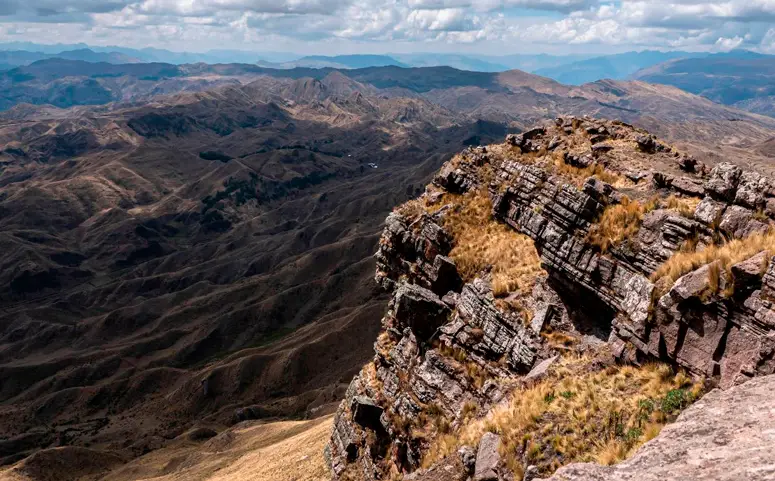
You’ve probably heard of some of the famous Apus such as Huanacaure, Pachatusán, or the majestic Ausangate. However, there’s another Andean guardian that is rarely spoken of, yet holds immense importance: Apu Mama Simona, rising proudly to 4,342 metres above sea level.
What makes this Apu unique is the striking shape of its summit, where you can clearly make out the natural outline of a woman’s face carved into the rock. According to tradition, the Incas noticed that all the Apus surrounding Cusco were masculine in nature, so they gave Mama Simona the feminine spirit of protection, creating a spiritual balance for the empire.
Even today, this figure can be seen from different parts of Cusco, such as the Regocijo Square or, even more clearly, from Sacsayhuamán. Yet nothing compares to admiring it up close on a tour, surrounded by breathtaking Andean scenery and the mystical energy that radiates from this mountain.
Considered both protective and sacred, Mama Simona continues to be a site for offerings and rituals to Pachamama. Visiting it is not just a visual delight, but a deeply spiritual experience that connects travellers with the Andean worldview and the powerful feminine energy of the Andes.
When is the best time to visit?
You’ve probably already got plenty of experience planning your trips – deciding on the right times, which days to go, what to take with you, and so on. But let me tell you, as any local from Cusco would, planning here also means getting to know the place itself – and Apu Mama Simona is no exception.
This sacred mountain is a place of worship, and if you visit between July and August you’ll understand why the Sun God Inti was so highly revered in the imperial city of Cusco. That’s in terms of the climate. Now, speaking of its spiritual side, this is also where rituals and offerings to Mother Earth are held, with the hope of ensuring good harvests for the year ahead. Among these ceremonies, the most important is the Haywarikuy.
Celebrated every 1st of August, Haywarikuy marks the Andean New Year. It is a festival dedicated to Pachamama (Mother Earth), giving thanks for the harvests of the past year and asking for blessings for the ones to come.
That’s why the best recommendation is to visit on the 1st of August – that way, you’ll get a double reward! Not only will you admire the mighty Apu Mama Simona, but you’ll also witness traditional dances, age-old rituals, and a truly unique cultural celebration.
You’ve probably heard the most famous tales of Cusco – the ones they tell every visitor during a city tour. But let me tell you – that’s just the tip of the Andean iceberg! There are stories, folktales, legends and local anecdotes that go far beyond origin myths, archaeology or ancient civilisations.
In this short piece, we’ll share stories known only to the true locals of Cusco. Will you be horrified? Or are you one of those who love fear, mystery and suspense? We’re about to find out! Delve deep into the heart of Cusco’s eerie tales and enjoy this collection – your very own ticket into the mysteries of the Andes!
Are you fascinated by urban exploration videos? And… what exactly gives these explorations that creepy edge? The answer is simple – the fear inspired by darkness. Let me tell you, back in the day in Cusco, it was quite common for many areas to have no electricity at all. This made the darkness especially intimidating, and only a few were brave enough to venture out under such conditions. Each avenue, street, alleyway – even the plazas – were dimly lit, often just by old lampposts giving off a faint orange glow.
It was in these shadowy conditions that the legends were born – tales, stories and real-life accounts that terrified more than a few.
If you’re visiting Cusco and want to take home more than just the standard tourist experience, have a read of these iconic legends that haunted the highland areas of Cusco. Among them:
The Mystery of the Pishtaco
This name, which originally comes from Ayacucho, spread into the darkest corners of Cusco.
The Pishtaco, whose name comes from the Quechua word pishtaku, meaning “to cut into pieces”, is portrayed as a figure with rather sinister and industrial intentions. These individuals were said to extract human fat from their victims.
According to some historians, Pishtacos have existed since the time of the Spanish conquest in Peru. However, their presence was most noticeable during the 1980s. At that time, weapon development in Peru was on the rise, and human fat became highly valuable – used in bullet casings and even in instruments such as bells. That’s where the Pishtacos came in – they were the ones who supplied this fat to companies in exchange for large sums of money.
They mainly operated in the high Andean regions, which, back then, had little to no security. Reports even claim that the amount of fat extracted by Pishtacos during their peak was extremely high, with some of it even being exported beyond Peru.
Because of this, people deeply feared the infamous Pishtacos – no one wanted to cross paths with such individuals. Today, it’s become a legend that still stirs intrigue, fear and fascination – even among the locals – turning this myth into a chilling blend of history and horror.
Up next, we’ll share a gripping local tale inspired by this very legend:
The Pishtaco of Salkantay
The story goes that a muleteer was travelling with his wife and their four mules while guiding a couple of tourists along the Soraypampa trail – a route that connects the mighty Salkantay mountain with the citadel of Machu Picchu. Once his work was done, the man and his wife set off on the same path to return home. However, night was beginning to fall, and darkness started to envelop the landscape. Faced with this unexpected turn, they decided to take a shortcut known as Manchayhuayo – a name that means “the cave that frightens” – located near the Salkantay pass. Despite its ominous reputation, it was the quickest way home.
When they arrived at Manchayhuayo, the couple paused in front of a cave when, all of a sudden, they heard a voice behind them. It was the fearsome Pishtaco, ready to carry out his evil deed. Terrified, they froze on the spot. Yet upon seeing the woman, the sinister man was instantly taken by her beauty. With a deep voice, he asked the muleteer:
—Hey there, friend… do you want to live?
The muleteer, bewildered and fearful, nodded. Without hesitation, the Pishtaco made his demand:
—If you wish to live, you must hand over your wife. Only then will you be free.
The man, heartbroken, leaned close to his wife and whispered:
—If we don’t do what he says, he’ll kill us both… and our children will be left all alone. I promise I’ll come back for you, my love.
With tears in his eyes, he handed his wife over to the Pishtaco and said:
—Alright, sir… I’ll leave you my wife.
Pleased with his triumph, the Pishtaco took the woman and one of the mules back to his lair – the cave. Inside, the woman looked around in horror, spotting cooking pots, a sharp knife, and a water bucket. When it was time to sleep, she lay on the Pishtaco’s bed and said softly:
—When I sleep with my husband… he wears nothing at all.
The Pishtaco, with a mischievous grin, followed her suggestion. The woman then added:
—Please, bring me a bucket of water.
The Pishtaco, slightly confused, replied:
—But… the river is far, and it’s already dark out there.
She insisted, with a tone of disappointed longing:
—My husband always brings me water, no matter the cold or the night…
Eager to impress her, the Pishtaco set off naked into the night to fetch water from the river. However, he hadn’t noticed that, before he left, the woman had taken the sharp knife and made a very fine cut at the bottom of the bucket. When the Pishtaco returned, the bucket was empty. He went back again and again, unable to understand why the water kept “disappearing”.
While he repeated his trips to the river, the woman seized her chance to escape quietly. When the Pishtaco realised she was gone, he shouted in rage:
—Where do you think you’re going, you treacherous woman?!
He ran after her, but the cold, his nakedness, and the water dripping down his legs numbed his body. Just as he was about to reach her, he slipped off a cliff and fell into the abyss below.
The woman finally made it home and embraced her husband through tears, having escaped from horror. As for the Pishtaco, he did not survive. Injured, naked, and with no one to help him, he perished in the darkness of his own lair.
What did you think of that tale? Fascinating, isn’t it? Stories like this are part of the rich oral tradition in places like Salkantay, Cusco, and the surrounding Andean highlands. If you’re visiting, don’t hesitate to ask your guide about these legends – you’ll uncover a side of Cusco that few ever get to see… the mysterious side of the Andes.
The Legend of the Kharisiri
You might be surprised to learn that the dreaded Kharisiri bears an eerie resemblance to the Pishtacos. However, his story carries a more spiritual undertone, deeply rooted in the Andean worldview. The term “Kharisiri” was used by Indigenous peoples to refer to certain friars, whom they regarded as “dangerous necromancers.” This perception arose from misunderstood religious practices, often associated with occultism and the manipulation of supernatural forces.
Highland communities claim that the Kharisiri also shares traits with the condemned—wandering spirits that roam the mountain ranges and volcanoes, striking fear into those who dare to cross their path. Like the Pishtacos, the Kharisiris were said to extract fat from their victims, particularly from the area near the kidneys. Although the exact purpose of this extraction remains unknown, many believe it was part of spiritual rituals rather than purely physical or economic motives.
The most unsettling aspect of these accounts is that victims who claimed to have been attacked showed no visible scars, wounds, or bleeding. Even so, their bodies would begin to waste away, slowly weakening, as though their very life essence had been taken from them.
It is said that the Kharisiri operated in silence, using a small bell to summon the victim’s spirit. Then, with a tiny lantern, he would illuminate the right side of the abdomen to carry out the extraction in the dark. Finally, he would pass a statue of the Virgin of Remedies over the affected area while reciting a prayer, which caused the wound to close instantly and almost magically.
These chilling details support the theory that the Kharisiris had a more spiritual goal—almost as if they were consuming their victims’ souls, leaving behind only an empty shell. In the highlands of San Salvador, Piñipampa, and other remote areas surrounded by majestic mountains, locals speak of an even more disturbing form of these entities: the “black sheep”—damned spirits condemned to wander the hills for all eternity.
Without a doubt, this information is fascinating, but hearing it told around a campfire or on a moonless night can truly spark the imagination—and draw you into the darkest corners of the unknown.
The Mysterious Black Sheep
No one knows exactly when it happened, but this story was passed down to me by my grandfather:
Long ago, in the remote village of Chalqui—more precisely near the mystical Torre de Chalqui in Espinar, Cusco—families didn’t follow a conventional pattern. Life in these highlands was marked by poverty and frequent domestic strife.
One such family consisted of a father, his wife, and their two children. Arguments were constant, mostly due to the lack of work and the overwhelming scarcity of money. One day, a fight escalated so badly that the man, fed up, shouted:
—”I’m tired of arguing with you! I’m going to sleep in the cemetery—the dead give me more peace than you!”
To which the woman replied without hesitation:
—”Is that so? Then go! And if you can’t find work, I hope some lost soul gives you a job.”
Blinded by anger, the man grabbed his bicycle and rode off to the small cemetery a kilometer away. Once there, he took out a small bottle of liquor and began drinking as the cold night crept in. Using his jacket as a blanket, he lay down on an old tomb and gradually fell into a deep sleep.
That night was unlike any other. While he slept, his body twitched, and he was drawn into a strange dream: a large black bag slowly approached him. But it wasn’t just any bag—it spoke.
—”Did you come looking for work? You’re disturbing my nap…”
The man couldn’t wake up. The bag drew closer, repeating the same words until finally, it said something different:
—”Do you think you’re dreaming?… We’ll meet tomorrow morning.”
He woke up with a start. Around him, dawn was breaking and the liquor’s warmth had faded. Trembling and full of regret, he whispered:
—”What a horrible dream… My wife… my kids!”
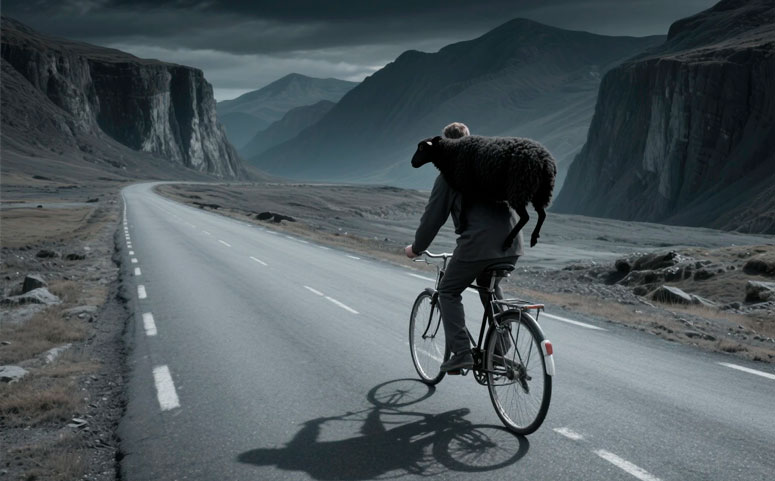
Wasting no time, he got on his bicycle and headed home. Along the way, he encountered a black sheep wandering alone, without flock or shepherd. Driven by guilt and desperation, he thought:
—”If I take this sheep home, maybe my wife will calm down, and we’ll have food. Thank you, God!”
He tied the sheep to his back with a rope and murmured with gratitude:
—”Thank you, little sheep. You’ll be delicious for my family.”
But as he neared a cliff by the Torre de Chalqui, a voice whispered in his ear:
—”Where are you taking me?… You think you’re going to eat me? Why have you led me off my path?”
The man froze. No one was around—and the voice came from directly behind him… from the sheep.
—”You think you’re going to eat me? I’m the one who’ll eat you. When we get to your house, I’ll devour your soul… and your wife’s too.”
In a panic, the man untied the rope and hurled the sheep off the cliff. Then, without looking back, he fled on his bicycle, heart pounding and soul trembling.
According to villagers, two weeks later, the man died under mysterious circumstances.
Peruvian traditions are full of stories where animals represent spiritual forces, whether as protectors or malevolent entities. These kinds of tales remind us of the deep respect that should be shown towards nature, animals, and Pachamama, as in the Andean world, every being and every place holds a spirit.
The Machu and the Paya: A Local Myth
Do you consider yourself – or have you ever been told – that you’re a very beautiful woman? If so, let me tell you that your admirers, fans… and even stalkers might not be the only ones after you.
In the city of Cusco, soul-stirring stories have been told since ancient times. One of the most chilling is that of the feared Machu.
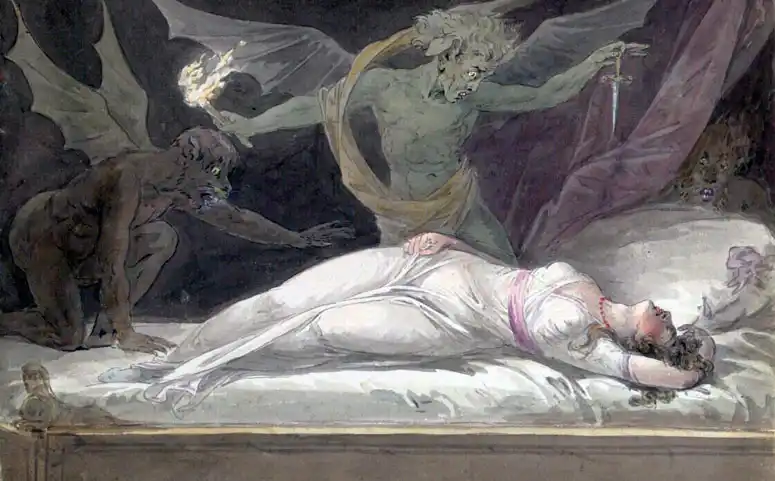
Machu, a Quechua word meaning “the old man”, doesn’t simply refer to an elderly person. It is said to be a malevolent spirit in human form that roams the night in search of beautiful women. According to oral tradition, this being doesn’t walk among the living in the usual way. It appears in dreams, when the body sleeps and the soul is most vulnerable.
People say the Machu easily falls in love with beautiful women, and his goal is to leave his “seed” in one of them. Several women claim to have dreamt of a tall man dressed entirely in black, wearing a hat that partially hides his face. In the dream, they try to run, to scream… but nothing works. Their body is paralysed and their voice is trapped in their throat.
No one knows exactly where this spirit comes from. What is clear, however, is that the sensation of seeing – or feeling – it is deeply disturbing. Many are left with psychological scars and a fear that’s hard to shake off.
But if you’re a man and think you’re quite handsome, don’t think you’re safe. There’s also the Paya, another Andean spirit whose name in Quechua means “the old woman”. Just as the Machu haunts women, the Paya seeks out attractive men, visiting them at night while they sleep. She crawls toward them, watches them, touches them… and sometimes even tries to “possess” them spiritually.
More than one Cusco local has shared encounters with these spirits. So if you ever hear similar stories from villagers, don’t brush them off as mere superstition. They might just be warnings…
Now, let me tell you a true story about one such encounter…
The Son of the Machu
A long time ago, in the province of Chumbivilcas (Cusco), there lived a woman of remarkable beauty, admired and desired by many—especially by the town’s mayor. But she was not easily won over, for she had clear goals in life, one of which was to become a professional. This ambition didn’t sit well with the mayor, who constantly promised her a beautiful and prosperous future if only she chose to stay by his side. Still, the woman never gave in to his tempting offers.
One day, as they were talking, the mayor pulled out a ring with a giant diamond and proposed to her. The woman responded:
—”Where did you get that from? Don’t you think you’re overdoing it?”
To which the mayor replied:
—”Anything for the most beautiful woman in the world. Accept this ring and be my wife!”
The woman, laughing mockingly, answered:
—”You could bring me the moon or a thousand diamonds—it wouldn’t matter. I won’t accept because you don’t understand what I truly want.”
Slightly irritated, the mayor gave her a suspicious look and said:
—”Fine. If not today, then tomorrow…”
But as she walked away, the woman replied:
—”Not tomorrow… and never!”
What she didn’t know was that she had unknowingly provoked the wrath of the mayor—without realising who he truly was.
That night, while she was asleep, a man appeared in her dream calling to her, saying:
—”You rejected my love… You rejected it! Now you must accept my blessing…”
She woke up in terror, and upon looking at herself carefully, she saw that her belly resembled that of a woman nine months pregnant. To her shock, she realised she was in labour—without knowing who the father was or how she had ended up in such a state. When the delivery was over, the nurses began to scream in horror. The reason? The newborn baby had horns and a tail!
No one truly knows what happened to the child, but ever since that day, beautiful women have become more cautious. As for the woman in this story, it is said she lost her mind. The mayor? He disappeared—because it turns out he was the Machu all along.
Stories like these often hold something fascinating—sometimes they’re just traditions or beliefs. If you’re visiting the city of Cusco, feel free to ask the locals—they’ll tell you the Machu is real. And if you live in Cusco and want to protect yourself from him, they say you must sleep with a kitchen knife under your pillow. Only then will you be safe from this spirit. Another tip? Sleep wearing a man’s garment—this will trick the Machu into thinking there’s a man in the house, and he will leave. In the high Andean regions, men are seen as protectors, so… cherish your husband if you have one!
As mentioned in this blog, these are beliefs you may choose to follow or not—but do remember that Peru embraces Mystical Tourism, which blends habits, offerings, and traditions with the presence of both positive and negative divinities.
The Mystery of the Apus
If you’ve made it this far, chances are you’ve heard of the Apus—sacred spirits and guardians of lakes, forests, wildlife, and agriculture. Their origins are steeped in mystical and cultural significance, but if we uncover the mystery they hold, you’ll understand that “great power comes with great sacrifice.”
The power the Apus possess is rarely questioned, mostly because its source remains unknown. One prevailing hypothesis suggests that the Apus are emotional beings—happy or sad—depending on the state of the natural world they protect. Some locals believe that the Apus were once ordinary people who survived something extraordinary. In the high Andes, during the rainy season, lightning strikes are frequent and intensely powerful. Now, imagine being struck by one of those bolts… According to legend, that is exactly how an Apu is born.
Those rare individuals who survived a lightning strike were infused with immense energy. Afterward, they developed a heightened sensitivity to nature—they could hear a bird’s chirp with deep clarity and even sense the movement of tectonic plates. With such abilities, they became guardians of the mountains and their surroundings.
The Apus chose to live atop the highest peaks to better protect not just the mountain itself, but everything within its reach. Perhaps this is why lightning is more common in the highlands and not in cities—the Apus dwell where lightning follows.
The Jarjacha: A Highland Legend
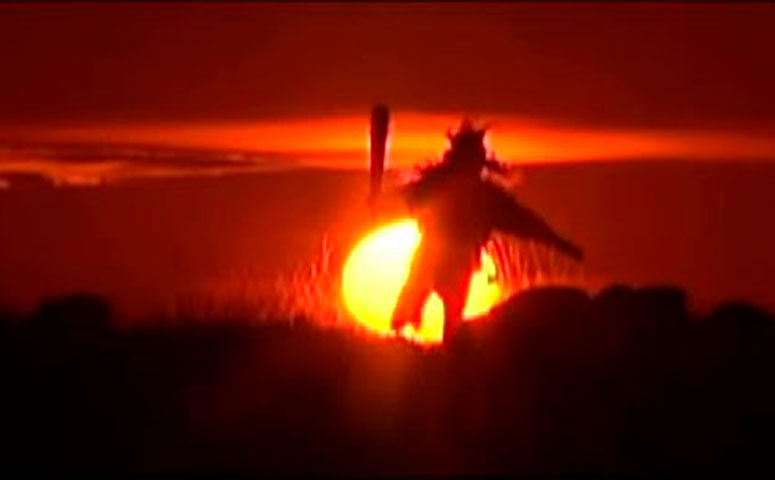
You’ve now reached one of the most terrifying parts of Andean mythology. Speaking of the Jarjacha is to speak of the darkness that haunts the Peruvian highlands. Several horror films explore what these beings are—one of the most well-known is Jarjacha: The Demon of Incest.
Jarjachas originate from the remote villages of Ayacuchoand are said to roam the high Andean regions of southern Peru. These creatures resemble llamas with human faces and wander the mountains at night. Their origin is tied to sin—specifically incest. In the highlands, this grave transgression is punished by transforming the offender into a Jarjacha, doomed to roam in the body of a llama until devoured by its executioner: the puma.
Over time, Jarjachas became craftier and began to roam village paths at night, hiding among humans. It’s said that anyone who sees one may die of fright, as the sheer terror of their appearance is enough to paralyze even the bravest. Though many highland villagers are considered “toughened,” even they fear the Jarjacha.
Those who have encountered one say the only way to protect yourself is to carry a mirror. Jarjachas cannot stand to see their reflection—it forces them into a trance, reliving who they once were and the horror of what they’ve become.
But there’s a grim twist: should the villagers succeed in killing a Jarjacha, it doesn’t end there. The creature returns—this time in an even more horrifying form, known simply as “the demon.” Dressed in a black spectral cloak, it seeks revenge on anyone who crossed its path.
Fortunately, you can experience the horror safely… through the screen. The movie we mentioned captures this Andean nightmare in chilling detail.
The Great Chincana: Mystery in Sacsayhuamán
It is well known that the grand fortress of Sacsayhuamán is considered a ceremonial centre, whose secrets and mysteries have slowly been revealed over time. Among them, the Chincana Grande holds one of the most fascinating enigmas associated with this archaeological complex.
If you’ve walked around Sacsayhuamán, you’ve likely come across an enormous rock placed over an ancient path, of which only a few traces remain today. That rock now acts as a seal over a series of underground catacombs filled with mystery and intrigue. It is said that when the entrance was still open, many people got lost trying to explore its corridors and galleries.
Old entrance to Chincana Grande
As shown in the image above, there once was a well-structured staircase leading inside. However, due to safety concerns and the repeated disappearances of people, the entrance was sealed off with this massive stone.
Now, let us tell you a story that will surely capture your imagination:
The Legend of the Golden Corn Cob
The story dates back to the 1980s, when the Great Chincana became infamous as those who ventured inside often never returned. This sparked the curiosity of three students, who, along with locals from the areas surrounding Sacsayhuamán, decided to explore the catacombs hidden beyond the Chincana.
On the day of the expedition, the locals tied a long and sturdy rope to the students as they entered the corridors. The students advanced into the deeper areas, until at a certain point, the rope was mysteriously cut from within, leaving them completely lost inside.
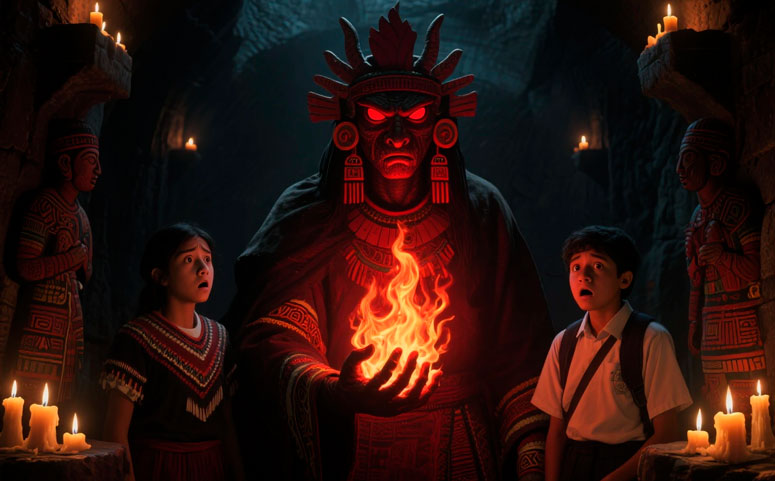
They wandered in circles, trapped in the darkness of the unknown. In a desperate attempt to find help, one of them tried to return on his own, leaving the other two behind. Unfortunately, he got lost and was never seen again. Meanwhile, the two remaining students, while still waiting, saw from a distance a majestic Inca figure breathing fire, his eyes ablaze with flames… One of the students, overcome by fear, suffered a heart attack. The Great Chincana became his final resting place.
The last student ran endlessly, and during his frantic escape, he stumbled upon a vast treasure of gold. Yet, rather than greed, it was fear that urged him onward. In the midst of panic, he grabbed a single golden corn cob and kept running.
A long time passed, and the students were eventually declared missing. One day, during a normal mass at the Convent of Santo Domingo, the priest heard knocks coming from an unknown door. When he opened it, he was shocked to find a man in a dreadful state—malnourished, with an enormous beard and the marks of time etched into his body and soul.
How do we know what happened to each student? That man was one of them. He recounted everything. Nearly a hundred years had passed while he wandered through the catacombs of the Chincana, until the day he heard the distant sound of a mass and followed it to the convent.
He handed over the golden corn cob to the church, and in his honour, it was used as decoration within the convent. This is the most well-known story in Cusco about the Great Chincana, and thanks to it, many believe that the Chincana once connected all the major sites in Cusco, and possibly even places far beyond. It is said that the Incas built these catacombs for strategic purposes during the expansion of their empire.
If you’ve already booked, or are thinking of booking, our Free Tour to Sacsayhuamán, don’t hesitate to ask our guides about this story. As we mentioned earlier, it’s almost a rule for us Cusqueños to know these legends. So don’t be left wondering—come and live this story with us!
Unknown Stories and Legends
We’ve already told you some of the most well-known stories and legends from the Andes of Peru, especially those that surround the imperial city of Cusco. But if we were to tell you every story that exists in the imperial city, let me tell you—we’d never finish… But don’t worry, we’ve selected the most fascinating ones, the kinds that will leave you with more than just curiosity.
The Soldier Who Drags Chains
This story is both a bit frightening and sad at the same time, as it’s linked to what locals often refer to as “the condemned”. These condemned souls are believed to be wandering spirits sent back to earth by God, as they left something unfinished in their lives. Now, they must complete their tasks—but as the not-living. The most common belief about the condemned is that they’re people who passed away with something important left unresolved.
This particular story was told to me by my mother, and it begins like this: Back in the 1980s, there was a young man with very few resources, trying to make ends meet by working as a porter. Sadly, the little money he earned was spent on alcohol, as he had had a rough childhood. One day, while intoxicated, he was taken against his will by a patrol from the Fifth Mountain Brigade in Cusco. At the time, this was not unusual, as military service was compulsory—especially if you had no ID or weren’t enrolled at a university.
The young man was harshly trained by his instructors and eventually became one of the most outstanding cadets in the brigade. His superiors would often assign him night watch duty because of his sharp instincts, reliability, and loyalty to the nation. However, as is often the case, envy and ill-will can be found even in the most disciplined places. Some of the other cadets grew jealous of his accomplishments and, in a cruel attempt to undermine him, decided to hide his rifle.
What might seem like a prank was, in fact, a deadly mistake. In the military, one of the strictest rules is never to lose your weapon. The punishment for such an offence is severe—especially considering that in the 1980s, the Peruvian army was far more ruthless and unforgiving than it is today.
Desperate and terrified, the cadet searched everywhere for his missing rifle, but it was nowhere to be found. When he reported for duty the next day without it, he was shackled and flogged. The punishment was so brutal that, due to the injuries and internal bleeding, he tragically died.
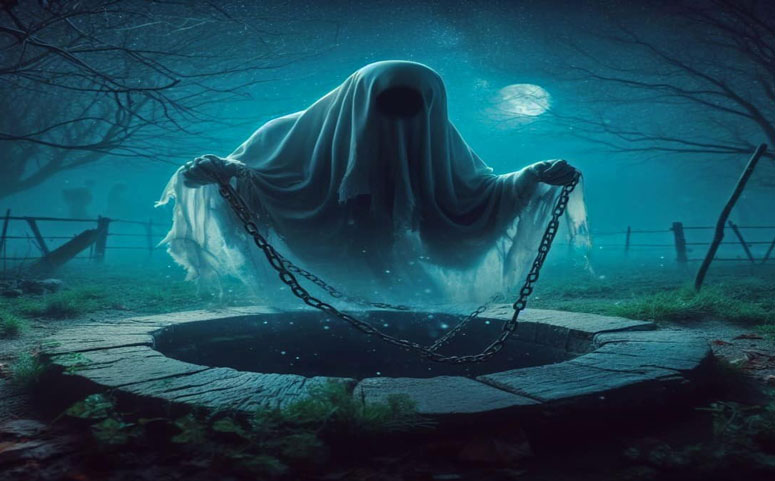
To this day, people say that around the complex of the Fifth Mountain Brigade, the eerie sound of chains being dragged can be heard at night. According to other soldiers’ accounts, what they saw was a man in uniform, dragging heavy chains along his arms, while faint sobs echoed in the background. It is said that the spirit of the young soldier still searches for his rifle every night, which is why the sound of chains continues to haunt the barracks.
Mermaids in the Huatanay River
This is what the Huatanay River looked like before
If you’re visiting Cusco, chances are you’ve already been to—or plan to visit—Huancaro, located in the district of Santiago. The most distinctive feature of this area is its river, the Huatanay, which nowadays sadly lacks water and is heavily polluted. However, long ago, this river was far more beautiful and its flow was much stronger, even reaching all the way to the main road.
Back in those times, people spoke of the existence of mermaids. But these weren’t the magical creatures who grant eternal life—their story is a little different.
When the river’s flow was still high, Huancaro was known for its picanterías—traditional eateries where locals would often drink chicha de jora (a fermented corn drink) and return home very late. It is said that mermaids would attack these men, as they were easier to deceive. The most infamous spot was the first bridge of Huancaro, since it was there that the so-called “drunkards” would pass. Before crossing the bridge, they would hear the beautiful voice of a woman calling out to them. Under the effects of alcohol, they were enchanted by the sirens’ singing and would lean over the railings. Once they were close enough, the mermaids would grab them by the neck and drag them down to the deepest part of the river. Many men disappeared this way, never to be seen again.
This is a small legend about the Huatanay River—one that certainly fills the past with mystery. Remember: if you walk by this river, don’t add to its pollution. Now you have one more reason to understand that every place has something that makes it special.
La Qhayqasqa: Tales of San Jerónimo
This story is known only to the people living in the district of San Jerónimo.
It is said that in the area of Pata Pata, there exists a malevolent spirit that frightens anyone nearby—especially those who decide to take a nap in the area. You might be asking: “A nap? Why would anyone take a nap in the middle of a forest?” Let us explain. For many years now, people who live in places like San Jerónimo or more remote areas outside the city often rest in these spots after long hours of work.
Because of this, several locals from Pata Pata have been victims of this spirit. According to legend, they rested in a place that belongs to another being… La Qhayqasqa. Below, we share a short film about this entity:
Remember, every place has something unique—and some may be sacred to certain spirits, such as La Qhayqasqa. If you invade her resting grounds, she may haunt you for the rest of your journey.
Escape the Story… Live It!
If you’re a fan of mystery and horror, we have some suggestions for a thrilling experience. But remember—before doing any of these activities, make sure you’re accompanied by a local guide or someone who knows the area well.
Almudena Cemetery
Cemeteries hold the stories of those who are no longer with us. But don’t be afraid—during October, especially around Halloween, themed night tours are available for you to enjoy with a group. This is our top recommendation. Going in alone might leave you with an unexpected surprise… and not necessarily a pleasant one.
Explore the Small Chincana
If you’d like to experience a glimpse of what happened to the three students who got lost in the Great Chincana, we invite you to explore the smaller version. Head to Sacsayhuamán (open from 6:00 a.m. to 6:00 p.m.) and find your way to this site. Our tip: do the route without a torch and let the stone walls guide you. Don’t worry—you’ll find the way out quickly. Just try not to panic in the dark.
Take our tour through the city of Cusco and uncover the secrets hidden within the Temple of Santo Domingo. Be sure to ask about the legend that links the Great Chincana to this convent. Our guides will captivate you with their stories.
Join Our Tours
We know there are experts out there who can guide you through Cusco’s historic streets and ancient traditions. What we offer is something more: not only professionalism, but a warm and friendly experience for all our visitors. Because without our listeners and readers, these stories would remain locked away, never to be told.
Come, witness, and live the marvellous customs and tales that Cusco has in store for you—by our side!
Peru is a wonderfully diverse and extraordinary country that offers a wide range of tourist experiences across its vast territory. This marvellous land isn’t just about ancient walls, archaeological sites, stunning structures and breathtaking landscapes; here, cultures from over a thousand years ago are still very much alive! Over a thousand years ago, you ask? —You’re probably wondering.
Well, let me tell you, dear friend, it’s absolutely true! These ancient cultures continue to thrive, thanks to the spirit and dedication of the Peruvian people who keep them alive.
Now, let’s take a look at just a few of the countless tourist activities that “The Land of the Incas” has to offer!:
Cultural tourism
Peru is considered a top tourist destination thanks to the richness of its cultural heritage, being the birthplace of ancient civilisations such as the Wari, Chavín, Mochica, Nazca, and many others.
Spanish culture also plays an important role, as during their time in Peru, the Spanish left behind important landmarks. Although these are not part of the country’s original cultures, they do tell the story of some of the most significant events that took place before and after their arrival.
Drawings accompanying “The First Chronicle and Good Government” by Guamán Poma de Ayala
Machu Picchu: This ancient Inca city is one of the most famous and mysterious archaeological destinations in the world. Just imagining how the Incas managed to build a citadel at the very top of a mountain leaves much to wonder about. Located on the eastern slopes of the Andes mountain range in Peru, at an altitude of 2,430 metres above sea level, Machu Picchu covers an area of 35,000 hectares and is made up of three mountains: Machu Picchu, Huayna Picchu, and Putucusi. The Inca technologies used here clearly demonstrate the remarkable skills of the Incas — all without the help of modern technology. It’s truly a place that sparks our curiosity! Exploring and learning about the ruins of Machu Picchu and the Inca civilisation is a cultural experience like no other.
The Historic City of Cusco: The ancient capital of the Inca Empire is a city brimming with history and colonial architecture, offering an unforgettable experience. Tales, legends, and stories waiting to be discovered are hidden within its walls, streets, avenues, and even its people. The Plaza de Armas, Cusco Cathedral, and Qoricancha are just a few of the must-visit sites to truly immerse yourself in the rich history and culture of this fascinating city.
Sacred Valley of the Incas: It is considered one of the lifelines that make up the heart of the Peruvian highlands, stretching along the Vilcanota-Urubamba River and surrounded by extraordinary agricultural richness and vast Inca fortresses. This region is home to archaeological sites that, beyond the breathtaking beauty of their landscapes, also preserve legends and mystical stories — tales of deities and guardians who are believed to still protect these sacred places today. Pisac (2972 m.a.s.l.) and Ollantaytambo (2792 m.a.s.l.) are among the must-visit destinations in the Sacred Valley of the Incas.
Lake Titicaca: Located at 3,809 metres above sea level and covering an area of 8,372 square kilometres, it is considered the only major water source that remains truly perennial. Beyond that, it is home to fascinating floating islands. The floating islands of the Uros and Taquile offer truly authentic cultural experiences. Moreover, Lake Titicaca is home to indigenous communities who still preserve unique cultural traditions, which you can experience firsthand if you’re ready to venture across its chilly waters.
Festivals and Celebrations: Taking part in festivals and cultural events is a fantastic way to experience Peruvian traditions firsthand. Dare to be part of the heart of a culture that still lives and feels the thousand years of history beating within you! The Inti Raymi in Cusco, the celebration of the Virgin of Candelaria in the city of Puno, and the Virgin of Carmen in the city of Paucartambo are unique festivities — don’t miss them!
Nazca Lines: Located 450 kilometers south of Lima, in one of the driest areas of Peru and surrounded by vast stretches of sand, clay, calcite, and solitude, the Nazca Lines are considered a mystery. They consist of a large number of lines, perfect geometric shapes, spirals, labyrinths, and most strikingly, impressive designs of marine and terrestrial animals of various origins. These are called “geoglyphs” and are considered a UNESCO World Heritage site. At first glance, they appear to be simple drawings on the surface, but if you delve into their origins, you’ll realize that these figures offer an intriguing and enigmatic insight into the ancient Nazca civilization.
Adventure tourism
If we were to mention the amount of natural attractions that Peru has, we would never finish this blog… but don’t worry, here we’ll show you the activities you can do and where you can enjoy them.
Peru offers a wide variety of exciting and sporty activities, and here are the most popular ones:
Trekking to Machu Picchu: The hike to Machu Picchu is undoubtedly exhausting and will take you about 3 hours. However, you can make the challenge more interesting by taking the famous “Inca Trail,” an incredibly exciting journey. Since this trail doesn’t take just one day, you’ll need to request permission for at least a week, my friend! The route is long, and you’ll need to travel around 40 kilometres on foot, making the trip a total of 4 days. During this journey, you’ll be able to enjoy the flora and fauna (such as the spectacled bear, the famous condor, etc.) that characterise the Sacred Valley of the Incas. The Inca Trail is the most well-known route, but there are other options, such as the Salkantay Route. So, if you’re ready for this hike, we recommend doing it with a guide.
Trekking in the Colca Canyon: The Colca Canyon, located in the Arequipa region within the Western Andes, with a depth of 4,160 metres, is one of the deepest canyons in the world. Its rock formations, shaped over time by weather and atmospheric conditions, make it truly unique. Have you ever visited the Grand Canyon? Well, let me tell you, the Colca Canyon offers stunning views, and in addition to hiking along its trails, you’ll have the chance to witness the famous Andean condor soaring through the sky. Tell me, does the Grand Canyon have this exclusive bird gliding through its lands? Dive into the most fascinating corners of Peru and join us on a tour!
Climbing in Huaraz: The Huaraz region in the Blanca Mountain Range is a paradise for rock and ice climbing enthusiasts. Located at an altitude of 3,052 metres above sea level in the heart of the Andes, it is known for its imposing mountains, with the Blanca and Negra Mountain Ranges being the most striking. There are challenging routes and breathtaking mountainous landscapes, and Huaraz is the starting point for treks to these mountains.
Sandboarding in Huacachina: Huacachina is an oasis situated 5 kilometres from the main square of Ica, famous for its massive sand dunes. The reason for its formation is due to the numerous lagoons, or “puquiales”, that once extended along the Peruvian coast in ancient times.
Rafting on the Apurímac River: The Apurímac River is located in the canyon of the same name, which is most well-known for marking the border between the Cusco and Apurímac departments. Its course begins in the Andes at Nevado Mismi, at an altitude of 5,597 metres. This vast river offers thrilling rapids and beautiful landscapes. Rafting on this river is an exciting experience for water sports enthusiasts.
Paragliding in Miraflores: If you’re looking for a paragliding experience with stunning views, the Miraflores promenade (Lima) is a popular spot to take off from the cliffs and enjoy the view over the Pacific Ocean.
Mountain Biking in Moray: Moray, a key part of Inca engineering, was fortified in the mid-15th and early 16th centuries. Its structure consists of a series of 4 craters of varying sizes, formed by circular terraces built to take advantage of the natural depression in the land. This complex is famous for its circular agricultural terraces. Mountain biking around the area gives you the opportunity to observe this archaeological site.
Kayak Excursions: You can enjoy kayaking in various locations across Peru, including rivers and lakes situated along the coast, in the Andes, or in the Amazon region.
Adventure in Collona, in the northeast corner of Arequipa
Nature and ecotourism
Peru is an ideal destination for ecotourism, as it boasts a great diversity of ecosystems, green areas, and a wide variety of exotic animals and plants. Below, we’ll tell you about some of the country’s most attractive natural spots:
Located in the Ica region, this reserve is considered a protected natural area in Peru and is well known for its marine biodiversity and variety of bird species. It lies along the coast, within the provinces of Pisco and Ica. The reserve covers a surface area of 335,000 hectares, with around 65% of it consisting entirely of marine environments.
Flora
The flora of this region is notable for its adaptability—particularly to desert environments. The plant life is mainly found in the coastal hills, especially at the higher elevations. Additionally, marine plants are an important part of its ecosystem.
Among the various species, you’ll find:
Orchids
Cacti
Tillandsias
Phytoplankton
Fauna
Thanks to the diverse biotopes, the reserve offers vital areas for feeding, reproduction, and shelter to its resident animals. These habitats include coastal water bodies, ravines and cliffs, rocky shores, sandy marine edges, coastal plains, and continental elevations.
The fauna includes:
Toothed whales
Sea lions
Otters
Sea turtles
A vast array of birds, fish, and other marine invertebrates
You can embark on boat tours to observe sea lions, penguins, and migratory birds.
Manú National Park
Located between the regions of Madre de Dios and Cusco, Manú National Park is considered one of the largest protected areas globally. Geographically, it spans from the highland puna region of Cusco (4,000 metres) down to the lowland Amazonian plains at the mouth of the Manú River (300 metres), covering an area of 1,532,806 hectares.
Flora
Manú National Park is renowned for its abundant plant species, with approximately 4,385 plant species recorded. This richness is attributed to the diverse ecological zones within the park.
Notable species include:
Bromeliads
Heliconia flowers
Rubber trees
Orchids
Giant water lilies
Passion fruit flowers
Medicinal plants
Monkey brush vines
And many more.
Fauna
The park’s fauna comprises over 160 mammal species, 800 bird species, 140 amphibian species, 50 snake species, 40 lizard species, 6 turtle species, 3 caiman species, 210 aquatic species, and a wide variety of exotic insects native to the region.
Common species include:
Jaguar (Otorongo)
Giant river otter
Spectacled caiman
South American tapir
Taricaya turtles
Red howler monkey
Among others
Tambopata National Reserve
Tambopata is a protected natural area located in the Peruvian Amazon, specifically in the southeastern region of Madre de Dios, encompassing a geographical area of 274,690 hectares.
Known as the “Capital of Biodiversity,” this reserve is home to a vast array of species, including macaws, capybaras, and pink river dolphins. Visitors can participate in birdwatching programmes and jungle treks.
Flora and fauna
Regarding its flora and fauna, Tambopata shares many species with Manú National Park. However, Manú boasts greater ecosystem diversity, including both mountain and jungle species, while Tambopata focuses on emblematic Amazonian species and offers more accessible tourist activities.
In addition to hosting all species of macaws, some species that differentiate the Tambopata National Reserve from the Manu National Park include:
Andean Treks: Peru is famed for its trekking routes in the Andes. You’ll enjoy spectacular views and the chance to experience the natural beauty of mountains like the Cordillera Blanca, Cordillera Negra, and Ausangate.
Ballestas Islands: Often referred to as the “Galápagos of Peru,” these islands are located off the coast of the Paracas National Reserve and are home to colonies of seabirds and sea lions. Boat tours offer opportunities to observe marine life.
Laguna de Mejía National Sanctuary: Situated in the Arequipa region, this sanctuary is a vital habitat for migratory birds.
Culinary Tourism
One of the most important elements in Peru is its cuisine, which is considered part of the intangible heritage. Currently, Peruvian gastronomy is experiencing a period of great success, and is internationally recognised as one of the most sophisticated and diverse in the world.
The most iconic dishes include Ceviche, Lomo Saltado, Ají de Gallina, Rocoto Relleno, among many others. Below, we present a guide to help you better navigate this culinary world:
Local Markets: Explore markets like Surquillo in Lima, San Pedro in Cusco, and San Camilo in Arequipa. These markets are hubs where you can discover a plethora of ingredients from the Andes, coast, and Amazon, as well as sample regional dishes quickly and affordably
Cooking Classes: Many restaurants and agencies offer cooking classes, providing an educational and enjoyable experience where you’ll not only savour Peruvian cuisine but also learn about its recipes and secrets. Don’t worry if you’re unfamiliar with local ingredients; you’ll be guided by local chefs.
Gastronomic Routes: Cities like Lima offer gastronomic tours that take you through restaurants, food stalls, and iconic spots to sample a variety of dishes.
Food Festivals: Peru hosts several food festivals throughout the year, such as Mistura in Lima, which brings together chefs, producers, and food enthusiasts from across the country; or Corpus Christi in Cusco, during which the famousChiri Uchu, a dish characteristic of this festival, is consumed.
Pisco, Wine Tastings, and Indigenous Beverages: Try Pisco, Peru’s flagship spirit, and participate in wine tastings to explore the diversity of the country’s wine regions. You can also discover Chicha de Jora, a traditional Andean beverage that, beyond its exquisite flavour, embodies traditions dating back to the Inca era.
Regional Cuisine: Delve into the culinary diversity across Peru’s regions. Each area boasts its own specialties and cooking techniques that reflect the country’s geographical and cultural variety.
Street Food: Don’t miss the chance to try street food: Anticuchos, Tamales, Humitas, Empanadas, Picarones, and other delicious snacks are readily available throughout your journey in Peru.
Street food on the Lima circuit, an exquisite outdoor experience
Experiential Tourism
Experiential tourism involves immersing yourself in the lives and traditions of local communities to learn about their culture and heritage. This is a significant aspect as it fosters cultural exchange, sharing knowledge, experiences, and traditions.
Among the activities you can do, consider the ones we will mention below:
Staying with Local Communities: Instead of conventional hotels, you can stay with local families in rural or exotic areas like the islands of Lake Titicaca.
Participating in Local Activities: Visitors have the opportunity to partake in daily community activities such as farming, fishing, livestock rearing, crafts, textiles, cooking, etc.
Craft Workshops: Learn directly from local artisans and participate in workshops where you’ll discover traditional crafts like pottery or textile making.
Connecting with Nature: Many experiential tourism experiences take place in natural settings, allowing visitors to connect with nature and understand the relationship between the community and their environment.
Mystical Tourism
Mystical tourism is considered an economic strategy focused on spiritual traditions, supported by the revaluation of indigenous or ancestral aspects of nature. Tourists engage in special experiences that go beyond typical tour packages, with the main attraction being the inherent energy of the place.
In Peru, mystical tourism encompasses these definitions and holds significant economic importance, as it’s one of the few countries where such tourism can be experienced. The diversity of activities is undoubtedly vast. Here are some activities you can partake in:
Offering to the Earth
This ritual is commonly practised in the high Andean regions of Peru and is performed on the first day of August, continuing throughout the month. According to local experiences and stories, it’s believed that during this time, Pachamama (Mother Earth) is thirsty and hungry, hence offerings of the best food are made to nourish and strengthen her, ensuring future protection, food, prosperity, and good harvests.
Ayahuasca Ritual
This ritual is most commonly celebrated in the Amazonian regions of Peru. Ayahuasca is considered a medicinal brew, used therapeutically and for rehabilitation, primarily to combat addictions. Its consumption has become widespread in recent years, especially in the Amazon jungle.
Healing Rituals
Have you ever felt unwell without explanation? Do you feel things aren’t going well in work, love, or health? Then this section might interest you. In the high Andean regions of Peru, there are beliefs regarding existing ailments. As the saying goes, it’s better to fear the living than the spirits; however, in these regions, both can impact your life positively or negatively. Some people may not wish to see you succeed, harbouring envy that brings negative energies, malevolent spirits, misfortunes, and even witchcraft into one’s life. That’s why healing rituals exist, using sacred plants and animals that absorb negative energies, cleanse your spirit, and ward off negativity. These rituals are performed by shamans and sometimes by locals, as it’s traditional in southern Peru for at least one family member to have knowledge of these practices.
Common methods include using black guinea pigs, garlic, Andean liquors, regional plants, coca leaves, among other elements. Embrace these rituals and cleanse negativity from your life!
Healing with Guinea Pig
This is considered a traditional therapeutic technique where a healer uses a guinea pig to detect ailments, anomalies, or internal issues—akin to a natural medical diagnosis. The ritual involves a guinea pig (preferably black), which the healer passes over the patient’s body. After the ritual, the guinea pig is sacrificed, and its body is examined for anomalies, representing the patient’s conditions.
Traditional cleansing with guinea pig, a spiritual x-ray
Derived from the Quechua word “qoyllority,” meaning “snow star,” this ritual is more of a religious festival in the city of Cusco. It blends Catholic and Andean beliefs, worshipping both Apu Ausangate and Christ. The ceremony is held on mountain Sinakara, one of Peru’s largest mountains and a pilgrimage site for the devout. If you wish to participate, here are some suggestions:
Don’t go alone; it’s advisable to travel in a group to prevent accidents.
Bring a backpack, hiking boots, and thermal clothing, as it gets very cold.
Join other devotees with respect and devotion; remember, it’s a pilgrimage site.
Frequently Asked Questions
Why is Peru a tourist destination?
Peru attracts visitors due to its rich history, cultural diversity, natural beauty, and renowned gastronomy. Reasons include archaeological heritage, living culture, recognised cuisine, varied landscapes from lush jungles to beautiful beaches, adventure opportunities, ecotourism, festivals, traditions, warm hospitality, and a deep connection with nature. In summary, these features make Peru a unique tourist destination.
In conclusion, the combination of the aforementioned characteristics makes Peru a unique tourist destination.
How is tourism in Peru?
Peru is a highly sought-after tourist destination; however, the pandemic significantly impacted this sector. Since 2021, the Peruvian government has implemented economic reactivation policies in tourism. As a result, upon arriving in Peru, you’ll find new tourist destinations and various facilities to access major attractions.
What are the most visited places in Peru?
One of the most visited destinations is Machu Picchu, which is also one of the most iconic archaeological sites in the world. This Inca citadel is renowned for its breathtaking architecture and its deep historical and cultural significance.
Other popular tourist attractions in Peru include Lake Titicaca, the Nazca Lines, the Colca Canyon, the city of Cusco, the historic centre of Lima, and the Peruvian Amazon.
What makes Peru special?
Peru stands out for its incredible diversity. Here you’ll find a rich mix of biodiversity, archaeological and cultural heritage, and world-renowned cuisine. Tourism in Peru is wonderfully varied, offering something for every taste – and you’ll be warmly welcomed by the country’s friendly and hospitable people.
It’s also worth noting that Peru has 13 UNESCO World Heritage Sites!